
That big hill in your yard isn't a problem—it's a great opportunity. Many homeowners see a steep slope and think of erosion, water problems, and the pain of mowing. But with the right plan, that same slope can become the best part of your property.
The secret is to work with the hill, not against it.
This guide is your complete plan for turning that tricky hill into a beautiful, strong, and useful part of your garden. We will walk you through everything, from the first important steps of checking your slope to choosing the final plants. This will make sure your project is built to last.
Your Plan for a Great Hillside Garden
Before you start digging, you need a good plan. Trying to figure it out as you go on a steep slope can lead to disaster. A well-planned project is the only way to avoid future problems like soil washing away, dying plants, or even a collapsing wall.
Your plan should do three main things:
- Control Water Flow: Rain is the biggest enemy of a bare slope. Your design has to manage the water, slowing it down and sending it where you want it to go.
- Hold the Soil in Place: You need the right mix of plants and structures to keep everything from moving. Without this, all your hard work could slide away in a big storm.
- Create a Lasting Design: A great hillside landscape is not just useful—it has to look good, too. The goal is a design that looks great and doesn't need constant, difficult work.
To start off right, it’s best to use a quick checklist. This makes sure you have all your bases covered before you start working.
First Checklist for Landscaping a Steep Slope
| Action Item | Why It's Important | What to Know |
|---|---|---|
| Measure Slope Angle | Helps you know what you can build and how big the erosion risk is. | A slope over 30% often needs a professional engineer for retaining walls. |
| Check Soil Type | The type of soil (clay, sand, loam) affects drainage, stability, and plant choices. | Do a simple "jar test" to see what your soil is made of. |
| Check Local Rules | Many towns have building rules for retaining walls and changing the land. | Call your local planning or building office before you design anything. |
| Watch Water Flow | See where water flows during rain to find spots where erosion might happen. | This will help you know where to build channels or drains. |
| Check Sun Exposure | See which parts of the slope get full sun, part shade, or full shade. | This is very important for picking plants that will grow well. |
This checklist is where you begin. It makes you understand your slope's unique features before you start changing things.
The real secret to landscaping a steep slope is to think in layers. First, you make the soil secure. Then, you add structures. Finally, you plant for long-term strength and beauty. This layered plan is what creates a landscape that lasts a long time.
From here, we'll go into each step of the process. We will give you the practical knowledge to turn that difficult hill into something you can be proud of for years.
Getting Your Slope Ready for a Makeover
Before you pick up a shovel, you need to know your hillside very well. I can't say this enough. Think of it like making a game plan. You wouldn't build a house without a blueprint, and a good slope landscape starts with knowing what you are dealing with. Rushing this step is a common mistake that leads to lost soil, sad plants, and a lot of wasted time and money.
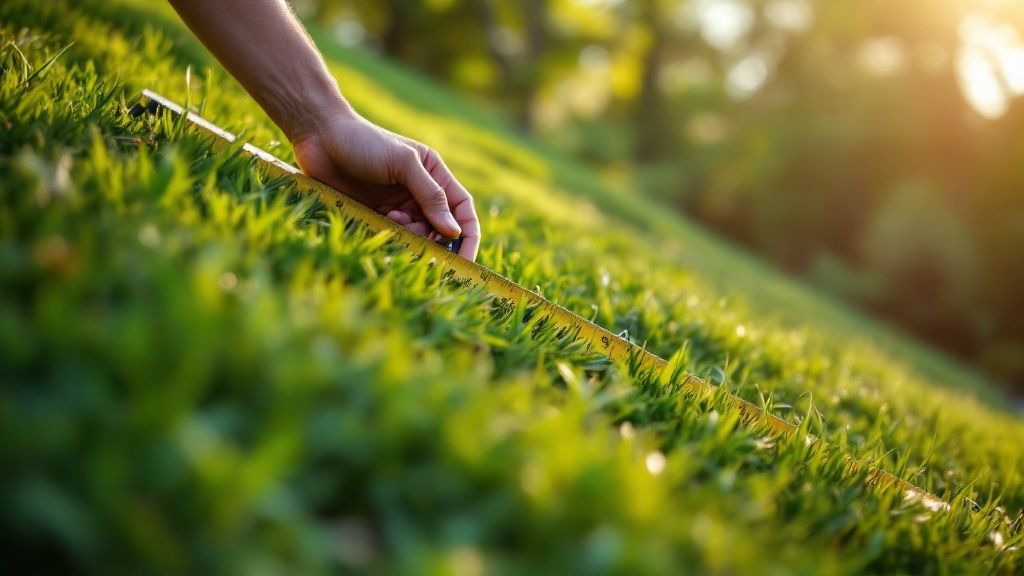
First, you have to figure out the steepness, or grade, of your slope. It sounds technical, but it’s pretty easy. You can do it with two stakes, a string, and a line level. Knowing the angle is important because it decides everything you do next. A gentle slope might just need some smart planting. But a very steep one will almost certainly need a structure, like a retaining wall, to be safe and stable.
Get to Know Your Soil and Sun
Now it’s time to get your hands dirty. You need to understand your soil because it’s the foundation for every plant. Is it thick, heavy clay that holds water? Or is it sandy and drains very fast? A simple "jar test" is a great way to find out. Just fill a mason jar about halfway with soil from your slope, add water to the top, shake it hard, and let it sit for a day.
You'll see layers form, showing you how much sand, silt, and clay you have. This small piece of information is a big help.
- Soils with a lot of clay will probably need other materials mixed in to help with drainage so your plants don't get too much water.
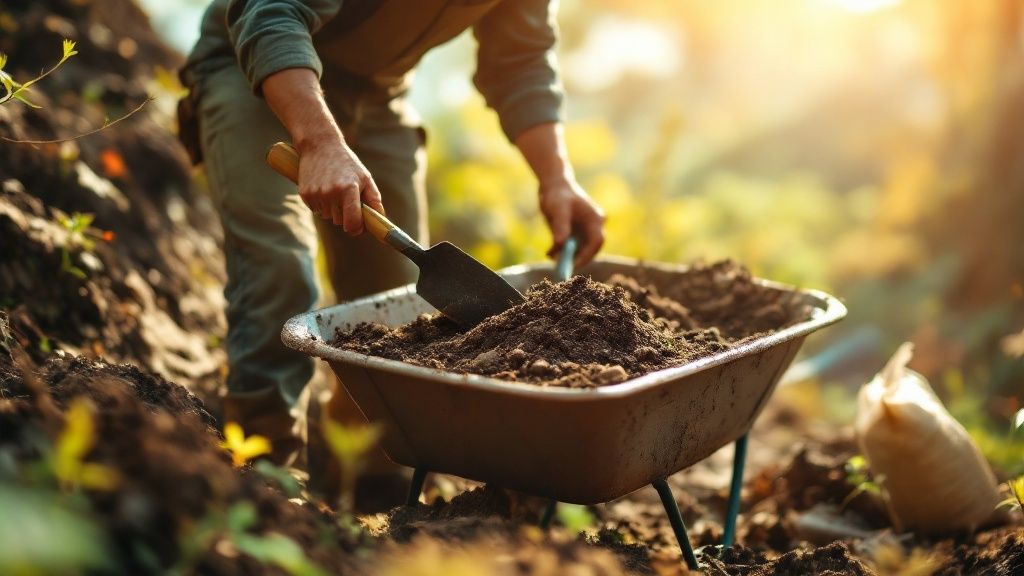
- Sandy soils will likely need natural matter like compost to help them hold water and food for the plants.
Let me be clear: you must understand your soil. If you put the wrong plants in the wrong soil, they will not do well and will eventually die. This leaves your slope bare and open to erosion. Good soil is the foundation of a healthy, stable hillside garden.
Finally, take a day or two to watch what the sun and water do on your slope. Notice which spots get hot afternoon sun and which stay in the shade. When it rains, watch where the water runs, where it rushes, and where it collects. These simple observations will tell you exactly where to put plants that can handle dry weather versus plants that like more water. It will also show you where you might need to build a channel or drain to handle the runoff. This prep work helps your design work with the land, not against it. It sets you up for a beautiful landscape that will last for years.
Key Ways to Control Erosion on Hillsides
When you landscape on a steep slope, your most important job is to keep the soil in place. Gravity and rain work together to pull everything downhill. This is called erosion. Without a good plan to control erosion, all your hard work could wash away in one storm. This can create ugly ditches and leave plant roots exposed.
I've seen it happen. But the good news is, there are many proven ways to lock your soil in place and build a strong foundation for a beautiful hillside garden.
This isn't just a problem for backyards. Keeping slopes stable is a big deal around the world. The market for erosion control products was worth about $2.44 billion and is expected to more than double by 2033. This growth shows how important it is to manage slopes well. You can learn more about these global trends in sustainable land management.
Using Plants as a Natural Shield
The best—and most beautiful—tool you have against erosion is plants. The roots of plants are like a living net that weaves through the soil, holding everything together. Plants with deep, thick root systems will be your best friends on a hillside.
But it can be hard to get those plants started on a bare slope. Seeds and new plants can easily wash away before they can take hold. That's where a few temporary helpers can make a big difference.
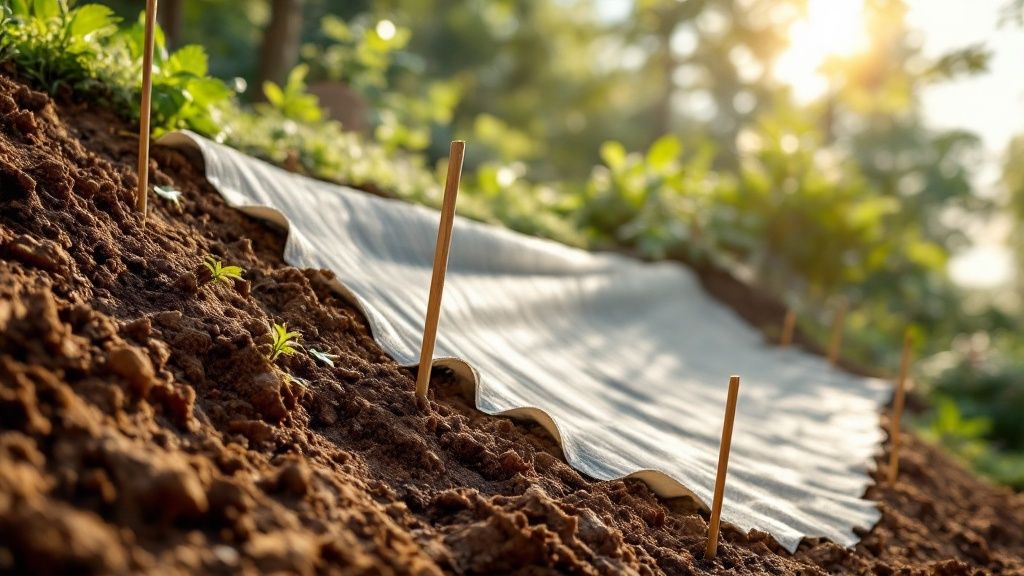
- Erosion Control Blankets: These are mats made from natural materials like jute, coconut fiber, or straw. You roll them out over your soil, pin them down, and they act like a protective blanket. They hold the soil and water in place while your new plants grow through them.
- Hydroseeding: This is a neat process where a contractor sprays a mix of seeds, mulch, fertilizer, and a special glue onto the slope. The mulch mixture gives the seeds a safe, wet place to sprout very fast, giving you quick ground cover.
The most important thing to remember is to never leave bare soil exposed for long. Whether you use a temporary blanket or a fast-growing cover crop, you need to protect the soil right away. This stops soil loss while your permanent landscape gets started.
Managing Water with Smart Design
Even with a hillside full of plants, you still need to think about how water moves down the slope. Just letting rainwater rush straight downhill will cause a washout. The trick is to slow it down, spread it out, and let it soak into the ground instead of running off.
One of the easiest and best ways to do this is with swales. A swale is just a shallow ditch dug along the curve of your hill. Think of it as a level path that cuts across the slope. Instead of fighting gravity, it catches runoff and holds it. This lets the water slowly soak into the soil and water your plants.
By building a few swales down your slope, you can create a stepped effect. This not only cuts down on erosion but also helps save water. This kind of smart water management is the backbone of any hillside landscape that is built to last.
Building Structure with Terraces and Retaining Walls
When you have a very steep slope, plants and mulch might not be enough. To really control a steep hillside, you need to use stronger solutions: terraces and retaining walls. These structures add stability and create flat, usable space where there was once only a hill you couldn't use.
Terracing is a classic way to handle a long, steady slope. The idea is to cut a series of flat "steps" into the hill. Each step is held in place by a low wall. This is a great plan for a few reasons. It breaks up the steep angle of the slope, creates perfect little planting areas on each level, and slows down rainwater. This gives the water a chance to soak into the soil instead of washing everything away.
Comparing Terraces vs. Retaining Walls
Deciding between terraces and a single retaining wall is a big first step. Terraces are great for making garden beds on a long, medium slope. A retaining wall is best for handling a sharp, steep drop. Here’s a quick comparison to help you.
| Feature | Terracing | Retaining Walls |
|---|---|---|
| Best For | Long, steady slopes; making garden beds | Sharp drops in height; making one large flat area |
| Cost | Can be cheaper for DIY, but more work | Higher cost at first, especially if built by a pro |
| Difficulty | Moderately hard; needs careful planning | Very hard; often needs a professional engineer to design and build |
| Look | Creates a cascading, multi-level garden | Provides a clean, strong, and bold structural line |
In the end, the choice depends on your property and what you want to do. Both are great ways to handle a difficult slope.
Choosing the Right Materials
The materials you choose for these structures will decide the final look, how long they last, and how much you spend. You have some great options, and each has its own style.
- Natural Stone: Nothing beats the classic, natural look of stone. It fits into the landscape well and is very strong. But it costs more and takes real skill to install right.
- Concrete Blocks: These are a very popular choice, especially for people who do it themselves. Modern blocks lock together and are designed to stack easily and make very strong walls. They also come in many different colors and textures.
- Timber: Wood gives a warm, rustic feel to the garden. If you choose wood, picking the right kind is very important. You must choose wood that can handle the weather, like a weather-resistant hardwood, to make sure your wall doesn't rot in a few years.
Here’s a look at how these three common materials compare.
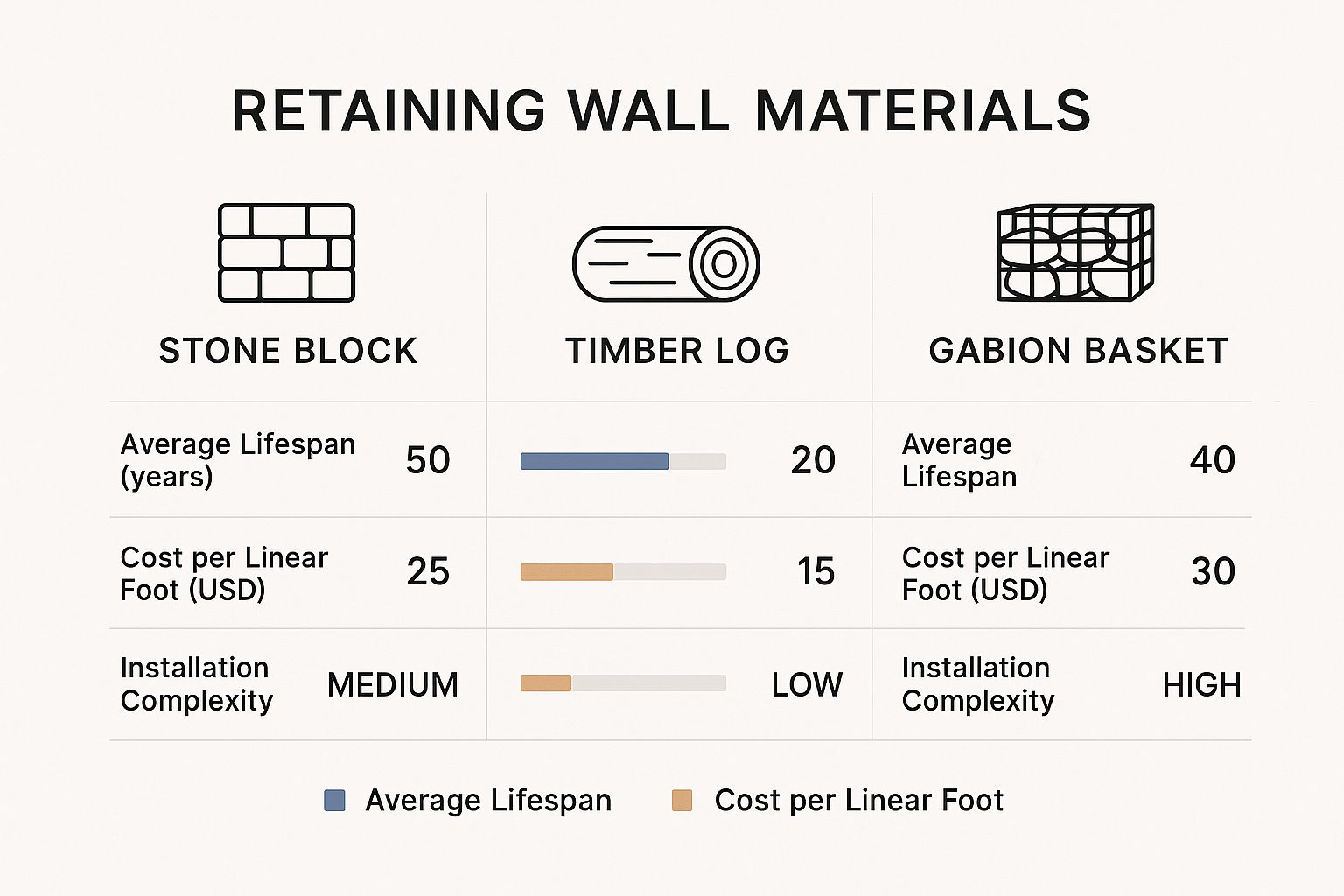
As you can see, there are pros and cons to each. Timber is cheaper at first but doesn't last as long. Stone blocks are the strongest but also cost the most.
Why Retaining Walls Are So Effective
For those really big, sharp drops in height, a single, well-built retaining wall is often the best choice. These are not just for looks; they are engineered structures and are very important in landscape design. In fact, industry reports show that 65-70% of projects on steep slopes use some kind of retaining wall.
When built the right way, a good wall can cut soil erosion by up to 95%. That's a huge difference. It gives you stable, level ground that is perfect for a patio, a lawn, or a garden.
But no matter what material you pick, there's one rule you absolutely cannot break: drainage is everything. The number one reason retaining walls fail is because of water pressure building up behind them. A properly built wall must have gravel fill behind it and a special drain pipe at the bottom to let that water escape safely. If you skip this step, even the strongest wall is at risk of bulging, cracking, or completely falling down.
A retaining wall is more than just a stack of blocks. It is an engineered system designed to hold back thousands of pounds of wet soil. Never, ever cut corners on the foundation or drainage. That is the hidden strength that makes sure your wall will last a lifetime.
Putting in a major retaining wall is a big project, so it’s important to understand the cost. For a deeper look at all the things that affect the final price, check out our detailed guide on the https://tamuradesigns.com/cost-of-retaining-wall/.
Choosing the Best Plants for Your Hillside Garden
The right plants do more than just look pretty. They are the living glue holding your whole hillside project together. When you are landscaping a steep slope, think of your plants as a hard-working team. Their main job is to send roots deep into the ground. These roots weave a powerful, natural net that locks the soil in place and stops it from washing away.
This is why picking the right plants is so important. A hillside covered with the right plants is very strong. In fact, studies show that having 60-80% plant coverage on a slope can reduce erosion by up to 90%. The roots simply hold the soil together, keeping it from being washed away by heavy rain. You can find more information about proven slope management techniques on marketresearchfuture.com.
Plants That Anchor and Protect
Your best partners in this effort are plants with deep, thick root systems. I’m not talking about delicate flowers that need a lot of care. We are looking for tough plants that will spread out and create a dense mat of roots that grip the soil.
Think about these types of powerful plants:
- Spreading Groundcovers: Plants like Creeping Thyme, Ice Plant, or some types of Juniper are great choices. They grow low and wide, quickly covering bare ground and protecting it from rain.
- Native Grasses: Don't forget about ornamental grasses. Grasses that are from your area, like Switchgrass or Little Bluestem, have very deep roots that can go several feet into the ground. This provides excellent stability.
- Drought-Tolerant Perennials: Slopes tend to dry out fast because water runs right off. Plants like Sedum, Lavender, and Yarrow grow very well in these conditions and need very little extra water once they are settled.
The best hillside gardens use plants that can take care of themselves. Choosing plants that are low-maintenance and don't need a lot of water will save you from constantly climbing a steep hill with a hose or fertilizer.
Matching Plants to Your Slope Conditions
Every slope is different, especially when it comes to sunlight. A hill that faces south might be in the sun all day. A hill that faces north might be in the shade for hours. You have to match your plants to these specific conditions.
For a hot, sunny slope, you’ll want to look at plants that love the heat. Think about Black-Eyed Susans, Coneflowers, and Rosemary. They will do great in the strong sun and dry soil.
For a shadier spot, look for plants that like cooler, more protected areas. Hostas, Ferns, and Ajuga are wonderful choices. They will provide thick, green cover without needing direct sunlight.
Choosing plants that are naturally a good fit for your slope's environment is a key part of sustainable landscape design. It makes sure your garden will do well with very little help from you. By creating a tough, self-sufficient plant community, you make your slope both beautiful and safe.
Got Questions About Landscaping Your Steep Slope?
You're not the only one. Working on a hillside means you're not just gardening; you're fighting gravity. That brings up a lot of questions. Getting good answers first will give you the confidence to move forward and make smart, safe choices for your property.
How Steep is Too Steep for a DIY Job?
This is probably the biggest question we hear. There isn't one exact number, but a good rule is to call a professional for any slope steeper than 3:1 (about a 33% grade). At that angle, erosion gets much worse. Any structures you build, like retaining walls, must be properly engineered to be safe. For anything less steep, a motivated homeowner can often handle the job with the right methods.
When’s the Best Time to Start?
Timing is very important. The best time to start working is in the late spring or early fall. The weather in these seasons is usually mild, which is easier on you and your new plants. Starting in the middle of a hot summer will stress new plants. The heavy rains of winter can wash away your work before it has a chance to settle.
Watering and Maintenance on an Incline
How do you water plants on a slope without all the water running to the bottom? It's a common problem on hillsides. Regular sprinklers are mostly useless here, as most of the water will run off before it can soak in.
The answer is a drip irrigation system. It's a game-changer for slopes. This system delivers water slowly and directly to the base of each plant, right where it’s needed. You can easily run the tubes along your terraces or planting areas, making sure every drop of water counts.
Here's why drip irrigation is the best choice for hillsides:
- It stops runoff: By releasing water slowly, it keeps the soil from getting too wet and causing erosion.
- It saves a lot of water: You lose far less water to the air or runoff. This is great for your water bill and the environment.
- It’s exact: You can give the perfect amount of water directly to the roots, which is exactly what your plants want.
The key to a healthy slope is to water deeply but not too often. This simple trick makes your plants send their roots deep into the soil. This gives them a much stronger hold and makes them tougher during dry periods.
So, What's This Going to Cost?
Let's talk about the budget. The cost of landscaping a steep slope can vary a lot. A simple project using native groundcovers and tough grasses will be less expensive. But if your plan includes moving a lot of earth, building several terraces, or having a professional install a retaining wall, you are looking at a much bigger cost.
For a large project with structures, you're not just paying for materials. You're paying for engineering knowledge, special workers, and heavy machines to do the job safely and correctly. Always get several price quotes and check references before you hire a contractor for a big slope project. A well-built hillside landscape is a wonderful addition to your home. But a poorly built one can quickly become an expensive and dangerous problem. Making smart decisions from the very beginning is the secret to getting it right.
Transforming a challenging slope into a beautiful, functional space is what Tamura Designs Landscape and Construction does best. With over 30 years of award-winning experience, we create stunning, sustainable landscapes that stand the test of time. If you're ready to see what's possible for your property, visit us at https://tamuradesigns.com.
