
Let's get this right from the start: designing an outdoor living space is about more than just putting a few chairs on a patio. It’s about creating a true extension of your home, a place that works for the way you live. The first step, before you do anything else, is to dream about what you want and then plan it out for your actual backyard.
Dreaming Up Your Perfect Backyard Retreat
That patch of grass outside your door? It's a blank canvas. But before you start looking at pictures of fancy outdoor kitchens, the real work is turning those big ideas into a solid, workable plan.
And you're not alone in this. More and more people are looking at their yards as extra living space. In fact, North America now makes up over 48.5% of the global outdoor living market, which is worth a huge USD 2.35 billion. This trend is all about people wanting to get more out of their homes. You can look at more details about the outdoor living market to see how big this has become.
Check Your Yard Like a Pro
Grab a notepad and walk around your yard like you're seeing it for the first time. The goal isn't to find problems, but to really understand the space you have. A little looking now saves a lot of trouble later.
Keep an eye on these key things:
- Sun and Shade Patterns: Where is the sun in the morning versus the late afternoon? A spot that’s perfect for coffee at 8 AM might be too hot by dinnertime. Watch where shadows from your house and trees fall during the day.
- Wind Direction: Is there a corner of your yard that’s always windy? That’s probably not the best spot for a dining table or a fire pit where smoke could blow into your guests’ faces.
- Slopes and Grading: Is your yard on a hill? A slope can be a good thing. Think about patios on different levels, a wall with built-in seating, or tiered garden beds.
One of the biggest mistakes I see is when people try to fight their yard’s natural layout. Work with what you have. That shady, forgotten corner could be a perfect, quiet reading spot. That super sunny patch of grass is a great place for a sunbathing deck or a small herb garden.
Be Clear on Your Outdoor Goals
Alright, here comes the fun part. What do you actually want to do out there? This is the most important question because the way you use the space should guide the design.
Are you picturing:
- A busy place for weekend barbecues and birthday parties?
- A quiet escape for morning yoga or reading a good book?
- A cozy spot with a fire pit for cool nights with friends?
- A complete outdoor kitchen for the serious griller in the family?
Don't be general. Instead of just saying "a place to relax," really think about what that looks like. Is it a hammock between two trees, or is it a big, comfy sofa with room for everyone? Being specific now will make every choice—from layout to materials—so much easier later on.
Creating Your Outdoor Layout and Style
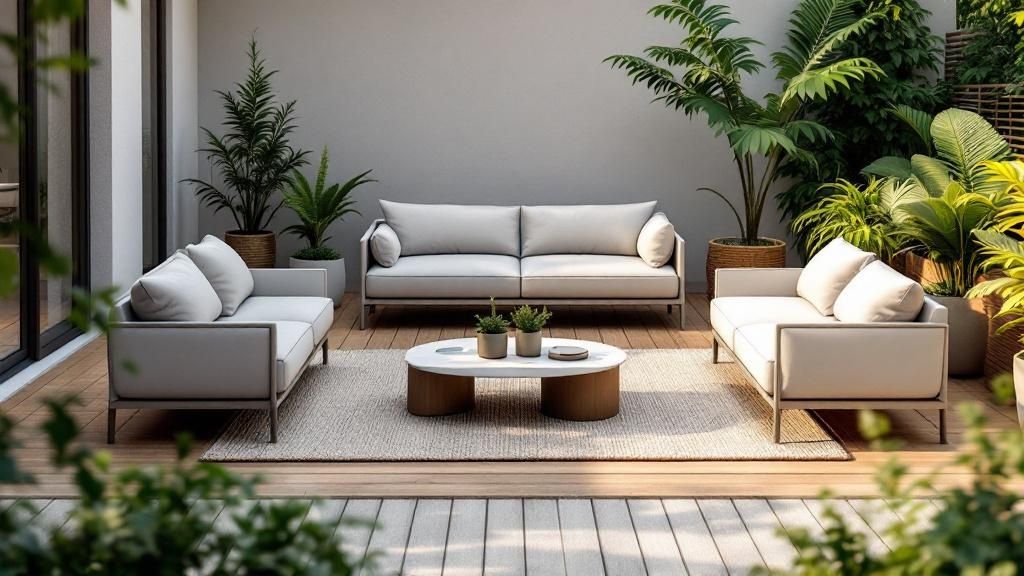
The secret to a great backyard design? Stop thinking of it as just a yard. Start thinking of it like a house with an open floor plan. You wouldn't put your dining table in the middle of your living room without some thought, right? The same idea works outside. Without walls, it's your job to create separate "rooms" for different activities.
This way of thinking turns a random bunch of furniture into a truly comfortable, organized outdoor living space.
It all starts with mapping out zones for everything you plan to do—dining, relaxing, grilling, maybe even playing. Grab a piece of paper and sketch the outline of your yard. Now, start drawing circles for each activity, thinking about how they fit together. It’s just common sense: the dining area should probably be close to the kitchen door.
Defining Your Outdoor Rooms
Creating these zones is all about smart placement and using visual hints. You can use groups of furniture, a large outdoor rug, or even a line of planters to show where one "room" ends and another begins. The goal is to guide people through the space without them even thinking about it.
A well-planned layout thinks about flow—a designer's term for making it easy to move around without bumping into things. Make sure you leave clear paths between your main zones, at least three feet wide if you can.
Think about breaking your space down into a few common zones:
- The Social Zone: This is your outdoor living room. It's usually built around a comfy sofa and is all about talking and relaxing.
- The Dining Zone: Simple enough—this is where your table and chairs go. It's for enjoying meals together.
- The Cooking Zone: This is the spot for the grill or a full outdoor kitchen. It needs good airflow and should be a safe distance from where people are sitting.
- The Quiet Zone: My personal favorite. This can be a small spot with a single chair or a simple bench, perfect for escaping with a good book.
Quick tip from the field: Think about how people actually talk to each other. Arrange your seating to make conversation easy, which usually means chairs facing each other. You don't want everyone sitting in a straight line, staring into space like they’re waiting for a bus.
Choosing a Style That Connects
Your outdoor space should feel like it belongs with your house. The best designs create a smooth flow from the inside out. Start by looking at your home’s style and indoor decorations for ideas. Is your style clean and modern, or is it more of a cozy, traditional style?
Whatever it is, carry that same feeling outdoors.
If you have a modern home, sleek metal furniture and simple, square planters will look great. If your house has a cozy, farmhouse feel, you’ll want to use weathered wood and soft, comfortable cushions. As you start gathering ideas, you can find lots of inspiration from different backyard patio ideas to see how different styles look.
While you're planning the layout, it's also a good time to think about any pests you don't want. Certain layouts, like having thick bushes right up against the house or a compost bin in the wrong spot, can attract pests. A little planning now can help you make smart design choices to deter pests and keep your new space peaceful.
In the end, your style and layout need to work together to create a welcoming space that feels like a natural part of your home.
Choosing Materials That Last
The materials you choose are the foundation of your outdoor living space. They don't just set the style; they also decide how much time you'll spend enjoying your new area versus taking care of it. This is a big decision that requires a careful balance of looks, strength, and what works for your local weather.
What works great in a dry, sunny place like Southern California might not last through constant rain or a hard New England winter. The real goal is to find materials that not only look great on day one but will also last for many years.
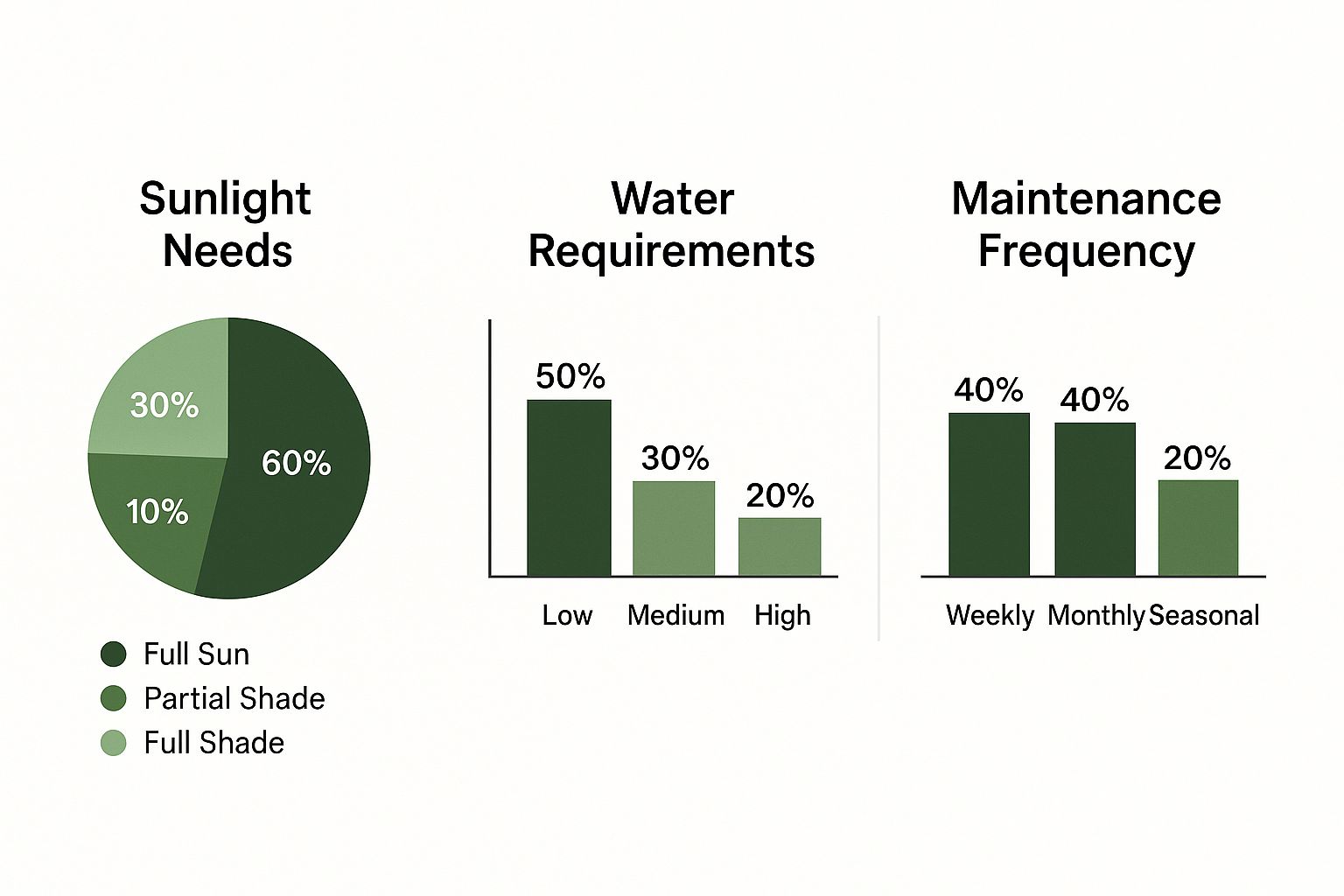
As you can see, most outdoor designs have to deal with full sun, so picking materials that can handle the heat is important. And, not surprisingly, most homeowners want options that don't need a ton of water or a lot of work to maintain.
Hardscaping Materials: Patios and Decks
Think of your patio or deck as the main stage for your outdoor life. The surface you walk on will have the biggest effect on both your budget and the overall style of the space.
- Natural Stone: There's nothing like the classic, natural look of flagstone or slate. Each piece is one-of-a-kind. Just know that this high-end look comes with a higher price and usually needs a professional to install it.
- Pavers: Concrete and brick pavers are the workhorses of the hardscaping world—they are very versatile and built to last. They come in an almost endless variety of shapes and colors, making it easy to create custom patterns. If you're thinking about this, our guide on the best patio pavers is a great place to learn more.
- Wood Decking: You can't beat the classic, warm feeling of a wood deck. Cedar and redwood are beautiful choices, but they need regular sealing or staining to protect them from rot and weather damage.
- Composite Decking: Made from a mix of wood fibers and recycled plastic, composite is a low-maintenance choice. It’s built to resist stains, fading, and pests. The downside is that it costs more at the start compared to most wood options.
As you invest in these beautiful surfaces, don't forget the small details that protect them. A good entrance mat can make a huge difference in keeping dirt outside. This helpful guide to choosing outdoor entrance mats can point you in the right direction.
To make the decision a bit easier, I've put together a quick comparison of the most common materials we work with.
Outdoor Material Comparison Guide
This table breaks down the key factors for each material, giving you a clear picture of what to expect in terms of cost, strength, and the upkeep needed.
| Material | Average Cost (per sq ft) | Durability/Lifespan | Maintenance Level |
|---|---|---|---|
| Natural Stone | $25 – $50+ | 50+ years | Low to Medium |
| Concrete Pavers | $15 – $30 | 30-50 years | Low |
| Wood Decking | $20 – $40 | 10-25 years | High |
| Composite Decking | $35 – $60+ | 25-50 years | Very Low |
In the end, looking at the numbers and pros and cons helps, but the best material is the one that fits your life.
Structures and Overhead Coverings
Once your "floor" is planned, it's time to look up. Materials for pergolas, fences, and railings also play a big role. For a clean, modern look, powder-coated aluminum is a fantastic choice. It's light, very strong, and will never rust. If you want a more traditional or rustic style, treated wood or even vinyl are popular and affordable choices.
When I'm helping a client, I often simplify the material choice with one question: What are you willing to do to take care of it? Be honest with yourself. If you hate the idea of spending weekends power washing and staining, then spending more money upfront on low-maintenance materials like composite or pavers will be worth it.
Adding Features for Comfort and Fun
With your layout planned and materials chosen, it’s time for the fun part—adding the features that truly bring your outdoor space to life. These are the things that turn a simple patio into the best spot for family parties or your own private escape.
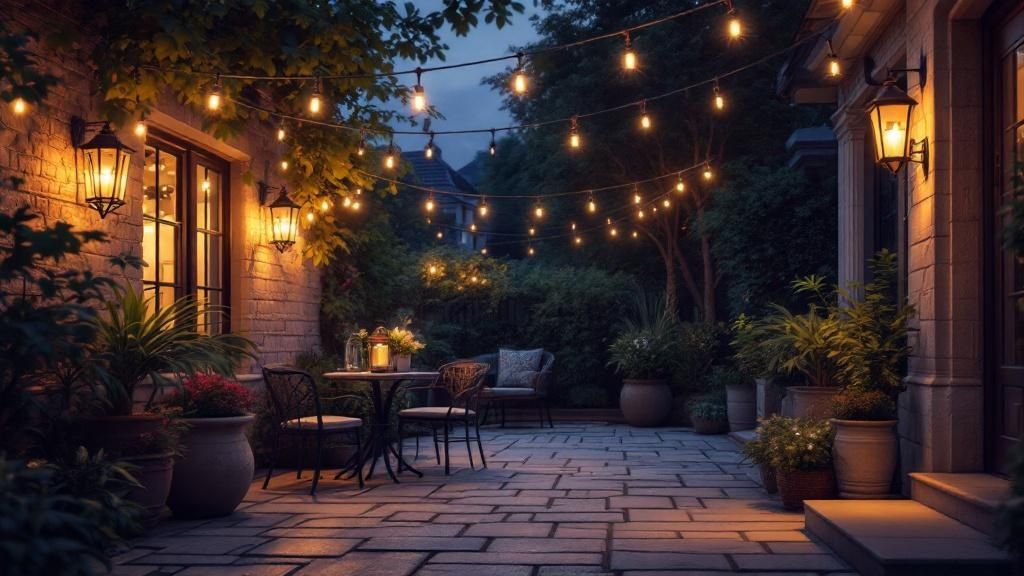
This is where the personality of your backyard really starts to show. By picking features that fit your lifestyle, you create a space that’s not just beautiful, but truly useful.
The Warmth of a Fire Pit
A fire pit or an outdoor fireplace almost instantly becomes the center of a backyard. It’s a natural gathering spot, offering warmth on cool nights and creating a relaxing focal point. Before you fall in love with the idea, let’s be practical.
- Fuel Source: Wood-burning pits give you that classic crackle and campfire smell, but they also create smoke. Gas-fueled options—powered by a hidden propane tank or a natural gas line—offer instant, smoke-free flames with the flip of a switch.
- Safety First: Always check your local city rules. Most towns have strict rules about how far a fire pit needs to be from your house or property line, usually somewhere between 10 to 25 feet.
- Placement is Key: Pay attention to the main wind direction in your yard. The last thing you want is smoke constantly blowing into your seating area or toward your house.
Creating an Outdoor Kitchen
An outdoor kitchen can be anything from a simple built-in grill station to a full setup with a sink, refrigerator, and plenty of storage. The secret is to design a space that matches how you actually cook and entertain.
If you’re a serious griller, a high-quality grill with plenty of counter space on both sides is a must-have. If you love to host parties, adding a small outdoor fridge for drinks will save you countless trips back inside.
The best outdoor kitchens I’ve built are the ones that copy the workflow of an indoor kitchen. Creating a "work triangle" between the grill, sink, and prep area makes the space easy to use, even when you're busy cooking.
And don't forget about utilities. Running gas, water, and electrical lines isn't a DIY job—it requires professionals and needs to be part of your plan from the very beginning.
The Power of Outdoor Lighting
Good lighting is one of the most important—and most forgotten—features in outdoor design. It does much more than just let you see after dark; it sets the mood, improves safety, and highlights the best parts of your yard.
You can layer different kinds of lighting for a truly professional look:
- Task Lighting: This is focused light for specific jobs, like bright lights directly over your grill or hanging above the dining table.
- Ambient Lighting: This provides soft, general light for the whole area. Think string lights over a pergola or soft lights on a house wall.
- Accent Lighting: Use this to draw attention to features you want to show off, like lighting up a beautiful tree or a stone wall.
These days, low-voltage LED systems are the standard. They use very little energy, are safe to install, and come in a huge range of styles. A well-lit space lets you enjoy your backyard for more hours, turning it into a magical place long after dark.
With the foundation laid and the big pieces in place, it’s time for my favorite part: bringing the space to life. The furniture and decorations are what truly turn a patio or deck into a real outdoor room—this is where your personality really gets to shine.
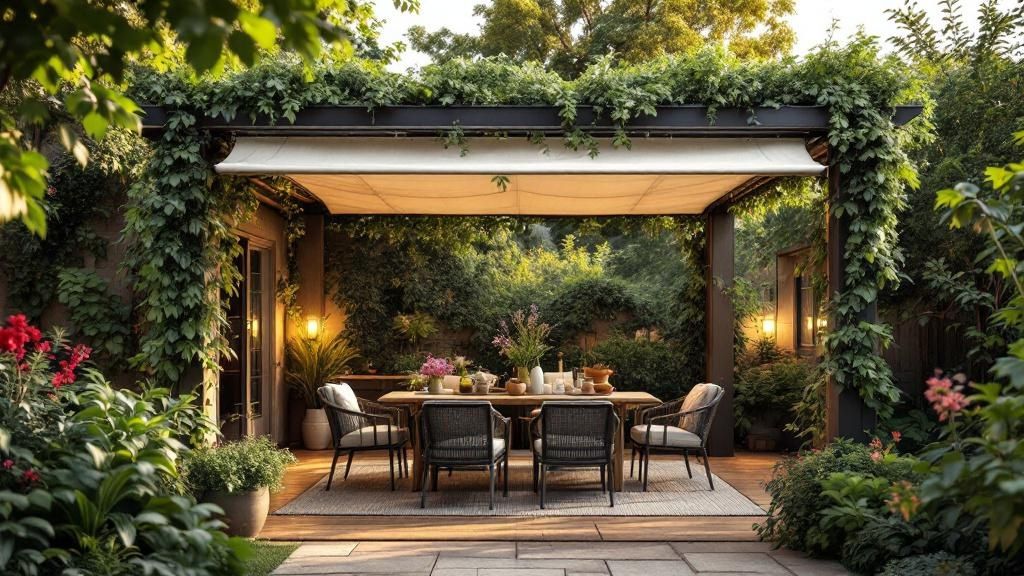
Choosing the right pieces is more than just about looks; it's about investing in an outdoor living space that will last. The demand for great outdoor furniture is huge, with the market now worth an amazing USD 53.27 billion. Homeowners want stylish, strong, and low-maintenance options that can handle the weather. You can get a sense of how fast things are moving by checking out the trends in the booming outdoor furniture market.
Selecting Comfortable and Durable Furniture
When you're shopping for outdoor furniture, weather resistance is the most important thing. You need materials built to handle whatever your local weather brings—sun, rain, snow, you name it.
- All-Weather Wicker: This isn’t your grandmother’s wicker. Modern man-made versions give you that classic, textured look without any of the rotting or fading.
- Aluminum: I love aluminum because it's practical. It’s light, completely rust-proof, and easy to move around when you have guests.
- Teak: It's a classic for a reason. This beautiful hardwood naturally resists water and pests, and it turns a beautiful silvery-gray color over time.
Besides the materials, think about how you'll actually use the space. Deep-seated sofas with plush, quick-drying cushions will get way more use than stiff, uncomfortable chairs. My advice? Arrange your seating to encourage conversation—think cozy groups, not a straight line of chairs against the wall.
Creating Shade and Protection
An outdoor space you can't use in the middle of a hot afternoon isn't much of a living space. Adding shade is a key step that, believe me, is often forgotten until the first heatwave hits.
A common mistake is treating shade as an afterthought. Planning for it from the beginning lets you build it beautifully into the design, whether it's a permanent structure or a flexible one.
Here are a few of the most popular ways to create that cool, comfortable spot:
- Market Umbrellas: The classic choice. They're flexible and can be moved and tilted as the sun moves across the sky.
- Sail Shades: For a more modern, stylish look, these fabric canopies are great. They can cover large or oddly shaped areas.
- Pergolas: A permanent structure that not only provides some shade but also gives you the perfect frame for climbing plants or romantic string lights.
Adding Personality with Decor and Lighting
This is where you really get to put your own style into the space. An outdoor rug can instantly define a seating area and add a welcome touch of softness. A few colorful pillows and a throw blanket add texture and a pop of personality, making everything feel complete.
Don’t forget the plants! Planters filled with bright flowers or green plants can soften the hard edges of patios and decks, helping your new space blend in with the rest of your yard.
And of course, there’s lighting. It has a huge impact on the final feeling of the space. You can explore all kinds of outdoor lighting ideas for your backyard, but think beyond just function. Simple touches like lanterns and string lights can add a magical glow, turning your new outdoor room into the perfect spot to relax after the sun goes down.
Common Questions on Outdoor Space Design
As you start dreaming up your perfect outdoor living space, a few questions always seem to come up. It's totally normal. Going from a cool idea to a finished project is a big process. Let's answer some of the most common questions to help you plan with confidence.
How Much Should I Budget for an Outdoor Project?
This is the big one, isn't it? And the most honest answer is: it really, really depends.
A simple update, like getting a new furniture set for a patio you already have, might cost a few thousand dollars. But if you're thinking bigger—a brand-new deck, new plants, and a fire pit—you could easily be looking at $25,000 or more.
Your vision is what sets the price. Here’s a quick look at where the money usually goes:
- Hardscaping: This is your foundation—patios, decks, and walkways. It's usually the biggest part of the budget.
- Key Features: Want an outdoor kitchen or a custom fire pit? These are great additions, but they'll add a lot to the total cost.
- Furnishings: Weather-resistant furniture and decor can range from budget-friendly finds to expensive luxury pieces.
A great way to manage costs without giving up the dream is to do the project in phases. Start with the basics, like the patio or deck, this year. You can always add the fun stuff, like that outdoor kitchen or a pergola, next year when you have the budget for it.
Do I Need a Permit to Build a Deck or Patio?
Dealing with local rules can feel like a pain, but it’s something you absolutely can't skip.
As a general rule, any structure attached to your house (like a deck) or anything built over a certain height—often just 30 inches off the ground—will need a permit. On the other hand, a simple ground-level patio made of pavers often does not need one.
But here's the catch: these rules can change from one town to the next. Before you even start digging, make your first call to your local building department. A quick chat can save you from big fines and the nightmare of having to tear out your hard work. It's a simple step that makes sure your project is safe and follows all the rules.
What Are Some Good Low-Maintenance Design Ideas?
Let's be real: everyone wants a beautiful backyard, but not everyone wants to spend their weekends working in it. The secret to a low-maintenance space is making smart choices from the very beginning.
Start with your materials. Choosing composite decking or concrete pavers means you can say goodbye to yearly staining and sealing. When it comes to plants, think about using plants that are native to your area. Native plants are already used to your climate, so they'll grow well with much less watering and care.
Another trick I love is to make your lawn smaller by making your patio or deck bigger. Less grass to mow is always a win. Finally, buy quality outdoor furniture made from materials like powder-coated aluminum or all-weather wicker. They're built to handle whatever Mother Nature throws at them without needing your constant attention.
Ready to turn your outdoor vision into a stunning reality? The team at Tamura Designs Landscape and Construction has over 30 years of experience creating award-winning outdoor living spaces. Visit us at https://tamuradesigns.com to schedule a consultation and see how we can build the backyard of your dreams.
