
Let's be honest: keeping a lush, green lawn alive in California can feel like you're constantly fighting a losing battle with the climate. But what if I told you that embracing drought tolerant landscaping in California wasn't just the responsible choice, but the secret to a stunning, low-maintenance garden that actually looks like it belongs here?
Why Your Garden Needs a Water-Wise Makeover
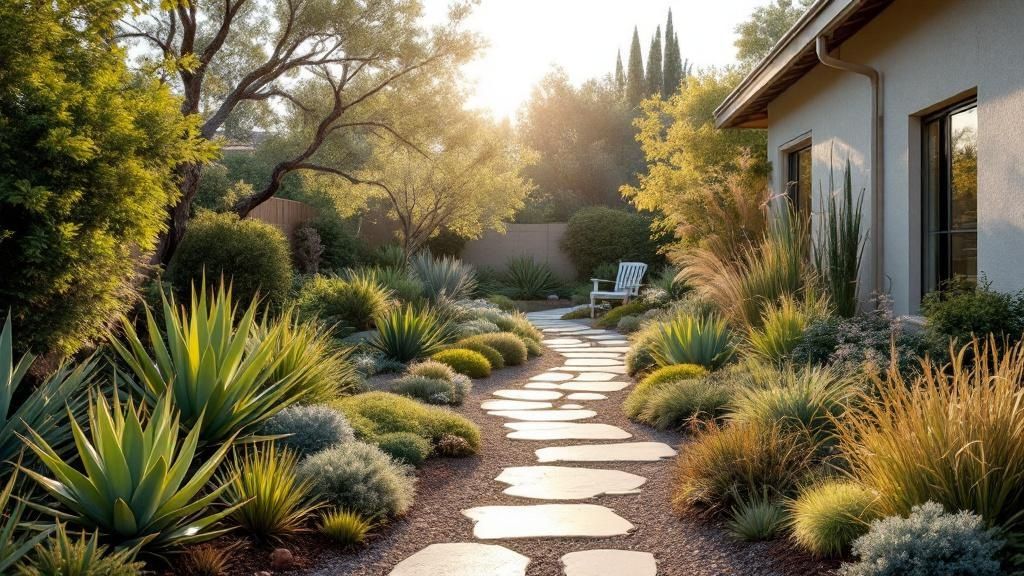
We all know the classic image of the perfect American home—it almost always includes a sprawling, perfectly manicured green lawn. For decades, this has been the gold standard for curb appeal. The problem? In California's arid climate, that ideal is not just unsustainable and expensive, it's flat-out exhausting to maintain.
This guide is designed to help you shift that perspective. I want to show you how swapping out that thirsty turf for plants that thrive in our climate can turn your yard from a constant chore into a genuine source of pride and beauty.
The Real Cost of a Green Lawn
A traditional lawn guzzles an incredible amount of water to stay green, especially during our long, dry summers. This non-stop irrigation puts a huge strain on local water supplies and, of course, your wallet. And beyond the sky-high water bills, there's the endless cycle of mowing, fertilizing, and weeding—time and energy you could be spending enjoying your outdoor space, not just working on it.
By embracing a water-wise approach, you stop fighting against California's climate and start working in harmony with it. The result is a landscape that is not only beautiful but resilient and genuinely sustainable.
This isn't just a niche trend; it's a statewide movement. Recognizing the urgent need for water conservation, California's Department of Water Resources (DWR) even launched a major turf replacement program. It's a $35 million investment to help communities trade ornamental lawns for beautiful, water-efficient landscapes—a powerful testament to how important this change is.
Benefits Beyond Water Savings
While slashing your water bill is a huge plus, the advantages of a drought-tolerant garden go much, much further.
- Lower Maintenance: Seriously, say goodbye to weekly mowing. Native and climate-adapted plants are remarkably self-sufficient once they're established, which means your weekends are yours again.
- Enhanced Biodiversity: Native plants are a lifeline for local pollinators. By planting them, you provide essential food and shelter for bees, butterflies, and hummingbirds, turning your garden into a vibrant, living ecosystem.
- Unique Beauty: Let's bust the myth that water-wise gardens are just rocks and cactus. A drought-tolerant garden can be a rich tapestry of textures and colors, from the silvery foliage of sages to the brilliant orange blooms of California poppies.
With thoughtful plant selection and smart design, you can create a space that is both visually stunning and environmentally responsible. If you're ready to go deeper, our guide on sustainable landscape design offers more expert insights into creating eco-friendly outdoor living areas.
Before you even think about buying a single plant or digging up a patch of lawn, the absolute most important first step is getting to know your own yard. Seriously. Think of yourself as a landscape detective, uncovering the unique story your property tells every single day. This deep dive is the bedrock of every decision you'll make from here on out.
A lot of gardeners know about the USDA Hardiness Zone map. It’s a decent starting point, telling you the average lowest winter temperature. But for a state as diverse as California, it’s a pretty blunt tool. There's a much better way.
Go Beyond USDA with Sunset Zones
The real secret weapon for California gardeners is the Sunset Climate Zone system. It’s far more nuanced and dialed-in for our specific regional challenges.
The Sunset system doesn’t just look at winter cold. It considers the whole picture: summer high temperatures, humidity, rainfall patterns, and the influence of the ocean. This is huge.
For instance, a garden on the coast in Monterey and another in the scorching Central Valley might share the same USDA zone. But their Sunset Zones are worlds apart. The Monterey garden has to deal with marine fog and mild summers, while the Valley yard bakes in intense, dry heat. Knowing your specific Sunset Zone is like getting a cheat sheet for picking plants that will actually thrive, not just survive.
Map Your Sun and Shade
Once you've got your climate zone figured out, grab a notepad and spend a day just watching your yard. You need to map the sun's path across your property. This doesn't have to be some complex architectural rendering—a simple sketch works perfectly.
Make a note of the spots that get absolutely blasted by the intense afternoon sun. These are your hot zones, perfect for the toughest, most sun-loving plants like certain sages or yarrow. At the same time, find the areas that get that gentle morning light or are shaded by the house or a big tree for most of the day. These cooler pockets can support plants that need a little protection from the heat.
Understanding the dance of sun and shade across your property is non-negotiable. Putting a shade-loving plant in a full-sun death trap is one of the most common—and expensive—mistakes I see. A few hours of observation can save you a ton of heartache and money.
This simple sun map becomes a critical layer of your plan. It stops you from making those classic planting mistakes and ensures every plant you choose gets the light it's looking for.
Get to Know Your Soil
The final piece of the puzzle is right under your feet: your soil. Is it heavy clay that holds water like a sponge, or sandy stuff where water seems to vanish instantly? You don't need to send it off to a lab for a basic diagnosis.
The classic "squeeze test" works surprisingly well.
- First, dig down about 6 inches and grab a handful of soil. You want it moist, but not sopping wet.
- Give it a good, firm squeeze in your fist.
- Now, open your hand and see what you’ve got.
If the soil holds a tight, dense shape, you're likely working with clay soil. If it feels gritty and just falls apart, you’ve got sandy soil. And if it holds together but crumbles when you give it a poke? You've hit the jackpot—that’s loam.
Knowing your soil type tells you how you'll need to amend it and, most importantly, how you'll water. Clay needs slow, deep soaks to prevent runoff, while sandy soil might need more frequent watering, especially when plants are getting established. This knowledge, combined with your climate zone and sun map, gives you the complete picture you need to start designing with real confidence.
Now that you have a solid handle on your property’s unique quirks and conditions, it’s time for the fun part: translating all that knowledge into a smart, beautiful, and genuinely practical garden design. This is where we move beyond just picking out individual plants and start thinking about the garden as a complete, functioning system.
The most powerful concept to embrace right now is hydrozoning. It might sound a bit technical, but the idea is simple and incredibly effective: group plants together based on how much (or how little) water they need. Honestly, this is the secret sauce to creating a truly efficient drought-tolerant landscape in California.
Think of it like creating different "garden rooms" across your yard. That sun-blasted patio area where you love to entertain? That’s a perfect spot for a 'very low water' zone, filled with striking succulents and other tough-as-nails plants that pretty much thrive on neglect. A more protected corner could become a 'low water' zone, home to flowering perennials that appreciate just a little more moisture to put on their best show. When you group plants this way, you can water each area precisely, which means not a single drop goes to waste.
Rethinking Your Lawn And Surfaces
A huge part of designing for our climate means taking a hard, honest look at your lawn. Let's face it, traditional turf lawns are incredibly thirsty and a massive drain on our state's precious water. Landscape irrigation is a huge chunk of California's urban water use, and lawns are the main culprit. For many of us, watering the yard can account for over 50% of our total annual water consumption. You can dig into California's water usage statistics to see the data for yourself.
This is where lawn alternatives can be a total game-changer. Instead of a water-guzzling lawn, you could have a stunning, walkable groundcover like Dymondia or a fragrant flowering thyme. These options give you that lush, green look but with a tiny fraction of the water and upkeep traditional grass demands.
If there’s one piece of advice I give every client, it’s to think beyond the plants. The hardscape materials you choose for paths, patios, and open areas are just as important for creating a sustainable garden.
Instead of pouring a solid concrete slab, why not explore permeable materials? Things like decomposed granite (DG), gravel, or pavers set in sand are fantastic choices. They allow that precious winter rain to soak right back into the ground, replenishing your soil instead of letting it all run off into the storm drain. It’s a simple change that makes a big difference.
Just look at how vibrant and full a low-water garden can be. This design combines beautiful California poppies and lavender with gravel mulch for a stunning, resilient landscape that’s anything but barren.
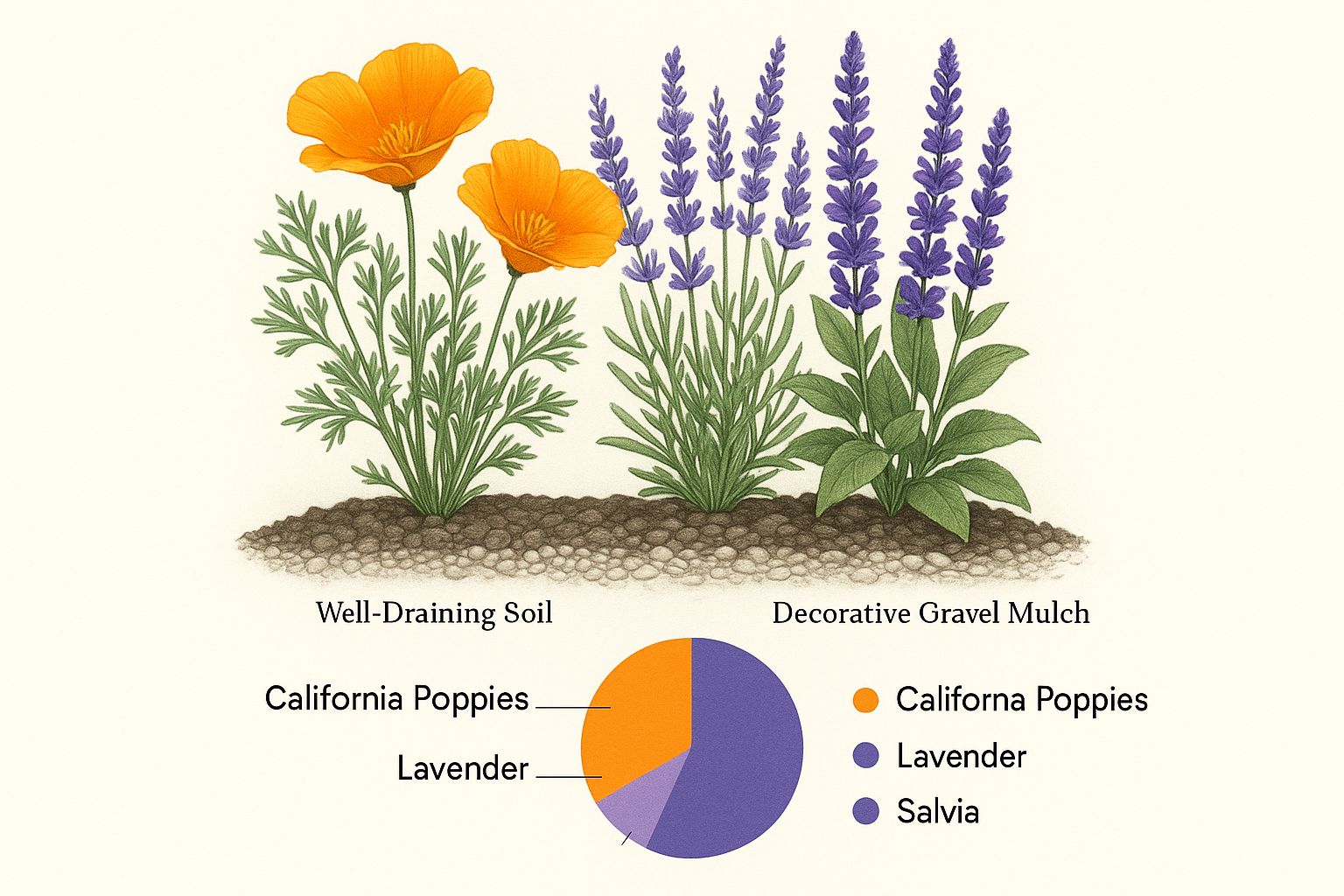
The mix of textures and colors here is a perfect example of how you can achieve a lush, lively garden that’s perfectly suited for our dry climate.
Ready to find the right fit for your yard? Here’s a quick comparison of some popular lawn alternatives that work beautifully in California.
Lawn Alternatives for California Landscapes
| Alternative | Water Needs | Maintenance Level | Best For |
|---|---|---|---|
| Dymondia (Silver Carpet) | Very Low | Low | Sunny areas, gentle foot traffic, between pavers |
| Creeping Thyme | Low | Low | Sun to part shade, light foot traffic, fragrant paths |
| Kurapia | Low to Moderate | Low | Sun to part shade, moderate foot traffic, durable play areas |
| California Native Grasses | Very Low | Very Low (mow 1-2x year) | Natural meadow look, no foot traffic |
| Decomposed Granite (DG) | None | Low | Patios, pathways, minimal-maintenance zones |
Choosing the right groundcover depends entirely on how you plan to use the space, but replacing even a portion of your lawn will lead to significant water savings and less weekend work for you.
Creating Your Garden Blueprint
It’s time to start sketching. Grab a piece of paper and a pencil—don't aim for perfection, just start getting your ideas down.
- Define Your Zones: First, think about function. Where will you relax with a book? Where will the kids play? Where will you set up the grill for entertaining? Maybe your main patio is a 'no water' zone, while a small patch of durable Kurapia serves as a 'low water' play spot.
- Map Your Hydrozones: Using the sun map you made earlier, draw rough bubbles for your 'very low,' 'low,' and 'moderate' water areas. This becomes your roadmap for planting and, later, for setting up an efficient irrigation system.
- Plan Your Pathways: Now, draw how you'll move through the garden. Connect your different "rooms" with paths made from permeable materials. This not only helps with water conservation but also adds great visual interest and structure to the design.
By thoughtfully combining hydrozoning, smart lawn alternatives, and permeable surfaces, you’re creating a blueprint for a garden that’s not only gorgeous but also intelligent and deeply resilient. It's a design that works with our California climate, not against it.
Choosing Plants That Thrive in California
This is where the fun really begins.Choosing the right plants is where your vision for a water-wise garden truly comes to life, moving from paper plans to the living, breathing beauty of your new landscape.
The secret to a stunning and sustainable California garden isn't just about picking pretty flowers; it's about selecting plants that are perfectly adapted to our unique climate. We'll walk through some fantastic California natives and gorgeous Mediterranean imports that absolutely shine through our dry summers, ensuring your garden is always bursting with color and life.
Think of your plants as having different jobs in your garden's design. You'll need foundational shrubs for structure, bursts of perennial color for seasonal interest, striking architectural succulents for drama, and hardworking groundcovers to tie it all together. Understanding these roles is the key to building a layered, dynamic, and incredibly resilient garden.
Foundational Shrubs and Structure
Every great garden needs strong "bones," and in a water-wise landscape, that role is filled by foundational shrubs. These are the workhorses that provide year-round structure, texture, and often, color. They define spaces and create the perfect backdrop for your other plants to pop.
One of the most iconic choices for a California garden has to be Manzanita (Arctostaphylos). With its sculptural, deep mahogany-colored branches, evergreen leaves, and delicate, bell-shaped winter flowers, it offers something beautiful in every season. It's a true cornerstone plant and provides essential habitat for local wildlife.
Another fantastic option is the California Lilac (Ceanothus). Honestly, there's hardly a more breathtaking sight than when it explodes with blooms in the spring, ranging from a soft sky blue to the deepest violet. It's tough, beautiful, and an absolute magnet for pollinators.
Don’t feel like you have to limit yourself strictly to natives, though. Many plants from other Mediterranean climates—think parts of Australia, South Africa, and the Mediterranean basin—feel right at home here. They're already used to our pattern of wet winters and dry summers, making them excellent, low-maintenance additions.
For instance, you can add spectacular, long-lasting color with some of the more vibrant Bougainvillea varieties. While they aren't native, these well-behaved imports thrive once established and bring a wonderful tropical punch to the garden.
Adding Pops of Perennial Color
Perennials are what bring that exciting, seasonal rhythm to your garden. These are the plants that often die back in the winter only to burst forth with renewed energy in the spring, delivering waves of color all year long.
A few of my go-to favorites include:
- Yarrow (Achillea millefolium): This native perennial has lovely flat-topped flower clusters in shades of yellow, white, and pink. It's incredibly tough and its soft texture provides a wonderful contrast against bolder plants.
- California Fuchsia (Epilobium canum): For late-summer and fall color, you can't beat the fiery red-orange tubular flowers of California Fuchsia. It’s a hummingbird’s absolute favorite and loves full sun with very little water.
- Sage (Salvia): The Salvia family is enormous, offering an incredible variety of colors, sizes, and textures. Cleveland Sage (Salvia clevelandii) is famous for its intoxicating fragrance and beautiful whorls of purple flowers.
To keep your garden looking interesting, aim for a succession of blooms. By mixing different perennials with varied bloom times, you can ensure your landscape never has a dull moment.
Architectural Accents and Groundcovers
To truly elevate your design, you need plants that offer bold shapes and textures. This is where succulents and ornamental grasses really shine. A single Agave, with its dramatic, sculptural form, can easily become a stunning focal point in any garden bed. Likewise, the soft, flowing blades of Deer Grass (Muhlenbergia rigens) add a sense of movement and grace that can soften hardscaping.
Groundcovers are that final, crucial layer. Think of them as a living mulch that suppresses weeds, conserves precious soil moisture, and keeps the ground cool.
- California Poppy (Eschscholzia californica): It’s our state flower for a reason! It brings cheerful, golden-orange blooms that can cover large areas with vibrant color.
- Creeping Thyme (Thymus serpyllum): This fragrant, walkable groundcover forms a dense mat that can handle light foot traffic, making it perfect for filling the gaps between pavers or along a pathway.
If you’re looking for even more inspiration, be sure to check out our guide on the top California native drought tolerant plants for a deeper dive into even more fantastic options.
Bringing Your Water-Wise Garden to Life
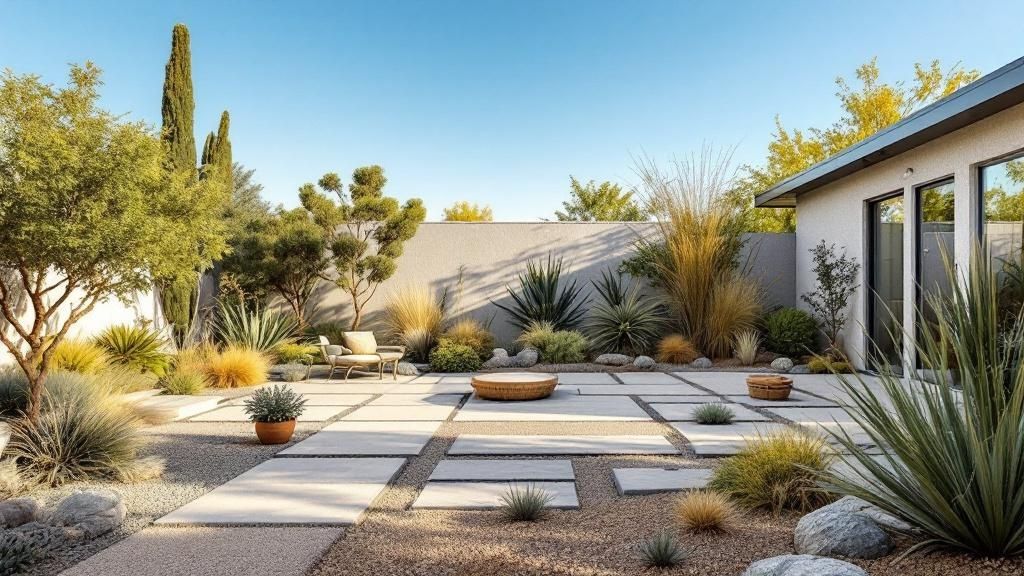
You’ve done the hard work of planning and picking out the perfect plants. Now for the fun part: bringing your vision for drought-tolerant landscaping in California to life. This is where you get to roll up your sleeves and really see your garden take shape. A proper installation is what sets the stage for years of low-maintenance beauty.
The success of your entire project truly starts from the ground up. I can't stress this enough: preparing your soil properly is the single most critical step. It’s what encourages your plants to develop deep, resilient roots that can find moisture even during our long, dry summers.
Building a Foundation in Your Soil
California soils are all over the map. If you're dealing with the heavy clay common in many areas, your main goal is to improve drainage. Clay is great at holding water, but it gets compacted easily, which can suffocate plant roots. The fix? Mix in some organic compost to break up that dense structure, letting air and water move more freely.
On the other hand, if you have sandy soil, your problem is the opposite—water runs right through it. Once again, generous amounts of compost are the solution. The organic material acts like a sponge, holding onto water and nutrients right where your plant's roots can get to them.
One common mistake I see is people going overboard when preparing soil for California natives. These plants are tough; they’re adapted to our local soils and often struggle in overly rich, amended ground. For natives, just loosening the existing soil to break up compaction is usually all you need.
Think of soil prep not as a chore, but as an investment in the long-term health of your garden. If you want to dig deeper into creating a healthy outdoor space, exploring the principles of sustainable landscape design can offer some fantastic insights.
Mastering Smart Watering and Mulching
It's time to say goodbye to those old-school sprinklers that waste more water on the sidewalk than on your plants. In a water-wise garden, your new best friends are drip irrigation and soaker hoses. These are the gold standard for watering efficiently.
- Drip Irrigation: This system is incredibly precise, delivering water slowly and directly to the base of each plant. Evaporation is minimal, and every drop goes right to the root zone where it’s needed most.
- Soaker Hoses: These are porous hoses that "weep" water along their entire length. They provide a slow, deep soak that encourages strong roots to grow downward, making plants more resilient.
After your plants are in the ground and the irrigation is hooked up, there’s one final, vital step: mulching. A thick layer of mulch is like a protective blanket for your soil.
The Power of a Good Mulch Layer
Applying a 3 to 4-inch layer of organic mulch, like shredded bark or wood chips, is one of the best things you can do for your garden. It’s a triple-threat that’s perfect for our climate.
- Conserves Water: Mulch dramatically cuts down on evaporation from the soil's surface, keeping it cooler and moist for much longer.
- Suppresses Weeds: A thick layer blocks sunlight, which stops most weed seeds from sprouting. This means less competition for your plants.
- Improves Soil: As organic mulch breaks down, it slowly adds valuable nutrients back into the ground, improving the soil's structure over time.
By focusing on these core installation techniques—great soil prep, smart watering, and a thick layer of mulch—you're not just planting a garden. You're setting it up for incredible, long-term success.
Common Questions About California Landscaping
Whenever you’re thinking about a big garden project, questions are bound to pop up. It's completely normal. Over my years of designing landscapes in California, I've found that most homeowners have the same couple of concerns when they consider shifting to a water-wise garden.
Let's clear those up right now.
Does Drought Tolerant Mean I Never Have to Water?
This is probably the biggest myth out there. While these tough plants are incredible at conserving water, they aren't "no-water" plants—especially when you first put them in the ground.
Think of that first year as their training period. You'll need to water them regularly to help them grow the deep, strong root systems they need to thrive on their own. Once they're established, their water needs drop off a cliff. Most will be perfectly happy with an occasional deep soak during the hottest, driest parts of the year, just to supplement our natural rainfall.
The real aim of drought-tolerant landscaping in California isn't to get to zero water use. It's about a massive reduction. You're swapping the constant, shallow sprinkling of a lawn for infrequent, deep watering that builds tough, self-sufficient plants.
Will My Yard Look Brown and Boring?
Not a chance! A well-designed, water-wise garden is anything but boring. It can be a vibrant, dynamic space with year-round interest. The secret is to think beyond the single shade of green offered by a traditional lawn.
So many amazing California natives and Mediterranean plants have stunning silver or grey foliage that just shimmers in the summer sun. And by planning for a sequence of blooms, you can have flowers popping at different times all year long.
- Year-Round Texture: Plants like Agave and Manzanita provide incredible architectural structure that looks fantastic in every season, even winter.
- A Parade of Blooms: By mixing plants like California Fuchsia (for fall color), Ceanothus (for a blast of spring blue), and Yarrow (for summer cheer), you ensure there's always something in flower.
- Foliage is a Feature: Don't underestimate the power of colorful leaves! Many succulents and sages offer beautiful shades of blue, purple, and silver that add depth and contrast.
With a little thoughtful design, your garden will be far more alive and visually interesting than a flat, green lawn ever could be.
Ready to transform your outdoor space into a beautiful, sustainable oasis? The team at Tamura Designs has over 30 years of experience creating award-winning landscapes in Morgan Hill and across Silicon Valley. We specialize in custom designs that reflect your lifestyle and thrive in our California climate. Learn more about our design services.
