
Picture a stunning Morgan Hill garden, bursting with color and life, that barely needs watering. This isn't a fantasy; it's the reality of drought-tolerant landscaping. It's a savvy design approach that creates a gorgeous, low-maintenance yard by working with our local climate, not against it.
Beyond Just Rocks And Cactus
When most people hear "drought-tolerant," their minds jump straight to a barren desert of rocks and cacti. Let's bust that myth right now. This is about creating a lush, beautiful, and resilient garden that's teeming with texture and color—all while being incredibly water-wise. Think of it less as deprivation and more as smart substitution.
This design philosophy swaps out thirsty, high-maintenance lawns for beautiful plants and intelligent features that are perfectly suited for Morgan Hill's dry summers. The benefits are huge, and they go way beyond just saving water. A water-wise garden means less time spent on weekend chores like mowing and fertilizing, and more time actually enjoying your yard. It’s an eco-friendly investment that boosts your home's curb appeal, slashes your water bill, and creates a welcoming habitat for local pollinators.
The Core Ideas of Water-Wise Design
The secret sauce is combining the right plants, smart techniques, and thoughtful planning. Instead of fighting nature with endless watering and chemical treatments, you're creating a balanced ecosystem that practically sustains itself. This strategy is a cornerstone of creating not just a beautiful yard, but a functional outdoor living area. To dig deeper, you can explore the principles behind sustainable landscape design in our detailed guide.
This handy graphic breaks down how all the pieces—plant types, water-saving methods, and benefits—fit together.
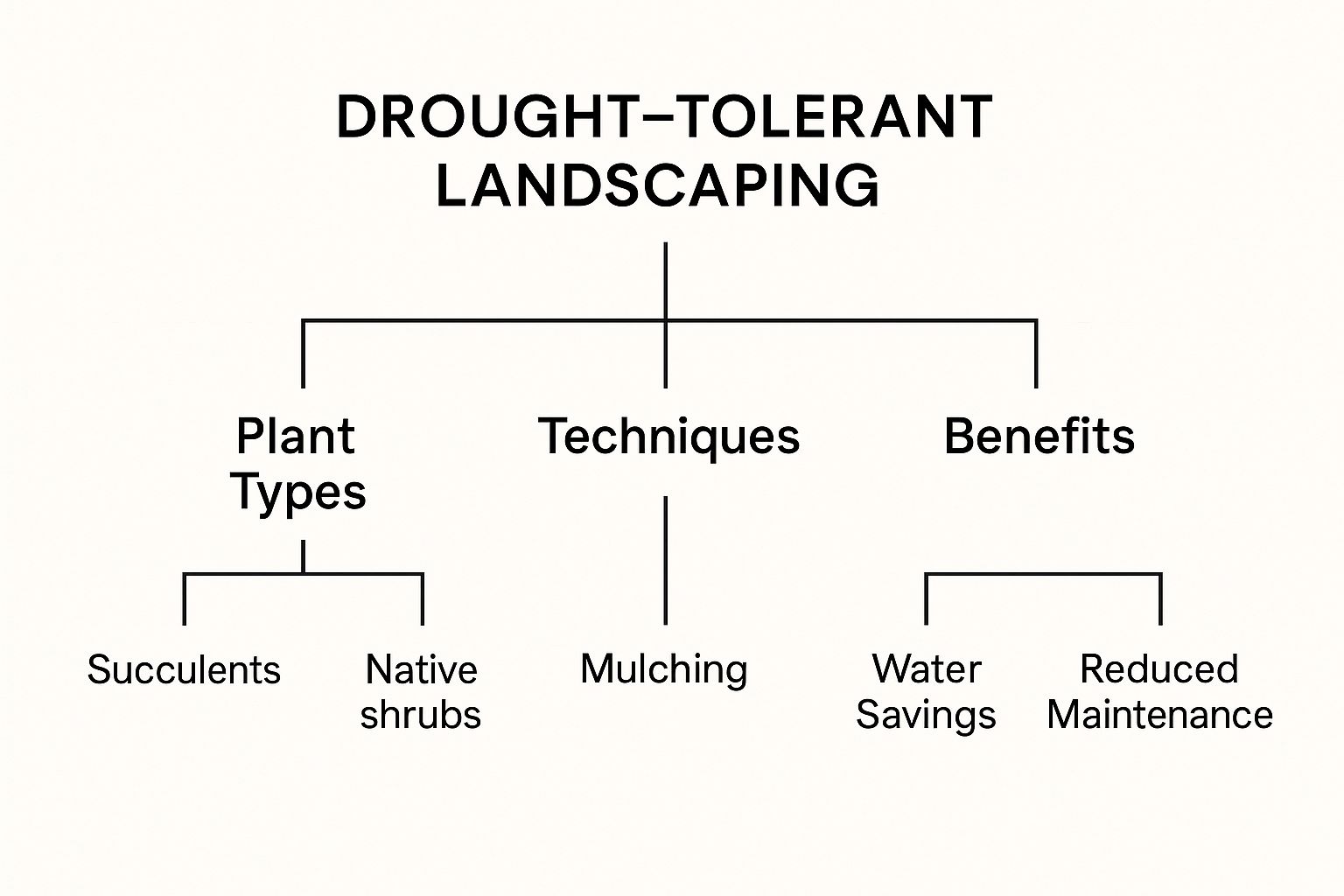
As you can see, success really comes down to choosing the right elements and using proven methods. Get these right, and you'll see significant water savings and a lot less upkeep.
To help you get started on the right foot, we've outlined the five fundamental pillars of this approach. Think of this as your roadmap. Understanding these core principles is the first step toward transforming your yard into a thriving, low-water oasis.
The 5 Core Principles of Water-Wise Landscaping
This framework summarizes the fundamental pillars for creating a successful drought-tolerant landscape, guiding you through the rest of the article.
| Principle | What It Means | Primary Benefit |
|---|---|---|
| Thoughtful Planning & Design | Analyzing your site, mapping sun and shade, and grouping plants by water needs (hydrozoning). | Maximizes water efficiency and keeps your plants healthy and happy. |
| Limiting Lawn Areas | Strategically reducing or replacing traditional turfgrass with garden beds, groundcovers, or hardscapes. | Drastically cuts your water use and eliminates most weekly maintenance. |
| Improving Your Soil | Amending soil with organic compost to improve water retention and provide essential nutrients. | Creates a healthy foundation that encourages deep, strong root growth. |
| Selecting Adapted Plants | Choosing plants native to California or from similar climates that are built to thrive in dry conditions. | Ensures you have a beautiful, resilient garden with minimal fuss. |
| Watering Efficiently | Using drip irrigation or soaker hoses and watering deeply but infrequently to encourage drought resistance. | Delivers water directly to the roots, eliminating wasteful evaporation and runoff. |
With these five principles in mind, you have a solid foundation for every decision you'll make in your new landscape. They ensure every choice contributes to a yard that is both beautiful and brilliantly efficient.
Of all the steps in creating a beautiful, drought-tolerant landscape, the one that happens before you even touch a shovel is arguably the most important. This is the planning phase, where you get to play detective in your own yard. A little bit of smart observation now will pay off massively down the road, creating the blueprint for a garden that not only survives, but truly thrives.
First things first, you need to become an expert on your property's unique microclimates. Every yard has them—those spots that bake in the sun all afternoon, the cool, shady nooks beside a fence, or the areas that get that gentle morning light. Grab a notepad, sketch a rough map of your yard, and watch how the sun moves across it during the day. This simple exercise tells you exactly where your future plants will be happiest.
The Real Secret: Hydrozoning
Once you’ve mapped out your sun and shade, you can unlock the single most powerful strategy for a water-wise garden: hydrozoning. It sounds technical, but the concept is brilliantly simple: group plants together based on their water needs.
Think about how a grocery store is organized. You wouldn’t find ice cream melting in the bread aisle. That would be a mess. Hydrozoning is the exact same idea for your garden. By creating distinct zones, you can give each area precisely the amount of water it needs, eliminating waste and keeping all your plants healthy.
What is Hydrozoning? It's like creating little neighborhoods in your garden. You'll have the "low-water neighborhood" for tough succulents and natives, a "moderate-water neighborhood" for vibrant perennials, and maybe a small, contained "high-water zone" for that one thirsty plant you just can't part with. It’s all about making every drop count.
Laying Out Your Zones
Using your yard map, it’s time to pencil in some zones. You can start with three basic categories based on what you’ve observed and what you want to plant:
- Very Low-Water Zone: This is for the toughest of the tough. Think of the hottest, sunniest parts of your yard, probably the areas furthest from a hose. This is prime real estate for California natives and stunning succulents.
- Low-to-Moderate Water Zone: Here, you can get a bit more creative with a wider variety of plants, like colorful flowering perennials and graceful ornamental grasses that just need a little more moisture. These spots often get partial shade or are closer to a water source.
- Higher-Water Zone (Optional): Have your heart set on a small vegetable patch or a few lush flowers? No problem. Just group them together in one accessible spot. This keeps the higher water use contained to a small, manageable area instead of spread throughout your yard.
Finally, before a single plant goes in the ground, we have to talk about soil. For most of us here in Morgan Hill, our soil can use a little help, and amending it with organic compost is non-negotiable. Good compost helps heavy clay soil drain properly and allows sandy soil to hold onto precious moisture, creating the perfect foundation for deep, strong roots. It's the unsung hero of a successful drought-tolerant landscape.
Choosing Plants That Thrive in Morgan Hill
Now for the fun part—this is where your vision truly starts to feel real. A great plan is one thing, but selecting the right plants is what transforms that plan into a living, breathing garden. The trick is to pick plants that are already comfortable in Morgan Hill's unique climate, which guarantees you get all the beauty without the constant need for water.
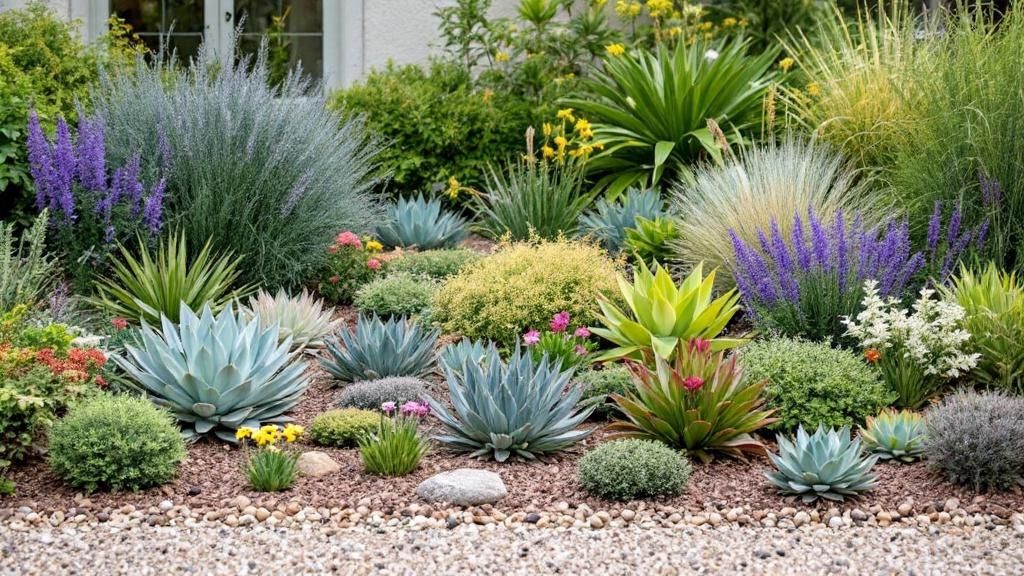
The undisputed champions of any local water-wise garden are California native plants. Just think of them as the home team. They've spent thousands of years adapting to our specific cycle of wet winters and bone-dry summers. Once they're settled in, their water needs drop dramatically, and they get right to work providing food and shelter for local pollinators like bees and butterflies.
Building Your Plant Palette
A truly stunning drought-tolerant landscape is all about variety. When you start mixing different forms, textures, and colors, you create a garden that has something interesting to offer all year long. Don't just fall in love with one type of plant; instead, think about the specific job each plant will do in your garden's overall look.
This isn't just a niche idea anymore. As water becomes a bigger concern, more and more homeowners are embracing xeriscaping, which is built on a diverse mix of tough, drought-ready plants. It’s a win-win: you conserve water and boost local biodiversity by using natives that our wildlife depends on.
Here are a few examples, broken down by their function in the garden:
- Groundcovers: These low-riders are fantastic for choking out weeds and keeping the soil cool. Plants like Creeping Thyme or the native Ceanothus 'Yankee Point' spread out to form a gorgeous green carpet that asks for very little in return.
- Flowering Shrubs: For those pops of color that make a garden sing, you can't go wrong with shrubs like Lavender, Russian Sage, or the iconic California Lilac (Ceanothus). They deliver long-lasting blooms and are a magnet for helpful insects.
- Architectural Plants: To give your garden some structure and a bit of drama, look for plants with bold, interesting shapes. Agaves, with their classic rosette forms, and native grasses like Deer Grass (Muhlenbergia rigens) add texture and movement that lasts all year.
It’s a common myth that a water-wise garden has to look sparse or empty. Nothing could be further from the truth. By layering different types of plants—from ground-hugging succulents to mid-height perennials and taller shrubs—you can build a garden that feels lush, full, and completely in tune with its surroundings.
Top Plant Choices for Our Climate
While your options are practically endless, some plants are just consistent all-stars here in Morgan Hill. Diving into the top California native drought tolerant plants is a brilliant place to start. It gives you a head start with species that are already wired for our local soil and rainfall.
To help you get a picture of what’s possible, here’s a quick look at a few reliable and beautiful plants that are perfectly happy in a Morgan Hill garden:
| Plant Type | Example | Key Feature |
|---|---|---|
| Perennial | Yarrow (Achillea) | Feathery foliage and long-lasting, colorful flower clusters. |
| Succulent | Echeveria | Stunning rosette shapes in a huge range of colors. |
| Ornamental Grass | Blue Fescue | Forms neat, tidy clumps of fine, silvery-blue foliage. |
| Shrub | Manzanita (Arctostaphylos) | Known for its beautiful reddish bark and delicate bell-shaped flowers. |
By thoughtfully mixing and matching these and other water-wise plants, you’re not just planting a garden—you’re making a statement. You’re proving that a drought-tolerant landscape doesn’t mean giving up on beauty. It means creating a smart, resilient, and stunning garden that works with Morgan Hill’s natural character, not against it.
Implementing Smart Irrigation Solutions
You can have the most beautiful, drought-tolerant plants in the world, but if you're not watering them correctly, you're fighting a losing battle. The real secret weapon in a successful, water-wise Morgan Hill garden isn't just what you plant—it's how you deliver the water. It’s time to say goodbye to those old, inefficient spray-head sprinklers that lose so much precious water to evaporation and runoff before it ever even reaches your plants.
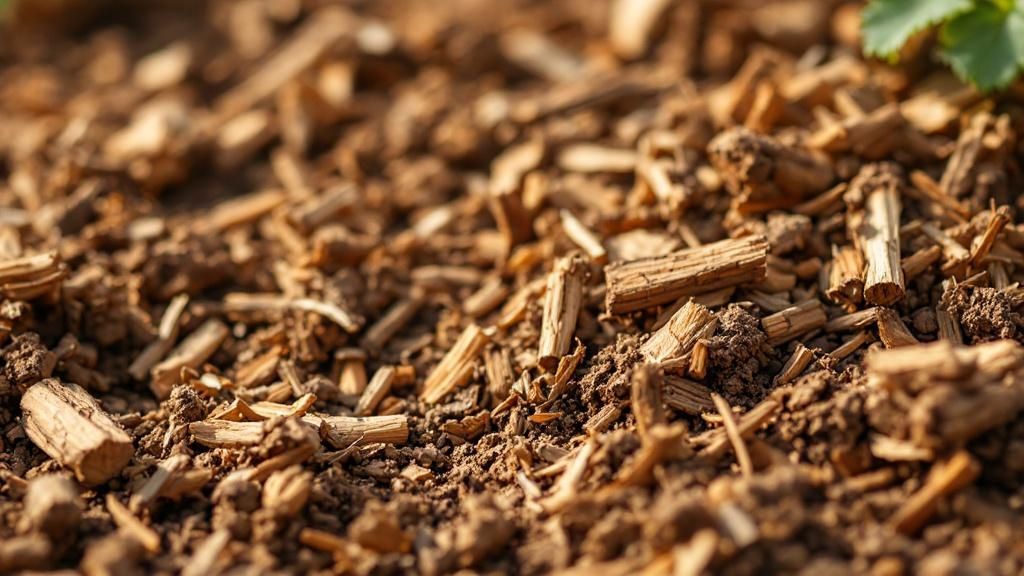
The modern approach is all about precision. Instead of blasting water into the air, smart irrigation systems deliver it right to the root zone, exactly where plants need it. This one simple shift can make a massive difference, both for your garden's health and your monthly water bill.
Rethink Your Watering Technology
The undisputed star of the smart irrigation show is the drip irrigation system. Think of it as a personalized delivery service for your plants. A network of thin tubes with tiny emitters is laid out across your garden beds, releasing slow, steady drips of water directly at the base of each plant. This method is incredibly efficient, slashing water waste from wind and evaporation by up to 90%.
Another fantastic option, especially for rows of plants or garden beds, is a soaker hose. These porous hoses literally "weep" water along their entire length, giving the soil a gentle, deep soaking. They're wonderfully simple to install and are a great entry point for anyone new to efficient watering. When you're setting up these systems, getting the right components, like specialized Irrigation Solenoid Valves, is critical for controlling the flow and ensuring your garden gets exactly what it needs.
This move toward smarter watering is part of a much bigger trend. The global landscaping services market is set to boom, projected to reach a staggering $657.5 billion by 2035. A huge driver of this growth is the demand for sustainable practices like xeriscaping, which can cut landscape water use by 50% and is becoming the new normal in places like ours.
Here's the bottom line for Morgan Hill homeowners: investing in smart irrigation pays for itself. You'll see immediate savings on your water bill while building a more resilient, self-sufficient garden that can breeze through our dry summers.
Proven Watering Strategies
Beyond the tech, how you water matters just as much. The two most important strategies are surprisingly simple but incredibly powerful:
- Water Deeply, Not Daily: Give your plants a good, long soak less often. This simple practice encourages their roots to grow deeper into the soil in search of moisture. The result? A stronger, more drought-resistant root system that can find water even when the surface is bone dry.
- Water in the Early Morning: The best time to water is in the cool, still air of the early morning. This ensures that the water actually gets to your plants' roots instead of being whisked away by the sun and wind through evaporation.
And don't forget one of the oldest, simplest irrigation tools around—the rain barrel. By connecting a barrel to your downspout, you can capture and store gallons of free, high-quality water every time it rains. It's an easy and effective way to make your landscape even more self-sufficient and eco-friendly.
Using Hardscaping and Mulch to Save Water
A truly stunning drought tolerant landscaping design is all about balance. It’s not just about choosing the right plants; it’s about artfully blending them with functional, stylish hardscape elements. Think of these non-living materials—like stone paths or a beautiful patio—as more than just decoration. They are your secret weapons for cutting down on water use while adding incredible utility and curb appeal to your Morgan Hill home.
Hardscaping really forms the foundation of your outdoor living area. Features like permeable pavers, winding gravel paths, and decomposed granite patios create wonderful, usable spaces for dining, entertaining, or just relaxing. The best part? They do all this while dramatically shrinking the size of your thirsty lawn.
This practical shift towards water-wise materials is catching on. Recent trend reports show that homeowner requests for low-water landscapes have jumped by 30%. We're also seeing a 6% increase in the use of hardscaping materials like gravel, while traditional concrete is on the decline. You can explore more of these climate-adaptive design trends in Yardzen's 2025 report.
The Two Faces of Mulch
Now, beyond patios and walkways, mulch is the unsung hero of any water-wise garden. It’s essentially a protective blanket for your soil, keeping it cool, moist, and free from pesky weeds. There are two main types to consider, and each brings something unique to the table.
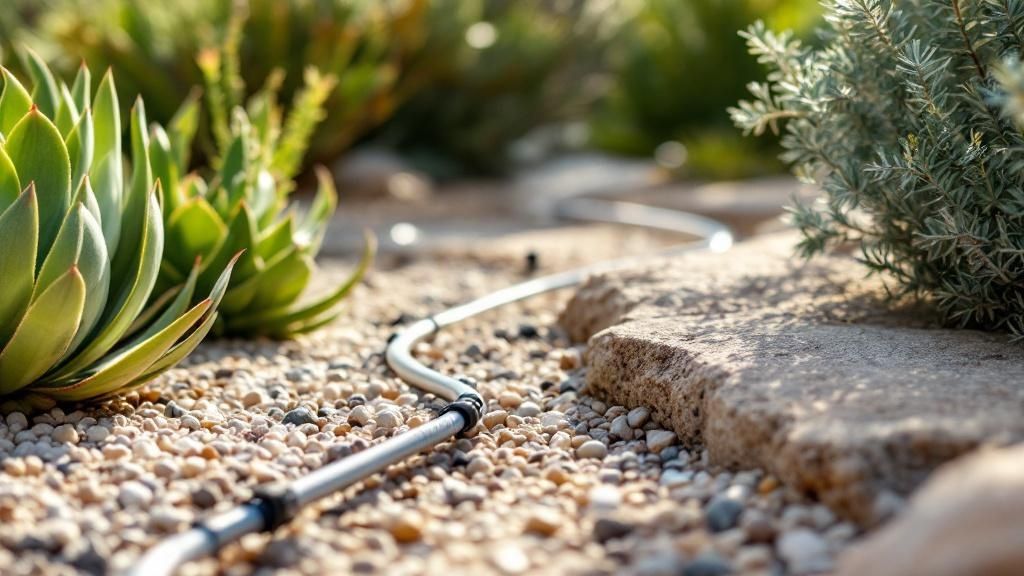
- Organic Mulch: This category includes things like bark chips, shredded redwood, and rich compost. As these materials slowly break down, they infuse the soil with valuable organic matter. This improves its structure and its ability to hold onto precious water over time.
- Inorganic Mulch: Think pebbles, decorative rock, and gravel. These materials are incredibly durable, offer a clean and modern aesthetic, and are absolute champions at suppressing weeds and locking in soil moisture.
A simple two-to-three-inch layer of mulch can slash water evaporation from the soil surface by as much as 70%. It’s a game-changer. This single step helps keep plant roots cooler in our hot summers and warmer in the winter, creating a stable, happy environment where they can thrive with far less irrigation.
The secret to a polished, low-maintenance yard is a smart combination of plants, hardscaping, and the right kind of mulch. By strategically replacing unused patches of lawn with attractive, permeable surfaces and protecting your soil with a generous layer of mulch, you build a resilient landscape that saves water and looks fantastic year-round.
To see exactly how these elements come together in a cohesive plan, check out our in-depth guide on drought-tolerant landscape design.
Of course. Here is the rewritten section, adopting the voice and style of an experienced human expert.
Your Questions on Water-Wise Landscaping Answered
Making the switch to a water-wise garden is a big step, and it’s only natural to have a few questions. I hear them all the time from homeowners—concerns about the cost, the look, and what it really takes to keep it up. Let's walk through some of the most common ones so you can move forward with confidence.
Think of this as more than just a way to save water. It's about creating a smarter, more resilient outdoor space that actually works with our Morgan Hill climate, not against it. Once we clear up these key questions, you'll see just how achievable a beautiful, low-maintenance, and eco-friendly yard really is.
Does Drought-Tolerant Mean Just Rocks and Cacti?
Absolutely not. This is probably the biggest myth out there when it comes to drought tolerant landscaping. A well-designed, water-wise garden isn't barren at all—it can be a lush, vibrant space bursting with color, texture, and life all year round. The whole point is to be smart about water, not to get rid of beauty.
Picture drifts of deep purple Lavender next to silvery-blue Fescue grass, or the cheerful, long-lasting blooms of Yarrow. You can fill your yard with graceful ornamental grasses that sway in the breeze, striking succulents in a whole rainbow of colors, and native California shrubs that just explode with seasonal blooms.
The focus is on choosing gorgeous plants that are already adapted to our dry climate. When you do that, you end up with a garden that feels full and thriving, provides a crucial habitat for local bees and butterflies, and proves that "low-water" and "lush" can absolutely go hand-in-hand.
Is It Expensive to Install This Type of Landscape?
The initial investment for a water-wise garden can be pretty similar to a traditional one, but the real story here is what happens down the road. Once everything is established, the financial benefits become incredibly clear. You can expect a major drop in your water bill—often by 50% or more—which adds up to some serious savings, year after year.
But that's not all. These gardens also slash your ongoing maintenance costs. You’ll save a lot of money on:
- Fertilizers and Pesticides: Plants that are native and adapted to our area are naturally tough and don't need constant chemical help.
- Mowing and Equipment: By shrinking or getting rid of your lawn, you cut out the gas, upkeep, and time you’d spend on a mower.
- Re-seeding and Repairs: Say goodbye to that annual headache of patching and re-seeding a struggling, thirsty lawn.
To help with the upfront cost, many local water districts, including those that serve Morgan Hill, offer some great rebates for turf removal and for installing high-efficiency irrigation. These programs make the switch even more of a no-brainer.
How Much Maintenance Does a Water-Wise Garden Need?
Low maintenance is one of the biggest perks of this style of landscaping. After the first year or so, once your plants have put down their deep roots, the upkeep becomes minimal. A water-wise garden genuinely gives you your weekends back.
Your main jobs will be simple and infrequent. A bit of light pruning once or twice a year will keep your plants looking sharp and growing healthy. You’ll want to top up your mulch every year or two to keep weeds down and lock that precious moisture in the soil. Other than that, a little bit of light weeding is usually all it takes. When you compare that to the constant weekly cycle of mowing, watering, and feeding a traditional lawn, a drought tolerant landscaping approach is a true breath of fresh air.
Can I Convert My Existing Yard in Stages?
Yes, and that’s a fantastic way to do it. You don't have to rip out your entire yard all at once. Starting small makes the project feel much more manageable and lets you spread out the cost and effort over time.
Here are a few ways to tackle it step-by-step:
- Start with a Single Area: Pick one spot, like that parking strip out front or a sunny corner in the back, to be your pilot project.
- Sheet Mulch the Turf: Instead of digging, you can remove the grass in that area by sheet mulching. It’s a great technique that smothers the turf while enriching the soil underneath.
- Amend and Plant: Once the grass is gone, mix some good compost into the soil and get your first batch of water-wise plants in the ground.
- Expand Each Season: The next year, you can make that garden bed a little bigger, add more plants, and remove a bit more lawn.
Another really smart approach is to start with your hardscaping. Putting in a new patio or a decomposed granite path immediately shrinks your lawn's footprint and its water needs. From there, you can build out the surrounding planting areas whenever you're ready. This gradual transformation turns the whole process into an enjoyable and rewarding journey.
Ready to transform your outdoor space into a beautiful, water-wise oasis? The award-winning team at Tamura Designs has over 30 years of experience creating stunning, sustainable landscapes in Morgan Hill and beyond. Visit us online at https://tamuradesigns.com to schedule your consultation and start building the garden of your dreams.
