
As the sun sets over the Santa Cruz Mountains, casting a warm glow on Morgan Hill, homeowners are increasingly looking to extend their living spaces outdoors. A well-designed fire pit is more than just a source of warmth; it becomes the heart of the backyard, a natural gathering place for family and friends to share stories and create lasting memories under the stars. The right design not only enhances your property's ambiance but also its value, reflecting the unique charm of our region.
Choosing the perfect one involves navigating local considerations like our Mediterranean climate, fire safety, and a growing desire for sustainable living. When planning your fire pit, it's wise to review foundational safety practices; you can find useful campfire safety tips for beginners that apply well to backyard settings.
This guide explores a range of creative and practical fire pit design ideas tailored for Morgan Hill lifestyles. We'll delve into everything from sunken conversation pits that offer cozy intimacy to sleek, modern gas features that provide effortless elegance. Our focus will be on quality materials, functionality, and eco-friendly options that resonate with community values. Whether you envision a rustic stone centerpiece or a sophisticated linear flame, these ideas will help you create an outdoor sanctuary that is both beautiful and built to last.
1. Sunken Conversation Fire Pit
Among the most dramatic and inviting fire pit design ideas, the sunken conversation pit creates an intimate, resort-like atmosphere right in your backyard. This design involves excavating an area and building a recessed circular or square seating lounge below ground level. The walls of the pit double as retaining walls and built-in benches, often crafted from elegant materials like natural stone or smooth, architectural concrete.
The central fire element becomes the undeniable focal point, with the lowered seating arrangement fostering a unique sense of enclosure and private community. This style, popularized by mid-century modern landscape architects and showcased in high-end settings like Restoration Hardware showrooms, is perfect for Morgan Hill homeowners looking to create a distinct destination for entertainment. It effectively separates the fire feature from other backyard zones, offering an exclusive and immersive experience.
Key Considerations for a Sunken Pit
Successful implementation requires careful planning to address structural and environmental factors. Proper engineering is not just a suggestion; it's a necessity.
- Drainage is Crucial: A robust drainage system is non-negotiable to prevent the pit from turning into a pond. This typically involves a gravel base, weep holes in the walls, and potentially a dedicated French drain or sump pump connected to your property's drainage system.
- Structural Integrity: The retaining walls must be engineered to withstand the lateral pressure from the surrounding soil. Consulting with a landscape architect or structural engineer in the Morgan Hill area is essential to ensure a safe and durable installation.
- Safe Access and Egress: Incorporate well-designed steps into the structure. Adding integrated, low-voltage lighting to the steps is a critical safety feature for evening use, preventing trips and falls.
The infographic below outlines the typical investment in time and budget for this high-impact project.
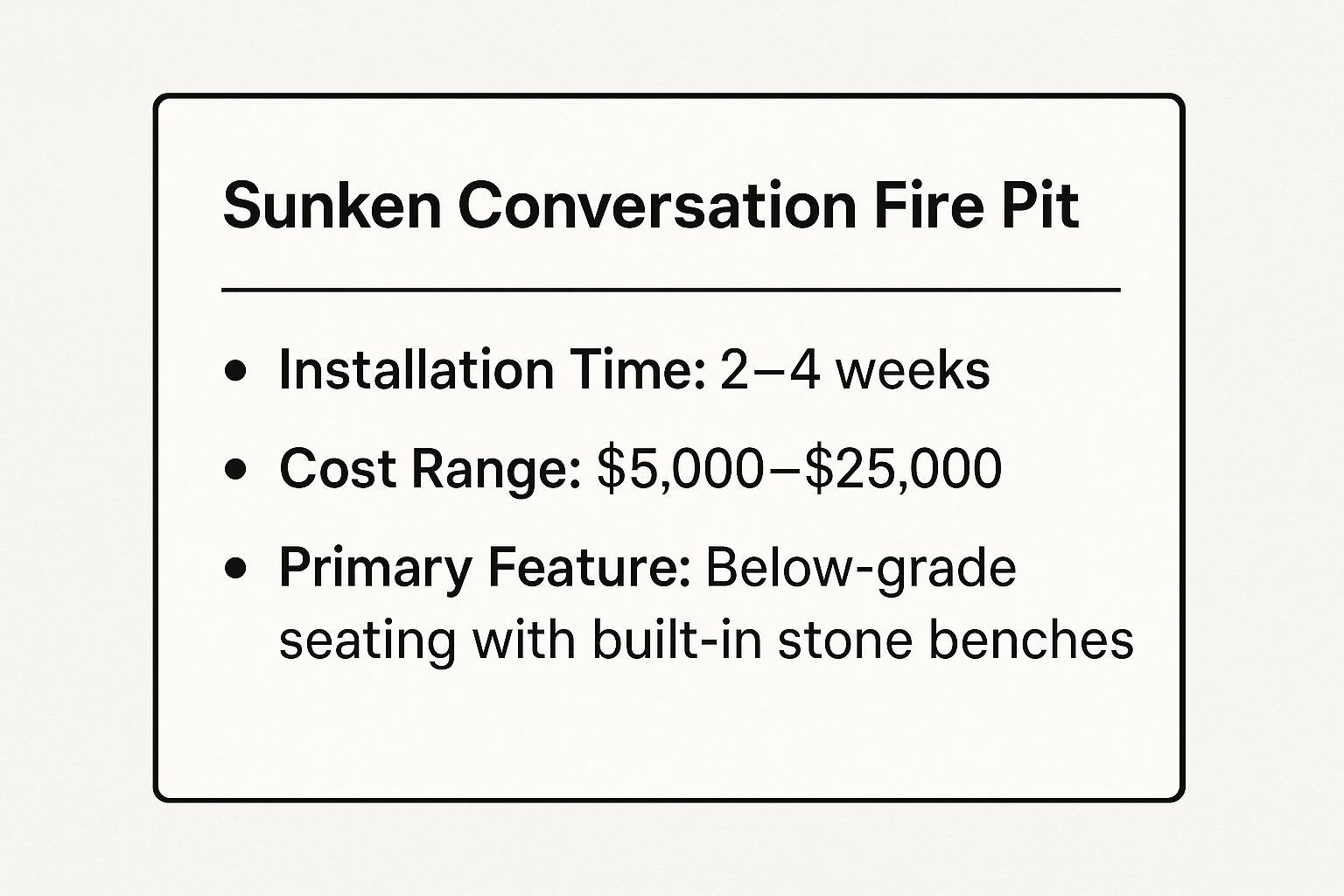
As the data shows, a sunken fire pit is a significant undertaking, but its primary feature of below-grade, integrated seating delivers an unparalleled architectural statement.
2. Modern Steel Bowl Fire Pit
For those who favor clean lines and a minimalist aesthetic, the modern steel bowl is one of the most versatile and stylish fire pit design ideas available. These standalone features, often crafted from robust materials like weathering steel (Cor-Ten), stainless steel, or powder-coated steel, bring an industrial-chic or sculptural element to any outdoor space. Their self-contained design makes them highly adaptable, fitting equally well on a sleek concrete patio or nestled within a lush garden landscape.
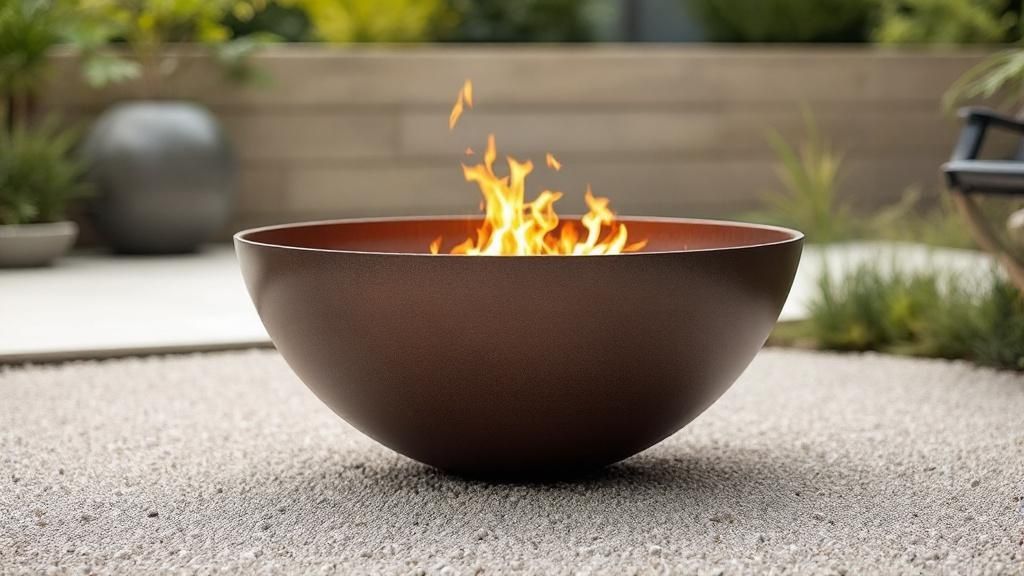
Popularized by manufacturers like Fire Pit Art and Ohio Flame, these bowls range from simple, elegant forms to intricate, sculptural works of art. This design choice is perfect for Morgan Hill homeowners who appreciate contemporary design and desire a low-maintenance, high-impact fire feature. The metal construction heats up and radiates warmth efficiently, creating a cozy gathering spot without the permanence of a built-in structure.
Key Considerations for a Steel Bowl Pit
While seemingly simple, selecting and placing a steel bowl fire pit requires attention to material performance and safety to ensure longevity and enjoyment.
- Material Choice Matters: Opt for Cor-Ten steel if you desire a natural, rust-colored patina that self-heals and protects the underlying steel from further corrosion. For a perpetually sleek look, choose high-grade stainless or powder-coated steel.
- Proper Placement: Always position the steel bowl on a non-combustible, heat-resistant surface like a concrete pad, decomposed granite, or gravel. Never place it directly on a wooden deck or dry grass to prevent fire hazards.
- Ventilation and Safety: Ensure the bowl has built-in ventilation or weep holes to allow for air circulation and water drainage. In residential areas or on windy days, using a spark screen is a critical safety measure to contain embers.
3. Stone and Brick Masonry Fire Pit
For a timeless and enduring addition to any landscape, a custom stone or brick masonry fire pit offers unmatched durability and aesthetic flexibility. This classic approach involves constructing the fire pit from materials like natural stone, traditional brick, or versatile concrete blocks. The design can be circular, square, or a custom shape, often complemented by integrated seating walls that extend the feature's functionality and tie it into the surrounding hardscape.
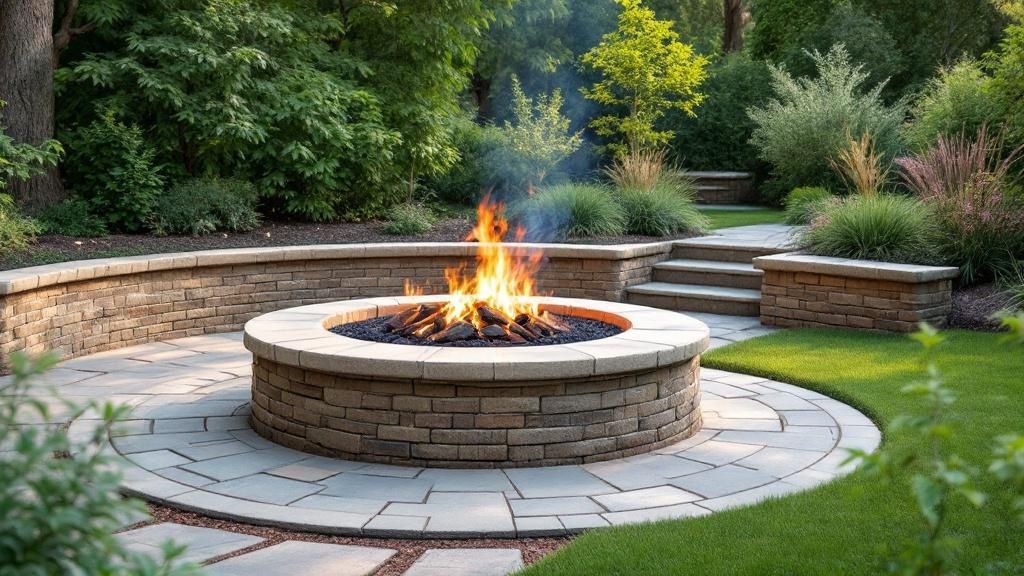
This style evokes the rustic charm of National Park Service campgrounds and the stately elegance of historic estates. For Morgan Hill homeowners, it provides an opportunity to create a robust, permanent structure that feels like a natural extension of the property. It is the ideal choice when looking for fire pit design ideas that prioritize longevity and seamless integration with existing features like a flagstone patio or stone retaining walls. You can find more details on how this integration works by reading about installing a flagstone patio on tamuradesigns.com.
Key Considerations for Masonry Construction
A successful masonry fire pit relies on proper materials and construction techniques to ensure it withstands intense heat and outdoor elements for years.
- Heat-Resistant Materials: Use refractory mortar and fire bricks for the inner pit lining. Standard mortar and common bricks can crack or spall under high temperatures, creating a safety hazard.
- Solid Foundation and Drainage: A compacted gravel base is essential to provide a stable foundation and allow for proper drainage, preventing water from pooling and causing damage during freeze-thaw cycles.
- Protect the Structure: Incorporating a steel fire ring insert can significantly extend the life of the masonry by shielding it from direct contact with the most intense heat.
- Local Sourcing: Choosing local stone for the exterior veneer can reduce project costs and ensure the fire pit's appearance harmonizes beautifully with the Morgan Hill region's natural geology.
4. Portable Gas Fire Pit Table
For those who prioritize flexibility and multifunctionality, the portable gas fire pit table is one of the most practical fire pit design ideas available. This clever design combines the ambiance of a fire feature with the utility of an outdoor table, creating a central hub for both warmth and refreshments. Powered by a discreetly hidden propane tank or a natural gas line, these units feature a central burner filled with lava rock or fire glass, surrounded by a durable tabletop surface.
This style offers the ultimate convenience, allowing Morgan Hill homeowners to enjoy a clean-burning fire with the push of a button, without the smoke or ash associated with wood fires. Its portability means you can reposition it on your patio or deck to suit different occasions, from intimate dinners to larger social gatherings. This dual-purpose functionality, popularized by brands like the Outdoor GreatRoom Company and seen frequently in high-end restaurant patios, makes it an efficient use of valuable outdoor space.
Key Considerations for a Gas Fire Pit Table
To maximize enjoyment and ensure safety, a few key factors should guide your selection and use of a gas fire pit table.
- Safety and Ventilation: While convenient, gas fire pits require proper airflow. Never use one in a fully enclosed space. If placing it under a covered patio, ensure there is adequate overhead clearance and cross-ventilation as specified by the manufacturer.
- Flame and Wind Management: For a consistent and beautiful flame, especially in breezy Morgan Hill evenings, look for models that include or can be fitted with a tempered glass wind guard. This not only protects the flame but also adds a layer of safety.
- Material and Maintenance: Choose materials like cast aluminum, concrete composite, or marine-grade polymer that can withstand the elements. Regular maintenance involves checking gas connections for leaks, cleaning the burners, and covering the unit when not in use to extend its lifespan.
5. Rustic Barrel Fire Pit
For those who appreciate rustic charm, sustainability, and a hands-on approach, the rustic barrel fire pit is an excellent design idea. This concept centers on upcycling a metal barrel, drum, or a similar large cylindrical container into a functional and stylish fire feature. The result is a self-contained, portable, and incredibly affordable fire pit that brings a touch of industrial or farmhouse character to any outdoor space.
This DIY-friendly option has been popularized by makers and rural communities, celebrated for its simplicity and resourcefulness. It’s a perfect fit for Morgan Hill properties with a more casual, ranch, or cabin-like aesthetic. By repurposing materials that might otherwise be discarded, this design not only saves money but also champions an eco-conscious mindset, turning a humble industrial object into a cozy gathering spot.
Key Considerations for a Barrel Pit
Creating a safe and effective barrel fire pit requires more than just finding an old drum. A few key modifications are necessary to ensure proper function and longevity.
- Barrel Preparation: Safety is paramount. Ensure the barrel is made of sturdy steel and was never used to store flammable or toxic chemicals. It must be thoroughly cleaned and scrubbed before its first use.
- Ventilation is Key: A fire needs oxygen to burn efficiently and with less smoke. Drill or cut several holes around the lower portion of the barrel to allow for adequate airflow to the base of the fire.
- Elevation and Stability: Place the barrel on sturdy, fire-proof legs or a stand made of stone or brick. This elevates it off the ground, protecting your patio or lawn from heat damage and improving airflow from underneath.
- Finishing for Durability: To prevent rust and maintain its appearance, consider coating the exterior of the barrel with a high-temperature, rust-resistant paint designed specifically for grills and fire pits.
6. Linear Gas Fire Feature
For a sleek, contemporary aesthetic, the linear gas fire feature is one of the most sophisticated fire pit design ideas. This style trades the traditional campfire circle for an elongated, rectangular flame that provides a clean, architectural element to any outdoor space. Fueled by natural gas or propane, these installations deliver instant ambiance with the flip of a switch, eliminating the smoke and ash associated with wood-burning pits.
The modern, ribbon-like flame creates a dramatic visual line, making it a perfect choice for defining spaces or complementing the clean geometry of contemporary homes. Often integrated into low retaining walls, custom-built tables, or as a standalone centerpiece, the linear design is frequently seen in luxury hotels and high-end restaurant patios. It offers Morgan Hill homeowners a chic, low-maintenance way to bring warmth and style to their custom outdoor living spaces.
Key Considerations for a Linear Feature
A successful installation prioritizes safety, performance, and visual appeal, requiring professional expertise for the gas connections and construction.
- Professional Installation is a Must: Always work with a certified gas technician to run gas lines and connect the fire pit burner. This ensures the installation is up to code, safe, and functions correctly.
- Protect Against Wind: Linear flames can be susceptible to wind, which can cause them to blow out or burn unevenly. Incorporating a glass wind guard is a popular solution that protects the flame and adds a layer of safety.
- Enhance with Media: Elevate the look of your fire feature by choosing a fire media that complements your design. Options range from reflective fire glass in various colors to modern ceramic logs or river stones that hide the burner.
- Ensure Proper Clearances: Follow manufacturer specifications for clearance from combustible materials. This is critical for preventing fire hazards, especially when integrating the feature into a deck or near a covered patio structure.
7. Beach and Lakeside Sand Fire Pit
For those aiming to capture a relaxed, vacation-like spirit, the beach and lakeside sand fire pit offers a simple yet profoundly effective design. This approach involves creating a temporary or semi-permanent fire pit directly in a sandy environment, perfect for waterfront properties or homes aiming for a coastal feel. The design is elegantly straightforward: dig a depression into the sand and line its perimeter with large, non-porous rocks to safely contain the flames.
This style evokes the casual charm of a bonfire on the shore, making it an excellent choice for informal gatherings and creating lasting memories. It’s a popular feature at coastal resorts and private lakefront properties, offering an organic connection to the natural landscape. For Morgan Hill homeowners with a more expansive or rustic-themed yard, creating a dedicated sandy area can replicate this serene, waterside experience. If your outdoor sanctuary leans towards this relaxed, coastal aesthetic, explore current coastal home design trends for broader inspiration that can complement your fire pit.
Key Considerations for a Sand Pit
While seemingly simple, a safe and enjoyable sand fire pit requires attention to environmental and safety details. Pre-planning is essential for a worry-free experience.
- Check Local Regulations: Always verify local fire restrictions, burn-day announcements, and permit requirements before you begin. Waterfront areas often have specific rules.
- Wind and Location: Dig the pit deep enough to shield the embers from wind. Pay close attention to wind direction to ensure smoke and sparks are blown away from guests, structures, and flammable vegetation.
- Safety First: Use large, dry, non-porous rocks like granite or marble to line the pit; wet or porous stones like sandstone can trap steam and potentially explode when heated. Always keep a bucket of water or sand nearby to fully extinguish the fire.
8. Elevated Platform Fire Pit
For a modern and architectural statement, the elevated platform fire pit raises the fire element, transforming it into a sculptural centerpiece. This design involves placing the fire bowl or linear burner on a pedestal or raised platform structure, lifting it above the surrounding patio or deck. This approach creates a more formal, contemporary aesthetic often seen in high-end resorts and sophisticated corporate outdoor lounges.
The elevation not only enhances the visual impact but also serves practical functions. It improves heat distribution to those standing or seated nearby and makes the fire a more prominent feature from various sightlines across the yard. For Morgan Hill homeowners with multi-level outdoor spaces, this design can create a stunning visual connection between different elevations. It’s a powerful choice for adding vertical interest and a touch of formality to the landscape.
Key Considerations for an Elevated Platform
A stable and heat-resistant base is the foundation of a successful elevated fire pit design. Meticulous planning ensures both safety and longevity.
- Platform Integrity and Heat Resistance: The platform must be engineered to support the substantial weight of the fire pit and any surrounding materials, like stone or concrete. Critically, the surface and structure must be built from non-combustible, heat-resistant materials to prevent damage or fire risk.
- Safety and Accessibility: If the platform is significantly raised, consider adding subtle safety railings or a wider hearth-like edge to prevent accidental contact. The design should also allow for easy access to fuel lines, valves, and components for routine maintenance.
- Integrated Features: Leverage the platform’s structure for added functionality. Consider building in discreet storage for fire pit tools or a cover. Integrating low-voltage accent lighting beneath the platform can create a dramatic floating effect at night.
9. Multi-Level Tiered Fire Feature
For the most dramatic and luxurious of all fire pit design ideas, the multi-level tiered fire feature transforms a simple backyard element into a stunning work of landscape art. This design goes beyond a single basin, incorporating multiple levels of flame, often cascading or interwoven with other elements like water features or elaborate stonework. Imagine a tiered structure where fire emanates from different heights, or a design that combines the elemental forces of fire and water, with flames appearing to dance on the surface of a pond.
Inspired by high-end resorts in destinations like Scottsdale or pages from Architectural Digest, these installations are the ultimate statement pieces. They serve as a powerful focal point, anchoring a large-scale landscape design and creating an unforgettable ambiance. For Morgan Hill homeowners with expansive properties and a vision for a truly unique entertainment space, a multi-level feature offers unparalleled visual impact and sophistication.
Key Considerations for a Tiered Feature
This architectural endeavor is complex and requires a fusion of artistic design and precision engineering. It is not a DIY project and demands professional execution from the outset.
- Integrated Utility Planning: These systems are intricate. You must plan for multiple dedicated gas lines, complex plumbing for water elements, and low-voltage electrical wiring for pumps and lighting. This requires a master plan before any ground is broken.
- Scale and Proportion: A multi-level feature needs significant space to be appreciated. The design must be proportional to the surrounding landscape and the home's architecture to avoid looking out of place. An experienced landscape architect is crucial for getting this balance right.
- Engineering and Access: The structure requires a robust foundation and expert engineering, especially if it incorporates heavy stone and water. Design for maintenance from the beginning, ensuring easy access to pumps, gas valves, and electrical components.
10. Chiminea and Adobe Style Fire Pit
For a touch of rustic charm and Southwestern authenticity, the Chiminea and Adobe style fire pit offers a unique and culturally rich aesthetic. Inspired by traditional kiva fireplaces and Mexican chimineas, this design features an enclosed fire bowl with a vertical chimney or stack. The structure is typically built from earth-toned materials like adobe, clay, or a stucco finish over a block core, reflecting the architectural heritage of Santa Fe and the greater Southwest.
This design is more than just a visual statement; its form serves a practical function. The chimney directs smoke up and away from guests, making for a more comfortable and enjoyable gathering space. This style is an excellent choice for Morgan Hill homeowners looking to infuse their patios with a warm, artisanal feel, reminiscent of a hacienda courtyard or a resort in New Mexico. It stands as a sculptural element, adding character and a distinct focal point even when not lit.
Key Considerations for a Chiminea or Adobe Pit
Building a durable and effective adobe-style fire feature requires an understanding of traditional materials and techniques, adapted for modern safety standards.
- Heat-Resistant Core: The interior firebox must be constructed from high-fire clay or refractory mortar and fire bricks to withstand high temperatures safely. The exterior adobe or stucco is a facade and should not be directly exposed to flames.
- Solid Foundation: A proper concrete footing is essential to support the weight of the structure and prevent shifting or cracking over time. This is especially important in areas with clay soil, like parts of Morgan Hill.
- Weather Protection: Natural adobe and stucco surfaces are porous and require regular sealing to protect against rain and moisture damage. In climates with freezing temperatures, it's crucial to ensure the structure is completely dry before a frost to prevent cracking.
- Decorative Accents: Enhance the Southwestern look by incorporating decorative elements like colorful Talavera tiles, a built-in wood storage niche (banco), or a handcrafted iron fire screen.
Fire Pit Design Comparison Matrix
| Fire Pit Type | Implementation Complexity 🔄 | Resource Requirements ⚡ | Expected Outcomes 📊 | Ideal Use Cases 💡 | Key Advantages ⭐ |
|---|---|---|---|---|---|
| Sunken Conversation Fire Pit | High (2-4 weeks, excavation needed) | High ($5,000-$25,000, stone/concrete) | Intimate, cozy atmosphere; great heat retention | Large groups; permanent, unique installations | Exceptional intimacy; wind protection; visually striking |
| Modern Steel Bowl Fire Pit | Low (1-3 days) | Moderate ($800-$5,000, steel materials) | Efficient heat; minimalist aesthetic | Modern architecture; portable or permanent | Low maintenance; quick install; moveable |
| Stone and Brick Masonry Fire Pit | Medium-High (1-2 weeks, skilled labor) | High ($2,000-$10,000, masonry materials) | Durable, customizable, strong heat retention | Classic landscape integration; permanent setups | Long-lasting; customizable; adds property value |
| Portable Gas Fire Pit Table | Very Low (2-4 hours) | Low-Moderate ($600-$4,000, gas fueled) | Clean, instant flames; multifunctional | Outdoor dining; casual entertaining | Smoke-free; instant control; dual functionality |
| Rustic Barrel Fire Pit | Low (4-8 hours, DIY friendly) | Very Low ($50-$300, repurposed materials) | Casual, rustic fire feature | DIY projects; temporary or budget setups | Cost-effective; recyclable; portable |
| Linear Gas Fire Feature | Medium-High (3-7 days, professional) | High ($3,000-$15,000, gas system) | Striking modern look; precise flame control | Contemporary architecture; large gatherings | Modern aesthetic; clean flames; scalable |
| Beach and Lakeside Sand Fire Pit | Very Low (1-2 hours, temporary) | Minimal ($0-$100, natural materials) | Natural integration; low-cost, temporary | Beach, lakeside, camping settings | Easy setup; minimal impact; natural materials |
| Elevated Platform Fire Pit | Medium (3-7 days) | Moderate ($1,500-$8,000, structural materials) | Improved airflow and visibility; formal look | Formal gardens; resorts; patios | Better airflow; easy maintenance; architectural |
| Multi-Level Tiered Fire Feature | Very High (4-12 weeks, complex) | Very High ($15,000-$100,000+) | Dramatic centerpiece; multiple functions | Luxury resorts; large-scale entertaining | Stunning visuals; customizable; high value |
| Chiminea and Adobe Style Fire Pit | Medium (1-3 weeks) | Moderate ($800-$5,000, clay/adobe) | Cultural aesthetic; good smoke management | Southwestern-style homes; cultural design | Distinctive style; excellent smoke control; affordable |
Creating Your Perfect Outdoor Sanctuary with Expert Craftsmanship
As we've explored, the journey to finding the perfect fire pit is about more than just adding a source of heat to your backyard; it's about defining the very heart of your outdoor living space. The diverse array of fire pit design ideas we've covered, from the intimate, communal feel of a sunken conversation pit to the sleek, contemporary allure of a linear gas feature, demonstrates that there is a perfect solution for every Morgan Hill home. Your final choice will ultimately shape how you connect with friends, relax with family, and enjoy the beautiful California evenings for years to come.
From Vision to Reality: Key Takeaways
The most successful fire pit projects are born from a thoughtful alignment of personal style, functional needs, and the unique characteristics of your property. Remember these core principles as you move forward:
- Function First: Before settling on a style, define the primary purpose of your fire pit. Will it be the centerpiece for large social gatherings, a cozy spot for quiet reflection, or a versatile fire table for dining and entertaining? Your answer will guide decisions on size, seating, and fuel type.
- Material Matters: The materials you choose, whether rustic Corten steel, classic brick masonry, or smooth, modern concrete, do more than create a look. They also dictate durability, maintenance requirements, and how well the feature integrates into your existing landscape.
- Harmonize with Your Home: Your fire pit shouldn't feel like an afterthought. It should be a seamless extension of your home's architectural style and your backyard's overall aesthetic. To truly complete your outdoor sanctuary, consider integrating your fire pit with broader terrace design ideas that enhance your entire backyard's aesthetic and functionality.
The Value of Professional Craftsmanship
Transforming your vision into a safe, beautiful, and lasting reality requires more than just a good idea. It demands technical expertise in site preparation, material selection, proper ventilation, and adherence to local Morgan Hill codes and safety standards. Partnering with seasoned professionals ensures that every detail, from the foundation to the final finish, is executed flawlessly. This protects your investment and guarantees your fire pit will be a source of joy, not a cause for concern.
An expertly crafted fire pit becomes more than just a landscape feature; it becomes a destination. It’s where memories are made, stories are shared, and the stresses of the day melt away in the flickering glow of the flames. By carefully considering these fire pit design ideas and enlisting professional guidance, you are not just upgrading your backyard, you are investing in a lifestyle of warmth, connection, and sophisticated outdoor living.
Ready to bring your vision to life with unparalleled craftsmanship? For over 30 years, Tamura Designs Landscape and Construction has specialized in creating custom, award-winning outdoor spaces for homeowners in Morgan Hill. Let our team of expert stonemasons and landscape designers build the stunning fire pit sanctuary you've been dreaming of.
