
Beyond the Backyard: Redefining Outdoor Living in 2025
The concept of a backyard patio has evolved far beyond a simple concrete slab and a few chairs. Today, a well-executed modern patio design serves as a true extension of your home-a versatile space for relaxation, entertainment, and a seamless connection with nature. Homeowners are increasingly seeking sophisticated outdoor environments that reflect their personal style and enhance their lifestyle. This shift is about creating functional, beautiful, and enduring 'outdoor rooms.'
Whether you envision a serene Zen retreat for quiet mornings or a fully-equipped outdoor kitchen for hosting memorable gatherings, the possibilities are limitless. A thoughtful approach to modern patio design can completely redefine how you experience your property, adding significant value and enjoyment.
In this guide, we explore 10 distinct concepts that are shaping outdoor living. Each idea is packed with actionable tips, specific material suggestions, and real-world inspiration to help you envision and create your own perfect outdoor oasis. This is where professional craftsmanship, like that of the award-winning team at Tamura Designs, transforms a vision into a breathtaking, functional reality, blending innovative design with impeccable construction.
1. Minimalist Zen Garden Patio
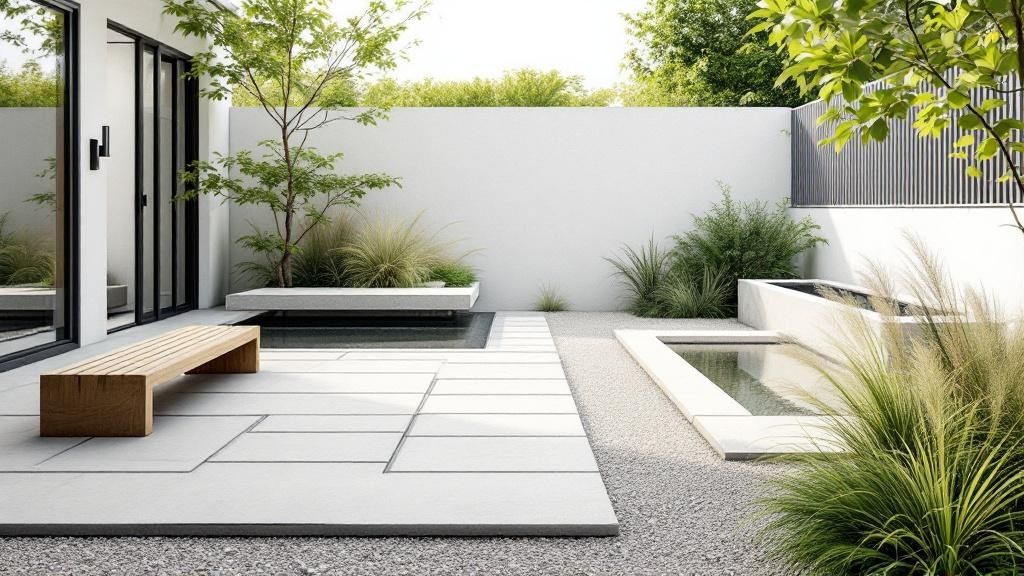
A Minimalist Zen Garden Patio transforms an outdoor area into a tranquil retreat by embracing the "less is more" principle. This style of modern patio design is heavily influenced by Japanese aesthetics, prioritizing natural materials, clean geometric lines, and intentional negative space. The goal is to eliminate clutter and create a serene environment that encourages relaxation, drawing inspiration from the work of minimalist architects like John Pawson and Japanese landscape designers.
Key Elements & Implementation
Achieving this look involves a curated material palette. Use large-format slate or concrete pavers, complemented by the warmth of cedar or bamboo for accents and decking. Plantings are sculptural and deliberate; opt for a single Japanese maple, ornamental grasses, or bamboo for their strong architectural forms rather than busy flower beds. A simple water feature or a raked gravel area completes the serene atmosphere.
Styling for Serenity
- Focus on a statement piece like a monolithic stone bench or a sculptural fire bowl instead of multiple small decor items.
- Use textural variety within a neutral palette. Combine smooth concrete, rough-hewn stone, and soft outdoor textiles to add depth and interest.
- Incorporate built-in seating from concrete or wood to maintain clean lines and reduce the need for freestanding furniture.
Planning a modern home involves thinking about both today's style and tomorrow's needs. For those considering all aspects of home preparedness, reviewing a guide on the Best Fire Blanket For Home Safety Top Picks Complete Buying Guide 2025 can be a valuable step.
2. Indoor-Outdoor Living Integration
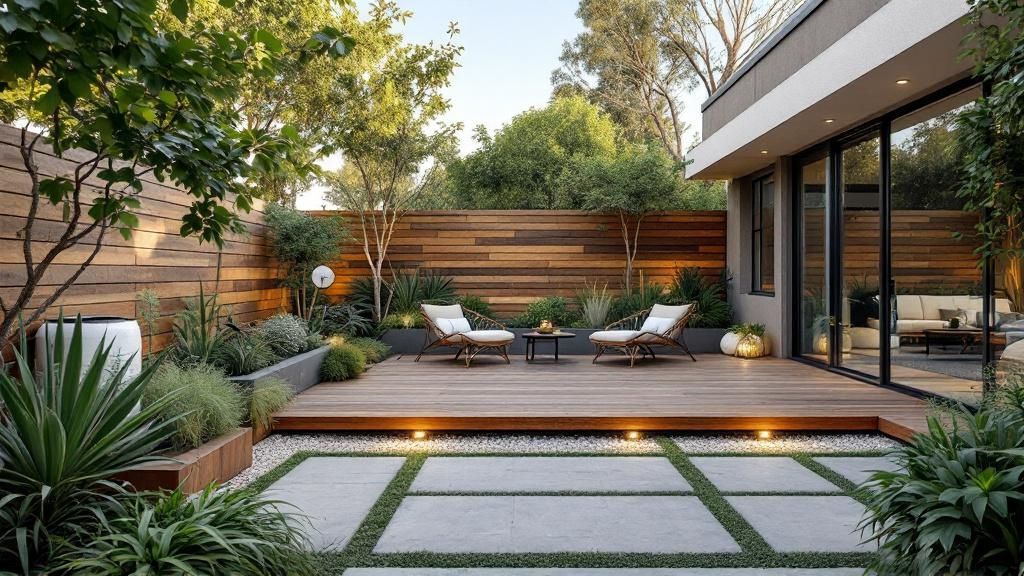
Indoor-Outdoor Living Integration is a design philosophy that erases the perceived barrier between a home's interior and its exterior spaces. This approach to modern patio design creates a single, expansive living area by using cohesive elements across both zones. Pioneered by mid-century modern architects like Richard Neutra, this concept is now a staple in luxury homes and resorts, transforming a patio from a separate entity into a true extension of the living room.
Key Elements & Implementation
The key to this design is material consistency. Select flooring, such as large-format porcelain tile or polished concrete, that can run seamlessly from your great room out onto the patio. This visual continuity is best achieved with expansive glass walls, like floor-to-ceiling sliding panels or bi-fold doors, which can be fully retracted to physically merge the two spaces. Ensure the outdoor area has proper drainage planned from the start to handle the elements without compromising the interior.
Styling for a Seamless Flow
- Unify with a consistent palette. Choose outdoor furniture and textiles in colors and materials that echo your interior decor. This creates a single, harmonious design language that makes the patio feel like a natural continuation of the room.
- Select high-performance furnishings. Opt for sophisticated outdoor furniture with deep seating and durable, fade-resistant fabrics that rival the comfort and style of your indoor pieces, ensuring the space is just as inviting.
- Incorporate effortless transitions. Install motorized glass doors or retractable insect screens to make opening up the space a simple, one-touch operation, encouraging daily use and removing any friction between inside and out.
3. Sustainable Green Patio Design
A Sustainable Green Patio Design is an environmentally conscious approach that merges ecological responsibility with contemporary aesthetics. This style of modern patio design prioritizes a low environmental impact by using renewable materials, water-wise landscaping, and features that support local ecosystems. The goal is to create a functional and beautiful outdoor space that is in harmony with its natural surroundings, drawing inspiration from the work of landscape architects like Piet Oudolf and sustainable design firms like SCAPE.
Key Elements & Implementation
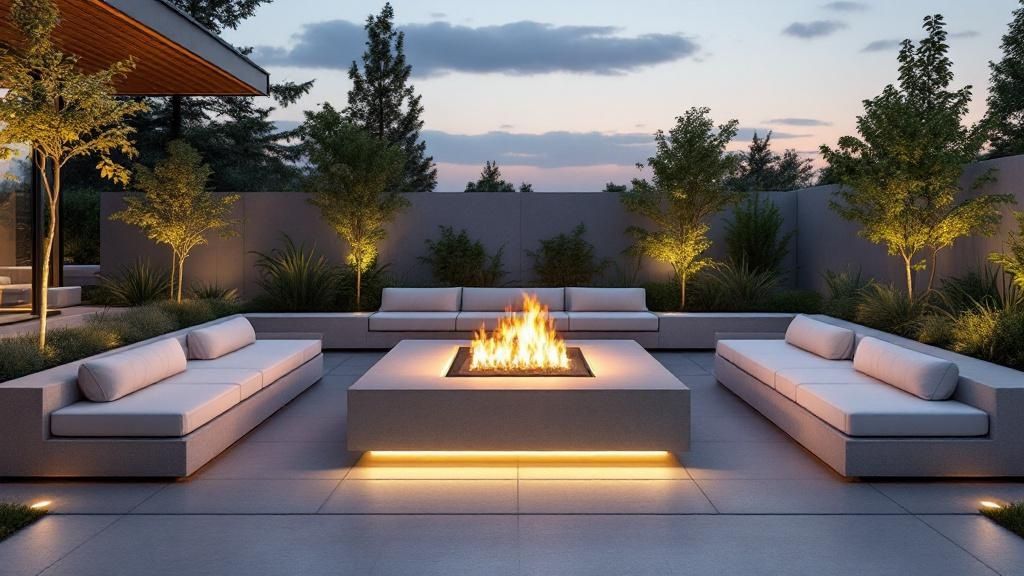
Achieving this eco-friendly design involves thoughtful material and plant selection. Opt for permeable pavers made from recycled materials or reclaimed wood for decking to reduce waste and manage stormwater runoff. Landscaping should feature native, drought-tolerant plants that thrive in the local climate with minimal irrigation. Integrating systems like rainwater harvesting barrels or drip irrigation significantly conserves water. The design often incorporates green roofs on pergolas or living walls to improve air quality and provide natural insulation.
Styling for Sustainability
- Choose materials with a purpose, such as light-colored pavers that reflect heat and reduce the urban heat island effect, keeping the patio cooler.
- Prioritize native plantings sourced from local nurseries. These plants are adapted to the regional climate, require less maintenance, and provide a habitat for local pollinators.
- Incorporate an edible garden with herbs, fruits, or vegetables in raised beds or containers. This adds a productive, "garden-to-table" element to your modern patio.
- Install smart water systems, such as drip irrigation on a timer, to deliver water directly to plant roots and minimize evaporation and waste.
4. Multi-Level Deck and Patio System
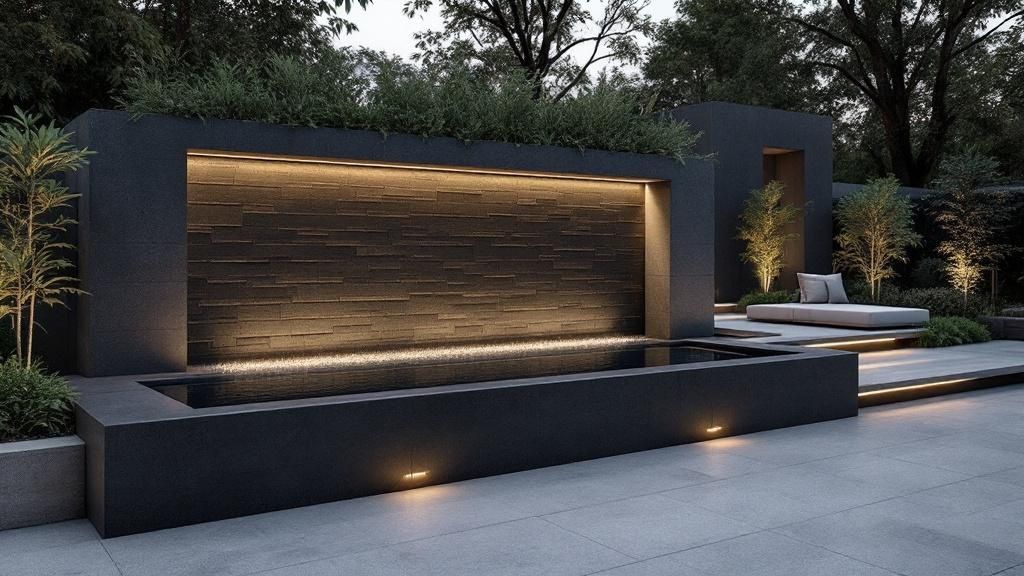
A Multi-Level Deck and Patio System is a sophisticated approach in modern patio design that utilizes changes in elevation to define separate functional zones. This design is perfect for properties with sloped terrain, such as hillside homes in California, or for adding dynamic architectural interest to a flat yard. It creates distinct, dedicated areas for dining, lounging, and cooking, all within a cohesive outdoor living space often seen in high-end residential and resort projects.
Key Elements & Implementation
Executing this design requires meticulous planning and material choice. You can combine different surfaces, such as warm Ipe or composite decking for an upper-level dining area that transitions down to a durable stone or paver patio below. Ensuring structural integrity and proper drainage between each level is crucial for longevity and safety. Integrating features like an outdoor kitchen on one tier and a fire pit lounge on another enhances functionality and establishes a dynamic, resort-like atmosphere.
Styling for Cohesion
- Use consistent railing styles and complementary materials across all levels to create a visually unified and harmonious design.
- Incorporate strategic lighting on steps, along retaining walls, and under railings to ensure safety and add dramatic nighttime ambiance.
- Soften hardscape transitions with built-in planters or cascading greenery along retaining walls to seamlessly blend the structure into the natural landscape.
This tiered approach not only maximizes usable square footage but also adds significant value and visual appeal. Creating a lower level with natural stone can ground the entire structure beautifully; for those exploring this option, reviewing a guide on installing a flagstone patio can provide valuable technical insight.
5. Fire Feature Focal Point Design
A Fire Feature Focal Point Design positions a fire element as the patio's centerpiece, creating a powerful anchor for warmth, light, and social interaction. This approach to modern patio design moves beyond simple fire pits to embrace architectural statements, from sleek gas fire tables to dramatic fire walls. The objective is to establish an irresistible gathering spot that extends the usability of the patio into cooler evenings, a concept perfected by high-end resorts and urban rooftop lounges seeking to create an exclusive ambiance.
Key Elements & Implementation
Success depends on integrating the feature seamlessly into the patio's layout. Options range from linear trough fireplaces built into retaining walls to sculptural fire bowls made from concrete or corten steel. Materials should complement the home’s exterior, with popular choices including stacked stone, smooth stucco, and powder-coated metal. Proper planning for fuel lines (natural gas or propane) and adherence to local fire codes and permit requirements are critical first steps for a safe and functional installation.
Styling for Ambiance
- Arrange seating strategically. Place comfortable deep-seating sofas or lounge chairs in a U-shape around the feature, approximately 6-8 feet away for optimal warmth and conversation.
- Select a wind-resistant design. For exposed patios, consider features with glass wind guards or a lower profile to ensure a consistent flame and enhance safety.
- Prioritize convenience and control. Opt for systems with automatic ignition and adjustable flame settings to effortlessly set the mood without the hassle of a wood-burning fire.
Integrating a permanent fire feature often requires specialized skills. Homeowners looking to build a lasting and beautiful structure can benefit from exploring custom stone masonry services to ensure the project is executed with precision.
6. Outdoor Kitchen and Dining Paradise
An Outdoor Kitchen and Dining Paradise elevates the simple backyard barbecue into a sophisticated culinary experience. This approach to modern patio design focuses on creating a fully functional outdoor room that rivals its indoor counterpart, complete with high-end appliances, extensive prep surfaces, and integrated storage. The concept draws inspiration from luxury estates in the Hamptons and the professional-grade setups popularized by brands like Lynx and DCS, turning the patio into the home's primary entertainment hub.
Key Elements & Implementation
Successful execution requires meticulous planning. Begin by integrating essential utilities, planning for electrical and plumbing lines early in the design phase. Choose durable, weather-resistant materials like stainless steel for appliances and cabinetry for easy cleaning, complemented by granite or concrete for countertops. The layout should be ergonomic, featuring dedicated zones for grilling, food preparation, and a sink for cleanup, often accompanied by a bar-style seating area for social interaction during cooking.
Styling for Serenity
- Prioritize workflow by planning for adequate counter space on both sides of the grill for a seamless and efficient cooking process.
- Incorporate layered lighting with specific task lighting over cooking surfaces and ambient lighting for the dining area to create a welcoming evening atmosphere.
- Add a structural element like a pergola or a solid roof structure. This not only provides crucial protection from the elements but also architecturally defines the space.
Creating a seamless transition from your home to your outdoor entertaining area is key. Exploring options for a custom outdoor living space can provide tailored solutions that perfectly match your home's aesthetic and your lifestyle needs.
7. Contemporary Pergola and Shade Structure
A Contemporary Pergola and Shade Structure moves beyond traditional latticework, serving as a powerful architectural statement. This approach to modern patio design utilizes clean lines, minimalist frames, and innovative materials to define outdoor rooms and provide functional shelter. These structures are not just for shade; they are integrated extensions of the home, seen in high-end residential projects from California to Arizona and in sophisticated commercial spaces like resort pool decks.
Key Elements & Implementation
Implementing a modern pergola involves selecting materials that match a contemporary aesthetic. Powder-coated aluminum or steel offer durable, sleek profiles, while warm woods like Ipe or cedar can soften the look. The real innovation lies in integrated technology. Consider motorized louvered roofs from specialists like StruXure, which can pivot to control sun exposure or close completely to block rain. Planning for a proper foundation and professional installation is critical for safety and longevity.
Styling for Architectural Impact
- Plan for integrated utilities by pre-wiring the structure for elements like recessed LED lighting, ceiling fans, or infrared heaters to create a year-round living space.
- Align materials with your home's architecture, choosing a powder-coat finish that matches window frames or a wood stain that complements existing siding for a cohesive look.
- Optimize orientation by positioning the structure and its shade elements, like louvers or retractable canopies, to effectively block the harsh afternoon sun while preserving desirable views.
8. Water Feature Integration
Water Feature Integration elevates an outdoor space by making water a central, dynamic element rather than a mere accent. This approach to modern patio design focuses on the sensory experience, using the sound, movement, and reflective qualities of water to create a tranquil or dramatic atmosphere. Popularized by high-end resort designers and water feature specialists like Aquascape, this concept brings the sophisticated ambiance of a luxury retreat to a residential setting.
Key Elements & Implementation
Executing this design involves selecting a feature that complements the patio’s architecture. This could be a sheer-descent water wall made of slate or stainless steel, a dark-bottomed reflecting pool for a mirror-like effect, or a minimalist concrete fountain. Proper implementation requires planning for recirculation systems, including hidden pumps and filters, to ensure a seamless and low-maintenance installation.
Styling for Sensory Appeal
- Integrate lighting: Use submersible LED lights to highlight the water's movement at night, transforming the feature into a stunning evening focal point.
- Position for maximum enjoyment: Place the water feature so its soothing sounds can mask neighborhood noise and its visual appeal is visible from primary seating areas and indoor living spaces.
- Ensure safety and clarity: Always use GFCI-protected electrical outlets for safety and consider a UV clarifier in the filtration system to keep the water clear and free of algae for a pristine look.
9. Smart Technology Integration
Smart technology integration elevates a patio from a simple outdoor space to a responsive, automated extension of your home. This approach to modern patio design embeds technology seamlessly into the environment to enhance convenience, ambiance, and entertainment. Popularized by smart home innovators like Lutron, Sonos, and Ring, a smart patio uses connected devices to automate everything from lighting and climate to music and security, creating a sophisticated, effortless outdoor living experience.
Key Elements & Implementation
A successful smart patio requires careful planning of its technological infrastructure. This includes installing dedicated, weatherproof electrical circuits and ensuring robust Wi-Fi coverage across the entire area. Key elements include automated LED lighting systems, outdoor-rated audio speakers, and climate controls like smart heaters or weather-responsive awnings. Advanced features can include automated irrigation or sophisticated water features. For unique water feature designs, understanding specialized components like a Vacuum Solenoid Valve becomes crucial for proper water regulation and creating stunning, automated effects.
Styling for Smart Ambiance
- Integrate tech discreetly to maintain a clean aesthetic. Opt for in-ground lighting, rock-shaped speakers, or devices that blend into the patio's architecture.
- Unify your control system by grouping all smart devices onto a single platform like Apple HomeKit or Google Home for streamlined management via voice or a single app.
- Create programmed 'scenes' for different activities. A "Relax" scene might dim lights, play calm music, and turn on a water feature, while an "Entertain" scene brightens the space and switches to an upbeat playlist.
10. Modular and Flexible Furniture Systems
Modular and Flexible Furniture Systems are a cornerstone of functional modern patio design, offering unparalleled adaptability for dynamic outdoor living. Championed by small-space specialists and brands like West Elm and CB2, this approach uses reconfigurable pieces to transform a patio for any occasion. A lounge area for relaxing can quickly become a dining setup for entertaining, maximizing the utility of your space without the clutter of multiple furniture sets. This is the ultimate solution for urban balconies, vacation rentals, and any patio that serves multiple purposes throughout the year.
Key Elements & Implementation
Implementation focuses on multi-functional pieces. Think of an L-shaped sectional that can be broken into separate sofas and chairs, or ottomans that double as coffee tables and extra seating. Lightweight materials like powder-coated aluminum and all-weather wicker make reconfiguration easy. These systems are particularly effective for commercial spaces requiring event adaptability or seasonal properties where furniture needs to be stored efficiently. The key is investing in a cohesive set that can be rearranged to suit a quiet morning coffee or a large family gathering.
Styling for Versatility
- Maintain a cohesive look by selecting a modular system with a consistent color scheme and material palette, ensuring harmony in any configuration.
- Invest in quality hardware and durable construction, as these pieces will be moved and adjusted frequently. Look for strong connectors and lightweight frames.
- Incorporate wheels or glides on heavier pieces like chaise lounges or large sofa sections to make movement effortless and prevent scratching on patio surfaces.
Making your outdoor area physically responsive is just one part of a smarter home. Integrating technology can make your outdoor space more intelligent and convenient. For more on this, read this article on smart home integration for window treatments to see how automation can elevate your environment.
Modern Patio Design: 10-Concept Feature Comparison
| Design Approach | Implementation Complexity 🔄 | Resource Requirements ⚡ | Expected Outcomes 📊 | Ideal Use Cases 💡 | Key Advantages ⭐ |
|---|---|---|---|---|---|
| Minimalist Zen Garden Patio | Moderate – requires disciplined minimalism | Moderate – quality natural materials | Serene, calming space with timeless aesthetic | Small urban patios, spas, rooftops | Low maintenance, maximizes small spaces |
| Indoor-Outdoor Living Integration | High – structural changes and materials needed | High – durable doors, flooring | Expanded living space with seamless flow | Modern homes, resorts, climates with mild weather | Enhances natural light and entertaining flow |
| Sustainable Green Patio Design | High – planning and eco-friendly installation | Moderate-High – sustainable materials | Reduced environmental impact, lower long-term costs | LEED buildings, eco communities, parks | Supports ecosystems, potential rebates |
| Multi-Level Deck and Patio System | Very High – complex engineering and construction | High – varied materials, specialists | Functional zoned areas with visual interest | Sloped terrain homes, luxury resorts | Maximizes space, adds privacy |
| Fire Feature Focal Point Design | Moderate – permits and safety considerations | Moderate – fire equipment and fuel | Warmth, ambiance, extended outdoor season | Resorts, urban rooftops, social spaces | Natural gathering spot, dramatic appearance |
| Outdoor Kitchen and Dining Paradise | Very High – utilities and professional install | Very High – appliances, cabinetry | Full outdoor cooking and entertaining setup | Large homes, celebrity estates, resorts | Enhances entertaining, increases home value |
| Contemporary Pergola and Shade Structure | High – engineering for structure and weather | High – modern materials, lighting | Defined shade spaces with architectural appeal | Restaurants, resorts, corporate campuses | Flexible shade, tech integration |
| Water Feature Integration | High – plumbing and electrical installation | Moderate-High – pumps, lighting | Cooling effect, soothing ambiance | Hotels, commercial plazas, luxury homes | Sensory appeal, wildlife attraction |
| Smart Technology Integration | High – technical setup and integration | Moderate-High – smart devices | Automated convenience, energy savings | Tech homes, vacation rentals, commercial spaces | Remote control, enhanced security |
| Modular and Flexible Furniture Systems | Low to Moderate – mainly furniture arrangement | Moderate – weather-resistant pieces | Versatile layouts, space maximization | Small patios, rentals, adaptable event spaces | Adaptable use, cost-effective |
From Concept to Creation: Your Modern Patio Blueprint
Throughout this guide, we've explored ten distinct avenues for transforming your outdoor area into a functional and breathtaking extension of your home. From the tranquil quiet of a Minimalist Zen Garden to the vibrant social hub of an Outdoor Kitchen and Dining Paradise, the potential is truly limitless. These concepts showcase a clear evolution in outdoor living, moving far beyond simple concrete slabs to become sophisticated, personalized sanctuaries.
The common threads weaving through every successful modern patio design are personalization, intelligent functionality, and the seamless integration of your home's architecture with the natural environment. Your patio should be a direct reflection of your lifestyle, whether that calls for a sustainable, green-focussed retreat or a tech-integrated space for effortless entertaining.
Distilling the Core Principles
The most impactful designs are born from a few key principles that we've seen illustrated in each example:
- Lifestyle Integration: The best modern patios are not afterthoughts; they are designed with purpose. They accommodate your need for solitude with a secluded water feature, your love for entertaining with a multi-level deck, or your family's daily life with flexible, modular furniture.
- Aesthetic and Material Cohesion: Success lies in creating a harmonious flow. This is achieved by using materials that complement your home's exterior, integrating indoor and outdoor spaces with large glass doors, and selecting features like fire pits or pergolas that enhance the overall architectural style.
- Multi-Sensory Experience: A truly remarkable space engages more than just the eyes. Consider the soothing sound of a water feature, the warmth of a fire pit, the tactile quality of natural stone, and the smart integration of lighting and audio to create the perfect ambiance for any occasion.
Your Actionable Blueprint for Success
Turning these inspiring ideas into a tangible reality requires a thoughtful, strategic approach. Before breaking ground, work through this blueprint to ensure your project is built on a solid foundation.
- Define Your Core Purpose: First, clarify how you will live in the space. Ask yourself critical questions: Is this a space for quiet morning coffee or for hosting large gatherings? Who will use it most often? What mood-calm, energetic, luxurious-do you want to create?
- Assess Your Canvas: Analyze your property’s unique characteristics. Map the path of the sun to plan for shade structures, identify the best views to orient seating, and consider privacy from neighbors. This practical assessment will inform everything from plant selection in a sustainable design to the placement of a multi-level deck system.
- Synthesize Your Vision: You don't have to choose just one idea from our list. The beauty of custom modern patio design is the ability to combine elements. Perhaps you envision a contemporary pergola that shades a fully-equipped outdoor kitchen, complete with smart technology integration for lighting and sound. Cherry-pick the features that resonate most deeply with your goals.
- Engage Professional Expertise: The complexity of integrating features like gas lines for fire pits, plumbing for kitchens, and structural supports for multi-level decks requires specialized knowledge. A professional designer and builder ensures that your vision is not only beautiful but also safe, durable, and compliant with local codes, which is a critical step for a significant home investment.
For homeowners in Morgan Hill and the surrounding Silicon Valley area, partnering with a seasoned expert is the surest path to an exceptional outcome. An award-winning firm like Tamura Designs Landscape and Construction possesses the deep expertise required to execute the very concepts we have discussed, from intricate custom stonework to complex outdoor kitchen installations. Choosing an expert is an investment in a durable, high-value extension of your home that will provide enjoyment for decades.
Ready to transform your vision into a stunning outdoor reality? For a design and construction process that prioritizes quality, craftsmanship, and your unique lifestyle, connect with the experts. Contact Tamura Designs Landscape and Construction to begin your consultation and create the modern patio you’ve always imagined.
