
Reimagining Your Outdoors: The Transformative Power of Pavers
Transforming your outdoor space from a simple yard into a functional and beautiful extension of your home often starts from the ground up. Paving stones offer a durable, versatile, and aesthetically pleasing foundation for any landscape design, capable of defining distinct areas and enhancing curb appeal. While a standard patio or walkway is a great start, the true potential of pavers lies in creative application and thoughtful design. This article moves beyond the basics to explore sophisticated landscape ideas with pavers that can elevate your property.
We will showcase a curated collection of innovative concepts, from intricate geometric patterns to eco-friendly permeable systems and integrated garden designs. Each idea is presented as a practical blueprint, complete with specific implementation advice and material considerations. Our goal is to provide actionable inspiration for creating stunning and functional outdoor living spaces, whether you're planning a new driveway, a multi-level terrace, or a cozy fire pit area. Before diving into the specifics of paver patterns and designs, consulting a comprehensive garden planning guide can provide a valuable foundation for your overall outdoor space transformation. Let’s explore how you can use pavers to create a landscape that is both impressive and uniquely yours.
1. Contemporary Geometric Paver Patterns
Modern landscape design thrives on structure and intentionality, and nothing captures this aesthetic quite like contemporary geometric paver patterns. This approach moves beyond traditional, rustic layouts, instead favoring clean lines, crisp angles, and a sense of order. By using uniform pavers, such as large-format squares or sleek rectangles, you can create a sophisticated outdoor foundation that feels both intentional and visually striking. These patterns are perfect for homeowners in Morgan Hill who appreciate a minimalist, high-end look that complements modern architectural styles.
How to Implement Geometric Designs
Success with geometric patterns hinges on precision. The key is to establish a strong visual rhythm through repetition. Popular choices include:
- Linear or Running Bond: This pattern involves laying rectangular pavers in long, straight lines, creating a sense of direction and making smaller spaces appear more expansive. It’s an excellent choice for walkways and elongated patios.
- Grid or Stack Bond: By aligning square or rectangular pavers in a simple grid, you achieve a clean, minimalist look. This pattern emphasizes symmetry and is ideal for creating a serene, uncluttered patio floor.
- Herringbone: A classic pattern with a modern twist, herringbone uses rectangular pavers set at 45-degree angles to create a dynamic "V" shape. It adds visual interest without sacrificing a sense of order.
For a truly contemporary feel, select pavers in monochromatic tones like charcoal, light gray, or stark white. This amplifies the pattern’s impact by focusing attention on the shapes and lines rather than color variation. These landscape ideas with pavers are most effective when they serve as a deliberate, artistic element in your yard, defining spaces like a chic outdoor lounge or a minimalist dining area with bold, graphic appeal.
2. Circular and Curved Paver Designs
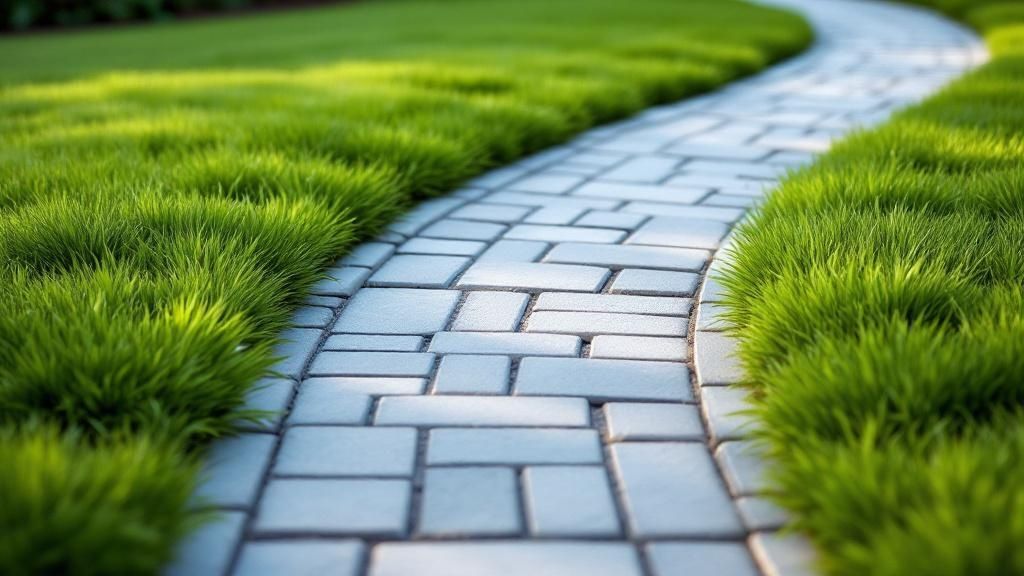
While modern designs often lean on straight lines, there is timeless elegance in embracing curves. Circular and curved paver designs introduce a sense of flow and softness to a landscape, breaking up the rigid angles of a home and yard. Inspired by historic English gardens and Italian Renaissance courtyards, this approach uses organic shapes to create inviting, naturalistic spaces. Flowing, serpentine walkways or circular patios can guide the eye, create intimate gathering spots, and add a layer of sophisticated artistry to your property. These designs are ideal for Morgan Hill homeowners looking to create a more classic, gentle, or whimsical outdoor atmosphere.
How to Implement Curved Designs
Creating beautiful curves requires careful planning and the right materials. Unlike grid patterns, free-flowing designs depend on smooth transitions and a strong focal point.
- Establish a Center Point: For circular patios or radiating patterns, start with a distinct center. This could be a fire pit, a fountain, or a decorative medallion paver. Build your pattern outward from this point to ensure symmetry.
- Use Flexible Edging: To achieve smooth, professional-looking curves, use flexible plastic or metal edge restraints. These guides hold the pavers securely in place and prevent them from shifting while maintaining the intended arc.
- Choose Smaller Pavers: Tighter curves are easier to create with smaller pavers. Cobblestones, small bricks, or fan-pattern kits are specifically designed for this purpose, as they require fewer cuts and conform more easily to the arc.
- Plan Your Cuts: For any curved design, some paver cutting will be necessary, especially along the edges. Lay out the entire pattern before making cuts to minimize waste and ensure a clean, finished look.
These landscape ideas with pavers are exceptionally effective for defining specific zones with a softer touch. A curved pathway can meander through a garden, inviting exploration, while a circular patio creates a natural and communal setting for a fire pit or dining area, encouraging conversation and connection.
3. Mixed Material Paver Combinations
Creating a truly dynamic and custom landscape often means looking beyond a single material. Mixed material paver combinations introduce a layer of sophistication by blending different textures, colors, and types of stone. This design approach involves thoughtfully integrating materials like smooth concrete, rustic brick, elegant travertine, or even loose gravel to define spaces and create stunning visual contrast. For homeowners in Morgan Hill looking to craft a unique, high-end outdoor environment, this technique allows for unparalleled creativity and personalization, transforming a simple patio or walkway into a work of art.
How to Implement Mixed Material Designs
The success of a mixed material project lies in creating harmony rather than chaos. The goal is to make the combination feel intentional and cohesive. Key strategies include:
- Create Borders and Inlays: Use a contrasting material, like a dark brick border around a light-colored natural stone patio, to frame the space. Inlays can form intricate patterns or simple accents within the main field of pavers.
- Define Functional Zones: Employ different materials to visually separate distinct areas. For example, use large-format concrete pavers for a modern dining area that transitions into a river rock or decomposed granite path leading to a garden.
- Blend Textures for Interest: Combine smooth, manufactured pavers with rough, natural flagstone to add tactile depth. This contrast engages the senses and prevents the design from feeling flat or one-dimensional.
To avoid a disjointed look, limit your palette to two or three complementary materials. Ensure they share a similar thickness for a smooth, level surface, or plan for deliberate transitions. These landscape ideas with pavers are most impactful when one material acts as the dominant field, with others serving as deliberate accents. This approach allows you to build a rich, layered landscape with distinct character and functional beauty.
4. Permeable Paver Systems
For environmentally conscious homeowners, permeable paver systems offer a functional and sustainable solution that marries beautiful design with responsible water management. Unlike traditional impervious surfaces that create runoff, these systems allow rainwater to filter through the surface and back into the ground. This is achieved using specially designed pavers with wider joints filled with small aggregate or by using pavers made of porous material. This approach not only helps recharge local groundwater but also reduces the strain on municipal storm-drain systems, making it a forward-thinking choice for residents in Morgan Hill and beyond.
How to Implement Permeable Systems
A successful permeable paver installation relies on a specialized foundation designed for water infiltration. The system functions as a whole, from the pavers on top to the layers of aggregate below. Key considerations include:
- Proper Base Construction: A deep base of open-graded, clean-crushed stone is crucial. This base acts as a reservoir, holding water as it slowly percolates into the subsoil. The depth of this base depends on local soil type and expected rainfall.
- Joint Filler Material: The gaps between pavers are filled with small, clean stone chips (like #8 or #9 aggregate), which allows water to pass through easily while keeping the pavers locked in place.
- Soil and Site Assessment: Before installation, a percolation test is essential to determine how quickly the native soil absorbs water. This test informs the design of the base layer and ensures the system will function as intended without becoming waterlogged.
These landscape ideas with pavers are ideal for driveways, patios, and walkways where managing stormwater is a priority. By integrating a permeable system, you create a durable, attractive surface that actively benefits the surrounding ecosystem. To ensure your project aligns with best practices for sustainable design and meets local requirements, consider working with experts in custom landscaping design and installation to engineer a system tailored to your property’s unique conditions.
5. Multi-Level Terraced Paver Designs
Sloped properties, often seen as a challenge, present a unique opportunity for creating dynamic, multi-dimensional landscapes. Multi-level terraced paver designs transform hillsides into a series of stunning, functional outdoor rooms. This approach uses retaining walls and paver steps to establish distinct tiers, maximizing usable space and adding profound visual interest through elevation changes. For homeowners in Morgan Hill with sloped yards, this technique, reminiscent of Mediterranean villa courtyards, turns a potential liability into a breathtaking asset.
How to Implement Terraced Designs
Executing a terraced design requires a blend of structural engineering and aesthetic vision. The goal is to create separate, purposeful levels that flow together seamlessly. Key implementation strategies include:
- Define Functional Zones: Dedicate each terrace to a specific purpose. For example, the top level could be a dining patio, the middle tier a cozy fire pit lounge, and the lowest level a quiet garden or play area.
- Build with Cohesion: Use a consistent paver material across all levels, steps, and retaining wall caps. This creates a unified look that ties the entire multi-level structure together, preventing it from appearing disjointed.
- Integrate Steps and Lighting: Design wide, comfortable paver steps to connect the tiers. Incorporate low-voltage landscape lighting into the retaining walls and along the steps to ensure safety and create a dramatic, ambient effect after dark.
The following summary box highlights the typical scope and complexity of these ambitious projects.
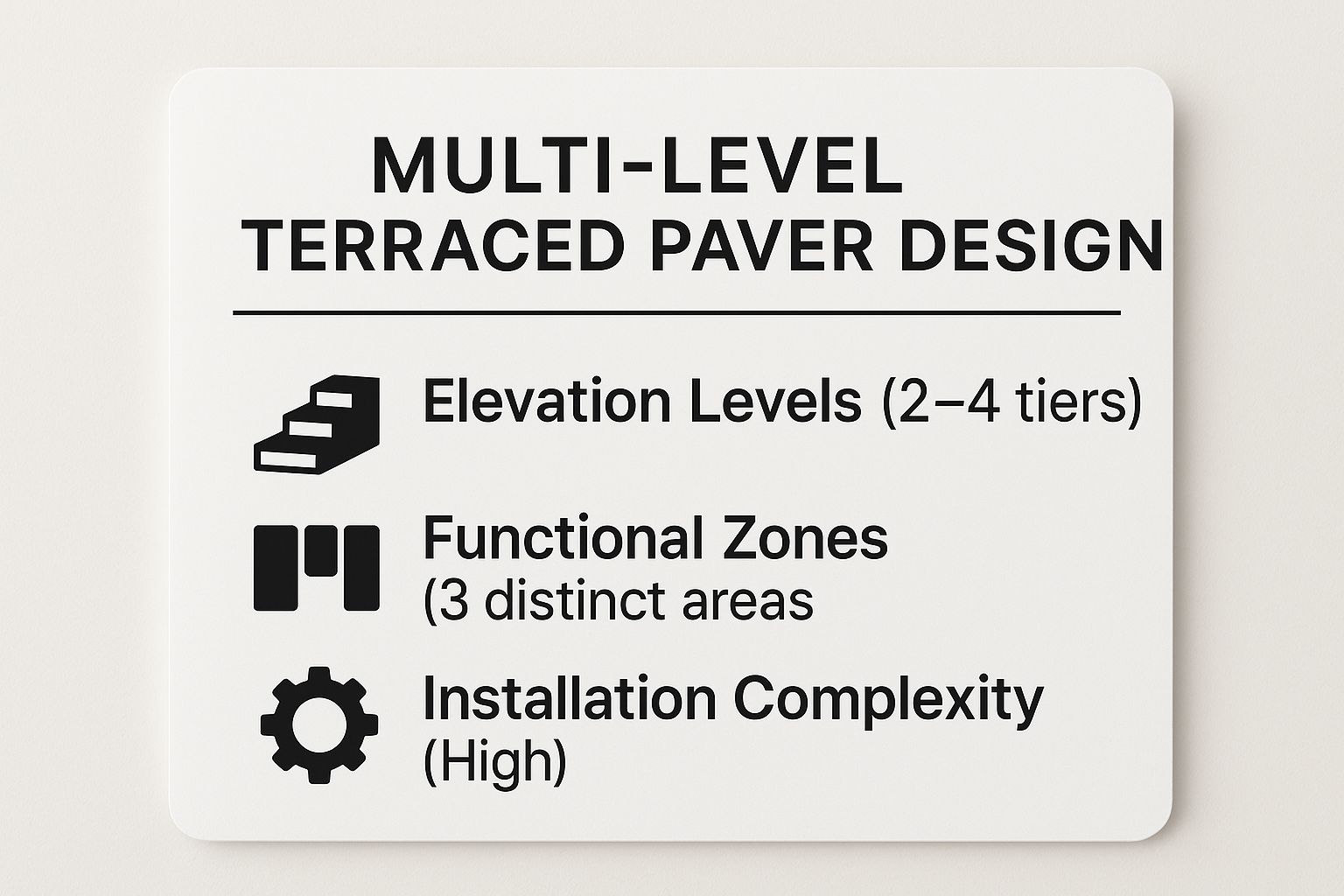
As the data shows, these projects are highly complex, often involving multiple tiers and distinct zones, demanding professional expertise. These landscape ideas with pavers are most successful when they feel like a natural extension of the property’s topography, turning a challenging slope into a layered, luxurious outdoor living experience. For any significant elevation change, consulting with a structural engineer is not just recommended, it is essential for safety and longevity.
6. Natural Stone Paver Patterns
For a look that is both timeless and deeply connected to the earth, natural stone paver patterns offer an unmatched elegance. This approach leverages the inherent beauty of materials like flagstone, slate, bluestone, and sandstone to create surfaces that are durable, sophisticated, and age gracefully. Unlike manufactured pavers, each piece of natural stone is unique in color, texture, and shape, allowing for a one-of-a-kind installation that blends seamlessly with the natural surroundings of a Morgan Hill property. This style is perfect for creating historic estate walkways, luxury mountain-lodge patios, or traditional English garden paths.
How to Implement Natural Stone Designs
Successfully working with natural stone is an art form that balances organic beauty with structural integrity. The goal is to highlight the stone's natural character while creating a functional, stable surface. Common approaches include:
- Irregular or "Crazy" Paving: This popular method uses uncut, irregularly shaped flagstones fitted together like a puzzle. It creates a rustic, organic feel ideal for garden pathways and informal patios, allowing for wider joints that can be filled with gravel or ground cover.
- Ashlar Pattern: This more formal style involves cutting stones into squares and rectangles of various sizes and laying them in a non-repeating pattern. It provides a structured yet natural look, perfect for high-end pool decks and courtyards where a blend of refinement and nature is desired.
- Uniform Layouts: For a more contemporary application of natural stone, uniform-sized pavers (like large bluestone squares) can be laid in a simple grid or running bond pattern. This combines the clean lines of modern design with the rich texture and color variation of natural materials.
When selecting your stone, consider its suitability for the local climate and its slip resistance, especially for wet areas around pools. The unique variations in thickness and color are part of the charm, but they require expert base preparation to ensure a level and long-lasting surface. These landscape ideas with pavers deliver a sense of permanence and luxury, creating an outdoor space that feels as if it has always been part of the landscape. For those interested in this method, it's crucial to understand the nuances of laying these unique materials; you can learn more about installing a flagstone patio on tamuradesigns.com for deeper insights.
7. Paver and Plant Integration Designs
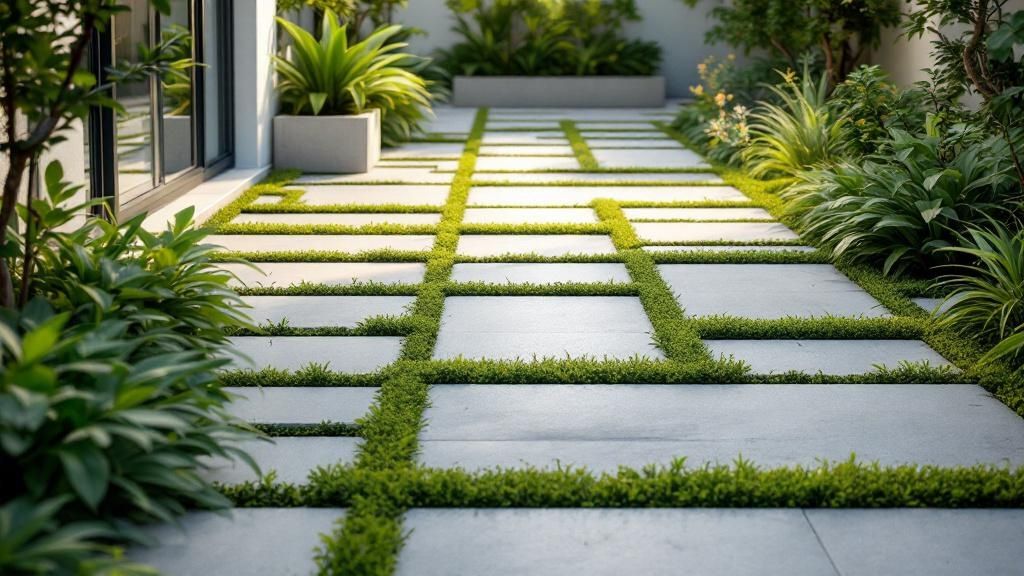
A truly harmonious landscape design blurs the lines between hardscape and softscape, and nothing achieves this better than integrating plants directly with your pavers. This approach intentionally creates spaces for vegetation to grow between, around, and even through paver installations. The result is a dynamic, living surface that softens the hard edges of stone and concrete, infusing your patio or walkway with natural texture and color. For Morgan Hill homeowners who desire a more organic, less rigid aesthetic, this method creates a functional yet beautifully lush outdoor environment.
How to Implement Paver and Plant Designs
Successful integration requires planning from the start, ensuring both pavers and plants can thrive together. The key is to design intentional gaps and planting pockets within the hardscape. Popular applications include:
- Living Pathways: Instead of tight joints, leave wide gaps between paver stones and fill them with low-growing, durable plants like creeping thyme or Irish moss. This creates a charming, cottage-garden effect.
- Permeable Patios: Design your patio with sections of pavers removed to create linear planting beds. These can be filled with ornamental grasses or architectural succulents for a modern, structured look that also improves drainage.
- Green Ribbons: Break up large expanses of pavers by creating "ribbons" of green. This involves laying parallel rows of pavers with a wide, continuous channel between them dedicated to planting.
When selecting plants, prioritize low-maintenance, drought-tolerant varieties that can handle foot traffic if necessary. It is crucial to consider the mature size of the plants to avoid overcrowding and to plan for irrigation during the paver installation phase. These landscape ideas with pavers are ideal for creating a sustainable, visually soft, and inviting space, transforming a simple patio into an integrated part of your garden ecosystem.
8. Outdoor Living Room Paver Layouts
Modern landscaping is about extending the comfort and functionality of your home into the outdoors, and nothing achieves this better than a well-designed outdoor living room. This concept uses pavers to create a solid, sophisticated foundation for fully functional zones, including kitchens, dining spaces, and lounging areas. By establishing these defined spaces, you can transform a simple backyard into a cohesive and luxurious extension of your indoor living environment. For homeowners in Morgan Hill looking to maximize their property’s potential, this approach creates a resort-style oasis perfect for relaxation and entertaining.
How to Implement Outdoor Living Rooms
Creating a successful outdoor living room requires thoughtful planning that goes beyond just laying pavers. The goal is to design a multi-functional space that is both beautiful and practical. Key considerations include:
- Zoning with Pavers: Use paver patterns, colors, or borders to visually separate different functional areas. For example, a sleek, large-format paver could define a modern dining area, while a more intricate pattern like cobblestone could designate a cozy fire pit lounge.
- Infrastructure Planning: Before any pavers are laid, plan for essential utilities. This includes running electrical conduits for lighting, outdoor outlets, and appliances, as well as plumbing lines for sinks or gas lines for grills and fire features. Integrating these elements from the start ensures a clean, professional finish.
- Furniture and Flow: Design the layout with specific furniture placement and traffic flow in mind. Ensure there is ample space to walk around seating areas and that the path between the kitchen, dining table, and lounge is logical and unobstructed.
These landscape ideas with pavers are ideal for creating a comprehensive entertainment hub. By using a consistent paver style across different zones, you can create a unified, high-end look that seamlessly blends cooking, dining, and relaxation. Considering a custom outdoor living space allows for a tailored design that perfectly suits your lifestyle and enhances your home’s value.
Landscape Paver Design Comparison Guide
| Paver Design Type | Implementation Complexity 🔄 | Resource Requirements ⚡ | Expected Outcomes 📊 | Ideal Use Cases 💡 | Key Advantages ⭐ |
|---|---|---|---|---|---|
| Contemporary Geometric Paver Patterns | Medium – requires precise alignment and installation | Medium to High – large-format pavers and skilled labor | Sophisticated, timeless, spacious visual effect | Patios, walkways, pool decks, courtyards, driveways | Timeless look, easy maintenance, structural stability |
| Circular and Curved Paver Designs | High – complex cutting and shaping needed | High – skilled craftsmanship and more labor | Dynamic, natural flow with multiple focal points | Historic gardens, resort pools, botanical pathways, fire pit areas | Softens spaces, encourages natural traffic flow |
| Mixed Material Paver Combinations | Medium to High – coordinating multiple materials | Medium to High – depends on material choices | Unique, custom zones with strong visual contrast | Luxury resorts, urban plazas, residential patios, restaurant courtyards | Customizable aesthetics, functional zoning |
| Permeable Paver Systems | High – specialized base and installation needed | Medium to High – eco-friendly materials and expertise | Sustainable stormwater management, reduced runoff | LEED projects, municipal parking, eco-friendly driveways, campuses | Environmental benefits, water filtration |
| Multi-Level Terraced Paver Designs | Very High – requires engineering and excavation | High – structural elements and complex installation | Maximized use of slope, distinct outdoor rooms | Sloped backyards, hillside pools, Mediterranean villas, commercial slopes | Space maximization, visual drama, drainage benefits |
| Natural Stone Paver Patterns | Medium to High – skilled installation for heavy, irregular stones | High – costly materials and preparation | Timeless, durable elegance with natural beauty | Historic estates, mountain lodges, resort decks, English gardens | Authentic look, durability, property value increase |
| Paver and Plant Integration Designs | Medium – integration with planting and irrigation | Medium – plant selection and irrigation setup | Natural, organic appearance with environmental benefits | Mediterranean courtyards, residential patios, public plazas, garden paths | Softens hardscape, seasonal interest, eco-friendly |
| Outdoor Living Room Paver Layouts | Very High – complex utility and multi-zone planning | High – comprehensive materials and systems | Functional, year-round outdoor living spaces | Residential outdoor kitchens, resort entertainment areas, restaurants, backyard renovations | Expands living space, indoor-outdoor flow, entertainment focus |
Partner with Experts to Build Your Dream Landscape
Throughout this exploration of innovative landscape ideas with pavers, we have journeyed far beyond the simple concept of laying stones for a path. We've seen how pavers are not just functional building blocks but are, in fact, the foundational elements of transformative outdoor design. From the clean, bold lines of contemporary geometric patterns to the soft, organic flow of circular layouts, the possibilities are as varied as the landscapes themselves. The key takeaway is that strategic paver selection and placement are essential for crafting outdoor spaces that are both stunningly beautiful and highly practical for your lifestyle.
From Inspiration to Implementation
The true power of modern hardscaping lies in its versatility. We've uncovered how integrating different materials, such as smooth concrete pavers with rugged flagstone or warm wood accents, creates a rich, textured environment full of visual interest. We also explored the critical importance of environmentally conscious choices, with permeable paver systems offering a sophisticated solution to stormwater management, a vital consideration for responsible homeowners. These ideas demonstrate that your hardscape can be as smart and sustainable as it is stylish.
Mastering these concepts allows you to elevate your property from a simple backyard to a cohesive and intentional outdoor sanctuary. Key principles to remember include:
- Unity and Flow: Use paver patterns and pathways to guide the eye and connect disparate areas of your landscape, such as a patio, fire pit, and garden beds.
- Form Follows Function: The layout of your pavers should directly support how you intend to use the space, whether it’s for large-scale entertaining, quiet relaxation, or creating a safe play area.
- Texture and Harmony: The most compelling designs often mix materials and integrate natural elements. Let your paver choices complement your home’s architecture and the surrounding plant life for a harmonious result.
Your Vision, Expertly Crafted
Ultimately, the most successful landscape ideas with pavers are born from a combination of a clear vision and expert execution. A well-designed paver project is an investment that pays dividends for years to come, not only by enhancing your property's curb appeal and market value but also by significantly improving your quality of life. Imagine stepping out onto a beautifully crafted multi-level terrace for your morning coffee or gathering with loved ones in an elegant outdoor living room defined by intricate paver work. This is the tangible impact of thoughtful landscape design. Your outdoor space is a canvas, and with the right approach, pavers provide the structure, color, and texture to bring your masterpiece to life.
If you are ready to transform these ideas into a stunning reality for your Morgan Hill home, the expert team at Tamura Designs Landscape and Construction is here to help. We specialize in creating custom paver patios, driveways, and complete outdoor living environments that blend artistry with precision craftsmanship. Visit Tamura Designs Landscape and Construction to see our portfolio and schedule a consultation to begin your landscape transformation journey.
