
Think of outdoor living space design as more than just mowing the lawn or planting a few flowers. It’s the art of taking that patch of grass and truly transforming it into an extension of your home—a place with purpose, designed for dining, relaxing, and entertaining, just like your indoor kitchen or living room.
This approach stops treating your backyard as an afterthought and starts seeing it as a vital part of your home.
Beyond the Backyard: The New Outdoor Living Room
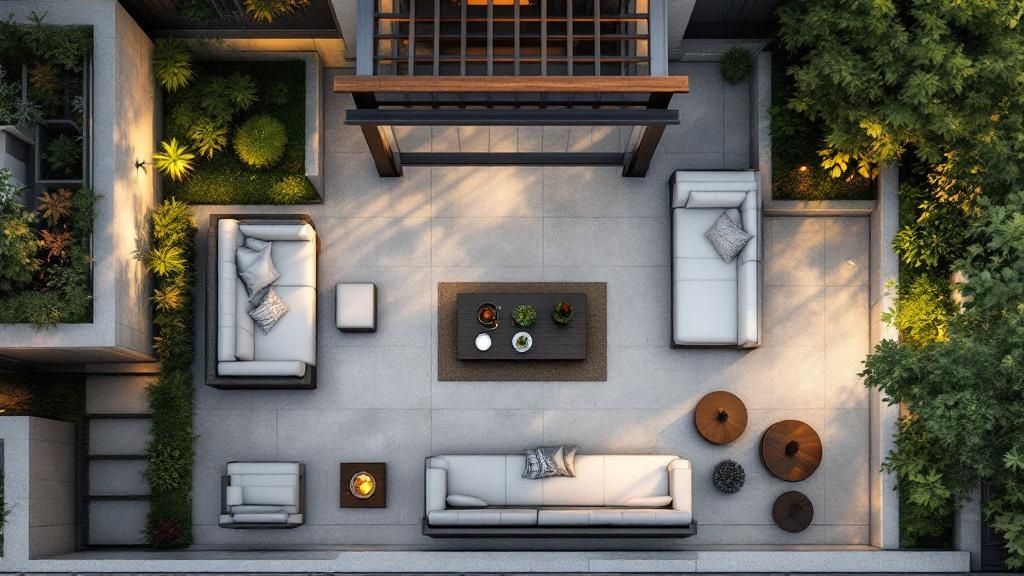
The classic backyard is officially a thing of the past. Gone are the days of a simple lawn dotted with a few plastic chairs. Today, we see our outdoor areas for what they truly are: a vital part of our lifestyle. It's a place to decompress after a long day, connect with family, and host friends under the open sky.
This shift comes from a deep desire to blend the comforts we love indoors with the freedom of being outside. Think of it as adding a brand-new room to your house, but one without walls. It's about creating your personal oasis, whether that’s a quiet nook for your morning coffee, a full-scale dining area for summer barbecues, or a cozy lounge for long evening chats.
Why Outdoor Living Is No Longer a Luxury
Designing an outdoor space with intention isn't just a trend; it's become a cornerstone of modern home life. We're not just talking about aesthetics here. It’s about genuinely improving your quality of life. A well-designed space can dramatically boost your home's value and your daily well-being.
The numbers don't lie. Since 2020, interest in creating seamless indoor-outdoor environments has shot up by about 50%. This isn't a fleeting fad—the market is projected to swell to an impressive $26.8 billion by 2027, proving just how essential these spaces have become.
Creating a true outdoor "room" means extending the comfort and style of your interior to your exterior. This includes comfortable seating, functional layouts, and personal touches that make the space feel genuinely yours.
Furnishing for Comfort and Style
To really turn your patio or deck into a true outdoor living room, you have to start with the seating. It's the foundation for creating an inviting atmosphere where you and your guests will actually want to hang out. For instance, exploring options like luxury outdoor bean bags for ultimate comfort can offer a perfect mix of relaxed style and weather-resistant durability.
Here are a few key elements that help bridge that gap between inside and out:
- Weather-Resistant Furniture: Pick pieces that can handle the elements without making you sacrifice an ounce of comfort or style.
- Outdoor Rugs: These are fantastic for defining a space, whether it's for seating or dining, while adding a pop of color and texture.
- Layered Lighting: A mix of ambient, task, and accent lighting lets you set the perfect mood for any occasion, from a bright family dinner to a soft, romantic evening.
- Shade Solutions: Pergolas, umbrellas, or sail shades are non-negotiable. They make the space usable and comfortable even on the hottest, sunniest days.
When you thoughtfully bring these elements together, you’re not just decorating—you’re crafting an outdoor sanctuary that is both beautiful and incredibly practical. This guide will walk you through everything you need to know to design an outdoor living space that fits your life perfectly, turning your yard into your new favorite room.
Designing for Your Life, Not Just Your Yard
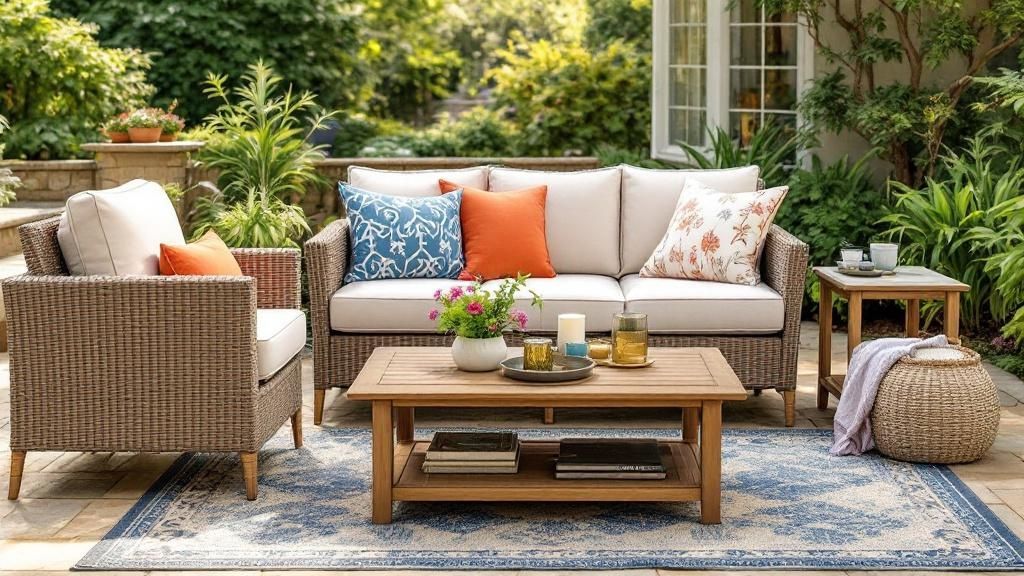
Before you ever break ground or even pick a single plant, the most critical step in creating an amazing outdoor living space happens entirely inside your head. It’s all about figuring out your “why.” Sure, a pretty yard is nice to look at, but a yard that’s actually designed for how you live? That’s a total game-changer.
Think of it like designing your home's interior. You wouldn't stick a high-end gourmet stove in your bedroom or a luxurious soaking tub in the middle of the dining room. It’s the same exact logic outdoors. We need to move past the generic idea of a "patio" and start creating a space that truly fits your lifestyle.
What Is Your Outdoor Dream?
First things first, you have to ask yourself some honest questions. What are your daily routines? What does your family need? How do you really like to entertain? This vision becomes the roadmap for every single decision you make from here on out.
So, what’s the primary purpose of your space?
- The Tranquil Retreat: Are you dreaming of a quiet spot for morning coffee, a good book, and a moment of peace after a long day?
- The Family Hub: Will this be command central for the kids’ playtime, casual weeknight dinners, and weekend s'mores sessions?
- The Entertainer's Paradise: Do you see yourself hosting big backyard barbecues, sophisticated cocktail parties, or the whole extended family for the holidays?
Each of those scenarios demands a completely different design. A different layout, different features, and different furniture. Nailing down your main goal is what keeps you from building a space that only looks good in pictures instead of feeling right for your life.
The most effective outdoor living space design is one that solves a problem or fulfills a need. It should make your life easier, more enjoyable, and more connected to the outdoors, becoming a natural extension of your daily activities.
Asking the Right Questions
To really sharpen that vision, you need to get practical. Think about your day-to-day, week-to-week, and even how you’ll use the space in different seasons. This is where the magic happens, leading to a design that just feels right. If you need a spark of inspiration, looking through a gallery of well-designed backyard patio ideas can open your eyes to possibilities you hadn't even thought of.
Here are a few specific questions to get the wheels turning:
- Who is this for? Is it mainly for adults, a family with young kids, or will you have guests over all the time?
- How many people do you realistically need to seat? Think about your average Tuesday night versus your biggest summer party.
- What are the must-have activities? Things like grilling, dining al fresco, lounging by a fire pit, or even a small garden area.
- When will you use it most? The answer dictates your needs for shade, outdoor lighting, and maybe even a heat source for chilly evenings.
- How much maintenance are you truly willing to do? Be honest! This is huge, influencing your choice of materials, plants, and water features.
Answering these questions gives you a solid, practical framework for your entire project. It’s how you ensure your investment turns into a personalized retreat that you’ll love for years—making your yard more than just a space, but a destination.
Mastering the Principles of Outdoor Design
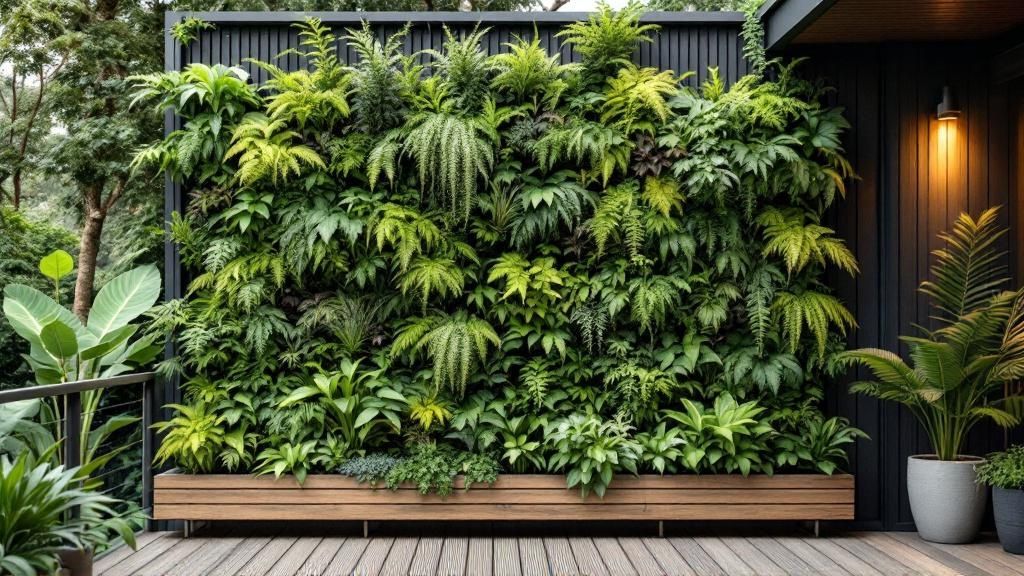
Once you've got a clear vision for how you want to live outdoors, it’s time to pull back the curtain on the secrets that professional designers use. They’re the tricks that make a space feel just right, almost effortlessly perfect. But great outdoor living space design isn't about luck—it's about applying a few core principles that guide every single choice, from the layout down to the last throw pillow.
Think of your yard as an open-concept home without a roof. Just like you have dedicated areas inside for cooking, eating, and relaxing, your outdoor space craves that same thoughtful organization. The real goal is to create distinct "rooms" that flow into one another, creating a single, harmonious environment instead of just a random collection of stuff.
Creating Distinct Outdoor Zones
First up is zoning. This is simply the art of giving every part of your yard a specific job. You wouldn't put your grill next to a quiet reading nook, and you probably don't want the kids' play area smack in the middle of your elegant dining setup. By creating zones, you give every activity its own dedicated space, which is the foundation of a functional layout.
Some of the most common zones include:
- The Dining Zone: This is for your table and chairs, where you'll enjoy those alfresco meals. It should be easy to get to from the house, especially the kitchen.
- The Lounging Zone: This is your spot for pure relaxation. Think comfy sofas, a coffee table, and maybe a cozy fire feature to serve as a focal point.
- The Activity Zone: This could be an open patch of lawn for games, a designated spot for a hot tub, or a play structure for the little ones.
Defining these areas from the start helps you build a logical, intuitive layout. It’s the best way to prevent the common mistake of ending up with a cluttered, confusing space where functions awkwardly overlap.
The magic of great outdoor design lies in creating a space that feels both open and intimate. Zoning carves out purposeful 'rooms' without building walls, giving each activity a home and making the entire area more usable.
Establishing Effortless Flow
Once your zones are mapped out, the next piece of the puzzle is flow. This is all about how people move between the different zones, as well as from inside your home to the outside. The pathways should feel natural and totally clear. Good flow is what encourages movement and makes the whole space feel connected and even larger than it is.
Imagine carrying a tray of drinks from your kitchen to the patio dining table. Is the path direct? Or do you have to weave awkwardly around a big planter or a piece of lounge furniture? Poor flow creates friction and makes a space frustrating to use, no matter how beautiful it is. Good flow, on the other hand, makes it a joy to be in.
This focus on smart design is also a wise financial move. A thoughtfully planned outdoor area is a huge draw for homeowners, who are investing more and more in these spaces. In fact, a whopping 70% of industry experts agree that updating outdoor areas adds significant property value. It's no wonder homeowners are allocating around 25% of their total remodeling budgets to outdoor improvements. Covered patios are the top choice for 44% of professionals, thanks to their all-season appeal. You can dig deeper into these outdoor living space design trends and statistics if you're curious.
Understanding Scale and Proportion
Finally, let’s talk about scale and proportion. This principle is all about making sure the size of your furniture and other features is a good fit for the size of your space. A tiny bistro set can look lost and lonely on a massive patio, while an oversized sectional will completely overwhelm a small balcony, making it feel cramped and unusable.
Getting the scale right is crucial for creating a sense of balance. Before you buy a single thing, measure your space. Better yet, use painter's tape to mark out the footprint of the furniture you're considering. This simple trick helps you truly visualize how much room an item will occupy and ensures you leave plenty of space for people to move around comfortably.
When the scale is right, every element feels like it belongs, completing your harmonious and professional-looking outdoor retreat.
Choosing Materials That Last and Impress
Now that you have a solid plan, it’s time for the fun part—getting tangible. Choosing your materials is the moment your vision for an outdoor living space starts to take shape in the real world. It's a critical decision, a balancing act between the aesthetic you dream of and the durability you absolutely need.
The building blocks of your space, from the patio beneath your feet to the lounge chair you sink into, have to stand up to whatever your local climate throws at them. This choice is about so much more than how it looks on day one; it's an investment in how much you'll love and use your outdoor oasis for years to come.
Hardscaping Foundations That Define Your Space
Think of hardscaping as the skeleton of your outdoor room. These are the foundational surfaces like patios, decks, and walkways that set the stage for everything else. Your choice here dictates the entire feel of the design and has a major ripple effect on your budget and long-term maintenance.
Two of the most popular options are pavers and composite decking, and each brings something different to the table.
- Patio Pavers: If you love design flexibility, pavers are fantastic. They come in a huge range of shapes, colors, and textures—from classic brick to sleek, modern concrete slabs. They're incredibly tough, and if one ever cracks, you can just pop it out and replace it without having to tear up the whole surface. If you're weighing your options, exploring a guide to the best patio pavers can really help narrow down the perfect style and function for your project.
- Composite Decking: As a modern alternative to traditional wood, composite decking is a game-changer. It’s made from a smart blend of wood fibers and recycled plastics, making it highly resistant to rot, insects, and fading. It needs very little upkeep beyond an occasional cleaning, and while the upfront cost can be higher, its low-maintenance nature often makes it the more cost-effective choice in the long run.
Your material selections are about more than just looks; they're about performance. Taking some time to explore durable materials and design for outdoor features can save you from future headaches and protect the beauty of your investment.
Selecting Furniture Built for the Elements
Outdoor furniture is where comfort meets resilience. It has to look fantastic, of course, but it also has to endure sun, rain, and wild temperature swings. This is one part of the project where investing in quality truly pays off.
Here’s a look at how a typical outdoor living space budget breaks down. Notice how significant the furniture portion is!
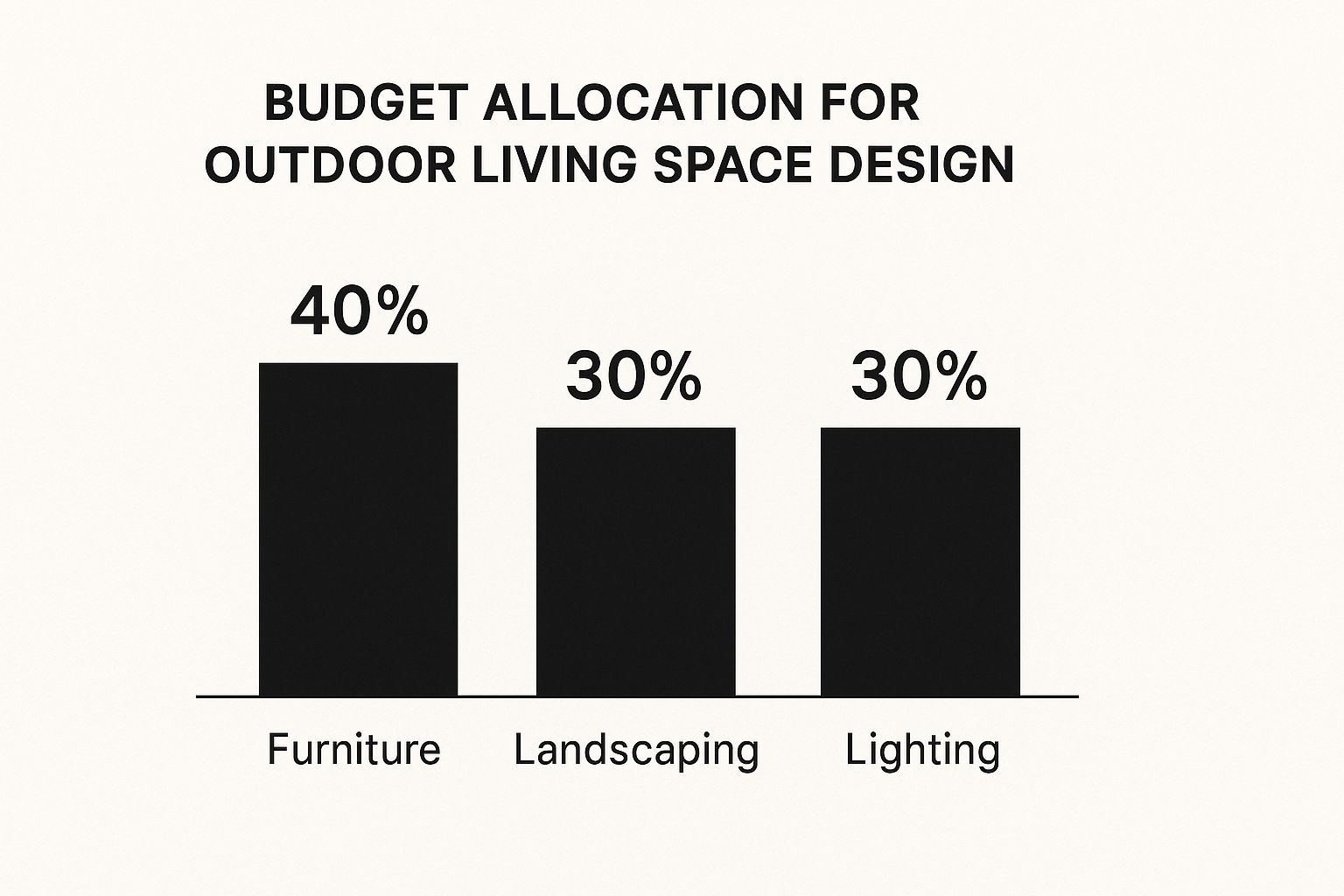
As you can see, furniture can easily be the biggest slice of the pie. That really drives home how important it is to make a smart, long-term choice.
When it comes to materials, a little homework goes a long way. Some materials handle the sun better, while others are champions in wet climates.
Outdoor Material Comparison for Durability and Maintenance
Here’s a quick comparison of common materials to help you decide what’s right for your space and lifestyle.
| Material | Durability Rating (1-5) | Maintenance Level | Average Cost | Best For |
|---|---|---|---|---|
| Teak Wood | 5 | Low | High | High-end furniture that resists weather and insects naturally. |
| Aluminum | 4 | Low | Medium | Lightweight, rust-proof frames for modern seating and tables. |
| Wrought Iron | 5 | Medium | High | Heavy, sturdy furniture in windy areas; needs rust protection. |
| HDPE Lumber | 4 | Very Low | Medium-High | All-weather furniture (like Adirondack chairs) that mimics wood. |
| Concrete Pavers | 5 | Low | Medium | Patios and walkways needing extreme durability and design options. |
| Composite Decking | 4 | Very Low | High | Decks and platforms where low maintenance is the top priority. |
Choosing materials that align with your lifestyle is the secret to a space you’ll actually use. Opting for low-maintenance solutions means less time working and more time relaxing in your beautiful retreat.
Vertical Elements: Pergolas and Privacy Screens
Finally, let’s look up. Vertical structures are what add dimension and intimacy, transforming an open patio into a true outdoor "room."
- Pergolas: These are perfect for defining a specific area, like a dining spot or a cozy lounge. They offer dappled shade and create a beautiful framework for climbing plants, string lights, or even a retractable canopy for serious sun protection.
- Privacy Screens: Whether you choose wood, metal, or composite materials, privacy screens are a stylish solution for blocking nosy neighbors, buffering wind, or just creating a sense of seclusion. They can be a stunning architectural accent that also serves a very practical job.
By carefully weaving together a cohesive palette of materials for your hardscaping, furniture, and vertical elements, you create a space that’s not just visually stunning, but fundamentally sound and built to last.
Alright, you've got your blueprint and you've picked out the materials. Now for the fun part: bringing your outdoor space to life with the features that really make it yours.
This is what separates a basic concrete slab from a true outdoor retreat—a place that pulls you, your family, and your friends outside. These features are the heart and soul of your design, giving it both function and personality.
Think of it like furnishing a room. The foundation is laid, the walls are up. Now you’re bringing in the fireplace, the big-screen TV, and the perfect lighting. It’s these final touches that turn a structure into a space you genuinely love.
The Allure of Outdoor Cooking and Dining
Is there anything better than cooking and eating under the open sky? This is where the best memories happen, from a casual weeknight barbecue to a full-blown dinner party. Your setup can be as simple as a great grill in the right spot or as ambitious as a complete outdoor kitchen. It all comes down to your lifestyle and budget.
For many, a high-quality grill, a bit of counter space for prep, and some smart storage is all they need. But if you’re someone who lives to entertain, a full outdoor kitchen is the dream. We're talking sinks, mini-fridges, and even pizza ovens that create a completely self-sufficient hub for cooking and hosting. Once your design fundamentals are solid, you can dive into more detailed guides on how to create an outdoor entertainment area to really dial things in.
And this isn't just a niche interest; it's a major trend. A recent study found that 73% of experts point to outdoor kitchens as the top feature for homeowners today. It’s clear people want spaces that make outdoor cooking and entertaining seamless. You can check out more about these popular outdoor design statistics to see what else is driving modern design.
The Magnetic Pull of Fire Features
Fire has a primal draw. It just makes people want to gather 'round. A well-placed fire feature instantly becomes the social centerpiece of your yard, creating an irresistible vibe and stretching your outdoor season deep into the cooler months.
You've got a few great options, each with its own feel:
- Fire Pits: These are the most versatile. They create a casual, campfire-like atmosphere that’s perfect for conversation (and s'mores, of course). You can go with classic wood-burning for a rustic feel or gas-powered for pure convenience.
- Fireplaces: An outdoor fireplace is a powerful architectural statement. It creates a more structured, room-like feel and is fantastic at radiating heat. It serves as a stunning focal point even when it's not lit.
- Fire Tables: The modern multitasker. These combine the warmth of a fire pit with the utility of a coffee table, giving you a place for drinks and snacks. They’re a perfect fit for a comfy lounge area.
Choosing a fire feature isn't just about adding heat. It’s about creating a focal point that sets the mood, encouraging people to connect and relax long after the sun has set.
Setting the Mood With Layered Lighting
Good lighting is a game-changer. It’s what transforms an outdoor space after dark, taking it from simply usable to truly magical. And just like indoors, the best approach is to think in layers.
First, you need ambient light for a soft, overall glow. Think string lights draped overhead or subtle lights on post caps. Next, add task lighting where you need it most—over the grill, above the dining table, or along a key walkway.
Finally, bring in accent lighting to create drama and depth. Use uplights to highlight a beautiful old tree or spotlights to showcase interesting stonework. This layered approach ensures your space is safe, functional, and enchanting once evening arrives.
Bringing Your Design to Life With Plants and Decor
You’ve laid the groundwork and picked out the furniture. Now for the fun part—the final layer that breathes life and personality into your design, making it truly feel like an extension of your home. This is where plants and decor come together to soften hard edges, inject vibrant color, and create an atmosphere that beckons you outside.
Think of plants as the living, breathing art of your backyard. They add texture, scent, and movement, and they can completely transform the mood of a space. A row of tall, slender cypress trees can lend a formal, Tuscan feel, while lush container gardens overflowing with flowers can make a patio feel energetic and cheerful. The real secret is choosing plants that fit both your vision and your lifestyle.
Selecting the Right Greenery
Picking plants isn't just about what catches your eye at the garden center. It’s about understanding what will actually thrive in your yard with the amount of care you’re willing to give. A low-maintenance design falls apart the moment you fill it with needy, high-maintenance plants.
Here’s a simple framework I use with clients to get it right:
- Look Local: Start with native plants. They're already built for your local soil and climate, meaning they'll need less water and fuss to look their best.
- Follow the Sun: Spend a day watching the light in your yard. Where does the intense afternoon sun hit? Which corners stay in the shade? Match your plants to the light they’ll get.
- Think in Layers: Great design has depth. Mix tall, structural plants like ornamental grasses with mid-sized shrubs and low-growing groundcovers or flowers. This creates a rich, full look with tons of visual interest.
- Create Natural Privacy: Layering evergreen shrubs with fast-growing vines on a trellis is a beautiful, organic way to screen a view or create a private sanctuary. It feels so much softer than a solid fence.
A truly successful planting plan strikes a perfect balance between beauty and practicality. It should feel lush and intentional, but it shouldn't chain you to constant upkeep. The goal is to spend more time enjoying your space and less time working in it.
This thoughtful approach is becoming more than just a good idea—it's a movement. Sustainability is a huge priority now, with 24% of industry professionals focusing on creating eco-conscious, pollinator-friendly landscapes. It’s a clear sign that homeowners want their backyards to be beautiful and beneficial. You can discover more about these eco-friendly patio design statistics and see how this trend is reshaping our outdoor spaces.
Tying It All Together With Decor
If plants are the art, then decor is what pulls everything together and makes your outdoor space feel cohesive and finished. These are the elements that turn a simple patio into a true "outdoor room" that reflects your personal style. For anyone aiming to take this a step further, our guide to sustainable landscape design offers more on creating a truly eco-friendly yard.
I always recommend starting from the ground up with an outdoor rug. It’s a game-changer for defining a specific zone, like a seating or dining area, while adding instant softness and a pop of color underfoot.
From there, layer in comfort. Weather-resistant cushions and throw pillows introduce inviting textures and patterns, making your outdoor sofa feel just as comfortable as your indoor one.
Finally, bring in the accessories that tell your story. This could be anything from elegant lanterns for evening ambiance to a unique sculpture you love or even some striking, weather-proof wall art. These personal touches are what complete the picture, turning your backyard into a stylish and personalized retreat.
Alright, let's get into the questions we hear all the time. As you start dreaming up your perfect outdoor space, the practical side of things naturally starts to creep in. It can feel like a lot to juggle, but getting straight answers to these common questions will make the whole process feel much less overwhelming and a lot more exciting.
How Much Should I Budget for My Project?
This is the big one, isn't it? The truth is, an outdoor project's cost can swing wildly—from a few thousand dollars for a simple patio refresh to $50,000+ for a full-blown backyard overhaul with a kitchen and custom stonework.
A solid rule of thumb for a major renovation is to plan for around 10-15% of your home's total value. To make that number feel more real, it helps to break it down:
- Hardscaping (Patios, Decks, etc.): 30-40%
- Big-Ticket Features (Fire Pit, Kitchen): 25-35%
- Furniture & Decor: 15-20%
- Plants & Lighting: 10-15%
And one piece of advice we always give: tuck away a 10% contingency fund. You'll thank yourself later when an unexpected issue pops up. If the final number looks intimidating, don't scrap the dream! Consider phasing the project over a couple of seasons. You'll still get your perfect space, just on a timeline that works for your wallet.
What Is the Most Important Design Element?
While it’s easy to get caught up in materials and cool features, the single most critical part of any design is a clear plan built around how you'll actually use the space. Before you fall for a specific paver or a comfy-looking sofa, you have to nail down the function. This "zone plan" is the foundation for every other decision you'll make.
The success of any outdoor living space design hinges on its functionality. A beautiful space that is awkward to use will sit empty. A functional space that meets your daily needs will become the most-loved area of your home.
This means literally mapping out your zones for dining, lounging, cooking, and playing. A good plan ensures every element has a purpose, creating a layout that feels natural and truly livable from day one.
How Can I Create Privacy Without a Tall Fence?
You don't need to build a fortress to get a little seclusion. The secret is to think in layers. Strategic planting is your absolute best friend here. Think "living walls" made of evergreen shrubs, graceful clumping bamboo, or tall ornamental grasses that can screen views and soften edges.
Trellises covered in climbing vines are a gorgeous way to block specific sightlines. For a more modern vibe, horizontal slat screens or even decorative metal panels can add architectural flair while doing the job. And for seating areas, nothing beats a pergola with outdoor curtains or a retractable canopy to create that cozy, room-like feel.
What Are the Most Common Design Mistakes to Avoid?
We see a few classic missteps time and time again. The first is ignoring scale. Tiny furniture on a massive patio looks completely lost, while bulky pieces can make a small deck feel claustrophobic.
Second is skimping on lighting. Your outdoor space needs layers of light—ambient, task, and accent—just like any room inside your house. The third, and often most expensive, mistake is choosing materials that can't handle your local climate. This is a fast track to rot, constant upkeep, and having to replace things way too soon.
Ready to turn your vision into a stunning reality without all the guesswork? The expert team at Tamura Designs has over 30 years of experience crafting award-winning outdoor living spaces. We handle everything from the first sketch to the final build, making sure every detail is just right. Visit us at https://tamuradesigns.com to start your journey.
