
Owning a home in Morgan Hill often means embracing a more compact yard, but a smaller footprint shouldn't limit your landscaping ambitions. In fact, a compact space presents a unique opportunity for creativity, demanding thoughtful design and innovative solutions. It isn't about the square footage you have, but how you use it. This guide moves beyond generic advice to provide specific, actionable landscaping ideas for small yards, tailored to the Morgan Hill climate and lifestyle. We will explore how to maximize every inch, create illusions of spaciousness, and turn your limited area into a lush, functional, and beautiful outdoor oasis.
These principles of maximizing space through smart design are highly effective. To further enhance your home's aesthetic, consider how you can apply smart design principles to your outdoor areas, similar to how you might approach decorating your home on a budget. Whether you envision a serene retreat, a vibrant hub for entertaining, or a productive edible garden, the concepts that follow will help you see your yard's true potential. As local experts with over 30 years of experience, we have seen firsthand how strategic design can completely transform even the most modest of spaces into stunning, personalized environments.
1. Vertical Gardens and Living Walls
When ground space is at a premium, the most innovative landscaping ideas for small yards involve looking up. Vertical gardens, also known as living walls, transform underutilized fences, sheds, and exterior home walls into vibrant, lush tapestries of greenery. This approach not only maximizes your growing area but also adds a stunning, artistic focal point to your outdoor space, turning a plain surface into a living masterpiece.
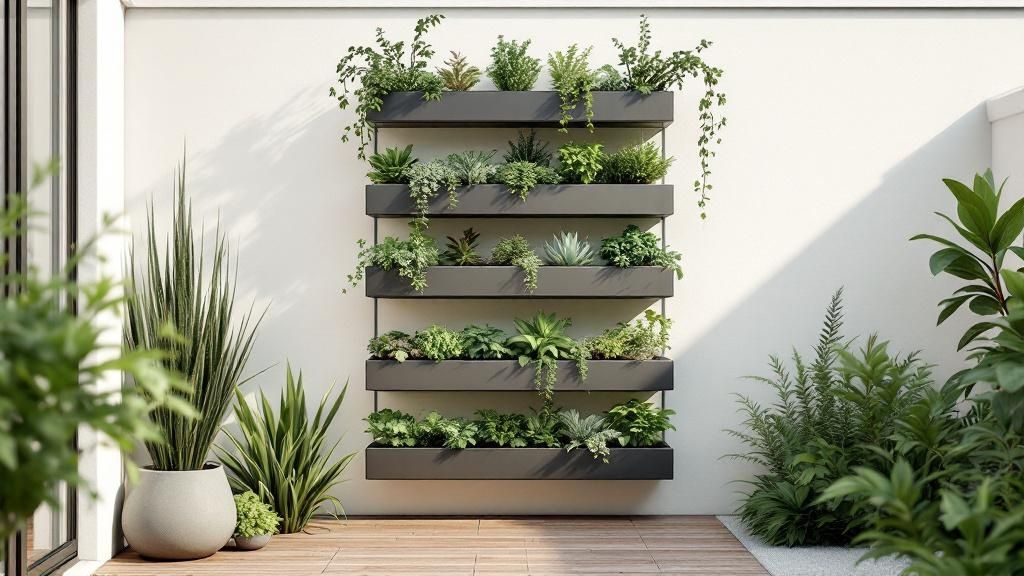
Pioneered by French botanist Patrick Blanc, this concept has evolved from large-scale commercial installations to accessible home-gardening solutions. In a Morgan Hill yard, a living wall can serve multiple functions: it can act as a privacy screen, dampen sound, and even help cool your home by insulating the wall it covers.
How to Implement a Vertical Garden
You can start small or go big, depending on your ambition and budget. Options range from simple DIY projects to sophisticated modular systems.
- Trellis Systems: The simplest method is to install a trellis and train climbing plants like star jasmine or bougainvillea to grow up it. This adds green texture without the complexity of a full living wall.
- Mounted Planters: Individual pots or pocket planters, like those popularized by Woolly Pocket, can be mounted directly onto a wall or fence. This allows for easy plant swapping and creative arrangements.
- Modular Living Wall Kits: For a more integrated look, modular panel systems allow you to create a dense, seamless wall of plants. These kits often include a built-in irrigation framework for simplified maintenance.
Key Insight: Start your vertical garden with hardy, drought-tolerant plants. Succulents like echeveria and sedum are excellent choices for Morgan Hill’s climate, as they require less water and are resilient to sun exposure, making maintenance significantly easier.
Before installation, always assess the structural integrity of the wall, as a fully saturated living wall can be heavy. Using a lightweight potting mix and installing a drip irrigation system are crucial steps for a successful, low-maintenance vertical garden that thrives year-round.
2. Container and Raised Bed Gardening
One of the most effective landscaping ideas for small yards is to embrace the versatility of container and raised bed gardening. This approach gives you complete control over your garden’s layout, soil, and water conditions, making it perfect for patios, balconies, or narrow side yards where in-ground planting isn't feasible. It allows you to cultivate a diverse range of plants, from edible herbs and vegetables to ornamental flowers and even small trees, all within a defined and manageable space.
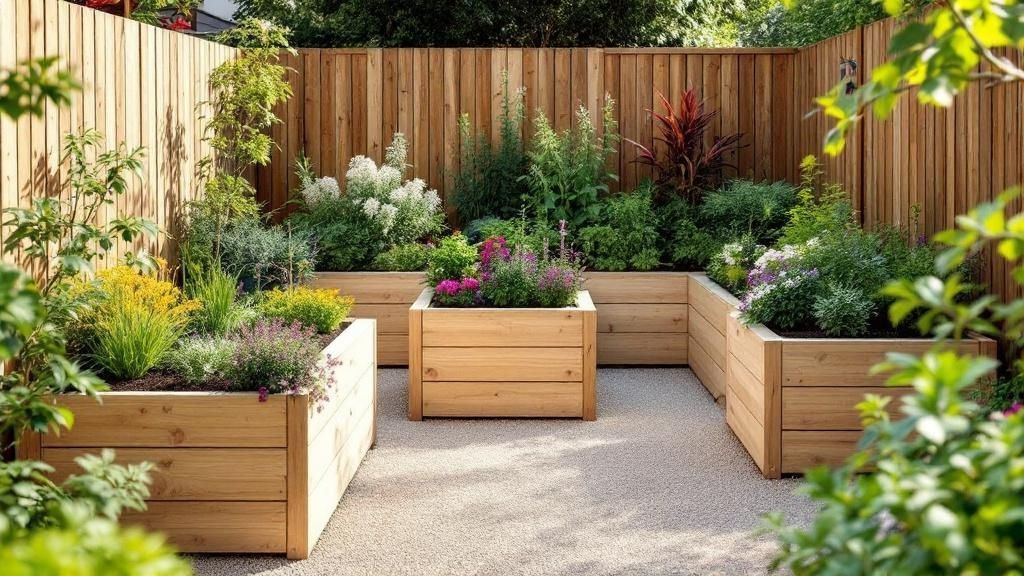
Popularized by visionaries like Mel Bartholomew of the Square Foot Gardening Foundation and modern content creators like Kevin Espiritu of Epic Gardening, this method transforms compact areas into productive and beautiful gardens. For a Morgan Hill home, raised beds can elevate the garden aesthetic, improve drainage, and warm the soil earlier in spring for a longer growing season. Containers offer mobility, allowing you to rearrange your landscape or move sensitive plants as seasons change.
How to Implement Container and Raised Beds
Getting started is straightforward, with options that can be tailored to any space, budget, or gardening skill level.
- Strategic Container Grouping: Arrange pots of varying sizes, colors, and textures to create a dynamic, layered look. Place larger containers like whiskey barrels in the back and smaller pots in the front.
- Modular Raised Bed Kits: Systems from retailers like Gardener's Supply Company offer easy-to-assemble, durable beds in various materials like wood, metal, or composite. This allows for a clean, organized garden layout.
- DIY Raised Beds: Constructing your own raised beds from untreated cedar or redwood is a cost-effective way to customize the size and shape to perfectly fit your yard's unique dimensions.
Key Insight: To maximize success in Morgan Hill’s warm climate, use self-watering containers or install a drip irrigation system on a timer. This ensures consistent moisture, reduces water waste, and prevents plants from drying out during hot summer days, making maintenance far more efficient.
Always use a high-quality, lightweight potting mix instead of heavy garden soil, which can compact and impede drainage in containers. For heavy pots, placing them on wheeled plant caddies before filling makes it easy to move them for cleaning, rearranging, or chasing the sun.
3. Multi-Level Landscaping with Terracing
One of the most effective landscaping ideas for small yards involves breaking up a flat plane to create depth and dimension. Multi-level landscaping, achieved through terracing and raised garden beds, creates the illusion of a much larger space. By introducing different elevations, you can establish distinct functional zones, add dynamic visual interest, and maximize your usable planting area.
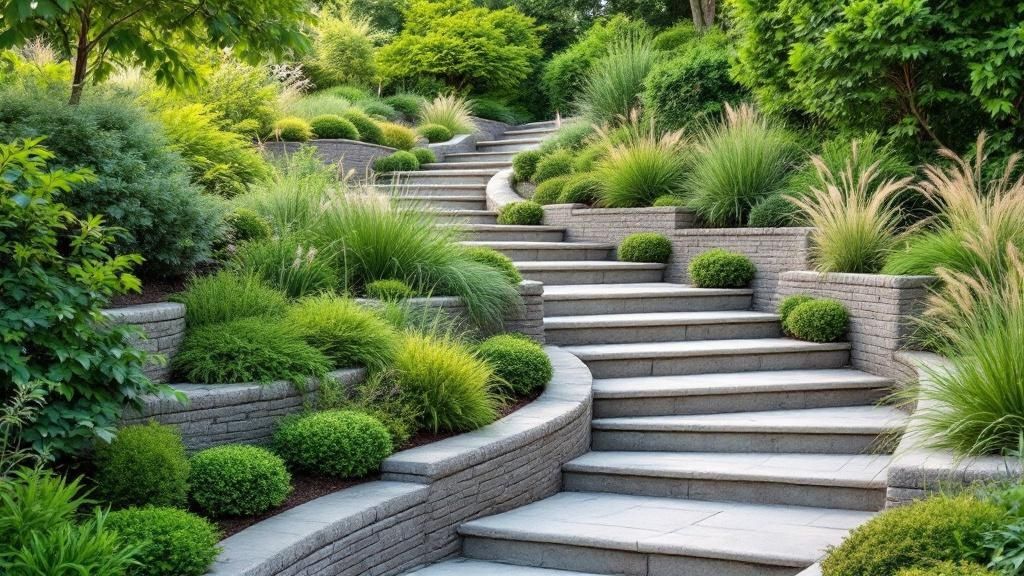
This technique, masterfully employed by landscape architects like Thomas Church in California, transforms a monotonous yard into an engaging journey. For a Morgan Hill property, even a gentle slope can be sculpted into a series of beautiful, accessible levels. This approach allows for creative planting schemes, separating a quiet seating nook from a vibrant perennial garden or a small herb patch.
How to Implement a Multi-Level Landscape
Creating a terraced garden can range from a simple weekend project to a more involved structural build, depending on the slope and materials.
- Raised Garden Beds: The easiest entry point is building raised beds from wood, stone, or Corten steel. This immediately adds height and defines planting areas without major earthmoving.
- Low Retaining Walls: For gentle slopes, low retaining walls made from stacked stone or interlocking concrete blocks can create broad, level terraces. These walls become features themselves.
- Integrated Steps and Platforms: Incorporate steps into your terraced design to ensure easy access. Small deck platforms can be built into a level to create a designated destination for a chair or a fire pit.
Key Insight: Select materials that harmonize with your home’s architecture. Using local stone or natural wood for retaining walls and steps ensures the new levels feel like an organic extension of your property, not a jarring addition.
Proper drainage is critical for the longevity of any retaining wall. Before you begin, explore the fundamentals of terracing a backyard slope to ensure your structure is stable and effective. Remember to plant groundcovers like creeping thyme or sedum on sloped sections to help prevent soil erosion.
4. Multipurpose and Dual-Function Features
In a small yard, every square foot must justify its existence. This is where multipurpose landscaping shines as one of the most intelligent landscaping ideas for small yards. This strategy involves integrating features that serve two or more functions, such as seating that also provides storage or decorative walls that double as planters. By layering utility, you can create a highly functional, uncluttered, and sophisticated outdoor living area without sacrificing style or open space.
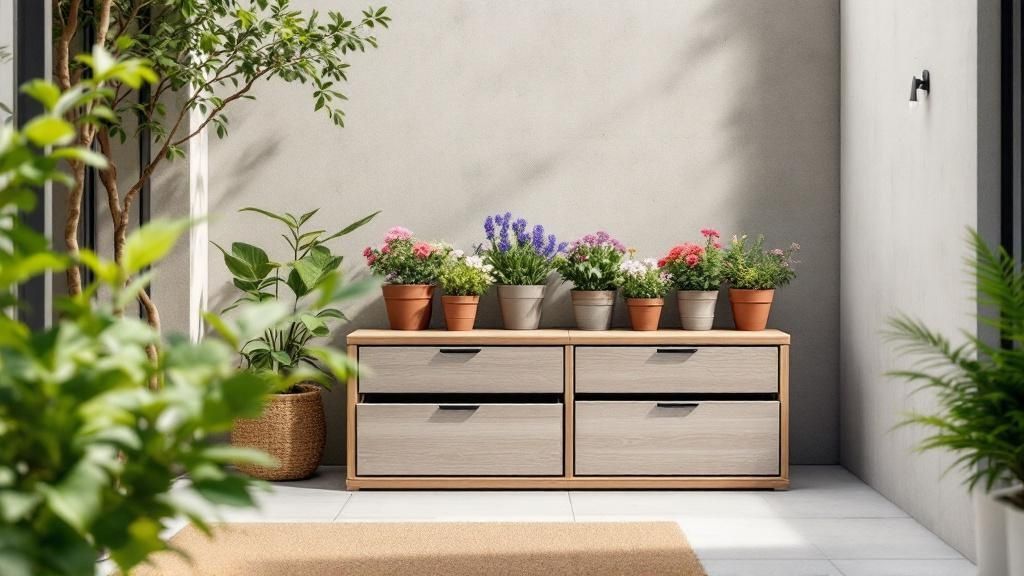
This approach, championed by designers like Jamie Durie, is all about efficiency. For a Morgan Hill homeowner, a single feature can provide seating for guests, storage for garden tools, and a container for herbs all at once. This frees up valuable ground space that would otherwise be consumed by separate benches, sheds, and pots, resulting in a cleaner, more expansive feel.
How to Implement Dual-Function Features
Integrating multipurpose elements can be as simple as buying a smart piece of furniture or as involved as a custom-built installation. The goal is to make every component work harder.
- Built-in Storage Seating: Construct a low retaining wall that doubles as a bench with a hinged lid, revealing storage space for cushions, toys, or irrigation supplies. You can also integrate planter boxes into the ends of the bench.
- Fold-Down Surfaces: A wall-mounted or fence-mounted table can fold down when needed for dining or potting plants, and then fold up to reclaim the space. This is ideal for narrow side yards or small patios. When considering flexible arrangements, a comprehensive guide to portable outdoor furniture can offer valuable insights into adaptable seating and decor.
- Functional Fire Pits: Design a fire pit with a wide, flat ledge that serves as a cocktail table when not in use. Some designs even come with a cover to convert the entire unit into a usable surface.
Key Insight: When designing a multipurpose feature, prioritize its primary function first. A bench must be comfortable for sitting above all else, and a storage unit must be weatherproof. Ensure the secondary function enhances, rather than compromises, the main purpose.
Always use durable, weather-resistant materials like sealed cedar, concrete, or composite decking to ensure your investment withstands Morgan Hill’s seasonal weather changes. Planning for easy cleaning and access is also critical for maintaining these hardworking features over the long term.
5. Illusion Techniques to Expand Visual Space
Some of the most effective landscaping ideas for small yards don't involve adding more elements, but rather, tricking the eye. Illusion techniques use core principles of art and design to create the perception of a larger, more expansive outdoor area. By manipulating perspective, color, and reflection, you can make a compact yard feel open, deep, and far more spacious than its actual square footage suggests.
Pioneered by designers like Christopher Bradley-Hole, who is renowned for creating spacious-feeling urban gardens, these methods are powerful tools for Morgan Hill homeowners with limited outdoor space. A cleverly placed mirror or a path laid on a diagonal can dramatically alter the perceived dimensions of your yard, turning a cramped patio into an inviting and seemingly boundless retreat.
How to Implement Visual Illusions
You can apply these techniques subtly or boldly to achieve your desired effect, often with minimal investment compared to major structural changes.
- Forced Perspective: Place larger, coarse-textured, and brightly colored plants in the foreground, with finer-textured, smaller, and cooler-toned plants in the background. This mimics how we see things at a distance, creating an illusion of depth.
- Strategic Mirror Placement: A large, weatherproof mirror mounted on a fence or wall can instantly double the visual space. Angle it to reflect the most attractive green areas and avoid reflecting seating areas directly, which can be disorienting.
- Diagonal Lines: Avoid straight lines that run parallel to your property lines, as they emphasize the yard's small boundaries. Instead, lay pavers, decking, or garden beds on a 45-degree angle. This diagonal axis draws the eye along a longer line, making the area feel wider.
Key Insight: Use cool colors like blues, purples, and soft grays on boundary fences or for plants at the far end of your yard. Cool colors naturally recede, while warm colors (reds, oranges) advance. This simple color-zoning strategy is a powerful way to enhance the sense of depth.
Before committing, test your ideas. Use a garden hose to mock up a diagonal path or have someone hold a large mirror in different spots to see what reflection works best. These small tests ensure your chosen illusion achieves maximum impact, transforming your yard into a more open and engaging environment.
6. Low-Maintenance Native Plant Gardens
One of the most sustainable and intelligent landscaping ideas for small yards is to embrace the beauty of California's own flora. A native plant garden utilizes species indigenous to the Morgan Hill region, which are perfectly adapted to the local climate, soil, and rainfall patterns. This approach dramatically reduces the need for supplemental watering, fertilizers, and pesticides, creating a self-sufficient ecosystem that is both beautiful and beneficial.
This concept, championed by figures like Lady Bird Johnson and author Doug Tallamy, moves beyond aesthetics to create functional habitats. In a Morgan Hill backyard, a native garden supports essential local pollinators like bees and butterflies, conserves precious water resources, and offers a unique, year-round display of textures and colors that reflect the area's natural heritage.
How to Implement a Native Plant Garden
Creating a thriving native garden involves working with nature, not against it. The key is selecting plants that are already designed to flourish in our specific environment.
- Choose Regional Champions: Opt for plants native to the Santa Clara Valley. Species like California Fuchsia (Epilobium canum), Ceanothus (California Lilac), and Sticky Monkey-flower (Diplacus aurantiacus) provide vibrant color and are magnets for hummingbirds.
- Layer with Grasses: Incorporate native grasses such as Deer Grass (Muhlenbergia rigens) or Purple Needlegrass (Stipa pulchra). These add structure, movement, and a soft, naturalistic feel to the landscape.
- Group by Water Needs: Arrange plants with similar water requirements together. This simplifies irrigation and ensures each plant receives the right amount of moisture, preventing waste and stress. You can find more low-maintenance yard ideas on Tamura Designs.
Key Insight: Focus on creating a layered, naturalistic design rather than a formal, manicured one. A successful native garden mimics the local landscape, allowing plants to form communities and go through their natural cycles of growth and dormancy, which provides visual interest throughout the seasons.
Before planting, amend your soil lightly with compost, but avoid creating an overly rich environment, as many California natives prefer lean, well-draining soil. This small-yard landscaping idea not only saves time and resources but also fosters a deeper connection to the local ecology.
7. Compact Water Features
The tranquil sound of flowing water can transform a small yard into a serene oasis, and you don’t need a sprawling estate to enjoy it. Compact water features are one of the most effective landscaping ideas for small yards, introducing auditory and visual tranquility without consuming precious square footage. These self-contained systems bring the calming presence of water to patios, decks, and garden corners, creating a powerful sensory experience.
Pioneered by companies like Aquascape Inc. and Henri Studio, these features have become increasingly accessible for homeowners. In a Morgan Hill yard, a small fountain can mask neighborhood noise, attract birds, and serve as a sophisticated sculptural element. The gentle movement of water also adds a dynamic quality to a static garden design, making the space feel more alive.
How to Implement a Compact Water Feature
Integrating a water feature is simpler than you might think, with many plug-and-play options available that require minimal installation.
- Wall-Mounted Fountains: These are ideal for tiny spaces as they attach to a fence or exterior wall, using vertical space instead of ground area. They create a beautiful cascade of water and a gentle, soothing sound.
- Container Water Gardens: A half-barrel or a large ceramic pot can be transformed into a miniature pond. Add a small bubbler and a few aquatic plants like water lilies or horsetail reed for a complete ecosystem in a pot.
- Modern Water Bowls: Sleek, geometric bowls made of concrete or metal offer a minimalist aesthetic. Many come with integrated LED lighting, turning them into a dramatic focal point after sunset.
Key Insight: For maximum efficiency and placement flexibility, choose a solar-powered pump. This eliminates the need for nearby electrical outlets, reduces energy consumption, and allows you to place your water feature in the sunniest, most visible spot in your yard.
When setting up your feature, consider using distilled water initially to minimize mineral buildup and algae growth. Also, position it where any splashing will land on hardscaping or water-loving plants, not sensitive foliage. A simple timer can run the pump during the hours you’re most likely to be outside, saving energy while maximizing your enjoyment.
8. Strategic Use of Hardscaping and Pathways
Thoughtful hardscaping is one of the most effective landscaping ideas for small yards, using non-plant elements like pathways, patios, and walls to add structure and function. This approach defines garden areas, improves traffic flow, and creates practical outdoor living zones. By carefully planning these solid surfaces, you can make a small yard feel more organized, expansive, and usable, providing a solid foundation for your greenery.
The principles of modern landscape architecture, championed by figures like Thomas Church, emphasize integrating hardscaping with the natural environment. In a compact Morgan Hill yard, a well-designed patio or pathway is not just a surface; it's a design tool that guides the eye, creates distinct zones for dining or lounging, and reduces lawn maintenance.
How to Implement Strategic Hardscaping
Integrating hardscaping requires a balance between solid surfaces and soft, green elements to avoid overwhelming the space.
- Curving Pathways: Instead of a straight path that rushes the eye to the property line, create gently curving walkways. Using materials like gravel or stepping stones adds texture and encourages a leisurely journey through the garden, making it feel larger.
- Permeable Patios: For patios, consider permeable pavers from brands like Belgard or Unilock. They allow water to drain through, which is environmentally friendly and prevents runoff. You can even leave gaps for planting small, tough groundcovers, softening the look.
- Multi-functional Walls: A low, natural stone retaining wall can do more than just manage a slope. It can double as built-in seating for guests and create a raised planting border, adding vertical interest. To explore more concepts, you can learn more about creative hardscaping and patio ideas.
Key Insight: Use light-colored materials like travertine or light-gray pavers for your hardscape surfaces. These materials reflect sunlight, making the area feel brighter and more open. In Morgan Hill’s warm climate, they also stay cooler underfoot compared to dark-colored stone or concrete.
Before you begin, create a cohesive plan that ensures your hardscape materials complement your home's architectural style. Proper planning for drainage is also essential to prevent water from pooling and causing issues down the line, ensuring your beautiful and functional space lasts for years.
8 Landscaping Ideas Comparison Matrix
| Item | Implementation Complexity 🔄 | Resource Requirements ⚡ | Expected Outcomes 📊 | Ideal Use Cases 💡 | Key Advantages ⭐ |
|---|---|---|---|---|---|
| Vertical Gardens and Living Walls | Medium to High (structural, irrigation) | Moderate to High (materials, water) | Maximizes vertical space, visual impact, air quality | Small spaces, indoor/outdoor walls, edible plants | Space-efficient, aesthetic, improves air |
| Container and Raised Bed Gardening | Low to Medium (assembly, soil prep) | Moderate (containers, soil, water) | Flexible planting, better soil/drainage control | Small yards, patios, mobility needs | Soil control, portability, accessibility |
| Multi-Level Landscaping with Terracing | High (construction, engineering) | High (materials, labor) | Creates depth, distinct zones, erosion control | Sloped yards, space maximization, architectural | Visual depth, maximizes planting, drainage |
| Multipurpose and Dual-Function Features | Medium to High (design, build complexity) | Moderate (custom furniture/materials) | Maximizes function, reduces clutter | Small spaces needing versatility | Space-saving, cost-effective, adaptable |
| Illusion Techniques to Expand Visual Space | Low to Medium (design planning needed) | Low (mirrors, paint, plants) | Makes space appear larger, engaging aesthetics | Small gardens needing visual expansion | Cost-effective, enhances visual interest |
| Low-Maintenance Native Plant Gardens | Low (plant selection and planting) | Low to Moderate (native plants) | Drought tolerant, supports wildlife | Low-maintenance yards, ecological gardening | Very low maintenance, eco-friendly |
| Compact Water Features | Medium (installation, pump setup) | Moderate (water system, electricity) | Adds sound, cooling, focal point | Small spaces needing ambiance | Relaxing, cooling, attracts wildlife |
| Strategic Hardscaping and Pathways | High (construction, design planning) | High (materials, labor) | Defines zones, increases outdoor living space | Organized small yards, traffic flow improvement | Visual structure, durable, functional space |
Bring Your Vision to Life with Expert Design
Transforming a compact outdoor area from a simple patch of grass into a functional and breathtaking oasis is entirely achievable. The key to success lies not in having more square footage, but in smart, strategic design. Throughout this guide, we've explored a variety of powerful landscaping ideas for small yards, each one offering a unique way to maximize space, enhance beauty, and reflect your personal style right here in Morgan Hill.
The journey begins with a clear vision. By combining the concepts we've covered, you can craft a cohesive and impactful outdoor living space. Imagine a yard where vertical gardens draw the eye upward, creating a lush, green backdrop without consuming valuable floor space. Picture multi-level terraces that define distinct zones for dining and relaxation, or the clever integration of a bench that doubles as storage. These are not just isolated tricks; they are components of a larger, harmonious design.
Key Takeaways for Your Small Yard Transformation
The most impactful small yard landscapes are born from a synthesis of creativity and practicality. Remember these core principles as you move forward:
- Think in Three Dimensions: Don't limit your design to the ground. Go vertical with living walls, use terracing to create depth, and select plants of varying heights to add complexity and visual interest.
- Embrace Multifunctionality: Every element should work hard. Choose features that serve dual purposes, such as a fire pit table, a retaining wall that doubles as seating, or planters that act as privacy screens.
- Create Illusions of Space: Strategic design can make your yard feel larger. Use curved pathways to create a sense of journey, install a mirror to reflect light and greenery, and use a unified color palette for hardscaping to create a seamless, expansive look.
- Prioritize a Focal Point: Whether it’s a compact water feature, a striking piece of art, or a beautifully designed patio, a single, strong focal point provides structure and prevents the space from feeling cluttered or chaotic.
Your Actionable Next Steps
With these landscaping ideas for small yards in hand, your next step is to evaluate your own property. Start by sketching a rough layout of your yard, noting sun exposure, existing features, and how you envision using the space. Consider which ideas resonate most with your lifestyle. Are you an avid gardener drawn to raised beds? Or do you crave a low-maintenance retreat centered around native plants and elegant hardscaping?
While a DIY approach can be fulfilling, the intricacies of executing a sophisticated, integrated design often require professional expertise. Achieving perfect drainage on a terraced slope, ensuring structural integrity for a custom built-in bench, or designing a lighting scheme that enhances the evening ambiance are tasks where an experienced hand makes all the difference. An expert can see the hidden potential in your yard, helping you navigate Morgan Hill’s specific climate and soil conditions to create a landscape that not only looks stunning on day one but thrives for years to come.
Ultimately, your small yard is a canvas of opportunity. It’s a chance to extend your living space, connect with nature, and create a private sanctuary tailored perfectly to you. By applying these thoughtful design principles, you can unlock its full potential and craft an outdoor environment that brings you joy every single day.
Ready to turn your inspiration into a professionally crafted reality? The award-winning team at Tamura Designs Landscape and Construction specializes in creating stunning, functional, and personalized outdoor spaces for Morgan Hill homeowners. We translate complex landscaping ideas for small yards into beautiful, lasting environments. Contact us today to schedule your consultation and let’s begin designing the landscape of your dreams.
