
Imagine a backyard that invites you to relax, not to work. In the sun-drenched climate of Morgan Hill, creating a beautiful outdoor space often feels like a full-time job of watering, weeding, and endless upkeep. For busy homeowners and eco-conscious residents, the dream is a stunning yard that thrives with minimal effort and resources. This guide is your roadmap to achieving that balance. We'll explore nine transformative low maintenance backyard ideas, specifically tailored for our local environment, that prioritize both beauty and practicality.
These aren't just generic tips; they are actionable strategies that will help you create a sustainable, stylish, and stress-free outdoor sanctuary. We will cover everything from smart plant selections that conserve water to durable hardscaping that eliminates mowing. By focusing on intelligent design and material choices, you can dramatically reduce the time spent on yard chores.
To start designing your oasis, consider incorporating plants that demand minimal attention. Discover which plantas fáciles de cuidar will allow you to enjoy more of your free time. Let's dive into the designs that give you back your weekends while enhancing your home's natural beauty and value.
1. Master Morgan Hill's Climate with Xeriscaping & Native Plants
For Morgan Hill homeowners, embracing our region's Mediterranean climate is the most effective strategy for creating a truly low maintenance backyard. Xeriscaping, a landscaping philosophy developed in the 1980s, is the perfect solution. It focuses on water conservation by utilizing native and drought-tolerant plants, efficient irrigation, and smart design principles. The result is a stunning, resilient landscape that thrives in our local conditions, drastically cutting down on watering, weeding, and general upkeep once established.
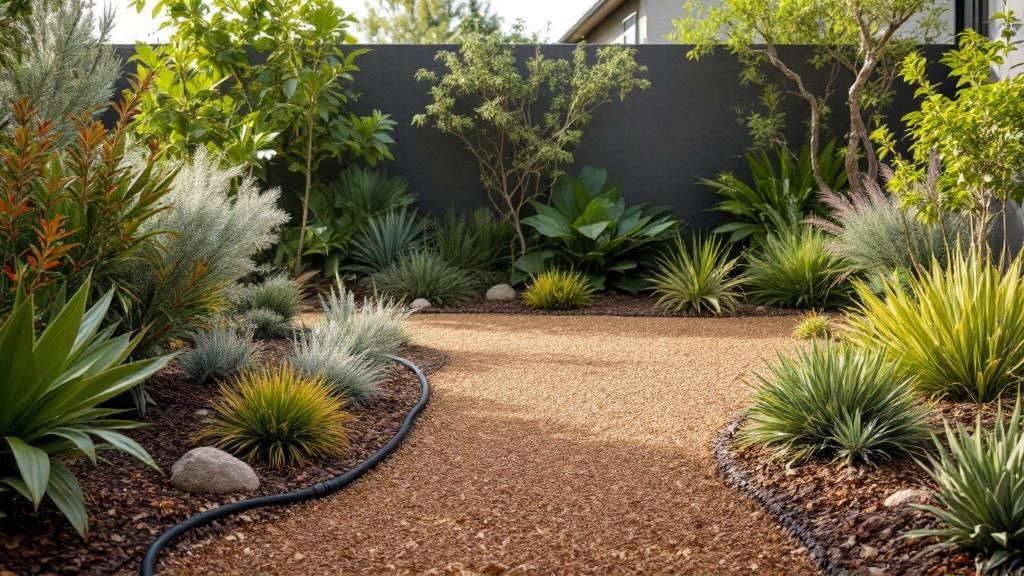
This approach replaces thirsty, non-native turf grass with a vibrant tapestry of textures and colors that are naturally adapted to California's dry summers. It's a cornerstone of sustainable, low maintenance backyard ideas that works with our environment, not against it.
How to Implement Xeriscaping
Successfully creating a xeriscaped garden involves more than just picking a few succulents. A thoughtful plan is key to long-term success and minimal effort.
- Start with Soil: Before you buy a single plant, conduct a simple soil test to understand its composition (clay, loam, sand) and pH. This will guide your plant selections and any necessary amendments.
- Group Plants Wisely: Arrange plants with similar water needs together in "hydrozones." This prevents overwatering some plants while underwatering others, making your irrigation far more efficient.
- Install Drip Irrigation: A drip system delivers water directly to the plant's root zone, minimizing evaporation and waste. Install this network before you put your plants in the ground.
- Mulch Generously: Apply a 3- to 4-inch layer of organic mulch like shredded bark or wood chips around your plants. This retains soil moisture, suppresses weeds, and regulates soil temperature.
By choosing plants specifically suited for our area, you create a self-sustaining ecosystem. For a curated list of excellent choices, explore these California native and drought-tolerant plants.
2. Embrace Ever-Green with Artificial Turf and Synthetic Grass
For homeowners who love the lush, manicured look of a perfect lawn but dread the endless cycle of mowing, watering, and fertilizing, modern artificial turf is a game-changing solution. Gone are the days of plasticky, unrealistic fake grass. Today’s high-quality synthetic grass systems offer an incredibly realistic alternative that provides a consistently green, usable surface year-round. This is one of the most direct low maintenance backyard ideas for eliminating lawn care chores entirely.
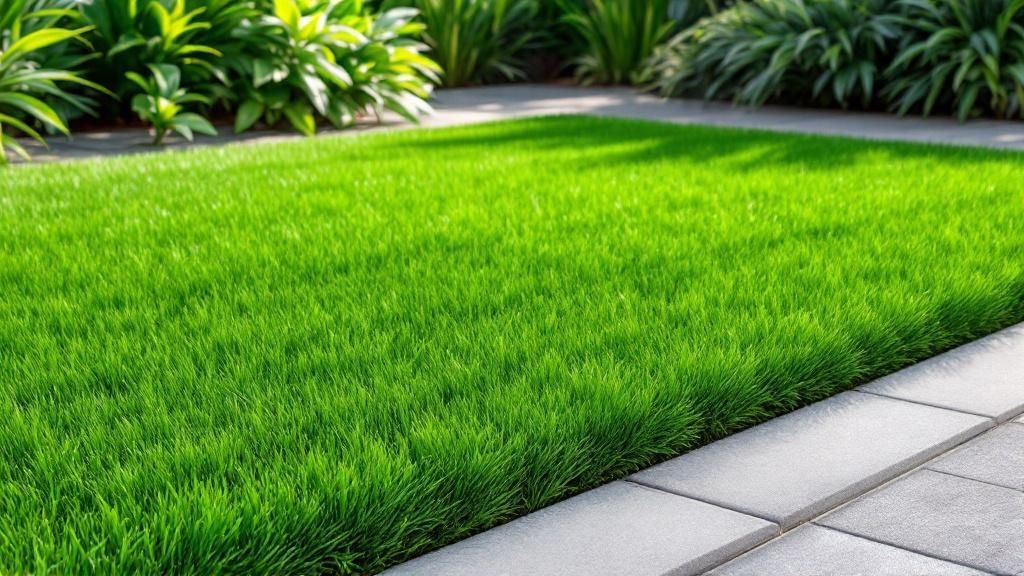
This option is particularly appealing in drought-prone areas like Morgan Hill, where water conservation is a priority. It provides the classic backyard aesthetic without the environmental cost or labor of a traditional lawn, making it ideal for everything from family play areas to elegant putting greens.
How to Implement Artificial Turf
A successful and long-lasting artificial turf installation hinges on quality materials and meticulous preparation. Skimping on the groundwork will lead to problems down the road.
- Prioritize Proper Base Preparation: This is the most critical step. The ground must be excavated and graded, followed by a compacted base of crushed stone or decomposed granite. This ensures superior drainage and a smooth, stable surface.
- Choose High-Quality Turf: Invest in turf with a high face weight, durable backing, and robust UV protection to prevent fading. Lighter-colored options can help reduce heat absorption in sunny Morgan Hill backyards.
- Install Edging: Secure the perimeter with bender board or another form of landscape edging. This locks the turf in place, prevents the edges from lifting, and creates a clean, finished look against garden beds or patios.
- Use the Right Infill: Infill, typically specialized sand, is brushed into the fibers to help them stand upright, add weight, and protect the backing. Choose an infill appropriate for your intended use, such as a non-toxic option for pet areas.
3. Gravel and Stone Gardens
For a backyard that offers maximum visual impact with minimal upkeep, consider a gravel and stone garden. This design philosophy swaps high-maintenance lawns and garden beds for a sophisticated landscape of rocks, pebbles, and carefully selected plants. To create textural interest and reduce water needs in your backyard, consider incorporating gravel and stone gardens, exploring various gravel and stone chippings for your design. The result is a clean, modern aesthetic that provides excellent drainage and eliminates the need for mowing, fertilizing, and frequent watering.
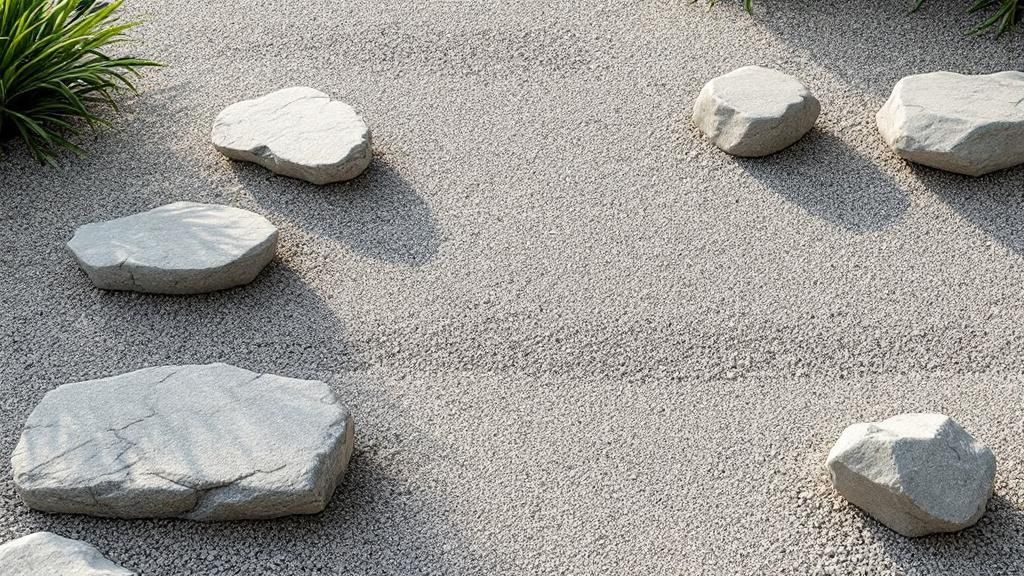
From serene Japanese zen gardens to chic Mediterranean courtyards, stone-based landscapes are incredibly versatile. They serve as a perfect canvas for drought-tolerant specimen plants, creating a durable and striking addition to any Morgan Hill home. This is one of the most effective low maintenance backyard ideas for homeowners who value both style and simplicity.
How to Implement a Gravel Garden
A successful stone garden is built on a solid foundation. Proper preparation is essential to prevent weed growth and ensure the stones stay in place for years to come.
- Lay Down Landscape Fabric: Before spreading any stone, cover the entire area with a high-quality, permeable landscape fabric. This crucial step blocks weeds from sprouting up through the gravel while still allowing water to drain into the soil below.
- Install Sturdy Edging: Use metal, stone, or composite edging to create clean lines and contain the gravel. This prevents stones from spilling into adjacent plant beds or patio areas, keeping your design crisp and tidy.
- Vary Textures and Sizes: Combine different types of stone to add depth and visual interest. Mix larger river rocks with fine pea gravel or angular chippings to create a dynamic, layered look that feels natural and intentional.
- Create Pathways: Integrate larger, flat stepping stones or pavers to design clear and comfortable pathways through the gravel areas. This makes the space more functional and protects the smaller stones from being displaced.
By carefully planning your layout and materials, you can craft a stunning and virtually maintenance-free outdoor space. For more inspiration, you can explore other drought-tolerant landscaping ideas.
4. Raised Garden Beds with Perennials
For Morgan Hill gardeners who love the look of a cultivated garden but not the back-breaking labor, raised garden beds filled with perennials offer the perfect compromise. This approach elevates your planting areas, providing superior drainage, easier access, and complete control over your soil quality. By planting perennials, which return year after year, you eliminate the annual chore of replanting, making this one of the most sustainable and effective low maintenance backyard ideas.
This method combines the organizational benefits popularized by the Square Foot Gardening movement with the long-term, low-effort appeal of perennial plants. The result is a tidy, productive, and beautiful garden feature that requires minimal upkeep once established, freeing you from constant bending, tilling, and weeding.
How to Implement Raised Garden Beds
Building and planting a successful raised bed garden is a straightforward project that pays dividends in reduced effort for years to come. A structured plan is key to creating a lasting, beautiful feature.
- Choose Durable Materials: Select rot-resistant materials like cedar, redwood, or high-quality composite lumber for the bed structure. These materials ensure your garden bed will withstand the elements for many seasons.
- Create the Perfect Soil Mix: Fill your beds with a high-quality blend of topsoil, compost, and amendments like perlite for drainage. This controlled environment gives your plants the ideal foundation to thrive, free from poor native soil issues.
- Incorporate Smart Irrigation: Before planting, install a simple drip irrigation or soaker hose system within the bed. This targets water directly to the plant roots, ensuring efficient hydration while keeping foliage dry and reducing disease risk.
- Select Climate-Appropriate Perennials: Choose perennials that are well-suited to Morgan Hill's climate. Options like Lavender, Salvia, and Yarrow provide beautiful blooms and textures while demanding very little water once established.
- Apply a Thick Layer of Mulch: Cover the soil surface with a 2- to 3-inch layer of organic mulch. This crucial step suppresses weeds, conserves moisture in our dry summers, and regulates soil temperature.
5. Embrace Flexibility with Container and Pot Gardens
For Morgan Hill homeowners who desire the beauty of a garden without the commitment of in-ground planting, container gardening is an exceptional solution. This approach uses various pots, planters, and raised beds to create curated garden spaces. It offers unparalleled flexibility, allowing you to easily rearrange your backyard layout, bring plants indoors during unexpected frost, or simply experiment with new plant varieties season after season. This method provides total control over soil, watering, and sun exposure, making it one of the most adaptable low maintenance backyard ideas available.
Container gardens are perfect for patios, balconies, or any area where digging into the ground isn't feasible. They nearly eliminate weeding and make tending to plants a simple, manageable task. You can create a compact herb garden right outside your kitchen door or a stunning display of seasonal flowers to brighten up a sitting area, all with minimal physical effort.
How to Implement a Container Garden
Creating a thriving and low-effort container garden requires a few key considerations to ensure your plants flourish with minimal intervention.
- Prioritize Drainage: This is non-negotiable. Ensure every container has at least one drainage hole at the bottom. Without it, water will pool and cause root rot, the most common reason container plants fail.
- Use Quality Potting Mix: Never use soil directly from your garden. It becomes compacted in pots, preventing proper drainage and aeration. Purchase a high-quality potting mix specifically designed for containers; it’s lightweight and formulated for optimal root health.
- Group for Efficiency: Arrange pots with similar water and sun requirements together. This strategy, similar to hydrozoning in xeriscaping, streamlines your watering routine and ensures each plant gets exactly what it needs.
- Choose the Right Size: Select plants that are appropriate for the container's size. A plant that will grow large needs a large pot to accommodate its root system. A small plant in a massive pot can lead to overly moist soil. For a hassle-free option, consider self-watering containers that significantly reduce watering frequency.
6. Mulched Landscape Areas
One of the most powerful and simple low maintenance backyard ideas is the strategic use of mulch. Mulching involves covering the soil in garden beds and around plants with a layer of organic or inorganic material. This simple act creates a barrier that significantly suppresses weed growth, retains precious soil moisture to reduce watering needs, and regulates soil temperature, protecting plant roots from Morgan Hill's summer heat. The result is a clean, uniform, and professional-looking landscape that requires far less active work from you.
Beyond weed and water management, mulch enriches the soil as it decomposes (if organic), improving its structure and fertility over time. It’s a foundational technique used by professional landscapers to create resilient, attractive, and easy-to-care-for garden spaces. From shredded hardwood in flower beds to pine needles around acid-loving plants, the right mulch is a true workhorse.
How to Implement Mulching
Effective mulching is about more than just spreading it around. Following a few key steps ensures you get the maximum benefit with minimal future effort.
- Prepare the Area: Before applying any mulch, thoroughly weed the garden bed. For areas with persistent weeds, consider laying down a layer of cardboard or several sheets of newspaper first.
- Apply the Right Depth: Spread a layer of mulch that is 2 to 4 inches deep. This is the optimal thickness for suppressing weeds and retaining moisture. Too thin, and it won't be effective; too thick, and it can suffocate plant roots.
- Create a "Donut" Not a "Volcano": When mulching around trees and shrubs, pull the material back from the base of the trunk or stems. Piling mulch directly against the plant, a "mulch volcano," can trap moisture and lead to rot and disease.
- Choose Your Material: Organic mulches like shredded bark or wood chips break down to improve soil health and need to be refreshed annually. Inorganic options like decomposed granite or pea gravel are permanent but don't add nutrients to the soil. Choose one that complements your home's aesthetic and your plants' needs.
7. Embrace Durability with Hardscape Patios and Pathways
For homeowners in Morgan Hill looking to create truly functional and low maintenance backyard ideas, hardscaping is the ultimate foundation. By replacing high-maintenance lawns or weed-prone dirt areas with permanent surfaces like stone, pavers, or concrete, you establish a durable, all-weather space for living and entertaining. These elements define your outdoor rooms, providing a clean, stable surface that eliminates mud, mowing, and constant weeding.
Hardscape patios and pathways are the workhorses of a low-upkeep landscape. They provide structure, direct foot traffic, and create designated zones for dining, lounging, or cooking, dramatically reducing the amount of living space that requires regular horticultural care. This is a key strategy for enjoying your backyard more and working in it less.
How to Implement Hardscape Surfaces
A successful hardscape installation is built on a solid foundation, ensuring it remains beautiful and functional for decades with minimal intervention.
- Prioritize Proper Preparation: The longevity of any patio or pathway depends on its base. Excavate the area and install a compacted layer of crushed rock or base material. This step is crucial for preventing shifting, cracking, and sinking over time.
- Plan for Drainage: Ensure all hardscape surfaces are graded with a slight slope, typically about 1/4 inch per foot, directing water away from your home's foundation and preventing pooling.
- Select Climate-Appropriate Materials: Choose materials that can withstand Morgan Hill's hot summers and cool, wet winters. Natural stone like slate or flagstone and high-quality pavers are excellent choices. Consider non-slip surfaces for areas around pools or walkways for enhanced safety.
- Incorporate Expansion Joints: For larger concrete patios, strategically placed expansion joints are a must. They allow the material to safely expand and contract with temperature changes, preventing unsightly cracks and structural damage.
By investing in well-designed hardscaping, you create a permanent, stylish extension of your home. For more design inspiration, explore these stunning hardscaping and patio ideas.
8. Design a Sculptural Succulent & Cactus Garden
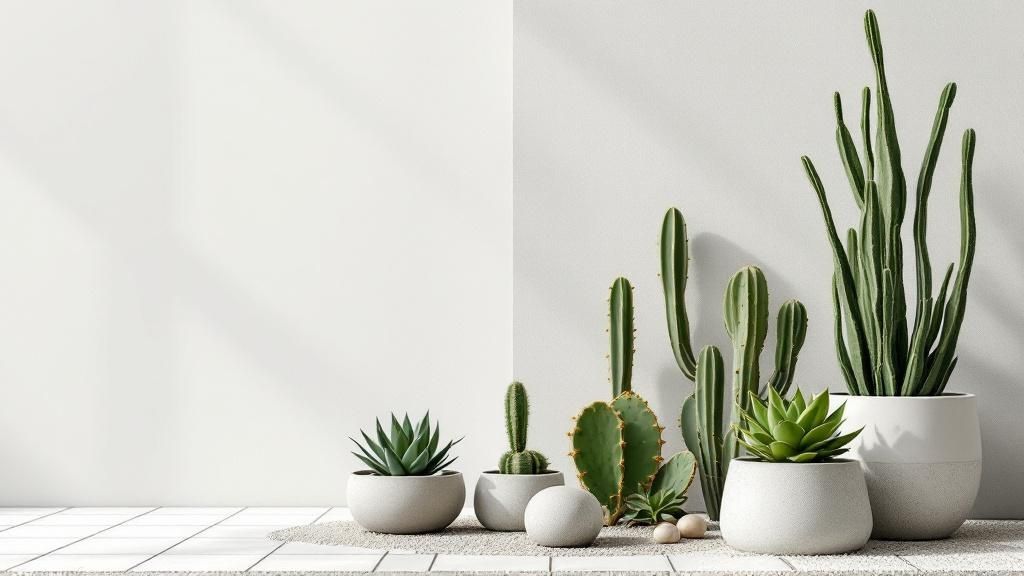
For a truly dramatic and water-wise landscape, designing a garden centered on succulents and cacti is one of the most impactful low maintenance backyard ideas. These plants are nature's sculptures, offering incredible variety in form, texture, and color, from the geometric rosettes of echeverias to the towering columns of a saguaro relative. Because they store water in their leaves and stems, they are perfectly adapted to dry conditions and require minimal intervention once established.
This approach creates a visually stunning, almost otherworldly garden that thrives on neglect. It’s an ideal choice for sunny, exposed areas of your Morgan Hill yard where other plants might struggle, transforming a problem spot into a focal point.
How to Create a Thriving Succulent Garden
Success with succulents and cacti hinges almost entirely on one factor: drainage. These desert natives despise "wet feet" and will quickly succumb to root rot in waterlogged soil.
- Prioritize Drainage: If you have heavy clay soil, amend it heavily with pumice, perlite, or coarse sand. Alternatively, create raised beds or mounds using a specialized cactus and succulent potting mix to ensure water drains away quickly.
- Mind the Sun: While most cacti and succulents love sun, the intense Morgan Hill summer heat can scorch some varieties. Plants like aloes and haworthias may appreciate some protection from the harshest afternoon sun.
- Water Deeply, Not Often: Mimic a desert downpour. When the soil is completely dry, water thoroughly until it runs out the bottom of the pot or soaks deep into the garden bed. Then, let it dry out completely before watering again. For most of the year, this may only be once every few weeks.
- Group for Success: Just like with other xeriscaping, group plants with similar light and water requirements. This simple step ensures every plant gets exactly what it needs without extra effort from you.
9. Install an Automatic Irrigation System
For a truly hands-off approach to garden care, nothing beats an automatic irrigation system. This technology is a cornerstone of modern low maintenance backyard ideas, eliminating the daily chore of watering. Instead of dragging hoses around, you can rely on a programmed system to deliver the precise amount of water your plants need, exactly when they need it. This not only saves you significant time but also conserves water by preventing overwatering and evaporation, a crucial benefit in Morgan Hill's climate.
From simple timers to sophisticated smart controllers, automated systems ensure your landscape remains healthy and vibrant with minimal daily effort. They are particularly effective when paired with xeriscaping, as they provide consistent moisture directly to the root zones of drought-tolerant plants, helping them establish strong, resilient root systems.
How to Implement Automatic Irrigation
Choosing and installing the right system for your specific backyard layout is key to maximizing its benefits and ensuring long-term, trouble-free operation.
- Choose Your System: For garden beds, trees, and shrubs, a drip irrigation system is ideal. It uses emitters to deliver water slowly and directly to the soil, minimizing waste. For lawn areas, traditional pop-up sprinklers are more effective, but should be zoned separately.
- Invest in a Smart Controller: Upgrade from a basic timer to a smart controller. These devices connect to Wi-Fi and use local weather data to automatically adjust watering schedules. They will skip cycles when it rains and increase watering during heatwaves.
- Water at the Right Time: Program your system to run in the early morning, typically between 4 a.m. and 7 a.m. Watering during this cool, calm window reduces water loss from wind and evaporation, allowing more water to soak into the soil.
- Perform Regular Maintenance: At the start of each growing season, check your system for leaks, clogged drip emitters, or misaligned sprinkler heads. A quick seasonal tune-up prevents wasted water and ensures every plant gets the hydration it needs.
Low Maintenance Backyard Ideas Comparison
| Item | Implementation Complexity 🔄 | Resource Requirements ⚡ | Expected Outcomes 📊 | Ideal Use Cases 💡 | Key Advantages ⭐ |
|---|---|---|---|---|---|
| Xeriscaping with Native Plants | Medium to High (knowledge of natives, 2-3 years to establish) | Moderate to High (initial setup, irrigation) | Long-term water savings, sustainable landscape | Water conservation, low maintenance gardens | Significant water savings, supports wildlife |
| Artificial Turf and Synthetic Grass | Medium (installation and base prep) | High (upfront cost, quality materials) | Year-round green lawn, minimal maintenance | Drought-prone areas, no-mow lawns | No watering/mowing, durable, pet-safe |
| Gravel and Stone Gardens | Medium (landscape fabric, edging needed) | Moderate to High (materials and installation) | Low maintenance, excellent drainage | Dry climates, minimalist textures | Weed suppression, very low maintenance |
| Raised Garden Beds with Perennials | Medium (construction and soil prep) | Moderate (materials, quality soil) | Easy maintenance, perennial harvests over years | Home vegetable/herb gardens, accessible beds | Better drainage, reduced back strain |
| Container and Pot Gardens | Low to Medium (pot selection and arrangement) | Low to Moderate (containers, potting mix) | Flexible design, easy access, movable plants | Small spaces, urban/rented areas | Portable, minimal weeding |
| Mulched Landscape Areas | Low (application and replenishment) | Low (mulch materials, periodic replacement) | Reduced weeds, moisture retention | All garden types needing ground cover | Weeding reduction, improved soil moisture |
| Hardscape Patios and Pathways | High (construction, base prep, design) | High (materials, labor intensive) | Durable, low maintenance functional spaces | Outdoor living, entertaining areas | Long-lasting, increases property value |
| Succulent and Cactus Gardens | Low to Medium (plant selection, drainage) | Low to Moderate (plants, soil amendments) | Extremely low water use, unique appearance | Hot, dry climates, drought-tolerant designs | Very low maintenance, striking visuals |
| Automatic Irrigation Systems | Medium to High (technical setup/programming) | Moderate to High (equipment, installation) | Efficient, consistent watering, water savings | Gardens needing precise watering control | Water efficiency, programmable automation |
Designing Your Low-Effort, High-Reward Morgan Hill Backyard
Creating the ideal outdoor space is a powerful act of reclaiming your time and enhancing your quality of life. As we've explored, transforming your yard from a source of weekend chores into a personal sanctuary is not only possible but also a smart, sustainable choice for Morgan Hill homeowners. The core principle weaving through every idea, from vibrant xeriscaping to elegant hardscape patios, is intentional design. It's about making conscious choices upfront to create a beautiful, functional, and self-sufficient environment that thrives in our local climate.
By embracing these low maintenance backyard ideas, you are not just reducing your to-do list; you are investing in a lifestyle. You are choosing more time for family gatherings on a durable composite deck, more quiet moments in a serene gravel garden, and more enjoyment of California's natural beauty without the constant demand for water and work. The path to achieving this isn't a single solution but a combination of synergistic strategies tailored to your specific property and personal taste.
Key Takeaways for Your Outdoor Transformation
Recalling the powerful strategies we've covered, a few central themes emerge as your roadmap to a hassle-free backyard:
- Embrace Water-Wise Solutions: Techniques like xeriscaping with native plants, installing efficient automatic irrigation, and creating succulent gardens are fundamental. These approaches work with Morgan Hill's climate, not against it, drastically cutting down on watering duties and utility costs.
- Prioritize Durable Hardscaping: Replacing traditional lawns with elements like paver patios, stone pathways, or even high-quality artificial turf provides a permanent, beautiful foundation for your yard. These surfaces eliminate mowing, weeding, and fertilizing from entire zones of your property.
- Contain and Control Your Greenery: The strategic use of raised garden beds, container gardens, and defined mulched areas allows you to enjoy the beauty of plants without letting them take over. This controlled approach simplifies planting, weeding, and maintenance, focusing your efforts on small, manageable spaces.
Your Next Steps to a Maintenance-Free Lifestyle
The true value of a well-designed backyard is measured in the moments of peace and connection it provides. It becomes a seamless extension of your home, a place for relaxation and entertainment that doesn't demand constant upkeep. The ultimate goal is to build an oasis that serves you, freeing up your valuable time and energy for what truly matters. By thoughtfully combining a few of these proven low maintenance backyard ideas, you can craft a stunning, eco-conscious landscape that is both a personal retreat and a valuable asset to your home.
The journey begins with a clear vision and a solid plan. Consider which of these concepts resonated most with you. Was it the modern appeal of a cactus garden, the classic utility of a paver patio, or the smart efficiency of an automated sprinkler system? Start by assessing your current yard's biggest time sinks and imagine how these solutions could solve those specific challenges. Planning is the most critical step, ensuring every element works in harmony to create the effortless, high-reward backyard you deserve.
Ready to turn these ideas into a stunning reality? The expert team at Tamura Designs Landscape and Construction specializes in crafting personalized, low-upkeep outdoor living spaces specifically for the Morgan Hill community. They can help you design and implement the perfect combination of hardscaping, water-wise plantings, and smart features to create the backyard you've always dreamed of. Contact Tamura Designs Landscape and Construction to start your transformation today.
