
Welcome to the future of beautiful, sustainable living in Morgan Hill. As California's climate continues to challenge traditional gardening, embracing water-wise design is no longer a niche trend, it is a necessity for creating a stunning outdoor space that thrives. A lush, vibrant yard does not have to mean a high water bill. The key is working smarter, not harder, by choosing plants, materials, and systems that are naturally suited to our local environment.
This guide moves beyond the simple idea of 'less lawn' and dives into 10 comprehensive and actionable drought tolerant landscaping ideas. We will explore everything from vibrant xerophytic native plant gardens and modern hardscapes to cutting-edge drip irrigation technology and rainwater harvesting. You will discover practical strategies for building a low-maintenance, high-impact landscape that conserves water while reflecting your personal style.
Whether you're aiming to drastically cut your water usage, support local ecosystems, or simply create a beautiful, low-maintenance oasis, these strategies provide the blueprint. Here, you will find the expert-backed insights needed to build a resilient and breathtaking Morgan Hill landscape that stands up to the driest seasons with grace and beauty.
1. Xerophytic Native Plant Gardens
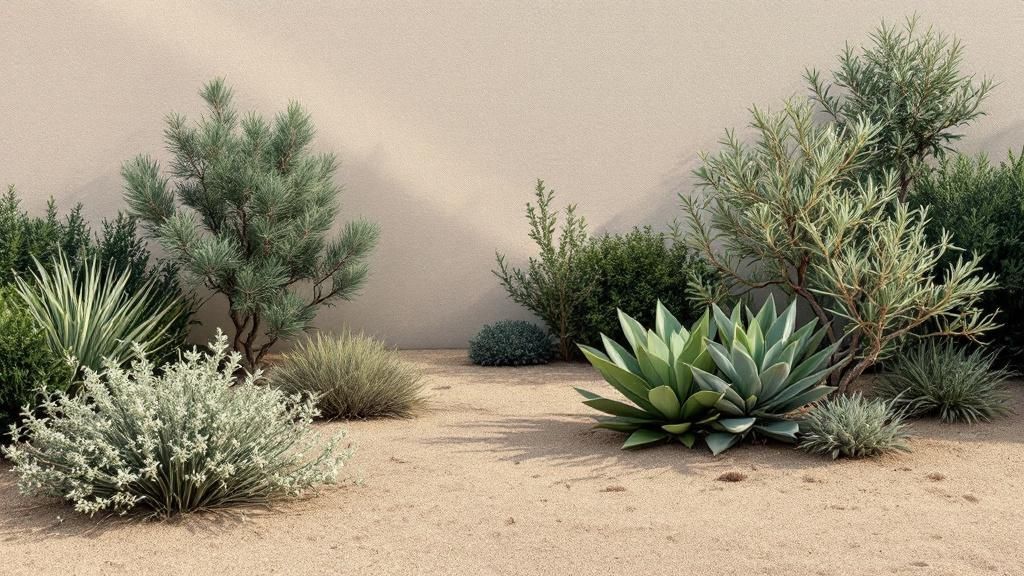
A xerophytic native plant garden is a cornerstone of drought tolerant landscaping ideas, focusing on plants indigenous to the Morgan Hill region that are naturally adapted to its specific climate and soil conditions. This approach works with nature, not against it, creating a self-sustaining landscape that requires minimal water once established. By choosing species that have evolved to thrive in California's dry summers, you can cultivate a beautiful, resilient garden that supports local pollinators and wildlife.
Why Choose Native Plants?
Opting for native plants like California Lilac (Ceanothus) and Manzanita means you are planting species perfectly suited for Morgan Hill's clay-like soils and seasonal rainfall patterns. Once their root systems are established, typically after one to two years, they can often survive on natural precipitation alone. This significantly reduces your household's water consumption and maintenance workload, eliminating the need for constant fertilizing and pest control that non-native plants often require.
Getting Started with a Native Garden
Implementing a native garden is a manageable and rewarding project. Follow these actionable steps for success:
- Consult Local Experts: Reach out to the California Native Plant Society (CNPS) Santa Clara Valley Chapter for a list of plants that will thrive specifically in your Morgan Hill microclimate.
- Plant in the Fall: Planting in autumn allows the plants' roots to establish during the cooler, wetter months, preparing them to withstand the summer heat.
- Group Plants by Need: Arrange plants with similar water and sun requirements together. This practice, known as hydrozoning, makes irrigation more efficient and prevents over or under-watering.
- Start Small: Begin with a small, manageable section of your yard. You can gradually expand your native garden as you gain confidence and see the beautiful results.
2. Gravel and Rock Mulch Systems
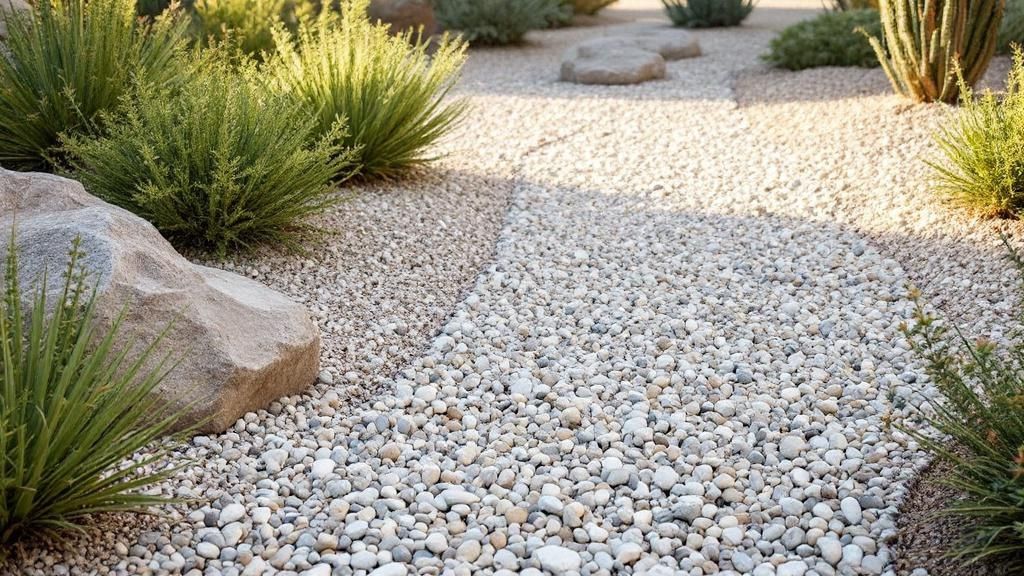
Gravel and rock mulch systems are a powerful tool in the arsenal of drought tolerant landscaping ideas, offering both aesthetic appeal and significant water conservation benefits. This technique involves using decorative stones, gravel, or pebbles as a top layer over the soil, which helps to lock in moisture, suppress weed growth, and regulate soil temperature. By mimicking the durable, low-maintenance ground cover found in naturally arid environments, this approach creates a clean, modern look that dramatically reduces your landscape's water needs.
Why Choose Gravel and Rock Mulch?
Unlike organic mulches like wood chips that decompose over time, rock mulch is a permanent, one-time investment that won't need replenishing. It excels in hot, sunny areas where organic materials might dry out too quickly or even become a fire hazard. For Morgan Hill homeowners, a rock mulch system provides a durable, fire-resistant ground cover that effectively reduces water evaporation from the soil surface, keeping plant roots cooler and moister for longer periods.
Getting Started with Rock Mulch
Integrating a rock mulch system into your landscape is a straightforward process with long-term payoffs. Here are some actionable steps to ensure success:
- Install a Weed Barrier: Always lay down a high-quality, permeable landscape fabric before spreading the rocks. This step is crucial for preventing weeds from sprouting through the stones.
- Choose Lighter Colors: In the intense Morgan Hill sun, light-colored gravel or pebbles can help reflect solar radiation, preventing the soil from overheating and protecting plant roots.
- Create Clean Edges: Use durable edging materials like steel or stone to create defined borders for your gravel areas. This prevents the rocks from migrating into lawns or onto pathways.
- Leave Space for Plants: When placing rocks around plants, leave a small, clear circle around the base of each stem. This prevents excess moisture from accumulating against the plant, which can lead to rot.
3. Succulent and Cactus Gardens
A succulent and cactus garden is a visually striking and highly effective drought tolerant landscaping idea, leveraging plants renowned for their water-storing capabilities. Featuring architectural species like agaves, aloes, echeverias, and various cacti, this style creates a dynamic, low-maintenance landscape. These plants have evolved specialized tissues to survive extended periods without rain, making them perfectly suited for a water-wise garden in Morgan Hill's climate.

Why Choose Succulents and Cacti?
The primary benefit of a succulent and cactus garden is its extremely low water requirement. These plants thrive in conditions that would stress or kill traditional turf and ornamentals. Their unique shapes, textures, and colors, from the silvery-blue of Agave tequilana to the vibrant rosettes of Echeveria, offer endless design possibilities for creating a living sculpture garden that conserves a significant amount of water.
Getting Started with a Succulent Garden
Creating a thriving succulent and cactus garden is achievable with the right approach. Follow these key steps for a successful installation:
- Prioritize Drainage: These plants are highly susceptible to root rot. Ensure excellent drainage by amending Morgan Hill's clay soil with sand or pumice, or by planting in raised beds or on sloped areas.
- Water Deeply, Not Often: Mimic desert rainfall by watering deeply but infrequently. Allow the soil to dry out completely between waterings to encourage strong, deep root growth.
- Mind the Sun: While most succulents love sun, some can get scorched in intense, direct afternoon heat. Observe your yard to place plants according to their specific sun exposure needs.
- Consider Winter Protection: Many succulents are frost-tender. For Morgan Hill's cooler winter nights, be prepared to cover sensitive species or plant them in containers that can be moved to a protected location.
4. Mediterranean Climate Landscaping
Mediterranean climate landscaping is one of the most natural drought tolerant landscaping ideas for Morgan Hill, as our local climate mirrors that of regions like the Mediterranean Basin, parts of Chile, and Western Australia. This style embraces plants that are inherently adapted to hot, dry summers and mild, wet winters. The result is a landscape that is not only water-wise but also often lush, aromatic, and even edible, creating a functional and romantic outdoor living space.
Why Choose a Mediterranean Style?
This approach allows you to cultivate a garden that feels both exotic and perfectly at home in Morgan Hill. Plants like lavender, rosemary, and olive trees thrive with minimal summer water once established, releasing fragrant oils in the heat and adding year-round structure. The aesthetic is defined by a blend of silver-leafed foliage, vibrant flowers, and rustic hardscaping, which work together to conserve moisture and reduce maintenance needs. This design is ideal for creating inviting patios and courtyards that withstand summer heat.
Getting Started with Mediterranean Design
Implementing a Mediterranean garden combines smart plant choices with classic design elements. Follow these steps for an authentic and sustainable landscape:
- Select Key Plants: Start with iconic Mediterranean plants such as Olive trees, Italian Cypress, Lavender, Rosemary, and Bougainvillea. These plants are proven performers in dry, sunny conditions.
- Incorporate Hardscaping: Use gravel pathways, stone retaining walls, and terra cotta pots to create the classic Mediterranean feel. These materials also help retain soil moisture and reduce weed growth.
- Plant in Autumn: As with native plants, planting in the fall gives Mediterranean species a chance to develop strong root systems during the cooler, rainy season.
- Prune for Health and Shape: Regularly prune herbs like rosemary and lavender to encourage bushy, compact growth and prevent them from becoming woody and sparse.
5. Drip Irrigation and Smart Watering Systems
A drip irrigation or smart watering system is one of the most effective drought tolerant landscaping ideas for maximizing water efficiency. This technology moves beyond wasteful traditional sprinklers by delivering water directly to the root zone of each plant through a network of tubes and emitters. This precision approach virtually eliminates water loss from evaporation and runoff, ensuring every drop is used to nourish your landscape, not the surrounding pavement. It’s a foundational technology for any serious water-wise garden.
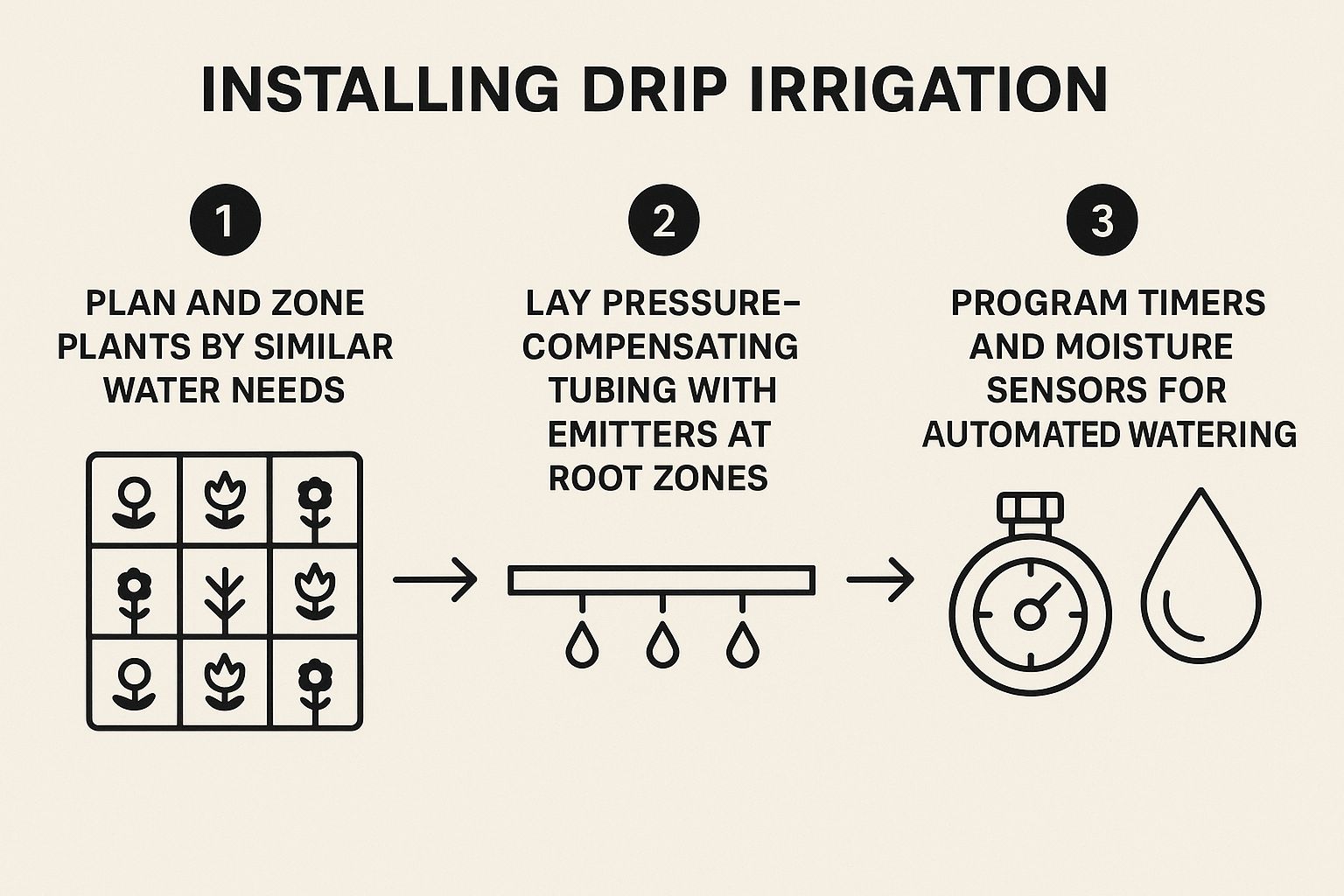
The infographic above outlines a streamlined process for a successful drip irrigation installation. By following this logical flow from planning and zoning to precise emitter placement and automated control, you can create a highly efficient system tailored to your landscape's specific needs.
Why Choose Precision Watering?
Implementing a drip system in your Morgan Hill landscape automates one of the most crucial aspects of garden maintenance while conserving a precious resource. Companies like Rain Bird and Hunter Industries have perfected systems that can reduce water use by up to 70% compared to conventional sprinklers. When paired with smart controllers that adjust schedules based on weather data and soil moisture sensors, these systems provide plants with the exact amount of water they need, promoting deeper root growth and greater resilience to drought.
Getting Started with Smart Irrigation
Setting up an efficient watering system is a straightforward project with a significant long-term payoff. Follow these actionable steps for a successful installation:
- Zone Your Landscape: Before laying any tubing, group plants with similar water and sun needs together. This hydrozoning ensures each area receives the appropriate amount of water without over or under-watering others.
- Install Pressure Regulators: High water pressure can damage or blow off emitters. Installing a pressure regulator at the start of your system is crucial for maintaining consistent, gentle water flow.
- Use Mulch: Apply a thick layer of mulch over the soil and around your drip emitters. This further reduces evaporation, keeps the soil cool, and suppresses weed growth.
- Add a Smart Controller: Integrate a timer with a rain sensor or a weather-based smart controller. These devices automatically skip watering cycles during rainy weather, preventing waste and saving you money.
6. Hardscape Integration and Stonework
Hardscape integration is a powerful drought tolerant landscaping idea that reduces water usage by replacing thirsty lawns with beautiful and functional non-living elements. This design approach strategically incorporates patios, walkways, retaining walls, and decorative stonework to create usable outdoor living spaces while minimizing the area that requires irrigation. By emphasizing materials like stone, pavers, and gravel, you can craft a sophisticated, low-maintenance landscape that remains stunning year-round, regardless of rainfall.
Why Choose Hardscape Elements?
Integrating hardscape is a practical solution for creating definition and utility in your Morgan Hill yard. Patios and decks extend your living area outdoors, providing space for dining and relaxation, while pathways guide movement and protect planted areas. Stonework and retaining walls can solve slope issues and create visual interest. This strategy drastically cuts down on water needs and lawn care, freeing up your time and resources while adding significant value and curb appeal to your property.
Getting Started with Hardscape
Thoughtful planning is key to successfully integrating hardscape features. Follow these actionable steps for a balanced and beautiful design:
- Balance Green and Gray: Aim for a thoughtful balance between hardscape (gray) and softscape (green). Use planters, climbing vines, and strategically placed garden beds to soften the edges of patios and walkways.
- Select Appropriate Materials: Choose materials that complement your home’s architecture. In Morgan Hill's sunny climate, light-colored pavers or stone can help reduce heat absorption, keeping outdoor areas cooler.
- Plan for Permeability: Incorporate permeable materials like decomposed granite or pavers with gravel joints. This allows rainwater to seep into the ground, replenishing soil moisture for nearby plants instead of creating runoff.
- Direct Water Flow: Use the contours of your hardscape, like a flagstone patio, to channel precious rainwater towards your planted areas, ensuring efficient use of every drop. Learn more about installing a flagstone patio on tamuradesigns.com for detailed guidance.
7. Rainwater Harvesting and Retention
Rainwater harvesting and retention are highly effective drought tolerant landscaping ideas that transform your yard from a consumer of water into a collection and conservation system. This approach involves designing the landscape to capture, store, and utilize natural rainfall through features like rain gardens, bioswales, and permeable surfaces. By actively managing precipitation, you can significantly reduce your reliance on municipal water for irrigation and sustain a vibrant garden even during dry spells.
Why Harvest Rainwater?
Harvesting rainwater allows you to create a reserve of high-quality, naturally soft water that is free of chlorine and other chemicals found in treated tap water. This method directly supports your garden during Morgan Hill’s dry summers, reduces stormwater runoff that can pollute local waterways, and recharges groundwater supplies. For efficient water conservation, especially in urban environments, incorporating durable and efficient methods like using high-capacity options such as vertical water storage tanks can be particularly effective.
Getting Started with Rainwater Retention
Implementing a rainwater harvesting system is a proactive step towards a truly sustainable landscape. Follow these actionable steps for success:
- Install Rain Barrels or Cisterns: Connect barrels or larger cisterns to your home’s downspouts to collect runoff from the roof. This stored water is perfect for hand-watering container plants and garden beds.
- Create a Rain Garden: Design a shallow depression in a low-lying area of your yard and fill it with water-loving native plants. This garden will capture runoff, allowing it to slowly soak into the ground rather than flow into storm drains.
- Use Permeable Surfaces: Replace impervious concrete or asphalt driveways and patios with permeable pavers, gravel, or decomposed granite. These materials allow rainwater to infiltrate the soil directly beneath them.
- Build Bioswales: Construct shallow, vegetated channels designed to slow and filter stormwater runoff from your property, promoting infiltration and cleansing the water as it flows.
8. Artificial Turf and Synthetic Alternatives
For homeowners in Morgan Hill who desire the classic look of a lush green lawn without the intensive water requirements, artificial turf presents a compelling solution. Modern synthetic grass is a far cry from the plastic-like turf of the past; today's advanced products are engineered to realistically mimic the look and feel of natural grass. This is one of the most direct drought tolerant landscaping ideas, as it completely eliminates the need for irrigation, mowing, and fertilizing, offering a perpetually green aesthetic year-round.
Why Choose Artificial Turf?
The primary benefit of artificial turf is its dramatic water savings, a critical advantage in California's climate. A synthetic lawn conserves thousands of gallons of water annually, significantly reducing utility bills and your environmental footprint. It also provides a durable, low-maintenance surface ideal for play areas, pet runs, and entertainment spaces that would struggle to thrive under heavy use and low water conditions. It offers a consistent, manicured look that enhances curb appeal without the constant upkeep.
Getting Started with Synthetic Alternatives
Proper selection and installation are key to a long-lasting, beautiful synthetic lawn. Follow these actionable steps for a successful project:
- Prioritize Quality and Cooling: In sunny Morgan Hill, choose a high-quality turf with heat-reduction technology to keep the surface temperature comfortable. Request samples to feel the texture and see the color in your yard's light.
- Ensure Proper Drainage: The installation must include a permeable base layer to prevent water from pooling on the surface after rainfall. Professional installation is highly recommended to ensure correct grading and drainage.
- Plan for Mixed-Use Design: Consider using artificial turf for a central "lawn" area and surrounding it with beds of native, drought-tolerant plants. This creates a visually interesting, water-wise, and functional landscape. Learn more about how to integrate turf into a custom outdoor living space.
- Understand Maintenance: While low-maintenance, synthetic turf isn't "no-maintenance." It requires occasional rinsing to remove dust and debris, along with regular brushing with a stiff broom to keep the blades upright.
9. Ornamental Grass Meadows
An ornamental grass meadow transforms a traditional lawn into a dynamic, low-water landscape that provides year-round texture, movement, and interest. This is a powerful drought tolerant landscaping idea that mimics the beauty of natural prairies, utilizing grasses that are inherently adapted to dry conditions. By embracing species with deep root systems and natural dormancy cycles, you can create a soft, flowing garden that sways with the breeze and demands very little water once established.
Why Choose an Ornamental Grass Meadow?
Pioneered by designers like Piet Oudolf, this approach celebrates the life cycle of plants, finding beauty in their seed heads and winter forms. For Morgan Hill homeowners, this means replacing a thirsty turf lawn with resilient California natives like Purple Needlegrass or Deer Grass. These grasses are built to withstand dry summers and can thrive on minimal supplemental irrigation, creating a habitat for birds and beneficial insects while dramatically reducing maintenance and water usage.
Getting Started with a Grass Meadow
Creating a meadow-like space is a highly rewarding project that adds a unique, naturalistic feel to your property. Follow these actionable tips for success:
- Select Clumping Varieties: Choose clumping grasses over spreading types to maintain control and prevent them from becoming invasive in your garden beds.
- Plant for Texture and Height: Combine different grass species, like the tall, airy Pink Muhly grass with shorter, finer Blue Fescue, to create layers of visual interest.
- Embrace Fall Planting: Like other native plants, grasses establish their root systems best when planted in the cooler, wetter fall and winter months, setting them up for summer success.
- Practice Winter Care: Allow seed heads to remain through the winter as a food source for local birds. Cut the grasses back hard in late winter or early spring just before new growth emerges to keep them looking tidy.
10. Vertical and Living Wall Systems
Vertical and living wall systems are innovative drought tolerant landscaping ideas that transform bare walls into lush, green canvases. These three-dimensional growing structures maximize plant coverage while minimizing ground space, making them ideal for compact urban yards or patios in Morgan Hill. By using specialized growing media and highly efficient, direct-to-root irrigation, these systems create dramatic planted walls that thrive with remarkably little water.
Why Choose a Living Wall?
Pioneered by botanist Patrick Blanc, living walls are a perfect solution for adding vibrant greenery without sacrificing precious square footage. They are incredibly water-efficient, as closed-loop or drip irrigation systems deliver water and nutrients directly to the plant roots, virtually eliminating runoff and evaporation. This method allows you to cultivate a stunning garden feature that also provides insulation, improves air quality, and can become a breathtaking focal point for your outdoor living space.
Getting Started with a Vertical Garden
Implementing a living wall requires careful planning to ensure its longevity and beauty. Follow these actionable steps for a successful installation:
- Select Appropriate Plants: Choose drought-tolerant succulents, sedums, and trailing plants like string of pearls or certain ferns that are well-suited for vertical growth and have similar light requirements.
- Plan Your Irrigation: Install a high-quality, automated drip irrigation system with a timer. This ensures consistent, precise watering, which is crucial for the health of a vertical garden.
- Consider Structural Support: Living walls can be heavy. Before installation, consult a professional to ensure your chosen wall or structure can safely support the combined weight of the system, soil, plants, and water.
- Ensure Easy Access: Plan the installation with maintenance in mind. You will need to occasionally prune, inspect, and replace plants, so ensure all parts of the wall are safely accessible.
Drought Tolerant Landscaping Ideas Comparison
| Item | Implementation Complexity 🔄 | Resource Requirements ⚡ | Expected Outcomes 📊 | Ideal Use Cases 💡 | Key Advantages ⭐ |
|---|---|---|---|---|---|
| Xerophytic Native Plant Gardens | Moderate – Requires plant research and planning | Low – Minimal water and maintenance once established | High – Significant water savings, ecosystem support | Sustainable landscaping, biodiversity preservation | Water-efficient, supports local wildlife, low long-term costs |
| Gravel and Rock Mulch Systems | Moderate – Installation with landscape fabric | Medium – Higher initial cost, low maintenance | Moderate – Reduces evaporation, weed suppression | Drought-prone areas, desert and modern minimalist gardens | Long-lasting, low maintenance, visually striking |
| Succulent and Cactus Gardens | Moderate – Requires soil prep and drainage | Low-Medium – Minimal watering, careful site selection | High – Unique aesthetics, low water use | Xeriscapes, arid climates, low-maintenance gardens | Water thrifty, architectural forms, easy propagation |
| Mediterranean Climate Landscaping | Moderate – Plant selection, seasonal pruning | Medium – Some water needs, seasonal maintenance | High – Lush, fragrant, year-round gardens | Regions with Mediterranean climates, edible ornamental gardens | Aromatic, dual-purpose plants, pollinator-friendly |
| Drip Irrigation and Smart Systems | High – Technical setup with sensors and programming | Medium-High – Initial cost, maintenance required | Very High – Precise water delivery, waste reduction | Efficient irrigation, varied plant water requirements | Water savings, automation, weed reduction |
| Hardscape Integration and Stonework | High – Skilled installation of materials | High – Significant upfront cost | Moderate – Functional, low water use landscape | Patios, walkways, urban outdoor spaces | Zero water maintenance, increases usable space, durable |
| Rainwater Harvesting and Retention | High – Design and grading complexity | Medium-High – Installation and system upkeep | High – Free water source, runoff control | Water conservation systems, stormwater management | Reduces water bills, erosion control, habitat creation |
| Artificial Turf and Synthetic Alternatives | Moderate – Professional installation recommended | High – Installation and eventual replacement cost | Moderate – Year-round green without watering | Lawns in drought areas, high-traffic green zones | No watering or mowing, consistent appearance |
| Ornamental Grass Meadows | Moderate – Planting and seasonal cutting | Low – Minimal water and maintenance once established | Moderate – Naturalistic, wildlife habitat | Naturalistic drought-tolerant landscapes | Low water use, habitat support, year-round interest |
| Vertical and Living Wall Systems | High – Specialized installation and maintenance | High – Costs for systems and upkeep | High – Space-efficient greenery, building cooling | Urban spaces with limited ground area | Maximizes greenery, insulation benefits, dramatic visuals |
Your Sustainable Morgan Hill Landscape Awaits
As we've journeyed through the diverse world of water-wise design, it's clear that creating a stunning, sustainable landscape in Morgan Hill is not only possible, but it's also an exciting creative endeavor. Moving beyond the traditional lawn doesn't mean sacrificing beauty; it means embracing a new, more resilient aesthetic that aligns perfectly with our local climate and ecological responsibilities.
From the vibrant textures of a xerophytic native plant garden to the modern elegance of integrated hardscapes, the possibilities are vast. Each of the drought tolerant landscaping ideas we've explored offers a unique pathway to transforming your outdoor space into a functional, low-maintenance, and visually captivating extension of your home. This is about more than just saving water; it's about intelligent design that enhances your property's value and your daily life.
Key Takeaways for Your Water-Wise Transformation
To bring these concepts from idea to reality, remember these core principles:
- Plan with Purpose: The most successful landscapes begin with a cohesive plan. Consider how you will use the space and which elements, from ornamental grass meadows to rainwater harvesting systems, will best serve your goals.
- Embrace Local Flora: Leveraging Morgan Hill’s native and Mediterranean-climate-adapted plants is the cornerstone of sustainable gardening. These species are naturally equipped to thrive with minimal water, reducing your maintenance burden and supporting local pollinators.
- Invest in Infrastructure: The right systems make all the difference. Drip irrigation, smart controllers, and properly installed hardscapes are foundational investments that deliver long-term water savings and durability.
A thoughtfully designed drought-tolerant landscape is a testament to the idea that ecological responsibility and sophisticated design can, and should, go hand in hand. It’s an investment that pays dividends in beauty, sustainability, and peace of mind.
Your Actionable Next Steps
Feeling inspired? The best way to begin is by taking a critical look at your own yard. Identify sunny and shady spots, assess your current water usage, and start envisioning the possibilities. Which ideas resonated most with you? A modern succulent garden, a functional artificial turf area for the kids, or a tranquil space defined by elegant stonework?
Start small by sketching a rough layout or creating a mood board of plants, materials, and styles you love. Researching specific plants that thrive in our region, like those highlighted in the Santa Clara Valley Water District's resources, is another excellent step.
Ultimately, crafting a truly exceptional, water-wise landscape is a sophisticated blend of art and science. It requires horticultural knowledge, design expertise, and a deep understanding of construction and irrigation technology. Partnering with a professional ensures your vision is executed flawlessly, resulting in a sustainable sanctuary that stands the test of time.
Ready to transform your Morgan Hill property into an award-winning, water-wise masterpiece? The experts at Tamura Designs Landscape and Construction have over 30 years of experience creating stunning, sustainable landscapes tailored to our unique climate. Visit Tamura Designs Landscape and Construction to see how our expertise in drought tolerant landscaping ideas can bring your vision to life.
