
Picture a vibrant, thriving garden that asks for less of your time, less water, and fewer chemicals. That’s the real beauty of eco-friendly landscaping. It’s not about fighting against nature, but about partnering with it to create an outdoor space that works smarter, not harder.
Your Foundation for a Sustainable Yard
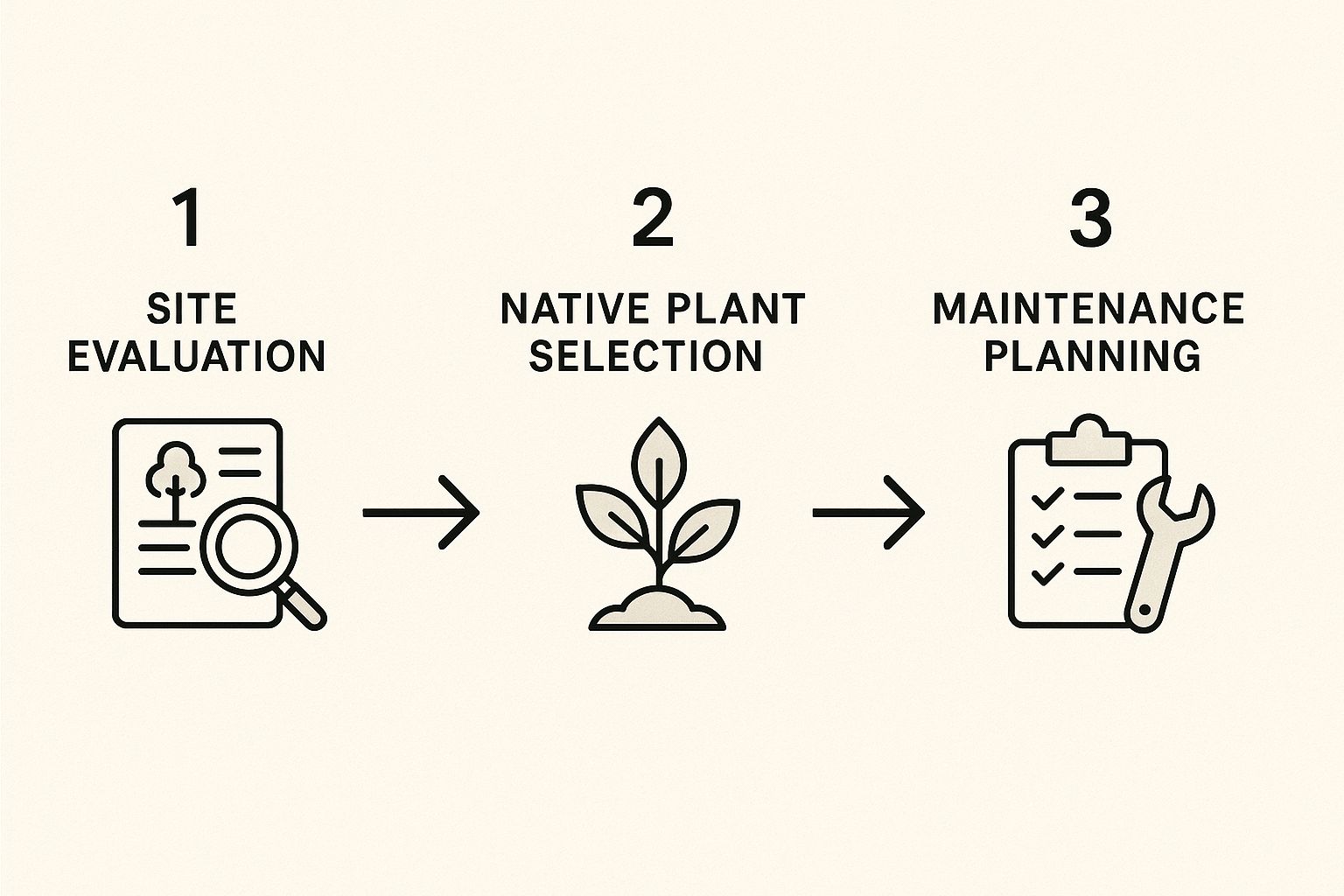
Before you even think about picking up a shovel, the most important work has already started. A truly resilient, low-impact landscape isn't just about the plants you choose; it's about deeply understanding where and why you're putting them there.
This upfront planning is everything. It's the secret to avoiding those frustrating gardening headaches down the road and sets you up for a yard that doesn't just survive, but genuinely flourishes on its own terms.
To get started, let’s look at the core ideas that underpin any successful sustainable landscaping project. These principles are your guideposts from the initial brainstorming phase all the way to long-term care.
Core Principles of Eco-Friendly Landscaping
| Principle | Objective | Example Action |
|---|---|---|
| Work With Nature, Not Against It | To create a self-sustaining system by aligning with the site's natural conditions. | Choosing plants that thrive in your existing soil and sun exposure without constant intervention. |
| Conserve Water | To minimize supplemental irrigation and reduce reliance on municipal water sources. | Grouping plants with similar water needs (hydrozoning) and installing a drip irrigation system. |
| Build Healthy Soil | To foster a living soil ecosystem that retains moisture and provides natural nutrients. | Amending soil with compost and using organic mulch to prevent erosion and feed soil life. |
| Create Habitat | To support local wildlife, including pollinators, birds, and beneficial insects. | Planting native flowers, shrubs, and trees that provide food and shelter for local fauna. |
| Reduce Waste | To minimize the landscape's carbon footprint by reusing materials and avoiding chemicals. | Composting yard trimmings, choosing permeable paving, and avoiding synthetic fertilizers. |
These principles aren't just abstract concepts; they are the practical framework for making smart, sustainable decisions that pay off for years to come.
Get to Know Your Site Inside and Out
Every yard is a collection of tiny, unique environments, or "microclimates." The first step is to simply observe. Grab a notepad and spend some time walking your property on a sunny day, and then again after it rains.
Here’s what to look for:
- Follow the Sun: Where does the sun land in the morning versus the hot afternoon? Make a note of your full-sun spots (6+ hours), shady corners, and everything in between. That south-facing wall is going to be a completely different world from the cool, north-facing side of your house.
- Watch the Water: After a good rain, where does the water go? Do you have puddles that linger for days? Are there other spots that are always bone-dry? Finding these wet and dry zones is crucial for placing plants where they'll be happiest.
- Map Existing Features: Don't forget what's already there. Mature trees, slopes, fences, and your house itself all cast shade, block wind, and change the soil. These aren't obstacles; they're opportunities.
This whole process is about gathering intelligence. The more you know about your yard's personality, the better your decisions will be.
The cornerstone of it all is your soil. You can learn a lot more about preparing healthy garden soil, but the main takeaway is that healthy soil acts like a sponge. It holds onto moisture so you water less, and it's packed with nutrients, which means you can skip the chemical fertilizers.
The 'Right Plant, Right Place' Mindset
Once you have a good map of your site's conditions, you can embrace the golden rule of sustainable gardening: Right Plant, Right Place.
This isn't just a catchy phrase; it's a philosophy. It means you stop trying to force plants to grow where they don't want to be and start choosing plants that are perfectly adapted to the conditions you already have.
Think about it: placing a sun-loving, drought-tolerant lavender in a hot, dry, sunny spot means you'll almost never have to fuss over it. Try to grow a moisture-loving fern in that same spot, and you’re signing up for a constant, losing battle with the watering can.
By letting nature do the heavy lifting, you're not just creating a garden that’s easier to care for—you're building a resilient, beautiful ecosystem right outside your door.
Building Your Landscape from the Ground Up
The real secret to a lush, resilient, and genuinely eco-friendly landscaping project isn’t found in a catalog of exotic plants. It’s hidden right beneath your feet. A vibrant garden begins with vibrant, living soil. Forget thinking of it as sterile dirt—we’re cultivating a thriving underground ecosystem that sustains your plants naturally.
Before you can improve your soil, you have to get to know it first. Simple, inexpensive at-home kits can give you a baseline reading of your soil's pH (its acidity or alkalinity) and its basic composition. Is it heavy clay that sticks to your shovel? Is it sandy and drains in a flash? Or are you lucky enough to have a balanced loam? Knowing this is the first real step toward building a healthy foundation.
Amending Your Soil with Organic Matter
Once you know your soil type, the goal is to improve its structure and fertility by adding organic matter. Honestly, this is the single most effective thing you can do for your garden's health. Adding rich organic material improves water retention in sandy soils and, believe it or not, enhances drainage in heavy clay soils. It’s a win-win.
Two of the absolute best sources are compost and leaf mold.
- Compost: This is just decomposed organic material—think kitchen scraps and yard trimmings—that has turned into a dark, crumbly, nutrient-rich soil amendment. Starting a compost pile is way easier than you think and provides a free, continuous supply of "black gold" for your garden.
- Leaf Mold: It's as simple as it sounds: a pile of fallen leaves left to decompose over a year or two. Leaf mold is a fantastic soil conditioner. It’s a superstar at retaining moisture and provides the perfect habitat for beneficial soil microbes and earthworms.
As you build your landscape from the ground up, incorporating elements like waterfalls and streams can add another layer of ecological value. As you plan, it's worth understanding the best practices for using pond liners for water features to make sure your design is both beautiful and conserves water effectively.
The Critical Role of Mulching
Mulching is so much more than a decorative finishing touch. A healthy layer of organic mulch is one of your most powerful tools for creating a low-maintenance, sustainable garden.
The right mulch acts like a protective blanket for your soil. It suppresses weeds, locks in precious moisture to reduce watering needs, and moderates soil temperature, protecting plant roots from extreme heat and cold.
As organic mulches break down over time, they continuously feed the soil. They enrich it with nutrients and support the microbial life that keeps your plants thriving. This process perfectly mimics what happens on a natural forest floor, creating a self-sustaining cycle of fertility right in your own backyard.
Choosing the Right Organic Mulch
Not all mulches are created equal, and the best choice really depends on the specific area of your garden and your goals. The key is to avoid non-porous materials like plastic sheeting, which can suffocate the soil and do more harm than good.
Here are a few of my go-to organic mulch options:
- Pine Bark or Shredded Hardwood: These are ideal for using around trees, shrubs, and in perennial flower beds. They look great, are long-lasting, and break down slowly to enrich the soil.
- Straw or Hay: Absolutely perfect for vegetable gardens. It helps keep the soil moist, prevents soil-borne diseases from splashing up onto leaves, and can be tilled right into the soil at the end of the season.
- Leaf Mold or Compost: Using your own homemade amendments as a top-dressing is a fantastic way to mulch. It delivers a powerful dose of nutrients directly to your plants while providing all the other benefits of a good mulch.
This focus on building soil health from the ground up is a fundamental part of a professional approach. If you're looking for expert guidance, exploring a portfolio of custom landscaping design and installation can provide some great inspiration on how these principles are applied to create stunning, sustainable outdoor spaces.
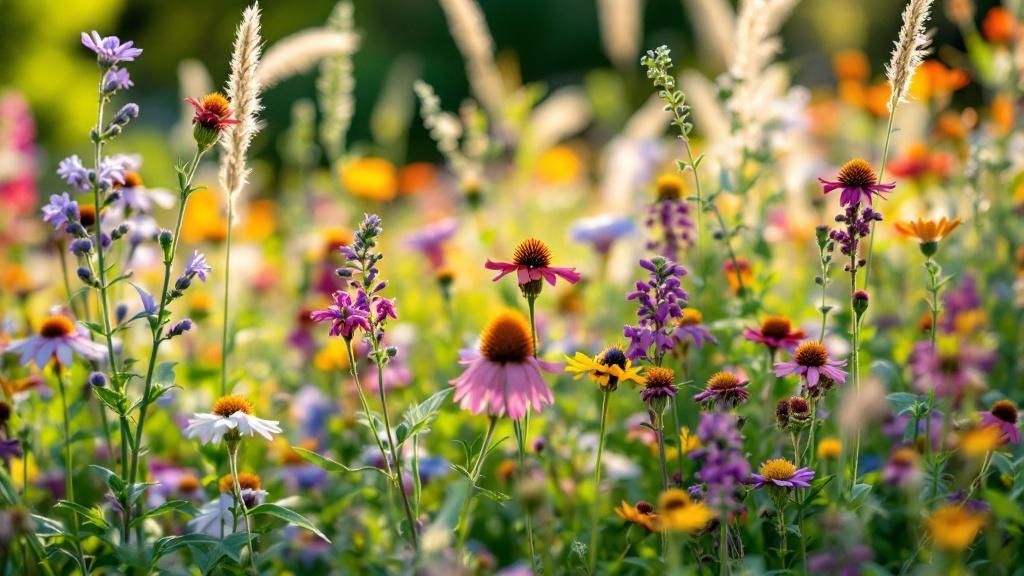
This is where the magic really happens. Choosing the right plants is less about picking pretty flowers and more about creating a living, breathing ecosystem that works with your property, not against it. This is the moment your paper plan starts to come alive.
Our goal isn't just to find plants that survive. We want to select species that will absolutely thrive in your garden's specific conditions, all with minimal fuss from you. The secret is simple: work with what you’ve got. When you choose plants that are already a good match for your local climate, soil, and sunlight, you build a garden that’s resilient and deeply connected to the world around it.
Champion Native Plants for a Resilient Garden
If I could give just one piece of advice for a sustainable garden, it would be this: embrace native plants. These are the species that have spent thousands of years adapting to your specific region. They’re already dialed into the local rainfall, soil quirks, and seasonal shifts.
What does that mean for you? It means they need far less water, fertilizer, and pest control than fussy non-natives. An established native garden pretty much takes care of itself, saving you a ton of time, money, and resources down the road.
Even better, native plants are the bedrock of the local food web. They provide the exact food and shelter that native bees, butterflies, and birds need to survive. One study I love to cite found that native oak trees can support over 500 species of caterpillars. A non-native ginkgo tree? It supports just a handful. When you plant natives, you’re not just making a garden—you're building a critical habitat.
The Power of Xeriscaping and Drought-Tolerant Plants
Beyond natives, there's a whole world of beautiful, drought-tolerant plants that can create a stunning, water-wise garden. This is the core idea behind xeriscaping, a smart landscaping method focused on reducing the need for irrigation. And no, it doesn't mean your yard has to be all rocks and cacti.
It's all about clever plant selection. So many gorgeous, lush-looking plants are surprisingly tough once they get their roots established.
- Lavender (Lavandula): Who doesn't love it? You get those iconic purple flowers and that incredible scent, and it asks for nothing more than full sun and dry soil.
- Coneflower (Echinacea): A prairie powerhouse. It brings vibrant color, pulls in pollinators like a magnet, and sips water.
- Sedum (Stonecrop): These succulents are fantastic. They come in a wild variety of shapes and colors, giving you amazing groundcover texture with almost zero watering needs.
Weaving these kinds of plants into your design builds a landscape that stays vibrant and beautiful, even when a dry spell hits. You can finally put that garden hose away.
Use Hydrozoning to Make Every Drop Count
Here’s a pro design trick that makes a huge difference: hydrozoning. The concept is incredibly practical. You simply group plants together based on how much water they need. This brilliant little strategy stops you from making the classic mistake of putting a thirsty hydrangea next to a succulent that likes to stay bone-dry.
By creating distinct zones—a low-water zone for your natives and succulents, a moderate-water zone for the veggie patch—you can water each area perfectly. No more broadcasting water everywhere. You deliver exactly what’s needed, right where it’s needed.
This approach is the ultimate way to eliminate wasteful over- and under-watering. It’s about giving every plant the precise amount of moisture it needs to flourish, making every single drop of water count.
Designing for Year-Round Beauty and Texture
A truly eco-friendly garden should look good in every season, not just for a few weeks in spring. To achieve that, you have to think beyond flowers. A masterful design is a tapestry of different forms, textures, and colors that create visual interest all year long.
Try thinking in combinations to create a more dynamic garden:
- Structure meets softness: I love pairing the strong, upright form of an ornamental grass like Little Bluestem with the soft, billowy mounds of a native geranium.
- Color through the seasons: Think about a progression. You could have spring-blooming Redbud trees, which give way to summer-flowering Black-Eyed Susans, followed by shrubs like Winterberry that offer up bright red berries against the snow.
- Textural play: Mix the broad, smooth leaves of a hosta (in a shady, damp spot, of course) with the delicate, airy fronds of a fern. The contrast is fantastic.
When you start layering your garden this way, it stops being a simple collection of plants and becomes a cohesive, beautiful space that feels alive and changes with the seasons.
Smart Water Management and Irrigation
Water is easily the most precious resource in any garden, and the heart of eco-friendly landscaping is treating it that way. The real goal isn't just to keep plants alive; it's to build a responsible system that uses every single drop wisely. This keeps your garden looking lush without the constant waste, which means we have to move past the old "set it and forget it" sprinkler mentality.
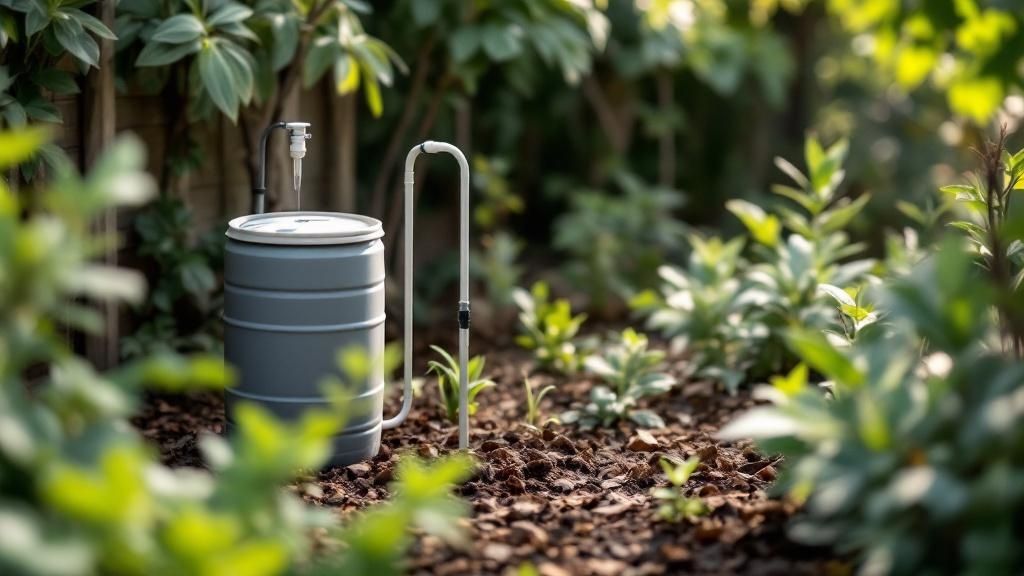
True water efficiency is a mix of smart technology and timeless, practical techniques. It’s all about getting water precisely where it’s needed—the roots—and only when it's needed. This simple shift prevents the runoff and evaporation that waste so much of this vital resource.
This focus on conservation is also a huge economic driver. In the U.S. alone, the landscaping services market hit USD 116 billion, and it's projected to keep climbing. A major reason for this growth is the demand from homeowners for water-saving tech. The smart irrigation niche is actually one of the fastest-growing parts of the U.S. landscaping industry, expanding at a 12% CAGR as more people get serious about cutting their water use. You can dive deeper into what's driving these changes with these lawn care industry statistics.
Embrace Smart Irrigation Technology
Modern tech gives us some incredibly powerful tools for managing water with precision. For any homeowner wanting to make a serious dent in their water waste, smart irrigation controllers are a total game-changer. They are miles ahead of traditional timers that run on a fixed schedule, rain or shine.
These systems connect to the cloud and use real-time local weather data—pulling in info on rainfall, temperature, humidity, and wind—to adjust your watering schedule automatically. Did it just rain? The system won't run. Is a heatwave on the way? It might water a bit more deeply to prepare. This prevents your soil from becoming a waterlogged mess and ensures your landscape gets exactly the hydration it needs.
By installing a smart controller, you’re basically letting nature tell your irrigation system when to turn on and off. This single upgrade can slash your landscape water usage by 30-50%, saving you a nice chunk of change on your water bill and promoting healthier, more resilient plants.
Go Low-Tech with Drip and Soaker Hoses
While smart controllers are fantastic, some of the most effective water-saving methods are delightfully simple. I’m a huge fan of drip irrigation and soaker hoses for garden beds, veggie patches, and shrub borders. They are the very definition of targeted watering.
Instead of launching water into the air where much of it evaporates or gets carried off by the wind, these systems deliver water slowly and directly to the soil right at the base of your plants.
- Drip Irrigation: This is a network of tubes with small emitters placed right next to each plant. It’s incredibly efficient, giving a slow, steady trickle of water straight to the root zone.
- Soaker Hoses: Think of these as porous hoses that gently "weep" water along their entire length. You just snake them through a garden bed for thorough watering with almost no waste.
Both of these methods cut down on evaporation so dramatically that nearly 90% of the water reaches the plant's roots. Compare that to traditional sprinklers, which can be as low as 50-70% efficient.
Tried-and-True Watering Wisdom
Technology is great, but how and when you water can make a massive difference. Adopting a few simple habits will improve your garden’s water efficiency and its overall health.
One of the most impactful changes is to water deeply and infrequently. Giving your plants a good, long soak encourages their roots to grow deeper into the soil to find moisture. This creates stronger, more drought-resistant plants that aren't so dependent on you. A shallow, daily sprinkle just creates shallow, weak roots that are the first to suffer in a dry spell.
Timing is also everything. The absolute best time to water is in the early morning, somewhere between 4 a.m. and 9 a.m. During these cool hours, evaporation and wind are at their lowest, so more water actually makes it into the soil. Watering in the midday heat is just wasteful, and watering in the evening can leave foliage wet all night, which is an open invitation for fungal diseases.
Sustainable Materials For Patios And Paths
When we think about eco-friendly landscaping, our minds usually go straight to the plants. But what about the "hardscape"? The patios, pathways, and retaining walls that form the bones of your garden often carry a surprisingly large environmental footprint.
Getting this part right is a huge step in creating a truly sustainable outdoor space. It’s all about making sure the very foundation of your garden is as green as the foliage.
This means we need to look past the easy, default choices like virgin concrete and instead embrace materials that reduce waste, have a lower carbon footprint, and work with the natural water cycle, not against it.
Rethinking Hardscape Materials
The goal here is simple: choose materials that are either reclaimed, recycled, or sourced locally and sustainably. This single decision dramatically cuts down on the energy needed for manufacturing and transportation, which is a massive part of any material's environmental cost.
Here are a few of my favorite sustainable options I recommend to clients:
- Reclaimed Wood: There's nothing like the character of old wood. Using salvaged lumber from old buildings or decks gives beautiful, seasoned wood a second life and keeps it out of the landfill. It's fantastic for adding a warm, rustic feel to decks and garden benches.
- Recycled Composite Decking: Modern composites have come a long way. Many are now made from a smart blend of waste wood fibers and recycled plastics (think grocery bags and milk jugs). You get the look of wood without the constant maintenance, all while keeping plastic out of our oceans.
- Locally Sourced Stone: This one is a no-brainer. Choosing stone that was quarried nearby slashes transportation emissions. For our projects here in California, local stone is the perfect complement to a Mediterranean or rustic garden style. If you're interested in working with natural stone, our guide on installing a flagstone patio has some great hands-on tips.
And for pathways or ground cover between beds, don't forget about organic options like eco-friendly landscaping bark. It’s another simple way to stick with natural, sustainable materials.
The Power Of Permeable Surfaces
If there’s one change that makes a massive impact, it’s swapping out traditional, solid surfaces like concrete or asphalt for permeable pavers. Honestly, this is a game-changer for most residential yards.
Solid, impervious surfaces cause a whole host of problems. When it rains, water picks up lawn chemicals, oil, and other pollutants and rushes straight into the storm drains. This overloads our water treatment systems and pollutes local rivers and streams. These dark, hard surfaces also absorb and radiate heat, contributing to the "urban heat island" effect that makes our neighborhoods hotter.
Permeable pavers offer an elegant solution. They’re designed with small gaps between the stones, filled with fine gravel. This allows rainwater to trickle right through the surface and soak naturally into the ground below, just like it’s supposed to.
The benefits are huge. This simple design choice helps recharge vital groundwater, filters pollutants out of the runoff, and can dramatically reduce the risk of flooding on your own property.
Designing With Permeable Pavers
Choosing a permeable system doesn't mean you have to sacrifice style. Far from it. These pavers come in a massive range of shapes, colors, and textures, so you can create beautiful, sophisticated designs for any patio, walkway, or driveway.
Whether you're after a classic brick look or a sleek, modern pattern, the design possibilities are virtually endless. You can have a stunning outdoor living area that's not just inviting, but is actively managing stormwater and protecting your local ecosystem. It’s a powerful way to make your hardscape work for nature.
Natural Care for a Healthy Landscape
An eco-friendly garden is wonderfully low-maintenance, but it's never "no-maintenance." The final piece of your sustainable puzzle is finding a simple, ongoing rhythm of care that keeps your landscape vibrant for years to come. This isn't about constant, back-breaking work; it's about partnering with nature to maintain a healthy, self-regulating ecosystem.
The goal here is to shift your mindset. Instead of "fighting" problems like pests and weeds, you'll be "nurturing" balance. When your garden is in harmony, you’ll find that many of these issues start to resolve themselves.
Attracting Nature’s Pest Control
Your most effective pest management program isn't a spray bottle—it's a bustling population of beneficial insects. These are the "good bugs" that prey on the ones munching on your plants. Think of ladybugs feasting on aphids or the delicate lacewings that devour mites.
You can roll out the welcome mat for these tiny garden allies. Here’s how:
- Plant a Buffet: Include plants with small, shallow flowers like dill, fennel, yarrow, and sweet alyssum. These provide an essential nectar and pollen source for the adult good bugs.
- Offer Shelter: Don't be too tidy! Leaving some areas a little "wild," like a small pile of leaves or a patch of ornamental grass, offers crucial overwintering habitat for these helpful creatures.
- Add Water: A shallow dish or bird bath filled with pebbles and water gives insects a safe place to drink without drowning.
Another powerful, time-tested strategy is companion planting. It’s the simple art of placing specific plants together because they help each other out. For instance, planting marigolds around your tomatoes can help deter root-knot nematodes, while aromatic herbs like rosemary and sage can repel cabbage moths from your brassicas.
Feeding Your Soil Naturally
Healthy plants start with living soil. Instead of reaching for synthetic chemical fertilizers, you can feed your soil with natural, homemade solutions that build fertility over the long haul. One of my absolute favorite tools for this is compost tea.
Compost tea is a liquid fertilizer that’s teeming with beneficial microbes. You make it by steeping finished compost in aerated water, which encourages the good bacteria and fungi to multiply like crazy. When you spray this on your plants and drench the soil, you’re inoculating your garden with the life it needs to thrive.
Think of it like a probiotic for your garden. You're not just giving it a quick hit of nutrients; you're boosting the soil's own ability to break down organic matter and make those nutrients available to your plants. This creates a far more resilient, self-sustaining system.
Rethinking the Traditional Lawn
For many of us, the lawn is the most resource-intensive part of the yard. Rethinking our approach to turf is a huge step in eco-friendly landscaping. This doesn't mean you have to rip it all out, but there are much smarter ways to enjoy a green space.
Start by considering the overall size of your lawn. Could you replace non-essential areas with beautiful native plant beds or walkable groundcovers? This simple change immediately cuts down on water use, mowing, and the need for fertilizer.
You can also transform your existing lawn into something more sustainable:
- Clover Lawns: Overseeding your grass with micro-clover creates a lush, green carpet that actually fixes its own nitrogen, naturally fertilizing the soil and choking out many common weeds.
- Low-Water Grasses: If you're starting from scratch or reseeding a patch, choose drought-tolerant grass varieties like Buffalo Grass or certain fescues that are much better adapted to your local climate.
These changes help create a landscape that is far more resilient and less demanding. It's a shift we're seeing across the entire global landscaping service market, which was valued at USD 129.7 billion and continues to grow. A key trend is the integration of new tech, like robotic mowers, that supports these low-impact maintenance routines. To get a better sense of where the industry is headed, you can find out more about landscaping industry forecasts.
By adopting these natural care practices, you’re not just maintaining a garden—you're cultivating a regenerative routine that supports a beautiful, healthy ecosystem for the long haul.
Your Top Eco-Landscaping Questions, Answered
Jumping into an eco-friendly landscape project is exciting, but it's totally normal for a few questions to pop up. Most people wonder about the cost, the final look, and how it all works with what they already have. Let's tackle some of the most common questions we hear, so you can feel great about moving forward.
Can an Eco-Friendly Garden Still Look Polished and Tidy?
You bet it can. There's a persistent myth that "eco-friendly" means wild and messy, but that's simply not the case. The truth is, sustainable principles can be woven into any garden style you can imagine, whether it’s a sleek, modern oasis or a charming, overflowing cottage garden.
It all comes down to intentional design. When you use strong elements like crisp, defined garden bed edges, clean pathways, and bold structural plants, you get a look that is both ecologically responsible and beautifully put-together. The whole point is to create beauty that works with nature, not against it.
Is This Going to Cost a Lot More Upfront?
That's a fair and practical question. It's true that some sustainable materials, like permeable pavers for a driveway or high-quality composite decking, might have a higher initial price than traditional options. But to really understand the investment, you have to look at the long-term savings.
The real win with eco-friendly landscaping comes from the savings down the road. When you prioritize native plants, make your own compost, and conserve water, you slash what you spend on irrigation, fertilizers, and chemical pest control. Over time, these choices often make a sustainable landscape the more affordable option.
Do I Have to Rip Out My Entire Lawn?
Not at all! The goal isn't to declare war on grass, but to reduce our reliance on those thirsty, high-maintenance lawns that demand so much water and care. You can start small and still see a huge difference.
Why not shrink your lawn's footprint? You could replace areas you don't use much with stunning native plant beds or a walkable groundcover that looks great year-round. Another fantastic approach is to simply overseed your existing lawn with tougher, more resilient grasses like drought-tolerant fescues or even micro-clover. This makes your lawn hardier and a lot friendlier to the local ecosystem. You can see how we bring these elements together by looking at our landscape construction projects. It's truly the best of both worlds—you get a beautiful, functional green space that requires way less work and water.
Ready to transform your outdoor space with thoughtful, sustainable design? The team at Tamura Designs Landscape and Construction has over 30 years of experience creating beautiful, eco-friendly landscapes in Morgan Hill and across Silicon Valley. Contact us today to start planning your project.
