
Let’s be honest, when you hear the word “xeriscaping,” what comes to mind? For many people, it’s a dry yard with rocks, gravel, and a few lonely cacti. But that’s a big misunderstanding.
Xeriscaping is really about creating a smart, beautiful yard using plants that don't need a lot of water. It’s a way to design a garden that works with our beautiful Morgan Hill climate, not against it. You can have a bright, colorful, and green space that does well with just a little bit of water.
What Is Xeriscaping, Really?
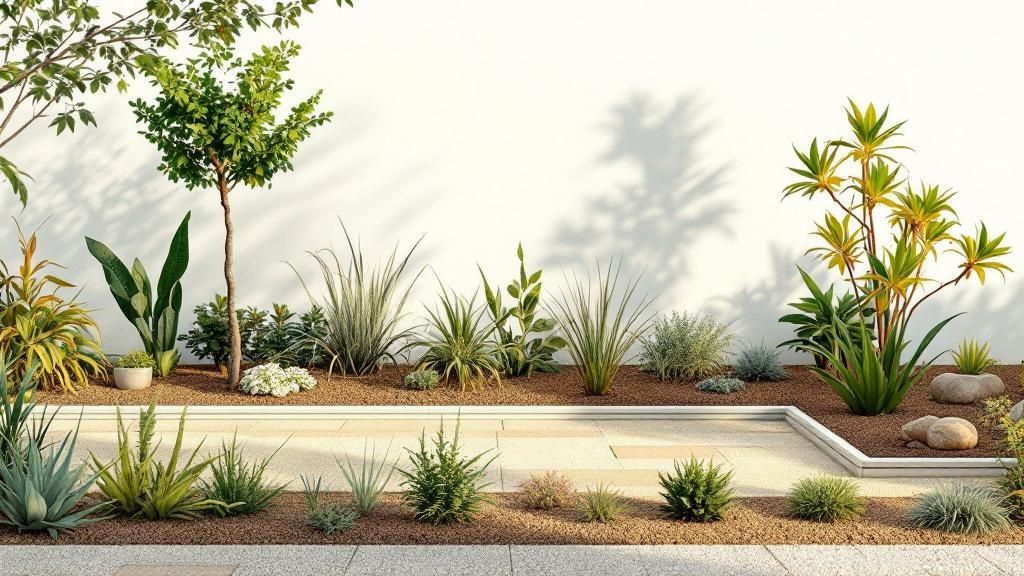
In simple terms, think of it as water-wise gardening. Instead of fighting to keep thirsty grass green or planting flowers that droop in our dry summers, you choose plants that are naturally a good fit for this area. It’s a design idea focused on saving water while making a lovely outdoor space you’ll enjoy.
This isn’t just about changing a few plants here and there. A true xeriscape involves a careful plan for your whole yard. The goal is a landscape that’s more independent, needing less work, less fertilizer, and—most importantly—a lot less water.
Where Did This Idea Even Come From?
Xeriscaping isn’t a new trend; it was actually started because it was needed. The idea began in Denver, Colorado, in the late 1970s and early 1980s because of some serious droughts.
It was the Denver Water Department that officially made up the term in 1981. They mixed the Greek word 'xeros' (meaning dry) with 'landscape' to describe this water-saving method. If you're curious, you can read more about its history and core principles on Wikipedia.
That history is important because it shows xeriscaping is a proven, tested way to create beautiful gardens in places with limited water—just like here in Morgan Hill.
Key Takeaway: Xeriscaping is not "zero-scaping." It's a low-water landscaping method, not a no-water one. Even the plants that handle drought best need some water to get started and stay healthy during long, dry times.
It’s So Much More Than Cacti and Rocks
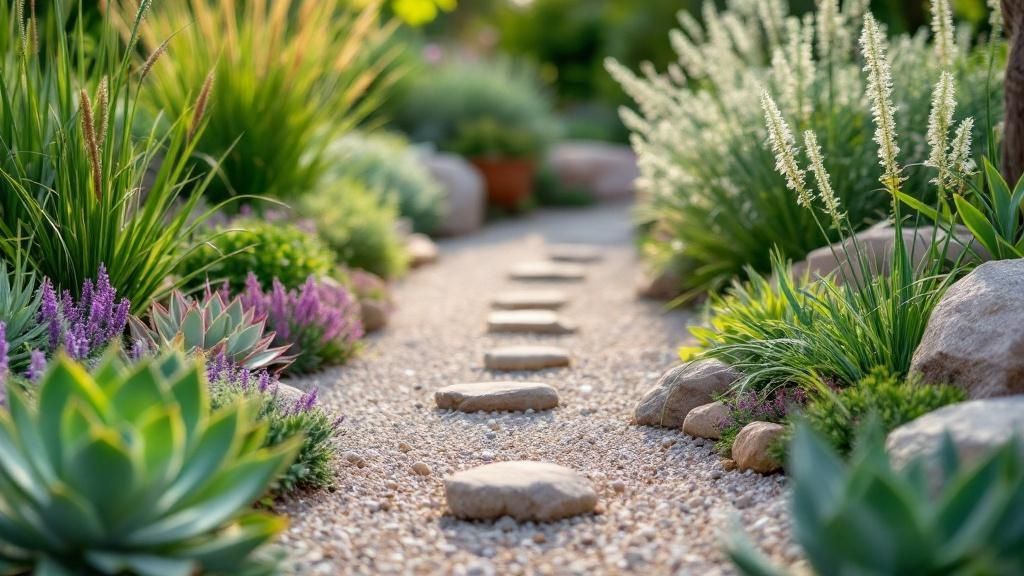
Let’s get rid of that common myth right now: a xeriscape yard doesn't have to be a desert of gravel and spiky plants. Honestly, that couldn’t be more wrong. A well-designed xeriscape can be full of life, green, and bursting with color.
The secret is to group plants with similar water needs together, use good mulch to keep moisture in the soil, and limit how much traditional lawn you have. You can easily include:
- Colorful Flowers: Many beautiful flowering plants, like lavender, salvia, and yarrow, don't need much water.
- Ornamental Grasses: These add nice texture and movement to your garden without using a lot of water.
- Hardy Shrubs: They provide structure, greenery, and look good all year.
To help make it clearer, here’s a quick summary of what xeriscaping is all about.
Xeriscaping at a Glance
| Core Idea | What It Means for Your Yard |
|---|---|
| Smart Planning | Designing your yard based on sun, shade, and water zones. |
| Low-Water Plants | Choosing nice plants that are native or used to California's climate. |
| Healthy Soil | Adding compost to your soil to help it hold more water. |
| Practical Grass Areas | Using grass only where it makes sense (like a play area) and replacing it elsewhere. |
| Good Watering System | Using drip systems or soaker hoses to get water right to the plant roots. |
| Mulching | Spreading a layer of mulch to stop water from drying up and to keep weeds down. |
| Proper Care | Less mowing, less fertilizing, and less trimming—giving you more free time. |
By focusing on smart design and plant choices, xeriscaping helps you create an outdoor space that’s not just beautiful but also good for the environment and easy to take care of. It's a practical, lasting way to have a great yard that saves water, time, and money.
The 7 Core Ideas Behind a Great Xeriscape
When people hear the word "xeriscape," they often picture a yard filled with nothing but rocks and cacti. But that's not true at all. Xeriscaping is really a smart, complete approach to gardening—a way of thinking about your yard that works with our local climate, not against it.
Think of these seven core ideas not as strict rules, but as a helpful guide. They all work together to create a beautiful, water-wise garden that's also easy to maintain.
When you bring these ideas together, you end up with a yard that saves a huge amount of water, cuts down on your yard work, and lowers your costs over time.
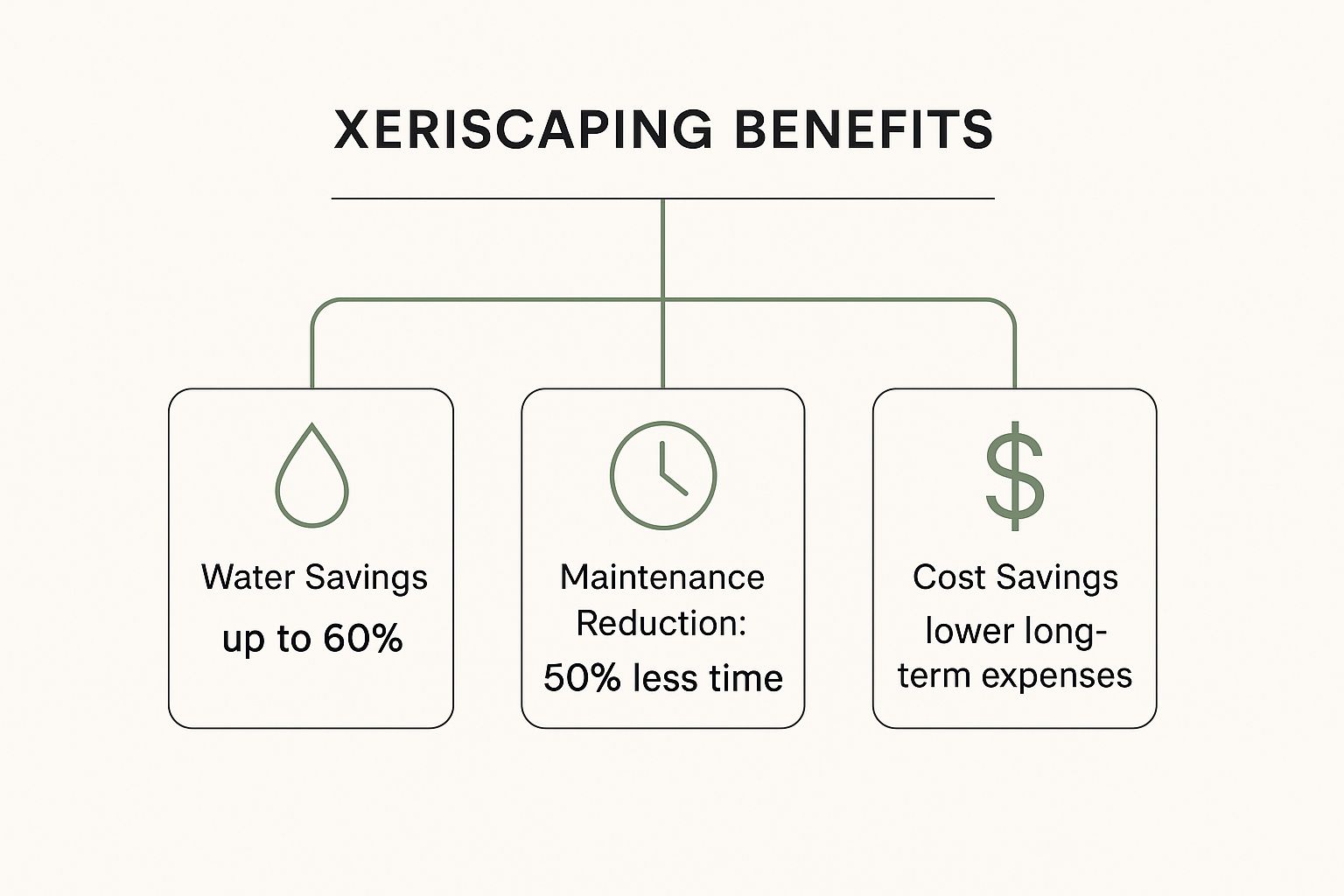
The proof is in the results. A well-designed xeriscape can cut your yard's water use by more than half while giving you back your weekends. Let's look at the seven ideas that make it all happen.
1. Smart Planning and Design
Every great yard starts with a great plan. Before you even start digging, take some time to map out your yard. Where does the sun hit? Where are the shady spots? How do you actually use the space? This is where you figure out if a small patch of grass for the kids makes sense, or where green garden beds would do well.
A really good design groups plants with similar needs together. We call these "hydrozones." It's a simple idea, but it works very well. It keeps you from giving too much water to a sun-loving succulent that's planted next to a thirsty flower, making your whole garden use water better.
2. Improving Your Soil
Healthy soil is the foundation of a great garden, and this is especially true for a xeriscape. The good news is that most soil can be made much better just by adding organic matter, like compost.
Think of compost as a super sponge you mix into your dirt. It helps sandy soil hold onto water and breaks up our thick California clay so that water and air can get down to the roots. Better soil means healthier plants that need far less help from you.
3. Choosing the Right Plants
Here’s where you can really get creative. The goal is to pick plants that are naturally suited to Morgan Hill's climate. That often means beautiful California natives or other great plants from similar climates around the world.
And please, don't think you're stuck with only spiky plants! The options are endless, from colorful flowers like Salvia and Lavender to graceful ornamental grasses that move in the breeze. To see just how beautiful a water-wise garden can be, you can explore some great ideas for a drought-tolerant landscape design.
4. Practical Turf Areas
Let's face it: traditional lawns are the thirstiest part of almost any yard. Xeriscaping doesn't mean you have to give up grass completely, but it does ask you to think about where you put it.
Where do you really need a lawn? Is it for kids, pets, or weekend parties? Perfect. For those other areas, like that narrow strip along the driveway or the side yard nobody uses, think about replacing the grass with beautiful, low-water plants and a layer of mulch.
5. Efficient Irrigation
How you water is just as important as what you plant. Old-fashioned sprinklers that spray water high into the air are very wasteful. They lose a lot of water to the air before it ever gets to the plants.
Xeriscaping uses smarter, better methods:
- Drip Irrigation: This is the best choice. It delivers water slowly and directly to the bottom of each plant, right where it's needed.
- Soaker Hoses: These special hoses are great for garden beds. They "weep" water directly into the soil along their whole length.
- Smart Controllers: These modern timers automatically change your watering schedule based on the weather, so you're not watering on a cool, foggy morning.
6. Using Mulch
Mulch is a xeriscaper's best friend, plain and simple. Spreading a 2-3 inch layer of organic mulch, like wood chips or shredded bark, over your garden beds is one of the best things you can do. It acts like a protective blanket, keeping the soil cool, cutting down on water loss, and stopping weeds.
Plus, as organic mulch slowly breaks down, it adds good nutrients to the soil. It’s a win-win.
7. Proper Maintenance
Finally, a well-designed xeriscape is low-maintenance, not no-maintenance. The good news? The chores are much easier than those for a normal yard.
Your to-do list will mostly involve some weeding, a little trimming to keep plants looking their best, and making sure your drip system is working right. Because you’ve chosen plants that are happy here, you'll spend a lot less time mowing, fertilizing, and, of course, watering.
Why Your Yard and Wallet Will Love Xeriscaping
Switching to xeriscaping is more than just a different way to garden—it's one of the smartest choices you can make for your home. The benefit everyone talks about first is, of course, the amazing water savings. When you choose plants that do well in Morgan Hill's climate, you can cut your outdoor water use by 50% to 75%.
That kind of savings shows up on your monthly utility bill. Instead of pouring money down the drain to keep a thirsty lawn green, you’re creating a yard that pays you back. It’s a real reward for making a better choice for the environment.
More Time for You, Less Time on Chores
What would you do with your weekends back? A traditional lawn is a lot of work, demanding constant mowing, watering, fertilizing, and weeding. A xeriscaped yard, on the other hand, is your ticket out of that endless cycle of chores.
By swapping out big sections of grass for beautiful, low-water plants and a layer of mulch, you make your to-do list much shorter. These plants are mostly able to care for themselves, the mulch keeps weeds from taking over, and a good watering system handles the rest. All of this means less time working on your yard and much more time actually enjoying it.
A Healthier Environment, Right at Home
The good effects of xeriscaping go beyond just your own yard. When you create a water-wise garden, you’re helping make your local environment healthier in a few really important ways.
- Saving Water: You’re helping protect our most important natural resource, which is very important during California’s long, dry seasons.
- Using Fewer Chemicals: Since native and adapted plants are naturally strong, they don’t need a mix of chemical fertilizers or bug sprays to look their best. This keeps harmful chemicals out of our local water.
- Creating a Home for Wildlife: Planting native species provides food and shelter for local animals. Your garden can become a welcoming spot for birds, butterflies, and important pollinators like bees.
By choosing the right plants, you're not just designing a garden—you're helping bring back a small piece of the local ecosystem. It’s a powerful way to make a positive change.
This way of thinking is at the center of modern landscaping. You can see how these ideas all come together by exploring the world of sustainable landscape design.
In the end, xeriscaping is a win for everyone. You save money, you get your free time back, and you get to be a good protector of the environment. It’s a truly practical way to create a beautiful, strong yard that not only raises your property’s value but also fits with a smarter, better way of living.
Choosing Plants That Thrive, Not Just Survive
This is where the real fun begins—picking the plants! Let's get one thing straight right away: a water-wise garden is not a dry, empty space with rocks and a few lonely cacti. You can absolutely create a lush, amazing yard filled with a huge variety of plants that are tough, beautiful, and don’t need constant watering.
Think of it like building an all-star team for your garden. Instead of picking players who are going to have a hard time in our local climate, you're choosing ones that are naturally built to do well here. The result? A yard that looks fantastic with a whole lot less work.

Go Native: The Ultimate Secret Weapon
When it comes to xeriscaping, choosing plants native to our area is the best secret weapon. California native plants have spent thousands of years getting used to our specific soil, rainfall, and climate. They are perfectly designed to do well right where you live.
This means they need far less water, fertilizer, and general care than plants from other places. Even better, they provide important food and homes for local birds, butterflies, and pollinators, turning your yard into a small but important part of the local ecosystem.
By choosing plants that truly belong here, you’re creating a garden that’s not just beautiful but also strong and wonderfully able to care for itself. If you're looking for ideas, check out this great list of beautiful California native drought-tolerant plants that will bring life and color to your yard.
Beyond Natives: Great Plants from Similar Climates
While native plants are a great start, they aren't your only choice. Many beautiful plants from other parts of the world with a Mediterranean climate—like parts of Australia, South Africa, and the areas around the Mediterranean Sea—also do very well here in Morgan Hill.
These "climate-adapted" plants have similar needs and can add amazing variety, texture, and color to your garden design.
A garden with many different types of plants is a strong garden. Mixing different kinds of low-water plants, from succulents and ornamental grasses to flowering perennials, creates a yard that’s much more interesting and balanced.
This flexibility is a key part of what makes xeriscaping work so well. You can mix and match, bringing in succulents like Agave, Mediterranean herbs like Rosemary and Lavender, and beautiful flowering plants that are all happy with our dry summers.
Smart Plant Swaps for a Water-Wise Yard
Making a big change doesn't always mean starting over completely. Sometimes, the easiest way to start is by making a few simple, smart swaps. Replacing just a few thirsty plants with low-water ones can greatly cut your water use and the time you spend on maintenance.
Here are a few common examples to show you how easy it can be.
Smart Plant Swaps for a Water-Wise Yard
This table compares common thirsty plants with beautiful, low-water alternatives to help you make smarter choices for your garden.
| Traditional Plant (High Water Use) | Xeriscape Alternative (Low Water Use) | Key Benefit |
|---|---|---|
| English Lavender | Spanish Lavender | Does well in hot, dry weather and blooms longer. |
| Hydrangeas | Salvia (Sage) | Offers bright, long-lasting color and attracts pollinators. |
| Traditional Rose Varieties | Shrub Roses (e.g., 'Iceberg') | Resists disease better and needs far less water. |
| Kentucky Bluegrass Lawn | Red Fescue or Buffalo Grass | Needs much less water and mowing once it's established. |
These simple changes prove that a water-wise garden can be even more colorful and interesting than a traditional one. It's all about choosing plants that are happy to be here.
Let's Bust Some Common Xeriscaping Myths
Let’s be honest, a few common misunderstandings often stop people from even thinking about a xeriscape. These myths create a picture of a boring, lifeless yard that costs a lot of money to install. It's time to clear the air and prove some of the biggest myths about this smarter, more beautiful way of gardening are wrong.
My goal here is to show you that a water-wise yard can be colorful, affordable, and very practical for anyone living in our area.
Myth 1: It’s Just a Yard of Rocks and Cacti
This is, by far, the biggest and most common myth out there. When people hear "xeriscape," their minds often jump straight to a dry desert scene—all gravel and a few lonely, spiky plants. I'm here to tell you that is completely wrong.
A well-designed xeriscape is full of life, color, and texture. The list of possible plants is huge, including everything from beautiful flowering plants and soft ornamental grasses to green groundcovers and hardy shrubs. The whole point is to choose beautiful plants that are a perfect fit for our local climate, not to limit yourself to a desert-only look. You can create any garden style you love, whether it's a country cottage style or a clean, modern design.
The Reality: A great xeriscape is a lively, healthy garden that can be just as green and colorful as any traditional yard. It just uses a smarter selection of plants to get that beauty with a lot less water.
Myth 2: It’s a “No-Maintenance” Garden
While a xeriscape is definitely low-maintenance, it is not no-maintenance. Every garden, no matter how well it is designed, needs some care to look its best. The key difference is that the work needed is much less than what a traditional lawn and thirsty flowerbeds ask of you.
So, what does "low-maintenance" actually feel like from week to week?
- Less Mowing: With grass areas that are smaller and more useful, you’ll spend a lot less time pushing a lawnmower.
- Less Weeding: A good layer of mulch is a game-changer. It does an excellent job of stopping most weeds before they even get a chance to start.
- Less Pruning: When you choose plants that are right for our climate, they tend to grow to their natural size and shape without needing constant trimming.
All that time you save on boring chores is time you get back to simply relax and enjoy the beautiful outdoor space you’ve created.
Myth 3: It’s Too Expensive to Install
The starting cost is another common concern. People worry that changing their yard to a xeriscape will be a huge, expensive project. While any landscaping project has initial costs, xeriscaping is a smart long-term investment that pays for itself over time. Those big savings on your monthly water bills start adding up right away.
Plus, you don’t have to do it all at once. Doing it in stages makes the whole process easier to handle and much more affordable. You can start with a small area—like that tricky parking strip or a side yard—and grow your xeriscape project over several seasons. This lets you spread out the costs while you slowly turn your yard into a lasting, water-wise paradise.
Your Xeriscaping Questions Answered
Even with all the good things laid out, it's totally normal to have a few questions come up before you start a new landscaping project. This is the fun part, where we answer the common things we hear from homeowners who are ready to switch to a beautiful, water-wise yard.
Let's clear up those last few questions so you can start planning your amazing new outdoor space with confidence.
How Much Water Can I Actually Save?
This is usually the first thing people ask, and the answer is always impressive. Homeowners who switch to a xeriscape yard can cut their outdoor water use by 50% to 75% compared to a traditional grass lawn.
Of course, the exact savings will depend on the size of your yard and our local climate here in Morgan Hill. But when you replace thirsty grass with smart, low-water plants and a good watering system, you'll see the difference on your water bill almost right away.
Do I Have to Get Rid of My Entire Lawn?
Not at all! This is a common misunderstanding—that xeriscaping means you have to say goodbye to grass completely. The truth is, a key idea of xeriscaping is creating practical grass areas, not getting rid of them.
You can design a smaller, more useful lawn that’s perfect for kids or pets to play on. Then, you can turn the other, less-used areas into beautiful garden beds. A great way to get started is to begin with just one section, like that parking strip between the sidewalk and the street.
Is Xeriscaping Expensive to Install?
It certainly doesn't have to be. Any landscaping project has some starting costs for plants, soil improvements, and mulch. But think of xeriscaping as a smart investment that pays for itself over time through lower water bills and less work.
The key is that you don't have to do it all at once. Breaking the project into smaller, more manageable parts lets you spread the cost out over a few seasons, making it much easier on your budget.
This method lets you slowly build your dream yard without a huge cost upfront. It’s the most practical way to a beautiful yard that is both good for the environment and saves you money.
Can My Xeriscape Garden Still Have Flowers and Color?
Absolutely! This is one of the biggest myths we love to clear up. A well-designed xeriscape can be bursting with bright, beautiful colors all year long. The world of low-water plants is anything but boring.
There are countless amazing options that do well in our Morgan Hill climate. You can fill your garden with beautiful, water-wise flowers that put on a show for months, including:
- Lavender: Gives you those beautiful purple spikes and a wonderful smell.
- Coneflower (Echinacea): Provides bold, daisy-like flowers that bees and butterflies love.
- Salvia: Comes in a huge range of colors, from bright blue to fiery red, and is a favorite for hummingbirds.
And those are just a few ideas to get you started. Your xeriscape can be a lively, colorful paradise that's just as beautiful—if not more so—than any traditional garden.
Ready to transform your outdoor space into a beautiful, water-wise oasis? The team at Tamura Designs Landscape and Construction has over 30 years of experience creating stunning, sustainable landscapes in Morgan Hill and beyond. Let's create the yard of your dreams together.
