
Learning how to landscape a backyard is more than just picking pretty plants. It's about planning smart to turn your dream into a real place you can enjoy. It all starts with figuring out your goals, understanding your yard's conditions (like sun and soil), and making a budget you can stick with.
This first step is key. It makes sure the outdoor space you create is not only beautiful but also works for your life.
Laying The Groundwork For Your Dream Backyard
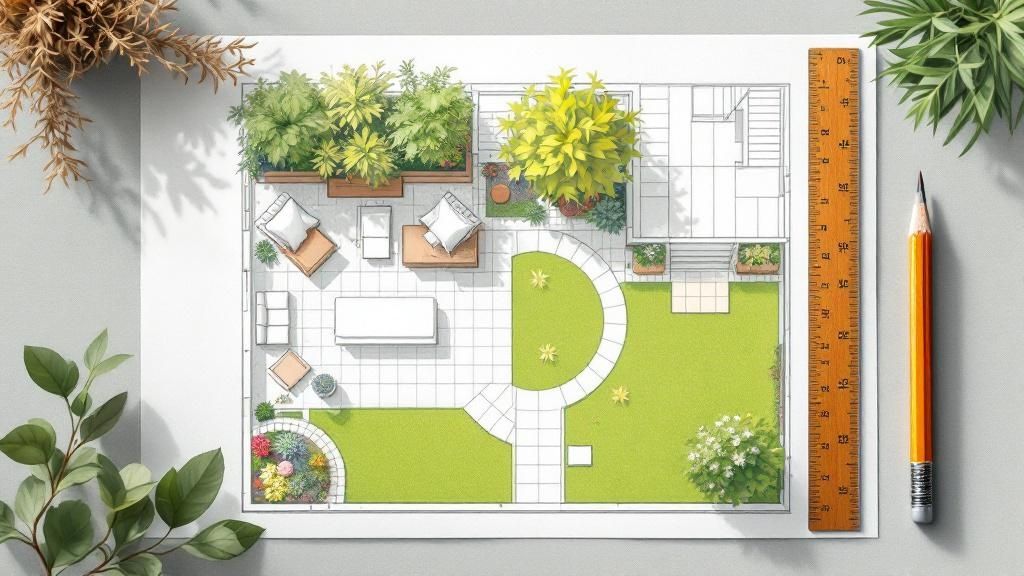
Before you even pick up a shovel, the best backyard projects start with a good plan. Think of it like a map. Without one, you might end up with a bunch of nice ideas that don't quite fit together. The goal is to answer a few questions that will guide all your choices later on.
Start by asking yourself how you really want to use your backyard. This is the most important step. For a moment, forget what you've seen online and think about what your family actually does—or wants to do—outside.
- Relaxation: Do you imagine a quiet spot for reading or enjoying your morning coffee? That might mean a small patio with a couple of comfy chairs.
- Entertaining: Do you love hosting summer barbecues? If so, you’ll probably need a bigger patio for a dining table and grill.
- Family Fun: Is the yard mostly a playground for kids and pets? A wide, tough lawn might be your main goal.
- Gardening: Have you always wanted to grow your own vegetables or flowers? You'll need to plan for garden beds in the sunniest parts of your yard.
Assess Your Existing Yard
Once you know how you want to use the space, it's time to take a hard look at your current yard. Every yard has its own quirks. I've learned that working with these quirks, instead of fighting them, saves a lot of time, money, and stress.
Grab a notepad and walk around your yard. Notice which areas get a lot of sun all day and which spots stay in the shade. This is very important because it decides what you can plant where. A rose bush that loves sun won't survive in a dark corner, and a shade plant like a hosta will get burned in direct sunlight.
Next, check your soil. Is it sandy, heavy clay, or the rich, dark soil everyone wants? A simple "squeeze test" can help. Grab a handful of damp soil and squeeze it. If it falls apart, it's sandy. If it forms a hard ball, you have clay. Knowing this helps you pick plants that will grow well or tells you if you need to add compost to make the soil better.
A good design works with what's already there. A smart landscape designer looks at every existing plant and feature to see what should be saved. This can make the yard more beautiful and save you money.
Set a Realistic Budget
Now, let's talk about money. It's easy to get carried away with big ideas, but a clear budget will keep your project realistic. A landscape project can cost anywhere from a few hundred dollars for a small DIY garden bed to tens of thousands for a complete makeover with a new deck and professional lighting.
People want beautiful outdoor spaces now more than ever. The U.S. landscaping market is worth around $153 billion and is expected to grow. This shows how much homeowners are willing to spend on their yards.
To start off right, it helps to understand how to plan a garden from the beginning. This early planning helps avoid costly mistakes. If the total cost seems too high, think about doing the project in stages. Maybe you build the patio this year and work on the garden beds next year. This makes the cost easier to handle.
Be honest about what you can spend, and decide what's most important to you. A clear plan and a realistic budget are the two most important parts of any successful backyard project.
Choosing a Design and Creating Outdoor Rooms
Now that you've studied your yard, you can move on to the fun part: picking a style and mapping out your new backyard. This is where your ideas start to become real.
Are you thinking of a clean, modern look, or do you dream of a full cottage garden that feels like a secret getaway? Choosing a style helps you make decisions. It makes sure everything, from the plants to the patio furniture, works together to create a beautiful space.
Find Your Landscaping Style
Don't worry about picking a "theme." It's really just about finding a look that matches your home and how you want to live outside.
To get some ideas, here are a few popular styles we often work with:
- Modern Landscapes: This style is all about "less is more." It uses clean lines, simple shapes, and a few basic colors. We often use things like smooth concrete patios, steel-edged planter beds, and unique plants like ornamental grasses to create a calm, orderly look.
- Cottage Gardens: While modern is simple, cottage is full and joyful. This style is charming, colorful, and feels a little wild (in a good way). We create this look with winding stone paths, trellises with climbing roses, and a mix of flowers like lavender, coneflowers, and daisies.
- Native Landscapes: This is my favorite way to create yards that are easy to care for and good for the environment. By using plants that naturally grow in our area, we design a space that feels like it belongs. The best part? Native gardens attract local birds and butterflies and usually need less water once they are settled.
Choosing Your Backyard Landscaping Style
This table can help you decide by breaking down the main features of a few popular styles. You can also mix ideas from different styles to create your own unique look.
| Style | Key Features | Maintenance Level | Typical Plants |
|---|---|---|---|
| Modern | Clean lines, geometric shapes, simple colors, repeating patterns. | Low to Medium | Ornamental grasses, succulents, boxwoods, single large trees. |
| Cottage | Lots of plants, curved paths, mix of colors, rustic materials. | Medium to High | Roses, lavender, hydrangeas, daisies, climbing vines. |
| Native | Plants from your area, natural look, helps local wildlife. | Low | Varies by region; think coneflowers, salvia, local grasses, and trees. |
| Mediterranean | Gravel beds, terracotta pots, plants that don't need much water, shaded seats. | Low | Olive trees, lavender, rosemary, bougainvillea, citrus trees. |
Finding the right style is about balancing the look you love with the amount of time you want to spend taking care of it.
Create Functional Outdoor Rooms
I always tell my clients to think of their backyard as another part of their home, with different "rooms" for different activities. This simple idea is a very powerful design tool.
Instead of one big, open yard, you can create separate zones. You might have a "dining room" with a patio table, a "living room" with chairs around a fire pit, and a "playroom" of open grass for the kids or dog. This method gives every part of the yard a purpose and makes the whole space feel more organized and useful.
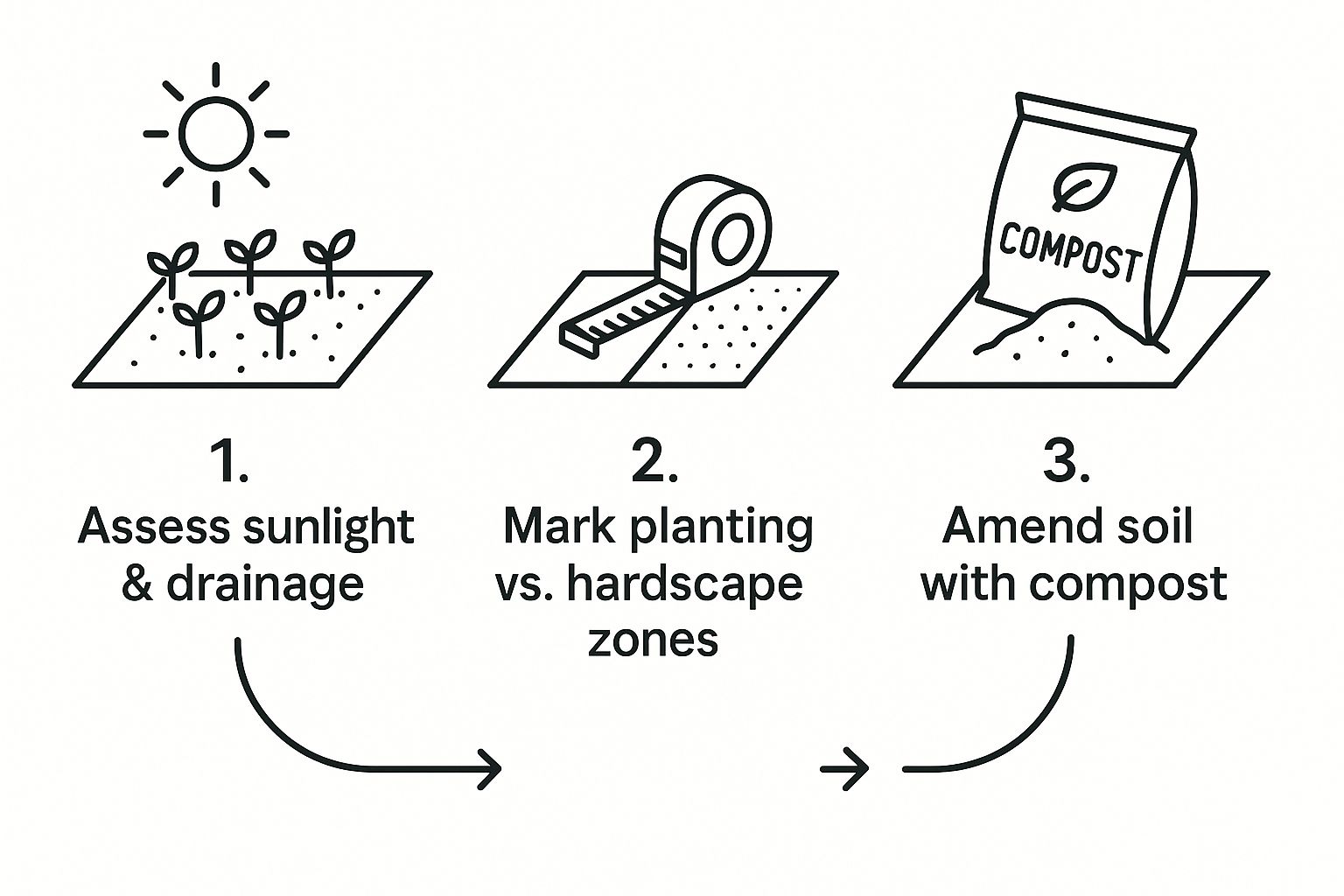
This method creates a natural flow, using paths to connect each "room" and lead you through the yard.
The best designs aren't just about what you add, but how you arrange it. By thinking of your yard in "rooms," you create zones that are useful and nice to look at, making the whole space feel bigger and more organized.
Add a Focal Point for Visual Interest
Every well-designed space needs a focal point—something that catches your eye right away and gives the area character. It’s the centerpiece that ties the whole design together.
In a backyard, a focal point can be anything that stands out. Here are a few ideas we often suggest:
- A Water Feature: Even a small fountain can change a space. The gentle sound is very relaxing and can help block out neighborhood noise.
- A Fire Pit: Nothing brings people together like a fire. A fire pit creates a natural gathering spot, making your backyard the place to be on cool evenings.
- A Specimen Tree: A single, beautiful tree can be like living art. Think of a Japanese Maple with its pretty leaves or a Magnolia with its big, sweet-smelling flowers.
- A Striking Patio: Don't forget about your patio! With the right materials and design, it can be the main attraction. For some great examples, check out these 10 inspiring backyard patio ideas for 2025.
By carefully choosing your style, creating different outdoor rooms, and adding a strong focal point, you’re setting up the foundation for a great backyard.
Finding the Perfect Plants for Your Climate
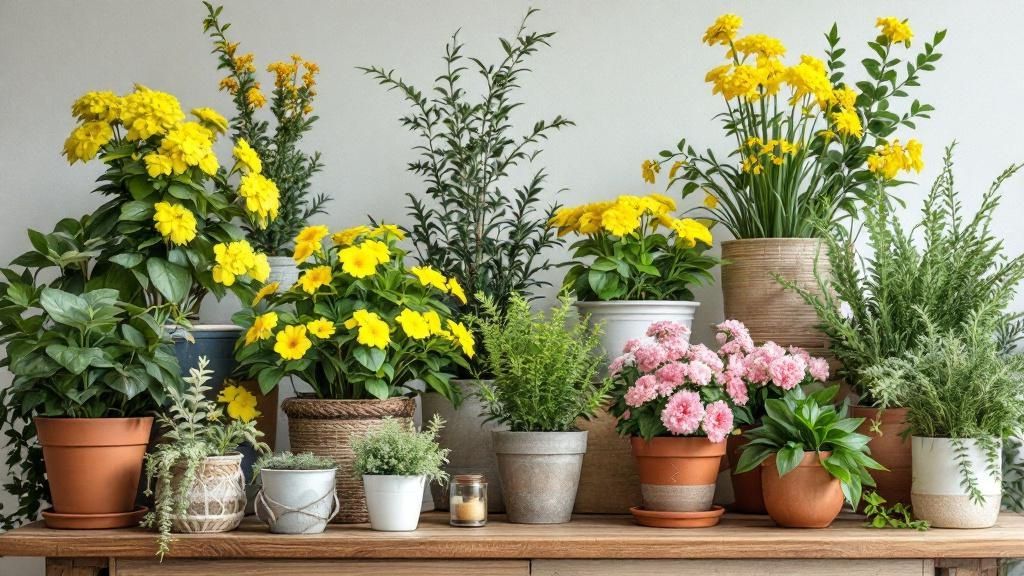
Plants are what make a backyard design feel alive. They add color, texture, and energy. But picking the right ones is about more than just finding what looks good at the store. The secret to a healthy, easy-care garden is to work with your local climate, not against it.
When you choose plants that are right for your climate, they need less water, less fertilizer, and less work from you. This doesn't just save you time and money; it also creates a yard that is stronger and better for the environment. It’s the smartest way to make sure your hard work pays off for years to come.
Understanding Your Climate Zone
Before you make a shopping list, you need to know your USDA Plant Hardiness Zone. This is a guide that tells you which plants can survive the winter in your area. Each zone is based on the average coldest winter temperature.
Knowing your zone is a simple but very important first step. For example, planting something rated for Zone 9 in a Zone 6 area is a bad idea—it won't survive the cold winter. You can find your zone easily by entering your zip code on the USDA website. That one piece of information will help you choose plants that are most likely to succeed.
This is a key step for anyone learning how to landscape a backyard. Once you know your zone, you can pick your plants with confidence.
The Building Blocks of Your Garden
A great garden uses a mix of different plant types to create structure and keep things interesting all year. I think of it as building a team where every player has an important job.
Here are the main types of plants to think about:
- Trees and Shrubs: These are the "bones" of your yard. They provide structure, create privacy, and add height. A well-placed tree can also provide great shade, making a patio much more comfortable in the summer.
- Perennials: These are the plants that come back every year. Their flowers might only last for a season, but their leaves often look good for months. Think of favorites like coneflowers, hostas, and lavender.
- Annuals: These plants only live for one season, but they provide a lot of bright color. They are perfect for filling in empty spots in your garden or for adding color to pots and window boxes.
- Groundcovers: These low-growing plants are great for spreading out and covering the soil, like a living mulch. They help stop weeds and are a great low-maintenance choice for tricky spots, like a steep hill.
The golden rule of gardening is to choose the right plant for the right place. A plant that loves sun will struggle in the shade, and a plant that likes dry soil won't survive in a wet spot. Matching a plant's needs to your yard's conditions is the key to a healthy garden.
Creating Year-Round Visual Interest
A common mistake is choosing plants that all bloom at the same time. You get a great show for a few weeks in the spring, and then a boring yard for the rest of the year. The goal is to design a garden that has something interesting to look at in every season.
To do this, you need to think about "succession of bloom." This just means picking a variety of plants that flower at different times—some in spring, some in summer, and others in the fall. A little bit of planning can give you color all year long.
But there's more to a garden than just flowers. Think about these other things:
- Texture: Mix plants with different leaf shapes and textures. The big, smooth leaves of a hosta look great next to the soft, feathery leaves of a fern.
- Color: Don't just think about flower color. Leaves come in many shades, from dark red and bright green to silvery blue.
- Form: Pay attention to the overall shape of your plants. Use tall, spiky plants like ornamental grasses next to soft, round plants like hydrangeas to create an interesting look.
For those of us here in California, picking native plants that don't need much water is very important. You can find some of our favorite choices in our guide to the top California native drought-tolerant plants for 2025.
Choosing Healthy Plants at the Nursery
The final step is to take your smart shopping list to the nursery. This is where your planning pays off. It can be hard, but try not to buy one of everything that looks good! Stick to your plan and the colors you chose.
When you're picking out plants, look for healthy signs. Avoid plants with yellow leaves, strange spots, or bugs. If you can, check the roots—a healthy plant will have white roots that fill the pot but aren't circling around and around at the bottom.
Gardening is a big part of what makes a backyard feel like home. The global gardening market is now worth over $150 billion, and about 55% of US households are active gardeners. This shows that creating a beautiful outdoor space is more than just a hobby; it’s a lifestyle choice that adds real value to your property.
Building Your Yard's Foundation with Hardscaping
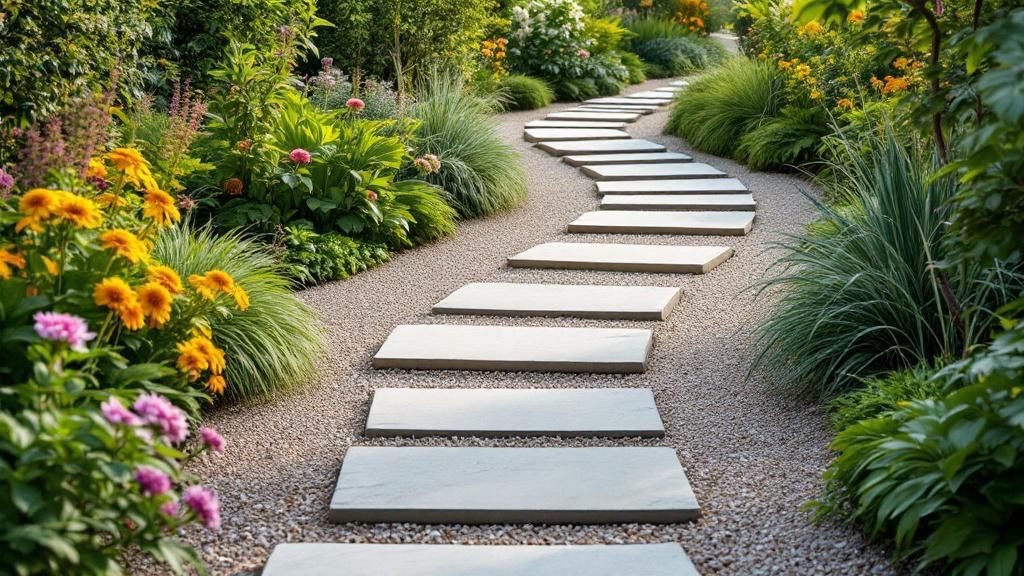
Think of plants as the furniture in your backyard. If that's true, then hardscaping is the floor and walls. Hardscaping is the name for all the non-living parts of your yard—patios, walkways, decks, and retaining walls.
These are the bones of your yard. We almost always install them before any plants go in the ground. Getting the hardscaping right sets up your outdoor rooms and decides how you'll move through and use the space for years. It's all about building the foundation first.
Choosing Your Patio Material
The patio is often the center of the backyard. It's where you'll have dinners, relax with a book, or just hang out. The material you choose sets the style for everything else. Two of the most common choices are pavers and flagstone, and they each have a very different feel.
Pavers are man-made stones, usually concrete or clay. They give you a clean, even look that's perfect for modern or formal designs. Because every piece is the same size and shape, you get a smooth surface that's great for patio furniture. No wobbly tables.
Then there is flagstone, which is made of natural, flat stones with uneven shapes. This is a great choice for a rustic, natural feel that looks perfect in a cottage or California native garden. The unique shapes and natural colors give the space a lot of character.
When you're picking a patio material, you have to think about both style and use. Pavers give you that smooth, neat surface, while flagstone offers a unique, natural look. It really depends on the overall feeling you want to create.
If you want to see how these materials look in real yards, check out these hardscaping patio ideas for Morgan Hill homes for some great ideas.
Deciding on Decking: Wood vs. Composite
If a deck is part of your plan, you'll have to choose between natural wood and man-made materials. The classic choice is natural wood. Woods like redwood or cedar are beautiful and feel great to walk on. The downside? They need regular care—like staining or sealing—to protect them from weather and keep them looking good.
The other main choice is composite decking, a material made from a mix of wood fibers and recycled plastic. It costs more at first, but it is very strong and easy to care for. You won’t have to worry about splinters, warping, or rot, and you'll never have to spend a weekend staining it.
Here’s a quick comparison to help you decide:
| Feature | Natural Wood Decking | Composite Decking |
|---|---|---|
| Appearance | Real, natural look and color | Even color, can look like wood |
| Maintenance | Needs regular staining/sealing | Just needs simple cleaning |
| Durability | Can rot and get damaged by insects | Resists rot, insects, and fading |
| Cost | Costs less at first | Costs more at first |
Designing Practical and Beautiful Pathways
Pathways are more than just a way to get from one place to another. They guide your eye and make you feel like you're on a journey through your yard. A well-designed path connects the whole yard and makes it feel more welcoming.
Think about the flow you want. A straight path has a formal, direct feel, while a curving path feels more relaxed. Width is also important. A main walkway should be wide enough for two people to walk together, which is usually about four feet.
For materials, you can use the same pavers or flagstone from your patio to create a matching look. Or, for a more casual feel, try gravel or mulch with stepping stones—a simple and affordable option that always looks great.
Finishing with Garden Edging
The last part of the hardscaping is often garden edging. It’s a simple border between your lawn and garden beds. It might seem like a small detail, but it makes a big difference.
Edging creates a clean, sharp line that makes your yard look more polished and neat. It's also useful. It keeps grass from growing into your flower beds and stops mulch from washing onto the lawn. Materials like steel, stone, or even simple plastic can give you that perfect, finished look.
Bringing Your Vision to Life with Planting
Okay, this is where the real magic happens. Now that the hardscaping has given your backyard its structure, it’s time to add the life, color, and texture that only plants can bring. All that planning you did leads right to this moment.
Think of it this way: a house isn't a home without furniture and personality. Plants are the living soul of your landscape.
Prepping Your Soil for Success
I can't say this enough: getting your soil ready is the most important thing you can do for your new plants. It’s the foundation for everything else. Healthy soil means healthy, happy plants.
Most backyard soil isn't ready for a garden right away. It might be packed down from construction, mostly heavy clay, or so sandy it doesn't hold water. The goal is to create a rich, loose soil where roots can spread out and find the food they need.
The easiest way to do this is by adding compost or other organic material. Spread a thick 2 to 3-inch layer over your new garden beds and mix it into the top 6 to 8 inches of soil. This one step makes a huge difference. It helps break up heavy clay so it drains better and helps sandy soil hold on to water.
A common mistake is to dig a small hole in bad soil and just fill it with good potting mix from a bag. This creates a "bowl" where water collects, which can drown your new plant's roots. You should always improve the soil in the whole planting area, not just one small spot.
Getting Plants in the Ground Correctly
Now that the soil is ready, it's time to plant. How you put a plant in the ground affects its long-term health. Don't rush this part—a few extra minutes here can help a plant grow strong for years.
Here are a few tips for successful planting:
- Dig the Right Hole: The hole should be about twice as wide as the plant's pot, but no deeper than the root ball. This gives the roots plenty of room to spread out into the good soil you just prepared.
- Check the Root Ball: Gently take the plant out of its pot. Are the roots a tangled, circling mess? That’s called being "root-bound." Use your fingers to gently pull them apart. This helps them grow outward into their new home instead of continuing to circle.
- Plant at the Right Depth: This is very important. Place the plant in the hole so the very top of its root ball is level with or even slightly above the ground around it. Planting too deep is one of the most common reasons new plants die.
- Backfill and Water: Fill the hole back in with your improved soil, gently pressing it down to remove any big air pockets. As soon as you're done, give the new plant a lot of water. This helps the soil settle and gives the roots the water they need.
The Finishing Touches: Mulch and Water
With your plants in the ground, two final steps will protect them and save you work later. First is mulch.
Mulch is like a protective blanket for your soil. A 2 to 3-inch layer of shredded bark or wood chips does amazing things. It helps the soil hold water (so you water less), it keeps weeds from growing, and as it breaks down, it adds good stuff back into the soil.
Just be sure to keep the mulch a couple of inches away from the stems of your plants to prevent rot.
Finally, get into a smart watering routine. For the first few weeks, your new plants will need regular water to get settled. After that, it’s much better to water deeply but not as often. This encourages the roots to grow deeper to find water, making the plants stronger and better able to handle dry weather.
The work is worth it. Most homeowners spend an average of $300 per month on landscaping services. With 69% of landscaping businesses feeling good about the future, it’s clear that beautiful, healthy outdoor spaces are more popular than ever. You can learn more about current trends in the landscaping industry and see for yourself.
A Few Common Landscaping Questions
Even people who have done projects before have questions when they start landscaping. It's a big job, so it's normal to want more information before you start. Here are some of the most common questions we get, along with our simple answers based on experience.
How Much Does It Cost to Landscape a Backyard?
This is always the first question, and the honest answer is: it depends. There’s no single number. The final cost depends on a few key things: the size of your yard, the materials you choose, and how much of the work you do yourself.
A simple weekend project, like making a new flower bed and filling it with small plants and mulch, might only cost a few hundred dollars. But if you're dreaming of a complete change—a new stone patio, a custom deck, and big trees for privacy—you could easily be looking at a budget of $10,000 or more, especially if you hire professionals.
My best advice? Start with a number you are comfortable with. From there, make two lists: your "must-haves" and your "nice-to-haves." This simple task helps you figure out your priorities and shows you where your money will have the biggest effect.
What Is the Best Time of Year to Start Landscaping?
The time of year you start your project can make a big difference, especially for your new plants. If you're putting anything in the ground, spring and fall are the best seasons.
The cooler temperatures and more frequent rain during these months help new plants get a good start. It's much less stressful for them, letting their roots grow strong before the hot summer or cold winter.
Now, for hardscaping—like building a patio or a wall—you have more options. You can work on those projects anytime the ground isn't frozen.
Can I Landscape My Backyard on a Tight Budget?
Yes, you can. You don't need a huge budget to create a beautiful backyard. It just takes some smart planning and patience.
One of the best ways to save money is to do the project in stages. Don't feel like you have to do it all at once. Focus on one area this year—maybe building the patio. Next year, you can work on the garden beds around it.
Here are a few other tips:
- Start Small: Younger, smaller plants are always much cheaper than bigger ones. It takes a little more patience, but they will grow and fill in the space before you know it.
- Do It Yourself: Labor is a big part of any landscaping budget. If you can, doing your own demolition, planting, and mulching can save you a lot of money.
- Shop Smart: Look for end-of-season sales at your local plant nurseries. You can often get great deals on healthy plants they need to sell.
What Are Some Common Landscaping Mistakes to Avoid?
Knowing what not to do is just as important as having a good plan. The biggest mistake we see is people starting without a clear design. That’s how you end up with a yard that feels random and messy.
Another common mistake is choosing plants that are wrong for your yard. A plant that loves sun will not survive in deep shade. Also, people often forget how big plants will get and plant them too close together. Always plan for their full-grown size to avoid a crowded mess later. Finally, a very important tip: make sure your yard always slopes away from your house's foundation to prevent water problems.
Ready to stop dreaming and start building the backyard you've always wanted? The team at Tamura Designs has over 30 years of experience creating stunning, sustainable outdoor living spaces in Morgan Hill and beyond. Contact us today for a consultation and let's bring your vision to life.
