
Welcome to the best guide for redoing your outdoor space. In a state as varied and beautiful as California, your front yard is more than just grass. It's a place to show your style, work with the local weather, and make a great first impression. Finding the right california landscaping ideas for your front yard means mixing beauty with common sense, especially in our state where we need to be careful with water.
Forget about thirsty lawns that need constant watering and flower beds that can't handle the summer heat. We will look at 10 clear ideas that work well in the Golden State, from the sunny coasts of Southern California to the hills of Morgan Hill. Each idea comes with plant suggestions, hardscape details, and care tips to help you create a beautiful and lasting landscape.
When you change your front yard, think about how using green ideas can make it look better and work more efficiently. For example, you can look into integrating green energy into your California landscape. This modern thinking goes well with the water-saving designs we will explore. Whether you want a calm Zen garden, a colorful wildflower field, or a clean modern space, this guide will give you the ideas and steps to make it happen. Let's start creating a front yard that is both lovely and truly Californian.
1. Mediterranean Drought-Tolerant Gardens
A Mediterranean-style front yard is a perfect fit for California's climate. It reminds you of the sunny hills of Italy or the coast of Santa Barbara. This design creates a beautiful, low-care landscape that works with, not against, our state's dry summers. It's one of the most popular california landscaping ideas front yard because it uses plants that grow well with very little water once they are settled in.
The style is known for its mix of sweet-smelling, silvery-green plants, rough textures, and warm, earthy colors. Think of winding gravel paths, clay pots, and stone walls that feel both rustic and classy. This style not only saves water but also gives you a full experience with smells from herbs like rosemary and lavender.
Why Choose a Mediterranean Garden?
This style is great for people who want a beautiful front yard without the constant work of a traditional lawn. It works very well on sloped yards, where stone terraces can create interesting planting areas. It is also good for sunny front yards where other plants might have a hard time. It’s a smart and lasting choice that has a classic, Old-World look.
To see the main benefits, this summary shows why so many people in California choose this design.
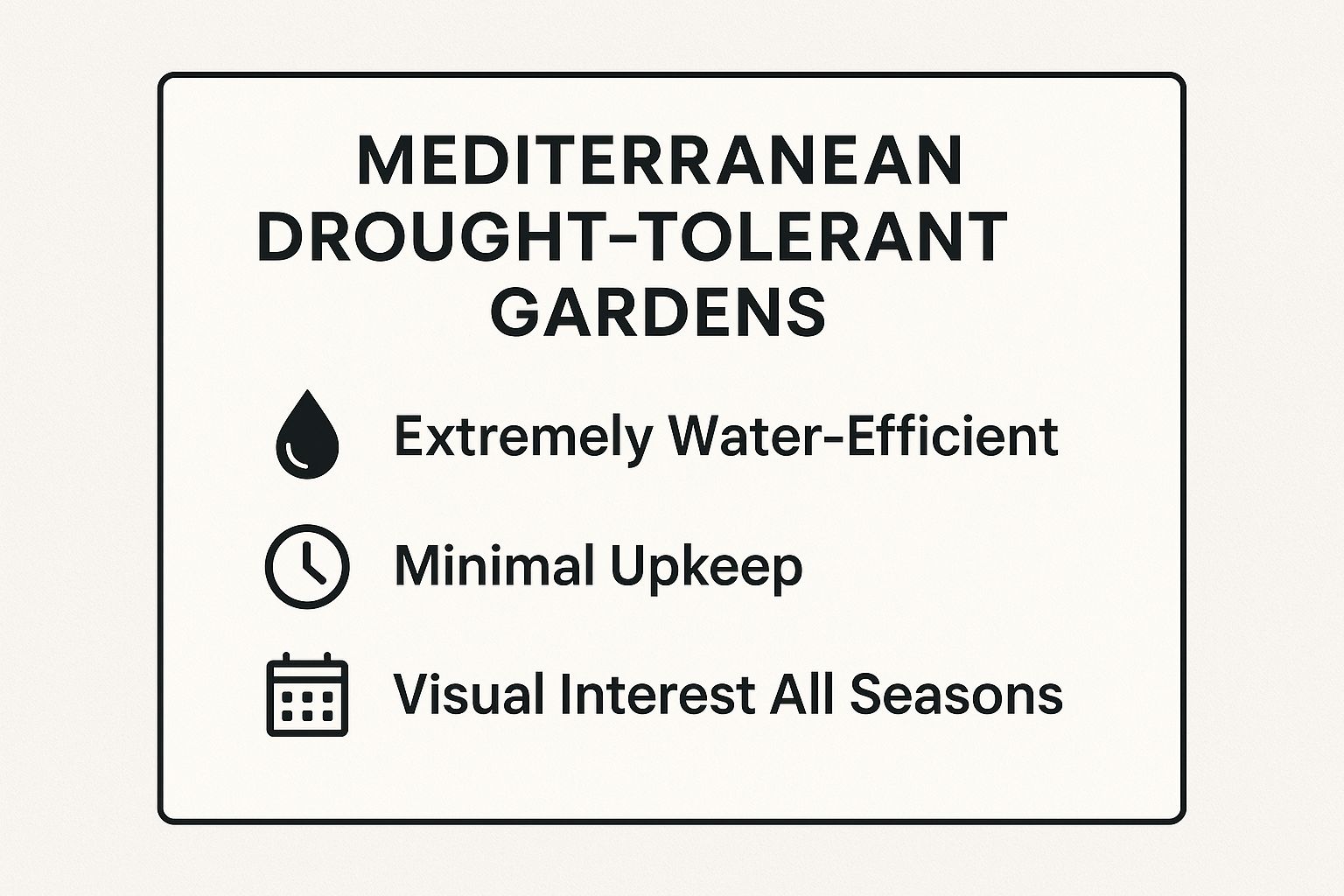
The mix of saving water, low care, and year-round beauty makes this style a smart, long-term choice for any front yard.
Actionable Tips for Implementation
Creating your own Mediterranean space is easy with the right plan. Focus on a few key things to make sure your garden is real and healthy.
- Group Plants Wisely: Put plants that need the same amount of water together. This keeps you from giving some plants too much water while others get too little. For example, plant lavender with olive trees and rosemary.
- Use Earthy Hardscapes: Use materials like decomposed granite, pea gravel, or flagstone for paths and patios. These surfaces let rainwater soak into the ground.
- Install Drip Irrigation: A drip system brings water right to the plant roots, which means less water is lost to the air. It's very important for helping new plants get started in their first year.
- Plant in the Fall: Planting in the fall lets roots grow during the cooler, wetter winter. This gets them ready for the stress of summer heat.
For a closer look at picking plants and design ideas, you can find expert help on drought-tolerant landscape design. This helps make sure your front yard is not only beautiful but also strong and perfect for the California weather.
2. California Native Plant Gardens
Making a garden with California native plants is like bringing a piece of the state's wild, natural beauty to your home. This idea uses plants that are from your specific area, like ceanothus, manzanita, and California poppies, to build a garden that can take care of itself. As one of the most nature-friendly california landscaping ideas front yard, it helps local wildlife and shows off our state's amazing variety of life.
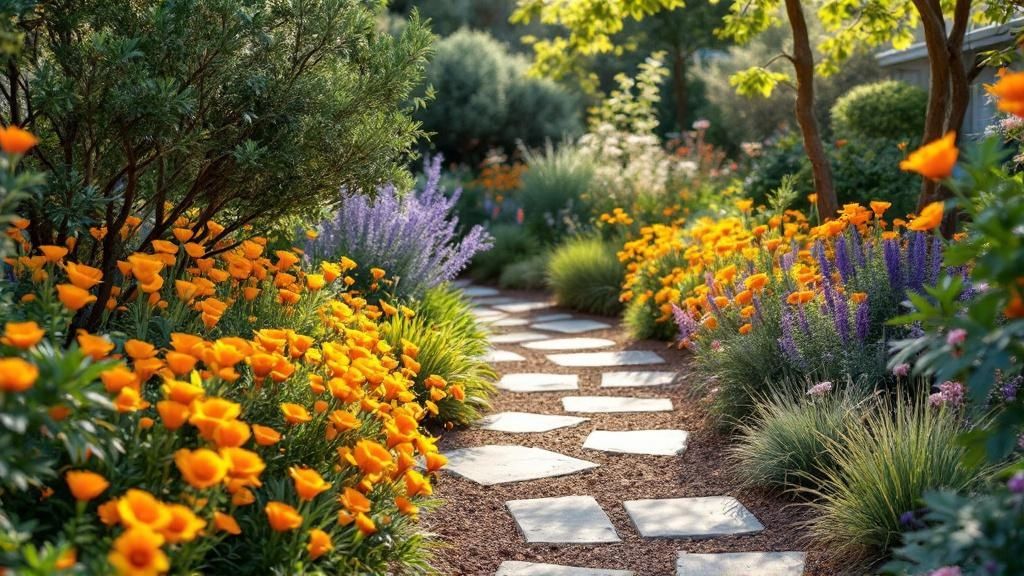
These gardens are made to do well in California's special climate. This means they need very little water, fertilizer, or bug spray once they are settled. The result is a lively, strong front yard that looks interesting all year with its special textures, colors, and shapes. From fragrant sages to the interesting shapes of native grasses, this style offers a true California look.
Why Choose a California Native Plant Garden?
This style is perfect for people who care about the environment and want to create a home for local birds, bees, and butterflies while saving water. It is a great choice for anyone who wants a low-care landscape that shows the real character of the area. Native gardens connect your home to the nature around it, creating a feeling of place that is both beautiful and meaningful.
The main benefits make it clear why this is a popular and smart choice.
- Supports Local Ecosystems: Gives food and shelter to local wildlife.
- Extremely Low Water Use: Native plants are used to dry summers.
- Reduced Maintenance: Needs no fertilizer and very little trimming.
- Authentic Beauty: Shows the natural charm of California's landscapes.
This mix of helping nature and easy beauty makes a native garden a great choice for any homeowner.
Actionable Tips for Implementation
Starting a native garden is all about knowing your local area. Follow these tips to help your plants grow well and create a healthy environment.
- Source Plants Locally: Buy plants from special native nurseries. They will have plants that are best for your area's soil and weather.
- Research Your Region: Use tools from the California Native Plant Society to find plants that are really from your local town.
- Plant in the Fall: Planting before the winter rains gives roots time to grow. This gets them ready for the dry summer.
- Avoid Soil Amendments: Most California natives like poor, well-draining soil. Do not use fertilizers and compost, as they can hurt the plants.
To find the perfect plants for your yard, you can get more information on California native drought-tolerant plants. This will help you pick plants that are not only beautiful but also perfect for your front yard's conditions.
3. Modern Desert Minimalism
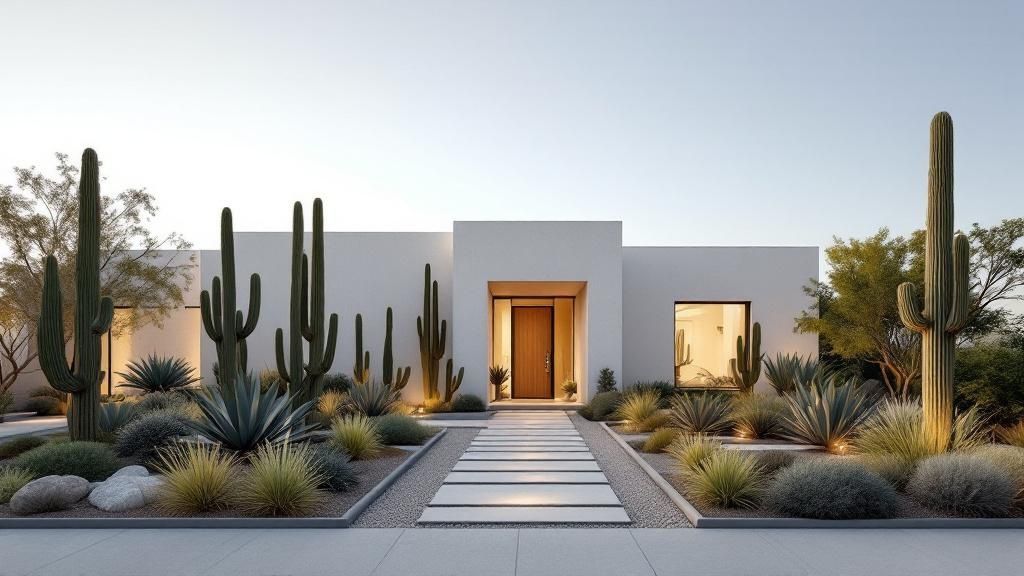
Inspired by the amazing landscapes of Palm Springs and the clean lines of modern homes, Modern Desert Minimalism creates a front yard that is both art and very easy to care for. This style uses simple, geometric hardscaping with bold, sculptural plants to make a strong statement. It's one of the most eye-catching california landscaping ideas front yard because it uses empty space and texture to create interest without being messy.
This design follows a "less is more" idea. Instead of a crowded garden, you might see one large agave plant against a smooth concrete wall, or three tall cacti rising from a bed of black river rocks. The focus is on shape, structure, and the mix of man-made materials and tough desert plants.
Why Choose Modern Desert Minimalism?
This style is a great fit for people who like modern design and want a front yard that saves a lot of water and needs very little care. It goes well with modern, mid-century, and even Spanish-style homes by adding a clean, stylish touch. The focus on sculptural plants and hardscapes makes sure your yard looks great all year, without the work of traditional gardens.
The simple beauty and low care make it a great choice for busy people or anyone who wants a big impact with little effort. It’s a design that feels planned, clean, and perfect for California's climate and style.
Actionable Tips for Implementation
Getting a modern desert look is about smart placement and choosing the right materials. Focus on these key ideas to bring this clean, architectural style to your front yard.
- Select Sculptural Plants: Choose plants with strong, interesting shapes. Think of Agave tequilana, Golden Barrel Cactus, or the eye-catching Yucca rostrata. These plants become like living sculptures in your yard.
- Embrace Strategic Spacing: Use empty space on purpose. Don't crowd your plants. Let each one have room to be seen. Grouping plants in odd numbers, like threes or fives, looks more natural and balanced.
- Incorporate Modern Hardscapes: Use materials like poured concrete pavers, steel planters, and dark-colored gravel. These items provide clean lines and a simple background for the plants.
- Add Strategic Lighting: Put lights at the base of your most dramatic plants. This will highlight their special shapes and textures, creating a beautiful look at night.
4. Colorful Cottage Gardens with Drought-Tolerant Plants
The romantic charm of an English cottage garden can be changed to fit our state's climate. This style mixes lots of colorful flowers with a relaxed, casual design. It creates a pretty and welcoming entrance. It is one of the most charming california landscaping ideas front yard because it shows you don't have to give up bright flowers to have a water-wise yard.
The look is made by planting things close together in layers. This creates a feeling of natural, wild beauty. It uses a mix of textures and heights, with flowers spilling over paths and climbing up fences. Instead of thirsty traditional flowers, this California version uses drought-tolerant perennials, flowering shrubs, and fragrant herbs to get that classic, full look with much less water.
Why Choose a Colorful Cottage Garden?
This style is perfect for people who love lots of flowers and a less formal, more natural feel. It works well in smaller front yards, where the dense planting can make the space feel bigger and more magical. By choosing plants that bloom at different times, you can enjoy color from spring through fall. This also attracts helpful insects like bees and hummingbirds.
This idea gives you a bright look without the high water bills of traditional flower gardens. It's a happy, low-stress style that feels personal and full of life.
Actionable Tips for Implementation
Making your water-wise cottage garden is about picking the right plants and planning well. Focus on these key steps to bring this charming style to your front yard.
- Layer Your Plantings: Put taller plants like salvias or kangaroo paws in the back. Put mid-sized plants like lavender and yarrow in the middle. Put low-growing plants like creeping thyme at the front of your garden beds.
- Choose Sequential Bloomers: Pick a variety of plants that flower in different seasons. For example, mix spring-blooming California poppies with summer-blooming coneflowers and fall-blooming asters for year-round color.
- Incorporate Edibles and Herbs: Mix in useful and pretty plants like rosemary, sage, and lavender. They add nice smells, provide texture, and are naturally water-wise once they are established.
- Add a Charming Focal Point: Include a rustic birdbath, a simple wooden bench, or a garden sculpture. This helps anchor the design and gives your eye a place to rest among all the flowers.
- Use Drip Irrigation: A drip system is key for watering mixed plants well. It brings water right to the roots of each plant, which prevents waste and makes sure everything gets the right amount of water.
5. Zen Japanese-Inspired Gardens
A Zen Japanese-inspired garden creates a calm and balanced space right at your front door. This style uses simple ideas and nature to create a peaceful landscape. It focuses on things like carefully placed stones, raked gravel, sculptural plants, and maybe a small water feature. It is a classy choice among california landscaping ideas front yard because it helps you feel calm through its simple, yet meaningful, design.
The look is clean, simple, and connected to nature. Instead of bright flower beds, it uses the quiet beauty of texture, shape, and structure. Think of a single, well-trimmed Japanese maple, smooth river stones set up to look like a stream, and green groundcovers that make a soft, green carpet. This style creates a strong feeling of order and peace that feels both modern and classic.
Why Choose a Zen Japanese-Inspired Garden?
This garden style is perfect for people who want to create a calm and low-maintenance entrance. It works especially well for smaller front yards or modern homes that need a clean, architectural look. The focus on evergreen plants and hardscape materials means the garden looks beautiful and structured all year, even in California’s dry seasons.
By focusing on a few high-impact items, this design creates a visually restful space that makes you want to pause and enjoy nature’s simplicity.
Actionable Tips for Implementation
Bringing the ideas of a Japanese garden to your front yard is about careful placement and not overdoing it. Focus on these key actions to get a real and balanced design.
- Arrange in Odd Numbers: When placing main items like big rocks or special plants, group them in odd numbers like three, five, or seven. This creates a more natural and balanced look that is pleasing to the eye.
- Select for Structure: Choose plants with interesting shapes, bark, or leaves. Japanese maples, black pines, and bamboo are classic choices. Think about how each plant adds to the overall look.
- Incorporate a Dry Stream Bed: Use smooth river rocks and gravel to create a "kare-sansui," or dry landscape garden, that looks like flowing water. This is a beautiful and water-wise way to add movement to the design.
- Use Subtle Lighting: Install low-voltage landscape lighting to show off the texture of a stone lantern, the branches of a tree, or the lines of a path. This creates a dramatic and peaceful feeling in the evening.
6. Formal Geometric Hardscaping
For those who like order, elegance, and sharp lines, formal geometric hardscaping offers a stylish and impressive look. This design style uses structured patterns, balanced layouts, and clean lines to create a front yard that feels both classic and modern. It’s a powerful choice among california landscaping ideas front yard for homes in areas like Beverly Hills or Napa Valley, where the yard is part of the home's fancy design.
The look is defined by its strong focus on shape and form. Think of crisp boxwood hedges outlining a rectangular lawn, straight paths leading to the front door, and planters lined up perfectly. This style turns the front yard into an organized, artistic space that shows control and purpose. It makes a bold statement of classic elegance.
Why Choose Formal Geometric Hardscaping?
This style is perfect for homeowners who want to create a grand entrance that matches traditional, colonial, or modern homes. It creates a feeling of formality and luxury, turning the landscape into a piece of art. It’s especially good for flat, open front yards where the balance and patterns can be seen clearly and create a stunning look.
The strict structure of a formal design provides a sense of peace and order. It proves that a very neat landscape can also save water by using carefully chosen plants and hardscape materials.
Actionable Tips for Implementation
Getting a polished, formal look requires careful planning and being exact. Focus on these key elements to make sure your design is balanced and beautiful.
- Prioritize Symmetry: The main point of this style is balance. Make sure that things on one side of a center line, like the front walkway, are copied on the other side.
- Use Architectural Plants: Pick plants that can be trimmed into specific shapes or have a naturally strong form. Boxwood, cypress, and agaves are great choices for creating clear lines and focal points.
- Choose Complementary Hardscapes: Use materials that match your home's outside. Poured concrete pavers, classic brick, or cut stone can be used to create clean, straight paths and patios.
- Plan for Plant Growth: When planting, think about how big your plants will get. This stops the design's clean lines from getting messy and overgrown over time.
7. Wildflower Meadow Front Yards
Imagine replacing a needy lawn with a lively, changing carpet of native wildflowers. This idea turns your front yard into a moving, natural field that is full of color in the spring and helps local wildlife. It's one of the most eco-friendly california landscaping ideas front yard because it creates a much-needed home for pollinators like bees and butterflies, and it needs very little water once it's established.
The look is natural and wild, with a series of flowers that change with the seasons. From golden California poppies to purple lupines and bright tidy tips, a wildflower meadow is a beautiful sight. This style connects your home to the nature around it, celebrating the special beauty of California's native plants and creating a yard that is truly alive.
Why Choose a Wildflower Meadow?
This style is perfect for people who want a low-water, high-impact landscape that helps the local ecosystem. It works beautifully on larger yards or hillsides, like those in Marin and Sonoma counties, where it can blend in with the natural surroundings. It is a reward for a patient gardener, offering a beautiful and sustainable option to a traditional lawn.
By choosing a meadow, you are not just landscaping; you are helping to restore nature. This summary shows the key benefits of this rewarding idea.
- Supports Pollinators: Provides needed food and shelter for native bees, butterflies, and birds.
- Extremely Low Water Use: Once established, native wildflowers are used to California's dry summers and need very little watering.
- Reduced Maintenance: Gets rid of the need for regular mowing, fertilizing, and other lawn care.
- Seasonal Beauty: Offers a changing display of color and texture that develops throughout the year.
The mix of helping nature, saving water, and natural beauty makes a wildflower meadow a powerful choice for any California front yard.
Actionable Tips for Implementation
Creating a healthy wildflower meadow needs careful preparation but is simple with the right steps. Focus on getting the site ready and choosing the right seeds for the best results.
- Prepare the Site Thoroughly: Remove all existing grass and weeds before you plant seeds. This is the most important step, as you don't want your wildflowers to fight for water and food.
- Choose a Regional Seed Mix: Pick a wildflower seed mix made for your Northern California area. This makes sure the plants are suited to your local weather and soil.
- Plant in the Fall: Sow seeds in the late fall, just before the rainy season starts. This timing lets the seeds sprout naturally with winter rains for strong spring growth.
- Create Defined Edges: Use mowed paths or a border of rocks or native grasses to give your meadow a neat, planned look. This also gives you a way to walk through it without stepping on the plants.
For more detailed information on choosing seeds and planting, the California Native Plant Society is an excellent resource. A wildflower meadow takes two to three years to fully grow, but the long-term result is a strong and beautiful landscape.
8. Terraced Slope Gardens
For California homeowners with hilly or sloped yards, a terraced garden is a great idea that turns a problem into a beautiful feature. This design uses retaining walls to create a series of flat, step-like planting areas. It not only stops soil from washing away, which is a common problem on slopes, but also creates a dramatic, multi-level landscape that adds great curb appeal and useful space.
This idea is very good for handling water runoff and making the most of planting space on tough ground. By creating flat levels, you can make different planting areas, each with its own style. This is one of the most practical california landscaping ideas front yard because it turns unusable hills, seen from San Francisco to Los Angeles, into beautiful, useful gardens.
Why Choose a Terraced Slope Garden?
This style is a must for any property with big changes in height. It offers a practical way to make a hillside stable while creating a visually interesting and organized landscape. Terraced gardens allow for more types of plants, as each level can have slightly different amounts of sun and soil types. It’s a great choice for those who want a structured, architectural look that feels both classic and perfect for California’s land.
The main benefits are clear: this design solves a major landscaping problem with a stylish and effective solution. It provides stability, beauty, and use where a simple lawn or groundcover would not work.
Actionable Tips for Implementation
Building a good terraced garden requires careful planning, especially for the structure and water flow. Focus on these key steps to make sure your project is safe, beautiful, and will last a long time.
- Ensure Proper Drainage: Put a drainage system, like a French drain with gravel and a special pipe, behind each retaining wall. This stops water pressure from building up and damaging the wall.
- Choose Appropriate Plants: Pick plants based on the conditions of each terrace. The top levels will probably be sunnier and drier, good for succulents and grasses. Lower levels might hold more water, which is better for ferns or other shade-loving plants.
- Use Complementary Materials: Build retaining walls from materials that match your home’s outside, like local stone, concrete blocks with a stucco finish, or modern corten steel.
- Plan for Access and Irrigation: Think about how you will get to each level for planting and care. It's also much easier to install your irrigation system, like drip lines, before you fill the terraces with soil.
Building a terraced garden is a big project that is part engineering and part art. for a more detailed look at how to build one, you can find expert advice on terracing a backyard slope. Doing it right ensures your terraced front yard will stay a stable and beautiful part of your home for years to come.
9. Edible Front Yard Gardens
Turning your front yard into a garden that grows food is a new and rewarding choice. An edible garden mixes fruit trees, colorful vegetables, and fragrant herbs with regular ornamental plants. This creates a landscape that is as beautiful as it is useful. This idea turns your property into a source of fresh, organic food, connecting your home directly to what you eat.
This style, made popular by people like Rosalind Creasy, changes the idea of a front yard. Instead of just being for looks, it becomes a useful, living pantry. It is one of the most sustainable california landscaping ideas front yard because it cuts down on food transportation, helps wildlife, and gives you a direct link to nature. Think of neat garden beds filled with colorful lettuces, fruit trees trained to grow flat against a wall, and borders of fragrant, evergreen herbs.
Why Choose an Edible Garden?
This style is perfect for people who love gardening, cooking, and green living. It works well in sunny front yards of any size, from small city lots to larger suburban properties. It’s a great way to teach children where food comes from and to connect with neighbors by sharing what you grow. An edible garden is a practical, eco-friendly choice that gives you real rewards.
To see the main benefits, this summary shows why many people in California are choosing this useful design. The mix of beauty, usefulness, and sustainability makes edible landscaping a very satisfying choice for any home.
Actionable Tips for Implementation
Creating a beautiful and productive edible garden can be done with careful planning. Focus on design and plant choice to make sure your front yard looks good all year.
- Choose Attractive Edibles: Pick types of plants known for being pretty. Examples include 'Bright Lights' Swiss chard, purple kale, climbing scarlet runner beans, and blueberry bushes that have beautiful fall color.
- Design with Structure: Use raised beds or create clear geometric patterns for your planting areas. This formal structure adds a sense of order and elegance that keeps the garden looking neat.
- Include Evergreen Herbs: Plant evergreen herbs like rosemary, thyme, and sage along borders. They provide green color and structure all year, so the garden doesn't look empty in winter.
- Use Attractive Supports: Use stylish trellises, arbors, or obelisks for climbing plants like peas, beans, and cucumbers. These items add height and a decorative touch.
- Plan for Succession: Plant crops one after another to make sure you always have something to harvest and that beds stay full and green. As one crop is finished, have another ready to plant.
By using these ideas, your edible front yard will become a source of both pride and food, perfect for the California lifestyle.
10. Contemporary Artificial Turf with Native Borders
For people who love the classic look of a green lawn but want a water-wise option, a mix using modern artificial turf is a great choice. This design combines the year-round perfect look of high-quality fake grass with the natural beauty of native plant borders. It’s a popular california landscaping ideas front yard solution that offers the best of both worlds: the clean, modern look of a perfect lawn without the huge water use and work.
This look matches the even green of the turf with the soft, varied textures of California native plants. This creates a balanced and nice-looking landscape. Hardscape items like concrete pavers, sleek metal edging, or simple rock features complete the modern feel. This style offers a practical yet beautiful front yard that stays green through droughts and heat waves. This makes it a favorite from San Diego to the Bay Area.
Why Choose an Artificial Turf and Native Plant Combo?
This style is perfect for families who want a strong, usable play space or for homeowners who want a low-maintenance, always-green front yard. It gets rid of mowing, fertilizing, and watering a traditional lawn, which saves time and money. By framing the turf with native plants, you still help local pollinators and create a landscape that feels connected to the California environment, not completely fake.
This combination is a smart, modern solution that solves many common landscaping problems in our state.
Actionable Tips for Implementation
Getting this mixed look right means choosing quality materials and planning well to make sure it looks seamless and natural.
- Invest in Quality Turf: Choose the best artificial turf you can afford. Modern types have different blade heights, colors, and thatch that make them look very real.
- Ensure Proper Drainage: The most important step is preparing the base correctly. A packed base of crushed rock and sand under the turf is needed for stability and to let rainwater drain away.
- Frame with Native Borders: Use native plants like California fuchsia, deer grass, or ceanothus to soften the edges of the turf. This creates a more natural look and adds environmental value.
- Brush Regularly: Use a stiff broom or a power brush to sweep the turf blades now and then. This keeps them standing up straight and looking fresh, especially where people walk a lot.
By mixing the practicality of modern turf with the environmental benefits of native plants, you can create a beautiful and sustainable front yard.
Front Yard Landscaping Styles Comparison
| Garden Style | Implementation Complexity 🔄 | Resource Requirements ⚡ | Expected Outcomes 📊 | Ideal Use Cases 💡 | Key Advantages ⭐ |
|---|---|---|---|---|---|
| Mediterranean Drought-Tolerant Gardens | Moderate – initial plant establishment and gravel prep required | Low water use, minimal ongoing upkeep | Water-efficient, low maintenance, year-round interest | Southern & Central California regions, dry climates | Extremely water-efficient, low maintenance, aromatic |
| California Native Plant Gardens | Low to moderate – sourcing natives and planting seasonally | Very low water once established | Supports local ecosystems, very low maintenance | Eco-conscious homeowners, biodiversity preservation | Supports wildlife, water-saving, heritage preservation |
| Modern Desert Minimalism | Moderate to high – design & installation costs can be significant | Low water use, minimal maintenance | Dramatic, modern look; increases property value | Modern architecture, desert and arid regions | Water-efficient, low maintenance, high visual impact |
| Colorful Cottage Gardens | Moderate – layered planting and seasonal care | Moderate water compared to pure natives | Seasonal color, insect attraction, softer aesthetic | Garden sizes needing color & texture, informal styles | Abundant color, insect-friendly, adaptable |
| Zen Japanese-Inspired Gardens | Moderate to high – specialized design knowledge needed | Low water use, regular gravel maintenance | Calming, meditative space; year-round structure | Traditional, modern homes seeking tranquility | Calming atmosphere, easy upkeep, architectural harmony |
| Formal Geometric Hardscaping | High – requires precise installation & maintenance | Moderate water, frequent pruning | Structured, elegant curb appeal; high maintenance | Traditional & contemporary formal homes | Impressive curb appeal, structural order |
| Wildflower Meadow Front Yards | Low to moderate – initial seed prep and patience needed | Very low water; minimal maintenance once set | Seasonal blooms, wildlife habitat, no mowing | Large properties, naturalistic preferences | Very low maintenance, habitat support, sustainable |
| Terraced Slope Gardens | High – construction and engineering expertise needed | Moderate water, complex irrigation | Erosion control, multi-zone planting, visual interest | Sloped yards requiring stabilization | Erosion prevention, maximizes slope usability |
| Edible Front Yard Gardens | Moderate to high – ongoing care and harvesting | Moderate water, pest management required | Fresh produce, educational, attractive | Family homes, food-focused landscaping | Edible yields, beneficial insects, unique design |
| Contemporary Artificial Turf with Native Borders | High – costly installation & base prep required | No water for turf; low water for native borders | Green lawn look year-round with low maintenance | Water-restricted areas wanting lawn appearance | No watering/mowing, consistent look, durable |
Bringing Your California Landscape Vision to Life
California front yards can be more than just grass—they can be part of your home. From Mediterranean gardens to modern turf with native plants, you can find a design that fits your style and climate. The right mix of plants and materials creates curb appeal and long-lasting beauty.
Popular materials like gravel and flagstone look great in a desert minimalist design, while bright flowers stand out in a cottage garden. Native shrubs create a low-care home for birds and bees. These ideas show that style and nature can work together.
Good planning is the key to a great yard. Testing your soil, setting up drip irrigation, and picking smart materials will give you results that last with little work. Whether you choose a terraced garden or an edible front yard, a solid plan is the first step to success.
“Spend time on a plan that fits your life and your yard's conditions. Simple changes early on will save trouble later. A clear idea helps you work with designers or do it yourself.”
Key Takeaways
- Match your garden style to your home's look and local weather
- Choose drought-tolerant or native plants to save water and reduce work
- Use hardscape features—like flagstone paths or gravel beds—for structure
- Layer plants of different textures and heights to create depth
- Use color to highlight key spots and seasonal changes
- Add seating or art for both function and style
- Plan your watering and lighting systems before planting to avoid extra work
- Choose materials and plants that help local wildlife and soil health
Actionable Next Steps
- Check the soil and sunlight in different parts of your front yard
- Draw a simple sketch of your yard, marking plant beds, paths, and seating
- Pick a main group of 3–5 drought-tolerant or native plants
- Design hardscape areas—gravel, pavers, or raised beds—to define spaces
- Install a drip irrigation system to water each plant directly
- Add accent lighting along paths and key features for a nice evening look
- Plan to check on your yard every few months to trim, add mulch, and adjust watering
Why This Matters
A well-designed front yard adds value to your home and makes your daily life better. Eco-friendly landscapes use less water and take less time to care for. Good designs also help local wildlife and create a welcoming space for family and friends.
Use these california landscaping ideas front yard to make your outdoor space a true reflection of you and the natural beauty of Morgan Hill.
Ready to transform your front yard? Tamura Designs Landscape and Construction combines over 30 years of expertise in california landscaping ideas front yard with quality craftsmanship to bring your vision to life. Reach out today to start planning a sustainable, stunning landscape that enhances your home’s value and lifestyle: Tamura Designs Landscape and Construction
