
That heavy, sticky soil in Silicon Valley doesn't have to be a problem for your garden. While clay soil is dense and drains slowly, it's full of good nutrients for plants. The key to a great garden is choosing plants that can handle its unique texture. This guide will help you create a beautiful yard that works with your soil, not against it.
Forget trying different plants and seeing which ones fail. This list shows you the best plants for clay soil that grow well in our area. We'll look at flowers and grasses, like the bright Black-Eyed Susan and the strong Switchgrass, that can turn your yard into a beautiful, low-maintenance space. You will learn what to plant and how to get your garden ready so your new plants will grow strong. Let's start building the garden you've always wanted.
1. Aster (Symphyotrichum species)
If you want a plant that not only likes clay soil but actually makes it better, the Aster is a great choice. These tough flowers are native to North America and are champions in difficult soil. Asters break up heavy clay with their deep, fibrous roots. Over time, this makes tiny tunnels in the soil for water and air, which helps your whole garden bed become healthier.
Besides being great for the soil, Asters put on a beautiful flower show late in the season. From late summer into fall, when other flowers are fading, Asters burst with daisy-like flowers in purple, blue, pink, and white. This is very important for local pollinators like bees and butterflies, giving them food before winter. They are one of the best plants for clay soil because they are helpful and beautiful.
Successful Implementation Examples
Asters are often used in big nature projects that show how tough they are. You can see them in prairie restoration projects, where they help bring back native plants on heavy clay ground. Planners also use them along highways in the Midwest to hold the soil in place and add color without needing much care. They are also used in Chicago's famous Lurie Garden in a natural planting design that has to survive city life.
The infographic below gives a quick look at why the Aster is so good for clay soil.
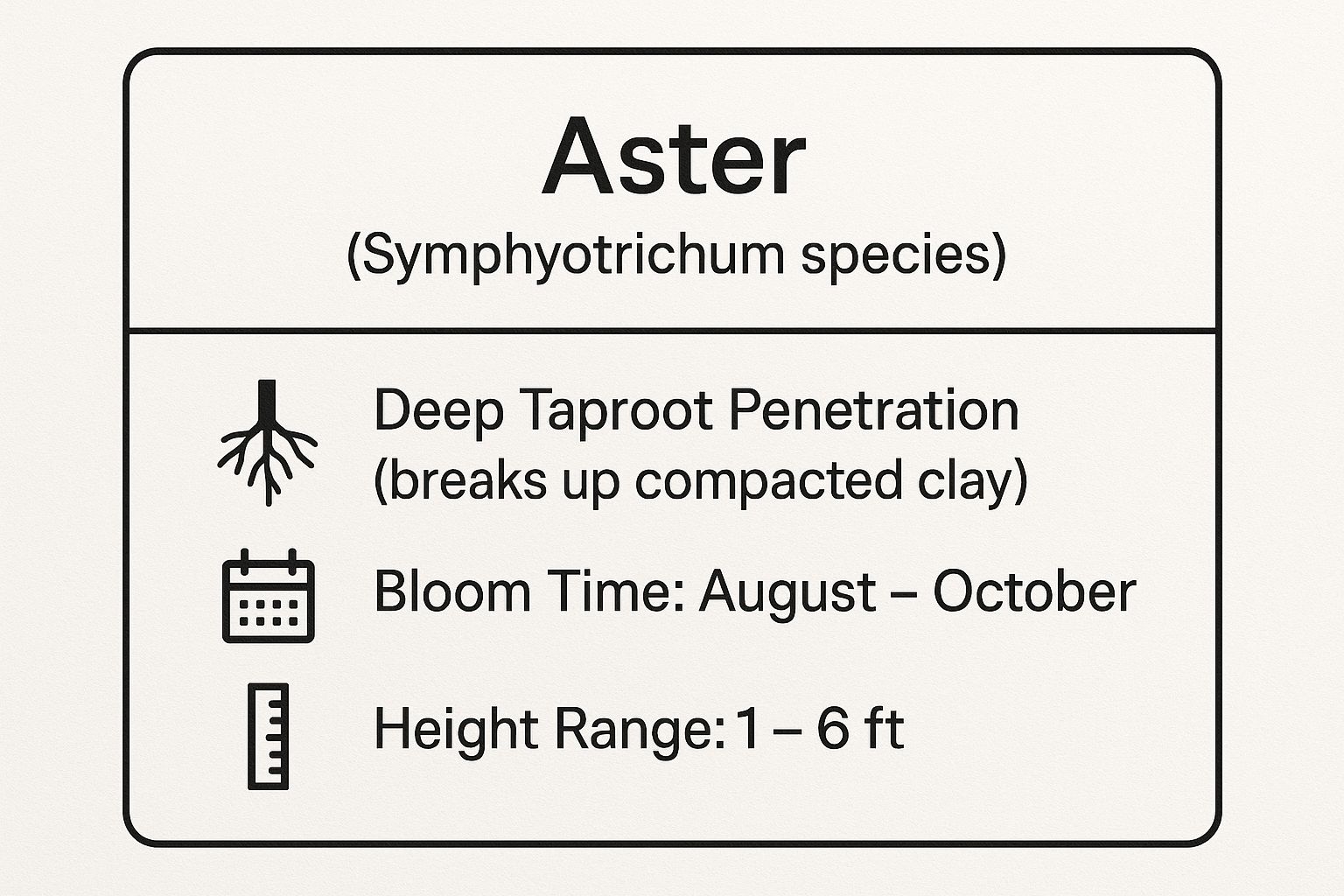
This picture shows how the plant's roots, late blooming time, and size make it a smart choice for gardens in Silicon Valley.
Actionable Tips for Planting Asters
To make sure your Asters grow well, follow these tips:
- Planting Time: Plant in the spring. This gives the roots a full season to grow strong before winter.
- Spacing: Give them space to grow. Plant them 18 to 24 inches apart. This lets air move around them and helps stop plant diseases.
- The "Chelsea Chop": For a fuller plant with more flowers, cut the stems back by about one-third in early summer (around late May). This makes the plant grow more branches and have a more compact shape.
- Division: Every three to four years, dig up and split the plant clumps in the spring. This keeps the plant healthy and gives you new plants for your garden.
2. Black-Eyed Susan (Rudbeckia species)
For gardeners who want a happy, easy-to-care-for flower that grows well in heavy soil, the Black-Eyed Susan is a perfect pick. This tough native plant is known for its bright yellow petals around a dark brown center. Its strong root system is great at pushing through heavy clay, which helps break it up and make the soil better over time. Once it's settled in, it doesn't need much water, making it great for a water-wise Silicon Valley yard.
Besides helping the soil, Black-Eyed Susans give you bright color from the middle of summer until the first frost. This long blooming time provides food for bees, butterflies, and other helpful insects. Because it's so reliable and pretty, it's considered one of the best plants for clay soil, offering both help to nature and months of easy beauty.
Successful Implementation Examples
The Black-Eyed Susan's toughness is seen in many public and business landscapes. The popular 'Goldsturm' type is often planted at office parks and shopping centers, where it blooms every year in tough clay soil. You can also see native types used in highway planting projects across the country, where they hold the soil and provide bright color with little work. It is a main plant in the famous High Line park in New York City, showing it can grow well even in tough city spots.
Actionable Tips for Planting Black-Eyed Susans
To get the most from your Black-Eyed Susans, follow these tips:
- Sunlight is Key: Plant them where they will get at least six hours of direct sun each day. Full sun helps them produce the most flowers.
- Encourage More Blooms: Cut off the dead flowers regularly during the summer. This stops the plant from making seeds and tells it to grow more flowers instead.
- Winter Interest & Wildlife: In the fall, leave the last of the seed heads on the plant. They look interesting in the winter and provide food for birds like goldfinches.
- Divide for Health: Every three to four years, dig up and split the clumps in early spring. This makes the plant healthier, controls its size, and gives you new plants for free.
3. Daylily (Hemerocallis species)
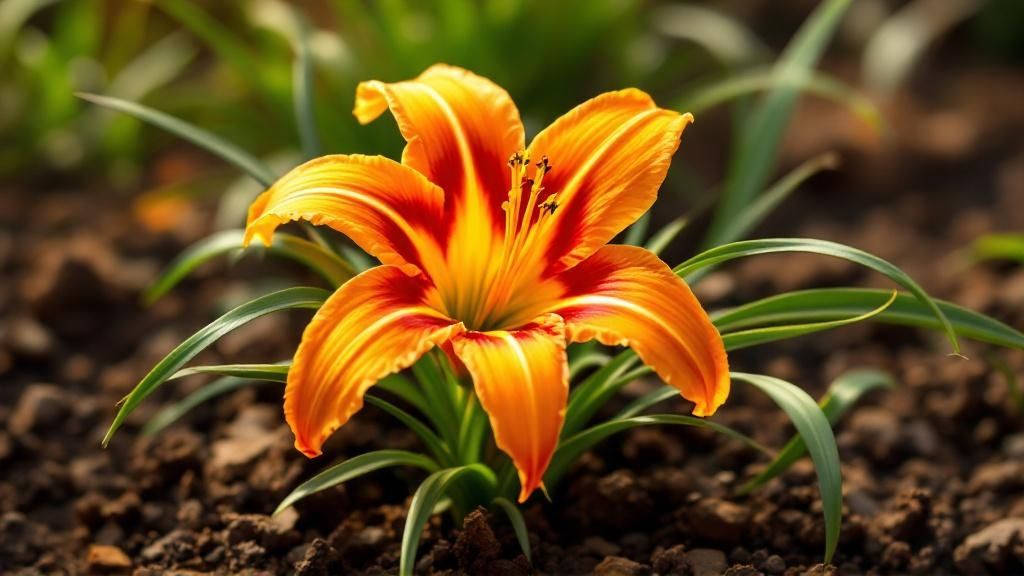
Daylilies are called "the perfect perennial" for a good reason, especially for people with heavy soil. These very tough plants grow well where many others would die, making them a great choice for clay. Their thick, fleshy roots are good at holding soil on hills and breaking through hard ground, making the soil better over time.
While each flower only lasts for one day, a healthy Daylily plant produces many buds one after another. This means you'll see bright colors for weeks. Because they bloom so much and are so tough, they are one of the best plants for clay soil. They offer an easy way to have a beautiful garden. They also handle dry weather well once they are established, which is great for saving water in Silicon Valley.
Successful Implementation Examples
You can see how tough Daylilies are in many public and private yards. The popular 'Stella de Oro' type is often seen in business areas and along highway medians in places with heavy clay, where it provides lots of yellow color with little care. Big gardens like the Chicago Botanic Garden have large Daylily collections, showing how well they can grow in improved clay soils. You can also see them used in city parks, where they handle packed ground and difficult conditions.
Actionable Tips for Planting Daylilies
To get the most out of your Daylilies and have lots of flowers, follow these steps:
- Planting Depth: When you plant, make sure the crown (where the leaves meet the roots) is even with the top of the soil. Planting too deep can stop it from flowering.
- Spacing: Give them enough room to grow. Space plants 18 to 24 inches apart so they don't get too crowded.
- Deadheading: To keep the plants looking neat and to get more flowers, snap off the dead flowers each day while they are blooming.
- Division: Every three to five years, or when you see fewer flowers, split the clumps in the spring or fall. This makes the plant healthy again and gives you more plants.
- Extend the Season: Choose a mix of early, mid-season, and late-blooming types to have color from late spring through summer.
4. Bergamot/Bee Balm (Monarda species)
If you want a bright, fragrant flower that does well in clay, Bergamot, also known as Bee Balm, is a great choice. This plant is in the mint family and is native to North America, so it's used to difficult soils. Its thick, spreading roots work through heavy clay, making paths for water and air, which helps the soil over time. This makes it perfect for filling large areas where other plants might not grow.
Besides helping the soil, Bee Balm is great for nature. From early summer to fall, it grows unique, crown-shaped flowers in bright red, pink, purple, and white. These flowers are full of nectar and are loved by pollinators, especially hummingbirds, butterflies, and bees. Adding Bee Balm to your garden makes it a key stop for local wildlife. It's one of the best plants for clay soil because it's tough and very helpful to nature.
Successful Implementation Examples
Bee Balm's toughness is seen in many different gardens and nature projects. Wild bergamot is a key plant in prairie restoration projects in the Midwest, where it grows well and holds heavy clay soils in place. You can also find it in professionally designed rain gardens, where it's valued for its ability to handle wet clay. A great example of its use is at the Lady Bird Johnson Wildflower Center, which shows how useful it is in a sustainable garden.
Using plants like Bee Balm is a key part of a sustainable landscape design, where the plants you choose directly help the local environment.
Actionable Tips for Planting Bee Balm
To get the most from your Bee Balm and keep it healthy, follow these tips:
- Sun Exposure: Plant it in a spot that gets morning sun and some shade in the afternoon. This is especially helpful in hot places like Silicon Valley to prevent stress.
- Air Circulation: Space plants at least 18 to 24 inches apart. Good airflow is the best way to prevent powdery mildew, a common problem for Bee Balm.
- Annual Thinning: Each spring, thin out the clumps by removing about one-third of the stems. This improves airflow and helps the plant grow stronger.
- Contain the Spread: Bee Balm spreads with underground stems. If you need to keep it in one spot, you can put a root barrier 8-10 inches deep in the soil around it.
- Encourage Reblooming: After the first set of flowers fades, cut the plant back by about half. This often makes it grow a second, smaller set of flowers later on.
5. Coneflower (Echinacea species)
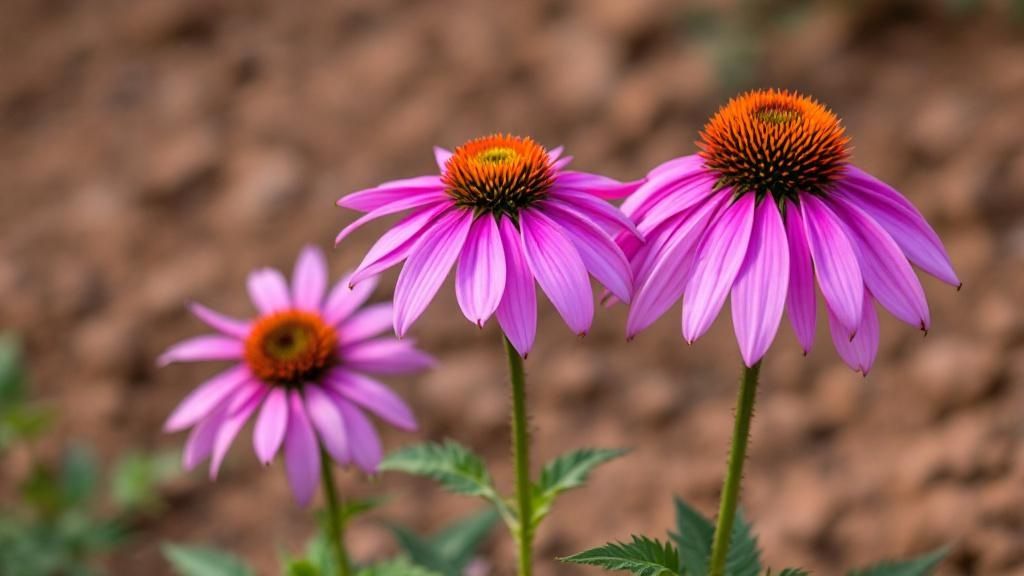
For a plant that is as tough as it is pretty, the Coneflower is a top choice for clay soil gardens. This native North American flower is known for growing well in tough conditions, including the heavy clay common in Silicon Valley. Coneflowers grow a deep main root, called a taproot, that helps them find water deep in the soil. This makes them very good at handling drought once they are established. This strong root also helps break up packed clay, slowly making the soil better over time.
Besides being tough, Coneflowers are great for looks and for nature. Their famous daisy-like petals surround a spiky center cone, which adds a unique texture to the garden from summer through fall. They come in purple, pink, white, and yellow, giving you long-lasting color. They are also a favorite of pollinators like bees and butterflies. Because they handle tough soil while helping wildlife, they are one of the best plants for clay soil.
Successful Implementation Examples
Coneflowers are a key part of modern, natural garden design. You can see them used with great success in public places like Chicago's Lurie Garden, where they handle city pollution and heavy clay. They are also important parts of prairie restoration projects across the Great Plains, proving they can grow and thrive on difficult land. Locally, they are used in business landscaping and on construction sites with packed clay soil because they are durable and good for the environment.
Actionable Tips for Planting Coneflowers
To get the most out of your Coneflowers in clay soil, follow these tips:
- Sunlight is Key: Plant them where they will get at least six hours of direct sun per day. Full sun helps them flower the best and prevents common plant diseases.
- Avoid Overwatering: Coneflowers can get root rot, especially in clay. Water them deeply but not too often once they're established. Let the soil dry out between waterings.
- Leave Winter Seed Heads: Don't cut off the dead flowers in the fall. The dried seed heads provide important food for birds like goldfinches through the winter and add interest to the garden.
- Division for Vigor: Every four to five years, you can split the clumps in the spring or fall. This makes the plant healthier, controls its size, and gives you more plants for your garden.
6. Sedum (Hylotelephium spectabile and other species)
For a plant that seems to break the rules of heavy soil, Sedum is a great choice. These succulents are known for their leaves that store water, which makes them great at handling drought. While many succulents need soil that drains fast, upright types like 'Autumn Joy' have root systems that do surprisingly well in clay, as long as the area doesn't stay wet.
Besides being tough, Sedums look great all year. Their thick, geometric leaves add texture from spring through summer. In late summer and fall, they grow large, broccoli-like flower heads that open in shades of pink, red, and rust, which attract bees and butterflies. These flowers are an important food source for pollinators late in the season. Even in winter, the dried seed heads look interesting in the garden. This makes Sedum one of the best plants for clay soil because it's tough and looks good year-round.
Successful Implementation Examples
You can see how tough Sedum is all around you. It's a popular choice for business landscaping and parking lot islands in Silicon Valley, where it grows well in packed clay with little care. Planners often use Sedums on green roofs, where they grow in shallow, clay-based soil and help manage rainwater. They are also star plants in drought-tolerant gardens throughout California, showing they can handle tough conditions well.
As you plan your garden, Sedum fits perfectly into many low-maintenance backyard ideas. Learn more about creating a beautiful, easy-care space with plants like Sedum that work hard for you.
Actionable Tips for Planting Sedums
To get the most from your Sedum plants in clay soil, follow these simple tips:
- Sunlight is Key: Plant in full sun. At least six hours of direct sunlight is needed for strong stems and lots of flowers. In shadier spots, the plants might get tall and floppy.
- Improve Drainage Slightly: While it can handle clay, Sedum likes a little help. Mix a small amount of compost or gravel into the planting hole to improve drainage right around the roots.
- Pinch for Fuller Plants: In late spring, when the plants are about 6 to 8 inches tall, pinch or trim the growing tips back. This makes the plant grow more branches, so it will be stronger, more compact, and have more flowers.
- Winter Cleanup: Leave the dried flower heads on the plant for winter interest. Cut the old stems back to the ground in late winter or early spring when new growth starts to appear at the bottom.
7. Switchgrass (Panicum virgatum)
For homeowners who want to add graceful movement and year-round shape to their garden, Switchgrass is a great choice. This native North American prairie grass is not only beautiful but also very tough. It has a deep, thick root system that makes it a champion in heavy clay. These roots work under the surface, breaking up packed soil and making paths for air and water. This improves drainage and soil health, making a tough clay spot better for other plants.
Besides helping the soil, Switchgrass looks great in all four seasons. In summer, it forms nice, upright clumps of fine leaves with light, airy seed heads on top. In the fall, the leaves turn beautiful shades of gold, orange, and red, adding warm color after other plants have faded. This makes it one of the best plants for clay soil, as it helps the environment and looks amazing. It's also a key plant in a successful drought-tolerant landscape design.
Successful Implementation Examples
Switchgrass's toughness is proven in big environmental and business projects. It is often planted along highways and in prairie restoration projects across the Great Plains to hold clay slopes and stop erosion. You will also find it used in modern landscape designs, like in rain gardens, where it helps manage water in clay soils. Its structural beauty makes it a popular choice for office parks, where it adds low-maintenance texture and height that lasts through the seasons.
Actionable Tips for Planting Switchgrass
To get the most out of your Switchgrass, follow these steps:
- Planting Time: Plant in the spring after the soil has warmed up. It's a warm-season grass, so it needs warm soil to start growing.
- Spacing: To create separate clumps, space individual plants about 2 to 3 feet apart. This gives them room to grow to their full size.
- Watering: Water it regularly during its first growing season to help the deep root system grow. Once it's mature, it is very drought-tolerant and will only need water during a long, severe drought.
- Maintenance: Leave the leaves standing through the winter for visual interest and to provide a home for wildlife. Cut it back to about 6 inches from the ground in late winter or early spring before new growth starts.
8. Yarrow (Achillea millefolium)
For a plant that grows well with little care and takes over difficult ground, Yarrow is a top choice. This tough perennial herb is a powerhouse in gardens with heavy clay. It uses its spreading underground stems, called rhizomes, to break apart packed soil. This network of roots helps add air and create paths for water, slowly making the soil better from below.
Besides helping the soil, Yarrow is liked for its long-lasting, flat-topped flower clusters and soft, fern-like leaves. It blooms from early summer often into the fall. Its flowers come in many colors, from classic white and yellow to shades of pink, red, and orange. These flowers attract helpful insects, like bees for pollination and ladybugs that help control garden pests. Because it handles drought and tough soil easily, Yarrow is one of the best plants for clay soil, offering help to nature and lasting beauty.
Successful Implementation Examples
Yarrow's toughness is seen in all sorts of gardens. Native white yarrow is a common part of prairie restoration projects across the country, where it helps hold poor soils and bring back a natural environment. In neighborhoods, colorful types are often used in flower beds and water-wise gardens in areas with heavy clay, providing bright color that doesn't need much water. You can also see it in business landscapes and along roads, where it's a great choice for covering large, difficult areas because it is low-maintenance.
Actionable Tips for Planting Yarrow
To get the most from your Yarrow in clay soil, follow these tips:
- Sunlight is Key: Plant in full sun. This helps the stems grow strong, produces the most flowers, and helps prevent diseases like powdery mildew.
- Extend the Bloom: Cut off dead flowers regularly through the summer. This tells the plant to produce more flowers, making its blooming season last well into the fall.
- Control the Spread: Every two to three years in the spring or fall, dig up and split the clumps. This keeps the plant healthy, controls its spread, and gives you free plants to use.
- Avoid Overwatering: Yarrow handles drought very well and can get root rot if it's too wet. Be careful not to overwater it in clay soil, which holds water for a long time.
Top 8 Clay Soil Plants Comparison
| Plant | Implementation Complexity 🔄 | Resource Requirements ⚡ | Expected Outcomes 📊 | Ideal Use Cases 💡 | Key Advantages ⭐ |
|---|---|---|---|---|---|
| Aster (Symphyotrichum) | Moderate (2-3 years to establish; division needed) | Low (once established) | Soil improvement, late-season blooms, supports pollinators | Naturalizing challenging clay soils, late-season color | Improves clay soil, attracts pollinators, low maintenance |
| Black-Eyed Susan | Low (establishes quickly; occasional division) | Very low | Long blooming period, seed heads provide winter interest | Reliable color in tough clay soils, cut flowers | Virtually maintenance-free, heat & drought tolerant, bird-friendly |
| Daylily (Hemerocallis) | Low to moderate (division every 3-5 years) | Low | Extended blooming, erosion control, deer resistance | Erosion control on slopes, varied bloom times | Extremely tough, wide variety, low maintenance |
| Bergamot/Bee Balm | Moderate to high (aggressive spread; division every 2-3 years) | Moderate (needs containment in some cases) | Soil improvement, attracts hummingbirds & pollinators | Naturalizing large areas, pollinator gardens | Improves soil, edible/medicinal uses, long bloom |
| Coneflower (Echinacea) | Moderate (slow first year, division every 4-5 years) | Low | Long-lived blooms, medicinal use, bird-friendly seeds | Prairie restoration, xeriscaping, medicinal garden | Drought tolerant, supports ecosystems, low care |
| Sedum (Hylotelephium) | Low (no division needed; can flop in shade) | Very low | Late-season nectar source, winter structure | Xeriscaping, drought-tolerant gardens | Extremely drought tolerant, low maintenance, winter interest |
| Switchgrass | High (slow establishment, 2-3 years maturity) | Moderate (space and initial watering) | Erosion control, four-season interest, deep rooting | Erosion control, prairie restoration, structural plantings | Deep roots, erosion control, supports butterflies |
| Yarrow (Achillea) | Moderate (spreading rhizomes; division every 2-3 years) | Low | Long bloom period, soil improvement, attracts beneficial insects | Naturalizing, low-maintenance landscapes | Soil improvement, drought tolerant, attracts beneficial insects |
Ready to Transform Your Clay Soil Garden?
Working with the dense, nutrient-rich clay soil in Morgan Hill and across Silicon Valley doesn't have to be hard. As we've seen, the key to a healthy garden is not about fighting your soil, but working with it. By choosing the right plants, you can grow a beautiful, strong landscape that needs less work and water over time.
We've talked about a variety of beautiful, hardworking plants that are perfect for this challenge. From the bright flowers of Coneflower and Black-Eyed Susan to the graceful shape of Switchgrass, these plants prove you don't have to give up beauty for strength. These are some of the best plants for clay soil because they are built to handle its slow drainage and dense nature.
Your Path to a Thriving Clay Garden
Remember the main ways to succeed that go beyond just picking plants. These basic steps will give your garden the best possible start and help it grow well for years.
- Amend, Don't Replace: The best way is to improve the soil you have. Adding organic matter like compost over time will improve drainage, make the soil structure better, and add important nutrients.
- Mulch is Your Best Friend: A 2 to 3-inch layer of organic mulch helps control soil temperature, saves water during our dry summers, and stops weeds. As it breaks down, it makes the clay even better.
- Water Deeply, Not Daily: Clay soil holds water for a long time. Help roots grow deep and strong by watering well but not too often. Let the top few inches of soil dry out between waterings.
By using these methods and choosing from our list of clay-loving champions, you are getting ready for a garden that is not only beautiful but also good for the environment. These plants, with their deep and fibrous roots, actively work to break up compacted soil, creating a healthier world underground. The result is a beautiful, low-maintenance yard that works with our local environment, attracts pollinators, and creates a wonderful outdoor space. Your clay soil is not a weakness; it's a chance to build a garden with character and strength.
Ready to turn your vision of a perfect outdoor space into a reality? If you need expert guidance in designing a landscape that thrives in our unique soil and climate, the team at Tamura Designs Landscape and Construction has over 30 years of experience creating award-winning gardens from Morgan Hill to Monterey. We specialize in building beautiful, functional, and sustainable outdoor living spaces tailored to your lifestyle. Contact us today to schedule a consultation and begin your landscape transformation.
