
If you've ever wondered when to plant a tree, the answer is simpler than you might think. The best time is almost always when the tree is dormant. This is in late fall after the leaves have dropped or in early spring before new buds open.
Planting at these times gives your new tree the best start. It can settle into its new home with less stress. This is the first and most important step to make sure it lives a long, healthy life.
Why Planting Time Is So Important
Planting a tree is like helping it move into a new house. It's much easier to move on a calm, quiet day than during a storm, right? It's the same for a tree. A peaceful "moving day" makes a huge difference.
This is all about reducing transplant shock. This is the stress a tree feels when it's moved to a new spot. Choosing the right time to plant is the biggest thing you can do to help your tree survive and grow. When you plant during its natural rest period, you're working with the tree's schedule, not against it.
The Advantage of Dormant Planting
During dormancy, a tree is basically asleep. It's not using energy to grow leaves or flowers. Instead, it can use all its energy for one important job: growing a strong root system.
The cool, damp soil of fall and early spring is perfect for this. New roots can spread out and get a firm grip before they have to deal with summer heat or a hard winter freeze.
This head start is key. A tree with good roots can easily soak up water and food when the growing season begins. The result is a stronger, happier tree.
Planting when a tree is dormant is like buying insurance for it. It gives the roots time to settle in. This greatly raises the chances that your tree will not just survive, but do really well for years.
The timing makes a big difference. Studies show that when you plant a tree is a major factor in whether it lives or dies. Trees planted in late fall or early spring have a survival rate as high as 90%. But for trees planted in the busy growing season, that rate drops to just 60-70%. If you want to learn more, you can explore more tree planting statistics.
By understanding and respecting a tree’s natural cycle, you are giving it the foundation it needs to become a beautiful, lasting part of your yard.
To make it even clearer, here's a quick guide to the best (and worst) times to plant.
Quick Guide to Planting Seasons
| Season | General Recommendation | Key Benefit |
|---|---|---|
| Fall | Excellent | Cool soil lets roots grow without the stress of making leaves. |
| Winter | Good (in mild climates) | The tree is fully asleep, which reduces shock. |
| Spring | Excellent | Moist soil and cool air help roots grow before summer heat arrives. |
| Summer | Poor (Avoid if possible) | High heat and dry weather create the most stress for the tree. |
This table gives you a quick overview, but remember that your local weather is very important. We'll talk about that next.
Matching Your Planting Plan to Your Climate
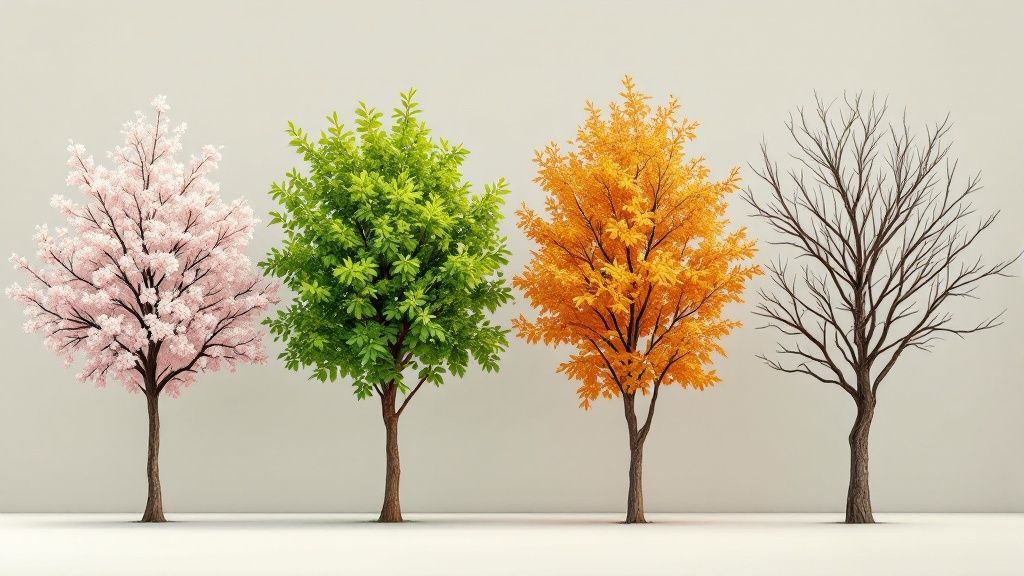
There is no single perfect day on the calendar for planting a tree that works for everyone. You wouldn't wear a heavy coat in a hot place. In the same way, you can't use the same planting rule for every climate. The best time depends completely on your local weather.
Finding out your climate zone is the first and most important step. A tree planted in the mild, rainy winters of the Pacific Northwest has a very different experience than one planted in the hot sun of Arizona. Getting the timing right is the difference between a tree that grows well and one that just barely survives.
Temperate Climates: Four Seasons of Opportunity
If you live where there are four clear seasons—fall, winter, spring, and summer—you're in luck. For you, the best time to plant trees is almost always in the fall. You should try to plant about six weeks before the ground freezes solid.
Why fall? The soil is still warm from the summer, which helps new roots grow and get comfortable. At the same time, the cooler air tells the tree to stop making leaves and send its energy underground. This gives it a big head start for the spring.
Planting in the fall is like giving your tree a quiet, comfortable room to settle into before the spring rush begins. It can grow roots without the pressure to perform, which leads to stronger growth when it warms up.
If you miss the fall planting window, early spring is your next best option. As long as you plant after the last hard frost but before the summer heat starts, you'll give the tree a good chance to grow roots in cool, moist soil.
Hot and Arid Climates: Dodging the Heat
In places with very hot summers and mild winters, you need to think about planting differently. Planting a tree in the middle of summer is a bad idea. The strong sun and lack of water will put too much stress on a young tree.
Instead, your best planting time is during the cooler, wetter months. This usually means late fall or winter. Planting then lets the tree use the entire mild, rainy season to grow a deep and strong root system.
This preparation is very important. By the time summer's heat arrives, a tree with good roots will be ready to find the water it needs to survive. For people in these areas, it's also a great idea to drought-tolerant landscape design to create a yard that is both beautiful and saves water.
Tropical Climates: Riding the Rainy Season
If you live in a tropical or subtropical climate, your seasons are defined by rain, not temperature. Your plan is simple: plant your tree right before the rainy season starts. This timing lets nature do most of the watering for you.
The steady, heavy rain helps the tree recover from the shock of being moved and helps it grow new roots and leaves. If you plant during the dry season, you would have to do a lot of watering just to keep it alive.
A Practical Guide to Each Planting Season
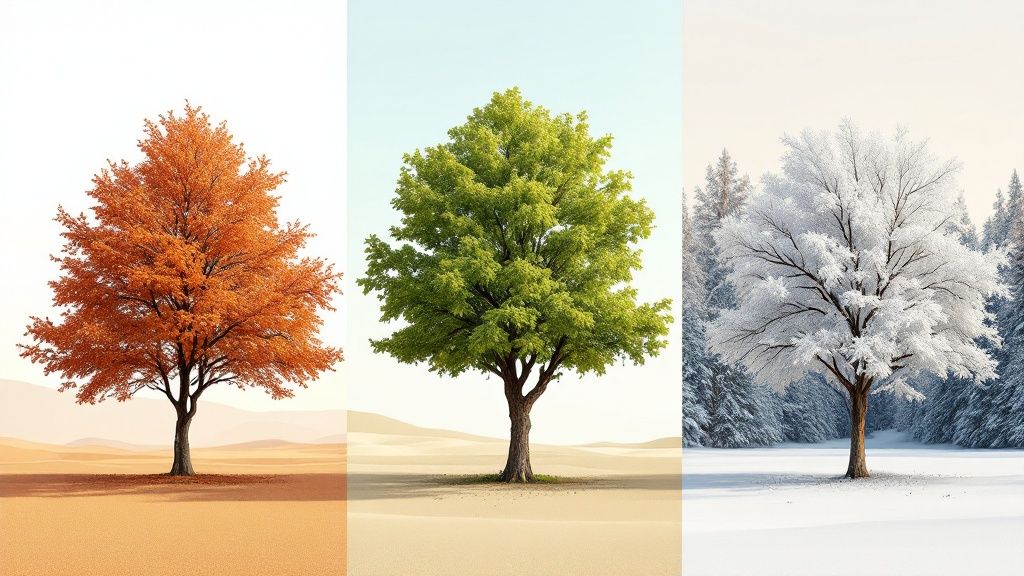
Okay, you know your climate zone. Now let's look at each season one by one. Each one has its own good and bad points for a new tree. Knowing these will help you choose the absolute best time to plant trees in your yard.
Think of the seasons as different training grounds for a young tree. Some are gentle and helpful, while others are very hard. Our goal is to give your tree the easiest start possible, so it can grow strong without a struggle.
Fall: The Champion Planting Season
For most places that have four seasons, fall is the best time for planting. The air is getting cooler, but the soil is still warm from the summer. This mix creates the perfect place for a tree's roots to start growing.
With no need to make leaves or flowers, the tree can put all its energy into growing a strong root system before winter. This head start is a big deal. It lets the tree anchor itself and get ready for a burst of growth in the spring. A simple layer of mulch will give the new roots extra protection from the cold.
Fall planting gives a tree the gift of time. It can focus only on building its roots in warm soil. This makes sure it's ready to grow well as soon as spring starts.
Spring: A Strong Contender
If you miss the best fall window, don't worry. Early spring is another great time to plant. The ground is no longer frozen, and the soil is usually damp from winter snow or spring rain. Planting now gives the tree the whole growing season to get settled.
The main problem with spring planting is the race against summer heat. You need to get your tree in the ground early enough for its roots to spread out before it gets too hot. You will have to water it regularly during this time, because a young, shallow root system can't reach deep for water on its own. This is a basic idea for any healthy garden and a key part of sustainable landscape design.
Summer: The Season of High Stress
Planting a tree in the middle of summer is usually a bad idea. Imagine asking someone to run a marathon on the same day they move into a new house. It's just too much stress.
The harsh mix of strong sun, high heat, and dry soil is very hard on a new tree. It has to work extra hard just to find enough water to live, leaving almost no energy for growing new roots. While it's not impossible, planting in summer means you have to promise to water deeply and often. You might even need to give it some shade.
Winter: A Time for Rest
For most of us, winter is a time of rest for both trees and gardeners. Trying to plant in frozen, hard ground is almost impossible and can hurt a tree's delicate roots.
But there is an exception. In milder climates where the ground doesn't freeze, winter can be a great time to plant. The tree is completely dormant, which means there is very little transplant shock. As long as you can dig in the soil, planting during a mild winter can give your tree a peaceful, gentle start before spring arrives.
How Tree Type Affects Your Planting Calendar
You wouldn't treat a cactus and a fern the same way. The same is true for trees. The type of tree you choose is a big factor in the best time to plant trees. Each type has its own favorite time for getting settled. Getting this timing right is a big first step toward a healthy tree.
Learning the main differences between tree types is key. Deciduous trees, evergreens, and fruit trees all have their own growth cycles. These cycles tell us when they can best handle the stress of being moved. One rule does not fit all.
Deciduous vs. Evergreen Trees
Deciduous trees are the ones that change color in the fall and then drop their leaves, like oaks, maples, and birches. This cycle makes them perfect for fall planting. Once their leaves are gone, the tree is dormant. It can put all its energy into growing a strong root system in soil that is still warm from summer.
Evergreens, like pines and firs, follow different rules. They keep their needles all year, so they can always lose water, even in winter. That’s why planting them in early spring usually gives them a better chance. It lets their roots get settled before they have to face both summer heat and cold winter winds.
Think of it this way: planting a deciduous tree in the fall is like tucking it into a warm bed for the winter. Planting an evergreen in the spring is like gently waking it up with a cool drink of water before the day gets busy.
The image below shows how planting times change based on different climate regions. This is another thing to think about along with your tree type.
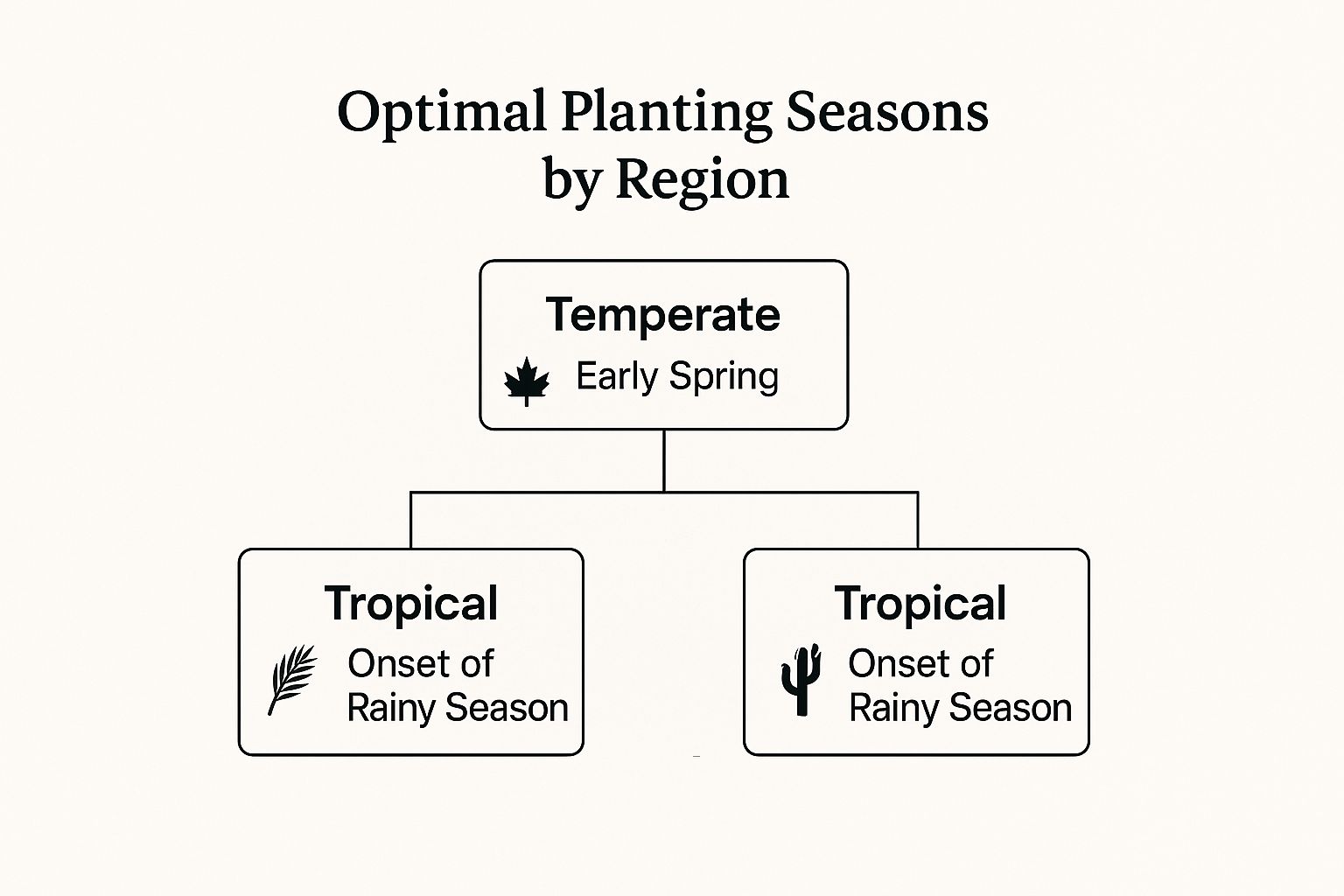
As the picture shows, there are some general rules. But your local climate—whether it’s temperate, tropical, or arid—is the first big filter you should use to find your best planting time.
To make this even clearer, here's a quick reference table for common tree types.
Planting Calendar by Tree Type
| Tree Type | Best Season | Secondary Season | Key Consideration |
|---|---|---|---|
| Deciduous | Fall | Early Spring | Plant after leaves drop so energy goes to roots. |
| Evergreen | Early Spring | Early Fall | Needs time for roots to grow before winter water loss. |
| Fruit Trees | Early Spring | Fall (mild climates) | Spring planting avoids frost damage to new growth. |
| Bare-Root | Early Spring | N/A | Must be planted while dormant before buds open. |
This calendar is a good starting point. But always remember to think about your local climate and how the tree is sold when you make your final choice.
How the Tree Is Sold Matters
Another piece of the puzzle is the form your new tree comes in from the nursery. This affects its planting schedule. You'll usually find trees in one of three forms:
- Container-Grown: These are the easiest to work with. Since their whole root system is in the pot, you have more flexibility. You can plant them almost any time the ground isn't frozen solid, though spring and fall are still best.
- Balled-and-Burlapped (B&B): For these trees, a large ball of soil was dug up with the roots and wrapped in burlap. They have a bit more transplant shock, so it's best to plant them in early spring or early fall to reduce stress.
- Bare-Root: Just as the name says, these are sold dormant and without any soil. They are the most delicate and must be planted in early spring before they start to grow leaves. This gives their roots direct contact with moist soil so they can get to work right away.
Choosing the right tree is important, especially if you have a small space. If you are looking for ideas, you might find our guide on the best trees for small yards helpful.
A Simple Step-by-Step Planting Method
Knowing when to plant is half the battle. The other half is using the right planting method.
Following a few simple steps can be the difference between a tree that struggles and one that grows well. This isn't just about digging a hole. It's about giving your new tree the best possible start in its new home. Think of this as your checklist for success.
Preparing the Perfect Spot
Before you even pick up a shovel, take a minute to prepare the planting area. Start by clearing a circle at least three feet wide of all grass and weeds. This might seem like a small thing, but it's very important. You are removing other plants that compete for water and nutrients. This gives your young tree a clean space to get started.
To give your tree an extra advantage, put down a quality weed control fabric around the base after planting. It stops weeds and helps the soil hold on to water. A well-prepared spot is like giving your tree a five-star hotel room.
Digging the Right Kind of Hole
Alright, now it’s time to dig. Here’s a rule that might surprise you: dig wide, not deep. You want a hole that's two or three times wider than the tree's root ball, but no deeper.
Why? A tree's most important roots grow sideways, near the surface, where they can get oxygen and water. Digging a wide hole and loosening the soil gives those roots an easy path to spread out, anchor the tree, and find what they need.
One of the most common and deadly planting mistakes is digging the hole too deep. You need to find the root flare. This is where the trunk gets wider just before the roots start. This flare must sit at or even slightly above ground level. Burying it is like a slow death sentence that leads to root rot and suffocation.
Handling the Roots with Care
With the hole ready, it’s time to put the tree in its new home. How you handle the roots at this point is very important and depends on how it came from the nursery.
- Gently slide the tree out of its container. If it’s stuck, don’t pull it. Tap the sides of the pot or lay it on its side to help it come out.
- Take a good look at the root ball. You’ll often find roots growing in a tight circle. This is called being "pot-bound," and it needs to be fixed.
- Untangle those circling roots. Use your fingers or a small tool to gently loosen and straighten them. You want them pointing outward, away from the trunk. If the roots are a thick, tangled mess, don't be afraid to make a few shallow vertical cuts around the root ball to help them grow in the right direction.
This one step prevents a future problem called girdling. This is when circling roots grow thick enough to choke the trunk, cutting off its water and food supply. It’s a simple action that can save your tree's life years from now.
After you place the tree in the hole, fill it back in with the soil you dug out. Then, finish the job by adding a two-to-three-inch layer of mulch. Make sure to keep the mulch from touching the trunk.
Your Planting Questions Answered
Even with the best plans, a few questions always seem to pop up when you’re ready to plant. Let's answer some of the most common questions people ask about finding the best time to plant trees. This way, you can feel confident when you head out with your shovel.
Can I Plant a Tree if I Missed the Best Season?
Yes, you can, but you'll need to be a more careful plant parent. If you end up planting in late spring or even early summer, your tree is going into the most stressful time of year. It will need extra help.
Think of it like this: you’re asking it to make a new home right before a heatwave. So, be ready to water it deeply and often. The main goal is to reduce transplant shock. A great trick is to give it some shade in the afternoon with a simple screen. It can make a big difference for a young tree trying to get settled at a tough time.
How Do I Know if the Ground Is Ready?
Let the soil tell you. The best soil is not frozen and not too wet. If you can't get a shovel in the ground, it's too frozen. The tree's roots won't be able to grow anyway.
Here's an old gardener's trick: grab a handful of soil and squeeze it. If it forms a muddy ball and drips water, it’s too wet. Planting now could cause the roots to rot. But if the soil is moist and crumbles apart easily in your hand? That’s the green light. Your conditions are perfect.
What Is the Worst Time of Year to Plant a Tree?
The absolute hardest time to plant a new tree is during a summer heatwave. The mix of strong sun, high temperatures, and dry air puts a huge amount of stress on a tree’s new root system. This makes it almost impossible for the tree to get established. It's a tough battle from day one.
The other time to avoid is when the ground is frozen solid. The tree is in a deep sleep and the soil is too hard to work with. Your best bet is to just wait for the spring thaw.
Ready to transform your outdoor space? The experts at Tamura Designs Landscape and Construction have over 30 years of experience creating stunning, sustainable landscapes. Let us help you design the perfect environment for your new trees to flourish. Visit us online to start your project.
