
Think your small yard means you're limited to shrubs and potted plants? It's time to look up. The right tree can transform a compact space from a simple patch of grass into a dynamic, multi-layered sanctuary, offering shade, privacy, and four-season beauty without overwhelming your property. Many homeowners believe trees are reserved for sprawling estates, but a new generation of compact, ornamental, and columnar varieties is designed specifically for modern, smaller lots. Finding the best trees for small yards involves more than just picking a dwarf species; it requires considering growth habit, root structure, and year-round visual appeal.
This guide moves beyond the obvious choices to provide a detailed roadmap for selecting the perfect arboreal centerpiece. We will explore seven outstanding species that thrive in limited space, detailing not just their mature size but their growth habits, seasonal interest, and specific maintenance needs. Understanding the unique characteristics of different tree species and their environmental advantages can further help you make an informed decision that benefits both your landscape and the local ecosystem.
Get ready to discover how a single, well-chosen tree can add immense value and create a stunning focal point, proving that even the smallest yards can have a mighty impact. From the architectural elegance of a Japanese Maple to the native charm of a Serviceberry, we'll help you find the ideal tree to anchor your landscape design for years to come, turning your modest plot into a truly impressive garden retreat.
1. Japanese Maple (Acer palmatum)
The Japanese Maple is arguably the quintessential small-yard tree, revered for its graceful form, delicate foliage, and stunning seasonal color. This deciduous tree, native to Asia, is not just a plant but a living sculpture, making it one of the best trees for small yards where every element must be impactful. Its slow growth rate and manageable size mean it won't overwhelm your space, instead providing a sophisticated focal point that evolves beautifully through the year.
Why It Excels in Compact Spaces
Unlike large shade trees that can dominate a landscape, Japanese Maples offer filtered light and a sense of intimacy. Their delicate, often deeply lobed leaves create a soft texture that contrasts wonderfully with hardscaping elements like patios or walkways. The sheer variety available is its greatest strength; with over 1,000 cultivars, you can find a Japanese Maple for virtually any small-space scenario, from tiny courtyards to narrow side yards.
Famous examples, like the collections at the Brooklyn Botanic Garden or the Portland Japanese Garden, showcase how these trees can define a space without consuming it. Even in a dense urban setting, a single well-placed 'Bloodgood' with its deep purple-red leaves or a weeping 'Crimson Queen' cascading over a retaining wall can transform a mundane corner into a breathtaking vignette.
The following infographic highlights the key attributes that make the Japanese Maple a versatile and high-impact choice for limited areas.
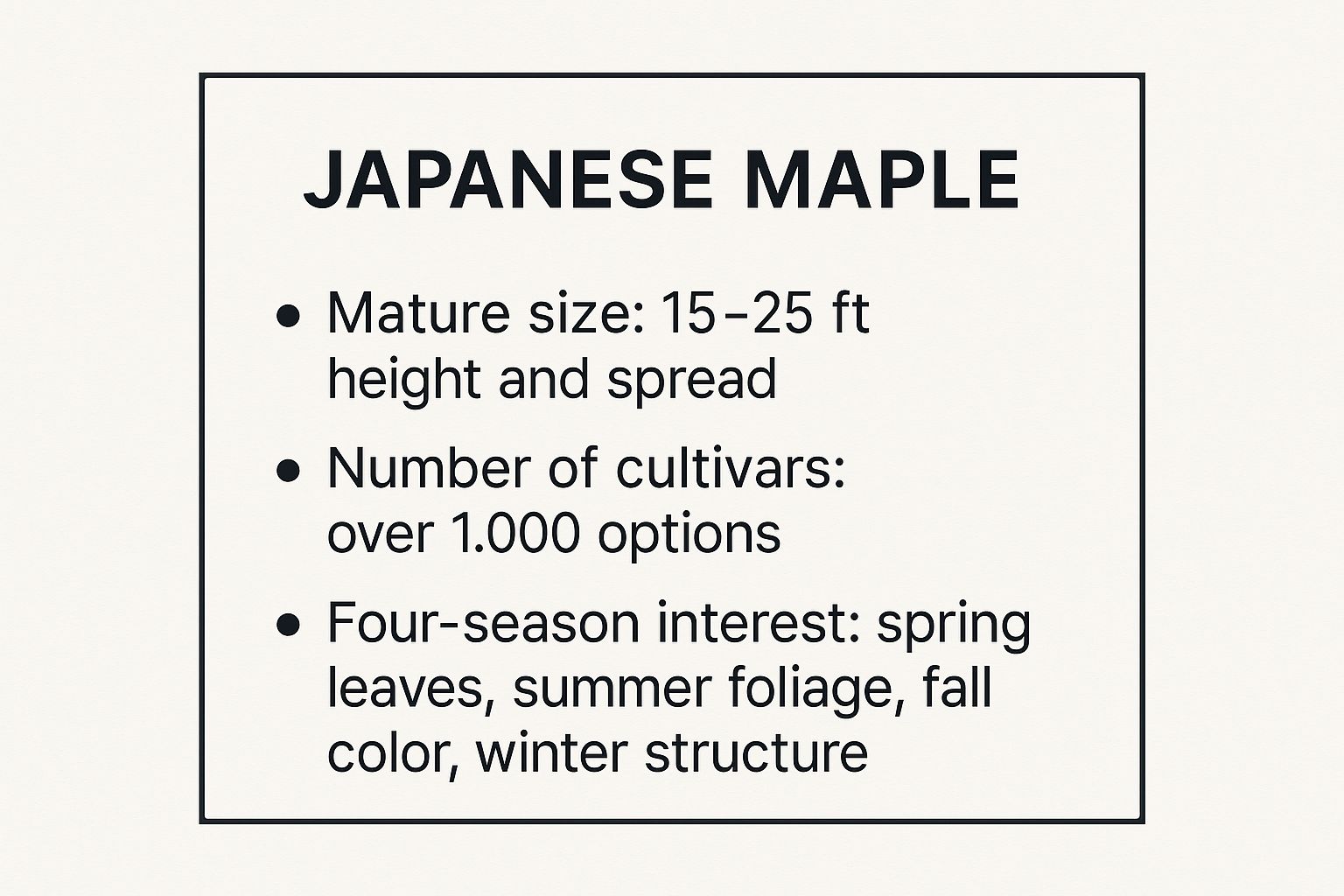
This data underscores the tree's adaptability, offering a perfect size for residential lots and delivering ornamental value in every season, from the fresh spring leaf-out to its elegant winter silhouette.
Actionable Tips for Success
To ensure your Japanese Maple thrives and becomes a cherished feature of your garden, proper placement and care are crucial.
- Protect from Harsh Sun: Plant in a location that receives morning sun and afternoon shade. The intense afternoon sun, especially in warmer climates, can scorch the delicate leaves.
- Mind the Wind: Choose a spot sheltered from strong, drying winds, which can cause leaf tatter and stress the tree.
- Ensure Proper Drainage: These trees despise "wet feet." Amend heavy clay soils with organic matter to improve drainage or consider planting in a raised bed or a large container.
- Mulch is a Must: Apply a 2-3 inch layer of organic mulch around the base, keeping it away from the trunk. This protects its shallow root system, conserves moisture, and moderates soil temperature.
For a visual guide on selecting and planting the perfect Japanese Maple for your space, the video below offers expert advice.
2. Dogwood (Cornus florida)
The Flowering Dogwood is a true American classic, celebrated for its spectacular spring display and year-round ornamental value. As a native North American tree, it brings a sense of established grace and four-season beauty, making it one of the best trees for small yards. Its modest mature size and elegant, horizontal branching structure create a broad, layered canopy that provides visual interest without casting overwhelming shade.
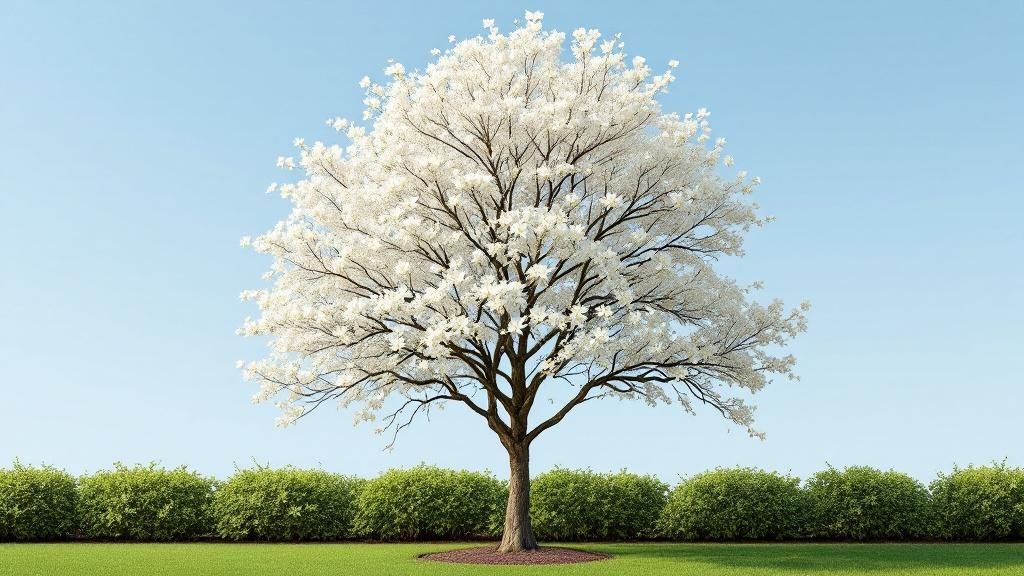
This tree is far more than just its iconic spring flowers; it’s a dynamic performer. After the large, showy bracts (often mistaken for petals) fade, the tree is covered in lush green foliage, followed by glossy red berries that attract birds in the fall. The autumn season brings a brilliant foliage display of scarlet, purple, and red, ensuring the Dogwood remains a stunning landscape feature. Its layered silhouette provides architectural interest even in winter.
Why It Excels in Compact Spaces
The Dogwood’s understory nature makes it perfectly suited for residential settings. It thrives in the dappled light found at the edge of woodlands, a condition often mimicked in small yards with existing structures or larger trees. Its mature height and spread of 15-25 feet allow it to serve as a beautiful anchor for a foundation planting or as a standalone specimen without outgrowing its welcome.
Famous landscapes demonstrate its impact. The annual Dogwood Arts Festival in Knoxville, Tennessee, highlights how these trees define entire neighborhoods. In more curated settings like Central Park in New York City, Dogwoods are used extensively to add a layer of spring color and naturalistic beauty to woodland gardens, proving their versatility in both formal and informal designs.
The tree’s ability to fit into an existing ecosystem is a major benefit. For homeowners interested in creating a cohesive, low-maintenance landscape, pairing it with other native species can be highly effective. You can discover more about incorporating beautiful, region-appropriate plants by exploring a guide to California native drought-tolerant plants.
Actionable Tips for Success
To get the most out of your Flowering Dogwood and ensure its health, thoughtful placement and consistent care are key. It is more sensitive than some other trees, but the reward is well worth the effort.
- Provide Afternoon Shade: In hot climates, Dogwoods need protection from the harsh afternoon sun. An ideal spot is on the east side of a home where it gets gentle morning light.
- Ensure Acidic, Well-Drained Soil: These trees prefer moist, slightly acidic soil that is rich in organic matter. Amend heavy clay or sandy soils with compost to improve structure and fertility.
- Water During Dry Spells: While established trees have some drought tolerance, they perform best with consistent moisture. Provide supplemental water during extended dry periods, especially in the first few years.
- Choose Disease-Resistant Cultivars: Modern cultivars like 'Appalachian Spring' offer strong resistance to common Dogwood issues like powdery mildew and anthracnose.
- Mulch to Protect Roots: Apply a 2-3 inch layer of mulch around the base, extending to the drip line but keeping it away from the trunk. This helps retain soil moisture and protects its shallow root system.
3. Crabapple (Malus species)
The Crabapple tree is a true four-season performer, celebrated for its explosive spring blossoms, handsome summer foliage, and colorful autumn fruit. This diverse group of deciduous trees represents one of the most reliable and beautiful choices for compact landscapes. As one of the best trees for small yards, a Crabapple provides a classic, all-American look without demanding excessive space, making it a spectacular addition to front yards, borders, and garden beds.
Why It Excels in Compact Spaces
Crabapples offer a multi-season display that ensures your small yard always has a point of visual interest. Their main event is a spectacular spring bloom show, with flowers ranging from pure white and soft pink to deep magenta, often filling the air with a sweet fragrance. Modern cultivars have been bred for a more upright or rounded form, preventing them from sprawling and overwhelming smaller plots.
The value of Crabapples is recognized in prominent public spaces. The Central Park Conservancy, for example, utilizes disease-resistant varieties for reliable seasonal color. Many urban streetscape projects also favor compact cultivars like 'Prairifire' for its persistent red fruit and 'Royal Raindrops' for its unique cutleaf, purple foliage that holds its color all summer. These examples show how a well-chosen Crabapple can bring structure and year-round beauty to even the most confined urban or suburban setting.
This consistent ornamental value, from the first buds of spring to the sight of birds feasting on fruit in the snow, makes the Crabapple a hardworking and highly rewarding tree for limited areas.
Actionable Tips for Success
To get the most from your Crabapple and ensure it remains a healthy, beautiful focal point, follow these key guidelines for selection and care.
- Choose Disease-Resistant Varieties: This is the most crucial step. Look for modern cultivars developed to resist common issues like apple scab, fire blight, and powdery mildew. Trees like ‘Prairifire’, ‘Sugar Tyme’, and ‘Red Jewel’ are excellent choices.
- Select for Persistent Fruit: For fantastic winter interest, choose a variety with small, persistent fruits that cling to the branches long after the leaves have dropped. This provides color and a vital food source for birds.
- Full Sun is Non-Negotiable: Plant your Crabapple in a location that receives at least six hours of direct sunlight per day. Full sun promotes the best flowering, strongest foliage color, and greatly reduces the risk of fungal diseases.
- Prune During Dormancy: The best time to prune is in late winter or very early spring before new growth begins. Focus on removing any suckers from the base, cutting out crossing or damaged branches, and lightly shaping the canopy to maintain an open, attractive form.
4. Redbud (Cercis canadensis)
The Eastern Redbud is a beloved North American native tree celebrated for its breathtaking spring display and multi-season interest. Before its leaves appear, the tree's bare branches and even its trunk become covered in clusters of vibrant, rosy-pink to magenta flowers. This unique flowering habit makes it one of the best trees for small yards, offering a spectacular show that signals the arrival of spring in a way few other trees can match. Its modest size and graceful, often multi-stemmed form ensure it fits comfortably without overpowering a compact garden.
Why It Excels in Compact Spaces
The Redbud's charm lies in its ability to deliver a high-impact floral show without demanding a large footprint. Its open, vase-like shape allows for underplanting with spring bulbs or shade-loving perennials, maximizing garden space. After the flowers fade, attractive heart-shaped leaves emerge, casting gentle, dappled shade that is perfect for a small patio or seating area. This combination of stunning flowers, unique foliage, and an elegant winter structure provides year-round appeal.
Renowned displays, such as those at the Missouri Botanical Garden or Nashville's Cheekwood Estate, demonstrate how Redbuds can be used to create stunning woodland edge effects or act as standalone specimens. Even in a simple suburban yard, a single Redbud planted near a doorway or property line can create a powerful and welcoming focal point, anchoring the landscape design with its naturalistic beauty.
The following infographic highlights the key attributes that make the Redbud a versatile and high-impact choice for limited areas.
This data underscores the tree's suitability for residential landscapes, confirming its manageable size, moderate growth, and significant ornamental value that enriches a garden from early spring through autumn.
Actionable Tips for Success
To ensure your Redbud thrives and becomes a cherished feature, focus on proper site selection and minimal, but strategic, care.
- Prioritize Drainage: Redbuds are susceptible to root rot in waterlogged conditions. Plant in well-draining soil, and amend heavy clay with compost to improve its structure. Avoid low spots where water collects.
- Sun and Shade Balance: In cooler climates, full sun promotes the best flowering. In hotter regions like Morgan Hill, plant it where it will receive morning sun and protection from the harsh afternoon sun to prevent leaf scorch.
- Protect the Root Zone: The area under the tree's canopy is sensitive. Avoid compacting the soil with foot traffic or heavy equipment, and apply a 2-3 inch layer of mulch to protect its shallow roots.
- Prune with Purpose: Redbuds generally require little pruning. If needed, trim to remove dead, damaged, or crossing branches during the dormant winter season. Avoid heavy pruning, which can spoil its natural form. Consider a multi-trunk specimen from the nursery for enhanced architectural interest.
For a visual guide on the beauty and care of the Eastern Redbud, the video below provides an excellent overview.
5. Serviceberry (Amelanchier species)
The Serviceberry is an exceptional North American native that functions as a year-round workhorse, making it one of the best trees for small yards. Often overlooked, this adaptable tree provides a spectacular show in every season: delicate white flowers in spring, sweet edible berries in summer, brilliant orange-red foliage in fall, and an elegant, silver-grey bark for winter interest. Its modest size and upright or multi-stemmed form allow it to fit gracefully into tight spaces without ever feeling imposing.
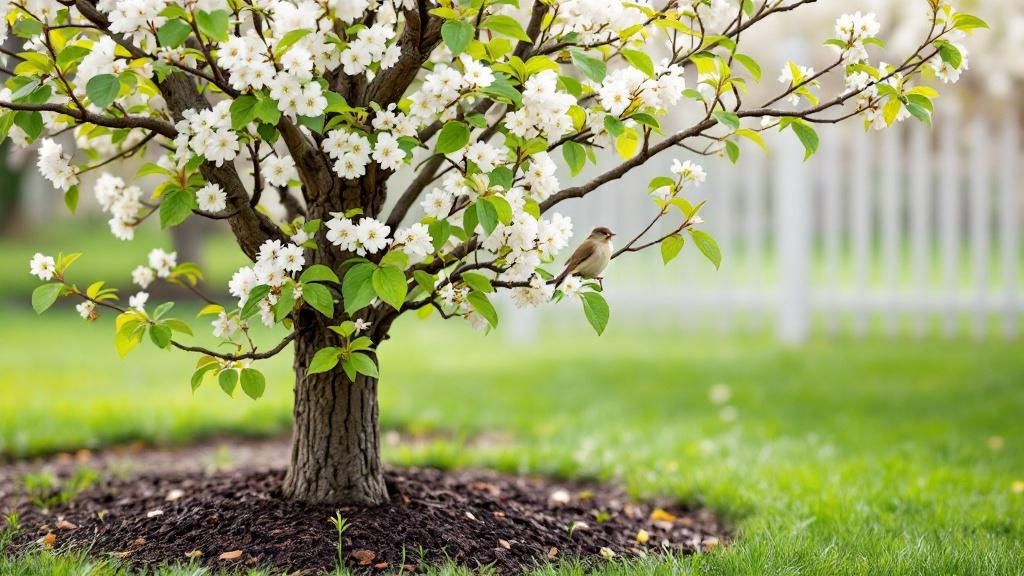
This versatility makes the Serviceberry a smart, high-value choice for homeowners who want maximum impact from a single plant. It delivers ornamental beauty while also supporting local wildlife, attracting pollinators with its flowers and feeding birds with its berries.
Why It Excels in Compact Spaces
Serviceberry trees, also known as Juneberries or Saskatoon berries, offer a light, airy canopy that doesn’t cast dense shade, allowing sunlight to filter through to understory plantings. This makes them perfect for layered garden designs, even in small beds. Their typically narrow, vase-shaped habit is ideal for planting near a patio, along a property line for a soft screen, or as a graceful specimen near the corner of a house.
Prominent botanical gardens recognize their value. Longwood Gardens in Pennsylvania and the New York Botanical Garden showcase various Amelanchier species in their native plant collections, demonstrating how these trees can anchor a landscape with natural elegance. Many urban restoration projects also favor Serviceberries for their resilience and ecological benefits, proving they can thrive even in challenging city environments. They are also relatively pest and disease-resistant, adding to their low-maintenance appeal. Many cultivars are also quite adaptable, fitting into various garden designs, including those focused on drought-tolerant landscaping. For those interested in sustainable gardening, you can learn more about creating a water-wise yard and see how trees like the Serviceberry fit in.
Actionable Tips for Success
To get the most out of your Serviceberry and ensure it becomes a star performer in your yard, follow these key practices.
- Form and Structure: For a more formal tree-like appearance, select a single-trunk specimen or train a young multi-stemmed plant into a single leader. If you prefer a more natural, shrub-like form, allow the multiple stems to develop.
- Soil Preparation: While adaptable, Serviceberries perform best in well-draining soil. Amend heavy clay or poor soil with compost to improve its structure and fertility before planting.
- Maintain a Clean Base: These trees can produce suckers from the root base. Prune these away regularly to maintain a clean tree form and direct the plant's energy into the main canopy.
- Enjoy the Harvest: For the best flavor, harvest the berries when they are a deep, rich purple. They are delicious fresh, in pies, or in jams. Be prepared to share with your local birds!
- Plant with Native Companions: Maximize the ecological benefit by planting your Serviceberry alongside other native plants like coneflowers (Echinacea), ferns, or sedges (Carex) to create a vibrant, self-sustaining garden habitat.
6. Ornamental Cherry (Prunus species)
The Ornamental Cherry is synonymous with the breathtaking beauty of spring, offering a floral spectacle that can transform any garden into a scene of ephemeral magic. These deciduous trees are celebrated worldwide for their clouds of pink and white blossoms, making them one of the best trees for small yards where a dramatic seasonal show is desired. Far from being a one-season wonder, their graceful forms, attractive bark, and sometimes vibrant fall color provide year-round interest in a manageable, compact package.
Why It Excels in Compact Spaces
Ornamental Cherries bring a powerful visual impact without the sprawling canopy of larger trees. Their defining feature, an explosive spring bloom, creates an instant focal point that draws the eye and celebrates the arrival of the new season. The diversity within the Prunus genus is a significant advantage; you can find weeping varieties like 'Snow Fountains' to cascade over a wall, narrow upright forms like 'Amanogawa' for tight spaces, or classic vase shapes like 'Kanzan' for a more traditional look.
The world-famous cherry blossoms around Washington D.C.'s Tidal Basin or the stunning Cherry Esplanade at the Brooklyn Botanic Garden are grand-scale examples of their power. However, a single well-placed ornamental cherry can have a similar transformative effect in a small residential yard, creating a picturesque setting for a patio or framing a view from a window. Their moderate size ensures they provide beauty and a light, filtered shade without plunging the entire yard into darkness.
The following infographic highlights the key attributes that make the Ornamental Cherry a spectacular and versatile choice for limited areas.
This data illustrates the tree's suitability for most residential lots, emphasizing its incredible ornamental value. From the flush of spring flowers to its elegant winter structure, the Ornamental Cherry delivers a high-impact performance throughout the year.
Actionable Tips for Success
To ensure your Ornamental Cherry thrives and delivers its signature spring performance, careful selection and placement are key.
- Prioritize Air Circulation: Plant in a location with good air movement to help prevent common fungal diseases like brown rot and powdery mildew. Avoid crowding it between buildings or dense shrubs.
- Sun and Soil are Crucial: These trees need at least six hours of direct sunlight per day to produce the most spectacular blooms. They also require well-draining soil, as they are susceptible to root rot in waterlogged conditions.
- Time Your Pruning: The best time to prune is immediately after the tree has finished flowering in late spring or early summer. Pruning in late fall or winter can remove the buds that would have become next year's flowers.
- Choose Resistant Cultivars: When possible, select modern cultivars that have been bred for better disease resistance. This will significantly reduce maintenance and lead to a healthier, more robust tree.
For a visual walkthrough on caring for these beautiful trees to get the best possible blooms, the video below provides excellent guidance.
7. Magnolia (Magnolia species)
The Magnolia is a timeless symbol of southern elegance, renowned for its dramatic, often fragrant flowers and handsome, glossy foliage. While many envision sprawling giants, numerous compact cultivars make the Magnolia one of the best trees for small yards, offering a touch of grandeur without overwhelming the landscape. These trees provide a powerful, multi-season display, from their stunning spring or summer blooms to their stately winter form, making them a worthy centerpiece for any thoughtfully designed space.
Why It Excels in Compact Spaces
Magnolias bring a bold, structural quality to a small garden that few other trees can match. Their large, leathery leaves create a lush, almost tropical feel, while the breathtaking flowers, some as large as dinner plates, provide an unrivaled spectacle. Instead of dominating with a wide canopy, many smaller varieties grow in an upright, pyramidal, or shrub-like form, occupying vertical space efficiently. This makes them ideal for framing an entryway, anchoring a garden bed, or serving as a living privacy screen.
Famous collections, such as those at Magnolia Plantation in South Carolina or the Brooklyn Botanic Garden's Magnolia Plaza, demonstrate the incredible diversity within the genus. For a small yard, you can select a variety whose mature size is perfectly suited to your needs. A 'Jane' magnolia with its tulip-shaped, purple-pink flowers or a 'Little Gem' with its classic white blooms can deliver that iconic magnolia presence in a fraction of the space.
The following infographic illustrates the key features that make select Magnolia varieties a superb choice for compact gardens.
This data highlights the manageable size and significant ornamental value these trees offer, confirming their status as a top contender for residential landscapes where space is a premium.
Actionable Tips for Success
To cultivate a magnificent Magnolia that becomes the star of your small yard, careful selection and placement are key.
- Choose the Right Cultivar: This is the most critical step. Look for smaller varieties like 'Jane', 'Ann', or 'Susan' (from the "Little Girl" series) or the 'Little Gem' Southern Magnolia. Research their mature height and spread to ensure they fit your garden plan.
- Provide Rich, Well-Drained Soil: Magnolias thrive in slightly acidic, loamy soil that is rich in organic matter. They require consistent moisture but will not tolerate soggy, waterlogged conditions.
- Protect the Shallow Roots: Magnolias have fleshy, rope-like roots that grow close to the surface and are easily damaged. Avoid digging or cultivating under the tree's canopy. Apply a generous 2-3 inch layer of mulch to protect these roots, retain moisture, and suppress weeds.
- Consider Bloom Time: For deciduous varieties that bloom in early spring, a late frost can damage the flowers. If you live in an area with unpredictable spring weather, planting in a location with some protection from early morning sun can help prevent the buds from opening too quickly and being zapped by a cold snap.
By selecting an appropriate variety and providing the right conditions, a magnolia can be a magnificent, low-maintenance choice that adds significant value and beauty. These principles of thoughtful plant selection align with a broader vision of sustainable landscaping. You can learn more about Magnolias and their role in an eco-friendly landscape.
Top 7 Trees for Small Yards Comparison
| Tree Species | Implementation Complexity 🔄 | Resource Requirements ⚡ | Expected Outcomes 📊 | Ideal Use Cases 💡 | Key Advantages ⭐ |
|---|---|---|---|---|---|
| Japanese Maple (Acer palmatum) | Moderate Needs well-draining soil, shade |
Moderate Consistent moisture, careful site |
High Four-season interest, vibrant fall color |
Small yards, containers, specimen trees | Compact size, over 1,000 cultivars, ornamental value |
| Dogwood (Cornus florida) | Moderate May need disease management |
Moderate Consistent moisture, partial shade |
High Spring blooms, fall foliage, wildlife support |
Small yards, native plant gardens | Outstanding flowers, supports butterflies, native |
| Crabapple (Malus species) | Moderate Pruning and disease resistance needed |
Low-Moderate Full sun, pruning |
High Spring flowers, winter fruits, wildlife food |
Small yards, urban streetscape | Disease-resistant varieties, wide size range |
| Redbud (Cercis canadensis) | Low-Moderate Adaptable but short-lived |
Low Tolerates various soils, minimal care |
Moderate Early spring flowers, light shade |
Small yards, understory planting | Unique flowering habit, supports ecosystem |
| Serviceberry (Amelanchier species) | Low Low maintenance, some pruning |
Low Tolerant, partial shade, well-drained soil |
High Four-season interest, edible berries |
Small yards, wildlife gardens | Edible berries, native, multi-season appeal |
| Ornamental Cherry (Prunus species) | Moderate Requires disease control, pruning |
Moderate Well-drained soil, regular maintenance |
High Spring floral display, graceful form |
Small yards, ornamental focal points | Wide variety, fast growth, iconic beauty |
| Magnolia (Magnolia species) | Moderate-High Large roots, frost sensitive |
Moderate-High Rich soil, consistent moisture |
High Large fragrant blooms, year-round structure |
Small yards (smaller varieties), focal points | Large fragrant flowers, evergreen options |
From Blueprint to Bloom: Planting Your Small Yard's Future
Choosing from the list of the best trees for small yards is far more than a simple landscaping task; it's a profound act of placemaking. You are not just planting a tree; you are planting a future landmark for your home, a source of seasonal joy, and a vital ecological contributor to your Morgan Hill neighborhood. This decision fundamentally shapes the character and usability of your outdoor living space for decades to come.
Throughout this guide, we've explored a curated selection of exceptional trees, each offering a unique combination of beauty, scale, and function. From the sculptural grace of the Japanese Maple to the four-season interest of the Serviceberry, the right choice is waiting. The most critical takeaway is the principle of "right tree, right place." This means moving beyond simple aesthetics and embracing a more holistic evaluation of your specific site conditions.
Synthesizing Your Vision: Key Principles for Success
Before you head to the nursery, let's distill the core concepts that will bridge the gap between your vision and a thriving, beautiful reality. Mastering these principles ensures your investment of time and resources yields a spectacular return.
- Think in Four Dimensions: Your yard has length and width, but a tree introduces height (the third dimension) and time (the fourth). Consider the tree's ultimate mature size, not just its current form. Visualize its canopy in 5, 10, and 20 years. Will it interfere with power lines, block a cherished view, or cast your vegetable garden into permanent shade? A successful choice accounts for this long-term growth trajectory.
- Match the Microclimate: Every yard has unique microclimates. The spot against a south-facing wall will be hotter and drier than a shaded corner near the fence. Pay close attention to the specific light, soil, and moisture conditions of your intended planting location. A sun-loving Redbud will languish in deep shade, while a moisture-loving Dogwood may struggle in a dry, exposed site.
- Layer for Impact: The most stunning small yards create a sense of depth and complexity through layering. Your chosen tree is the "canopy layer" or "understory layer." Think about what will go beneath it. Will you use low-growing groundcovers, mid-height perennials, or evergreen shrubs? This layered approach creates a cohesive, lush, and professionally designed look.
- Prioritize Function and Beauty: The best trees for small yards often serve multiple purposes. A Crabapple provides stunning spring blossoms, attractive summer foliage, and persistent winter fruit for wildlife. A Serviceberry offers delicate flowers, edible summer berries, and brilliant fall color. Selecting a tree that works hard across multiple seasons maximizes the value you get from your limited space.
Your Actionable Next Steps
With this knowledge, you are empowered to make an informed decision. Here is your roadmap to move forward:
- Site Assessment: Take photos of your intended planting spot at different times of the day to accurately gauge sunlight exposure.
- Soil Test: Perform a simple DIY soil test or send a sample to a lab to understand its pH and composition. This information is invaluable for selecting a suitable tree and knowing what amendments might be needed.
- Create a Shortlist: Revisit the trees detailed in this article and create a shortlist of two or three top contenders that match your site conditions and aesthetic goals.
- Long-Term Care Plan: Your tree's journey just begins at planting. Once your small yard's future is blooming, establishing effective watering strategies is critical for its long-term health and vitality, especially during its first few years as it establishes its root system.
Key Insight: A small yard doesn't limit your potential for a dramatic and beautiful landscape; it simply demands a more thoughtful and strategic approach to plant selection. The perfect tree will not overwhelm your space but will instead define it, creating an anchor point that elevates the entire design.
Investing in a high-quality tree and its proper installation is one of the most rewarding upgrades a homeowner can make. It enhances curb appeal, increases property value, provides shade that can lower energy costs, and creates a personal sanctuary for you and your family. You are quite literally planting a legacy.
Ready to transform your Morgan Hill property with the perfect tree and a landscape design that reflects your lifestyle? The experts at Tamura Designs Landscape and Construction possess deep horticultural knowledge and design expertise to seamlessly integrate the ideal tree into a stunning, cohesive outdoor environment. Contact Tamura Designs Landscape and Construction to ensure your vision is executed with precision, craftsmanship, and a commitment to long-term success.
