
Ever wonder if your driveway could do more than just sit there? What if, instead of acting like a slick surface that sends rain rushing into the street, it could behave more like a sponge? That's the simple but brilliant idea behind permeable pavers.
This isn't just another paving option; it's a completely different way of thinking about hardscapes. It’s a smart paving system designed to let rainwater soak right through the surface and into the ground below, rather than letting it become wasteful, polluted runoff.
An Eco-Friendly Answer to Stormwater
Let's face it, traditional pavement like asphalt or solid concrete creates a waterproof barrier. When a storm rolls in, the rain hits this hard surface and has nowhere to go but sideways. As it flows toward the nearest storm drain, it picks up all sorts of nasty stuff—oil from cars, lawn chemicals, and other debris—and funnels it directly into our local creeks, rivers, and lakes. This runoff is a huge source of urban water pollution.
Permeable pavers flip that whole dynamic on its head. They create a solid, durable surface you can drive and walk on, but one that's also porous. This design allows rainwater to pass straight through, managing stormwater exactly where it falls.
Think of it like a giant, high-tech coffee filter for your entire property. The system lets the water (the coffee) trickle through while trapping pollutants in its layered base, keeping them from ever reaching our natural waterways.
This approach does a lot more than just manage a downpour. It actively helps the surrounding ecosystem thrive. By letting water seep back into the earth naturally, these systems:
- Recharge groundwater: They help refill the underground aquifers that are a critical source of our drinking water.
- Prevent soil erosion: By slowing water down and absorbing it, the system keeps precious topsoil from washing away.
- Reduce flooding: They take a massive load off our municipal storm sewers, especially during heavy rain events.
To help you visualize how these components work together, here’s a quick breakdown of a typical permeable paver system.
Key Features of a Permeable Paver System
| Feature | Description |
|---|---|
| Permeable Pavers | The top layer. These pavers have special spacer bars that create small gaps between them. |
| Joint-Filling Stone | Tiny, angular stones (ASTM No. 8 or 9) are swept into the gaps between the pavers. This is what the water flows through. |
| Bedding Layer | A layer of slightly larger crushed stone (ASTM No. 57) that sits directly under the pavers, providing a stable, level base. |
| Base & Subbase | Deep layers of open-graded aggregate that act as a reservoir, holding water temporarily as it soaks into the soil beneath. |
| Geotextile Fabric | A special filter fabric that separates the stone layers from the native soil, preventing clogging and keeping the system working. |
This simple but powerful shift from shedding water to absorbing it makes permeable pavers a true cornerstone of modern, sustainable landscape design. They are a game-changer for everything from driveways and patios to public walkways and parking lots, offering a solution that is as beautiful as it is responsible. Understanding what permeable pavers are is the first step toward creating smarter, greener outdoor spaces that work with the natural water cycle, not against it.
How Permeable Paver Systems Actually Work
To really get what permeable pavers are all about, you have to look past the beautiful surface you see and walk on. The real magic isn't in the pavers themselves, but in the carefully engineered base hidden underneath. It’s best to think of the whole thing not just as a patio or driveway, but as a complete system designed to work with nature, much like a forest floor soaking up a summer rain.
When a storm rolls in, raindrops that land on a permeable surface don't create puddles or rush into the street drain. Instead, the water slips into the small, deliberate gaps between each paver. These gaps are filled with tiny, angular stones that act as a gateway, allowing the water to pass right through to the layers below.
This is where the real work begins.
The Journey Through the Layers
Once the water gets past the paver joints, it doesn't just seep into the dirt. It enters a multi-layered underground system that’s been meticulously designed to filter and hold rainwater before slowly releasing it back into the ground.
Here’s how the water travels down through the system:
- Bedding Layer: Right under the pavers, there’s a shallow layer of small, clean-washed aggregate. This provides a perfectly level bed for setting the pavers and acts as the very first stage of filtration.
- Base & Subbase: This is the structural heart of the system. It’s a much deeper layer of larger, open-graded crushed stone that provides all the necessary strength for your driveway or patio. Its open structure also creates a massive underground reservoir with up to 40% void space, giving stormwater a place to go.
- Geotextile Fabric: Think of this as the system's gatekeeper. This special filter fabric is usually laid between the native soil and the stone base. It’s crucial for preventing soil and silt from working their way up and clogging the stone, which keeps everything flowing freely for years to come.
This visual gives you a great breakdown of how this simple, yet incredibly effective, process works to manage stormwater.
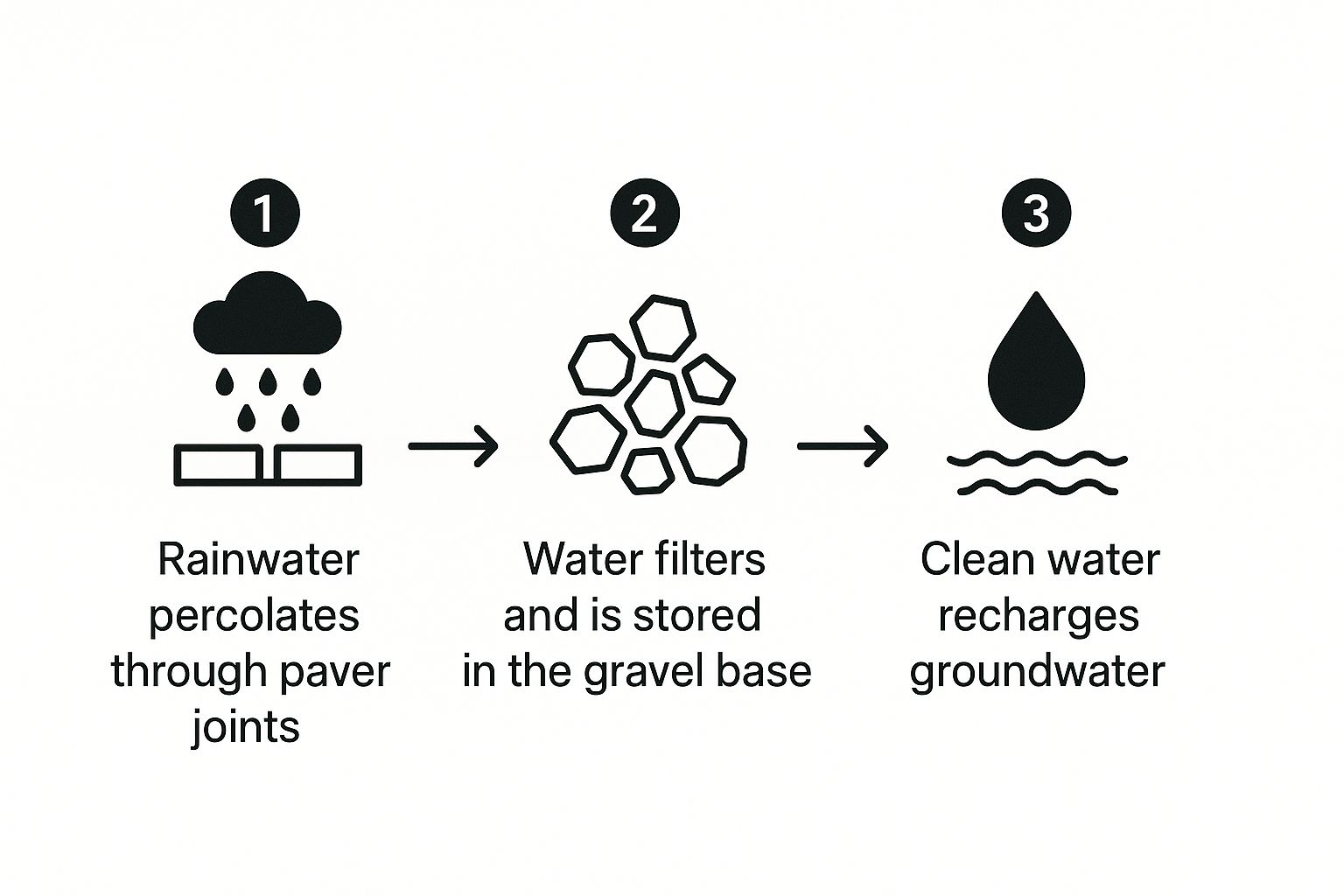
As you can see, the whole setup is designed to slow water down, store it, and filter it before letting it naturally recharge the earth below.
Filtration and a Greener Footprint
As stormwater makes its slow journey down through these aggregate layers, a quiet, natural purification happens. The different sizes of stone trap sediment, pollutants like heavy metals from brake dust, and even hydrocarbons from oil and gas drips. By the time that water finally reaches the subsoil, it’s remarkably cleaner.
What you're really doing is creating a man-made aquifer right under your feet. It's an incredibly powerful way to combat the urban heat island effect, stop polluted runoff from entering our waterways, and replenish precious groundwater supplies.
This kind of functionality is a cornerstone of modern, sustainable building. If you're looking to understand how these systems contribute to a larger green strategy, our guide to eco-friendly landscaping is a great place to start. In the end, this smart engineering ensures your hardscape works in harmony with the natural water cycle, not against it.
When you start thinking about permeable pavers, it’s easy to picture just one kind of chunky, gray block. But the reality is much more interesting. The world of permeable paving has a surprising amount of variety, with different options designed to match specific looks, budgets, and project goals.
Figuring out which one is right for you is the first step toward a successful project. While they all share the same goal—letting water pass through—they get there in different ways. From classic pavers to systems that practically disappear into your lawn, let's look at the most common choices.
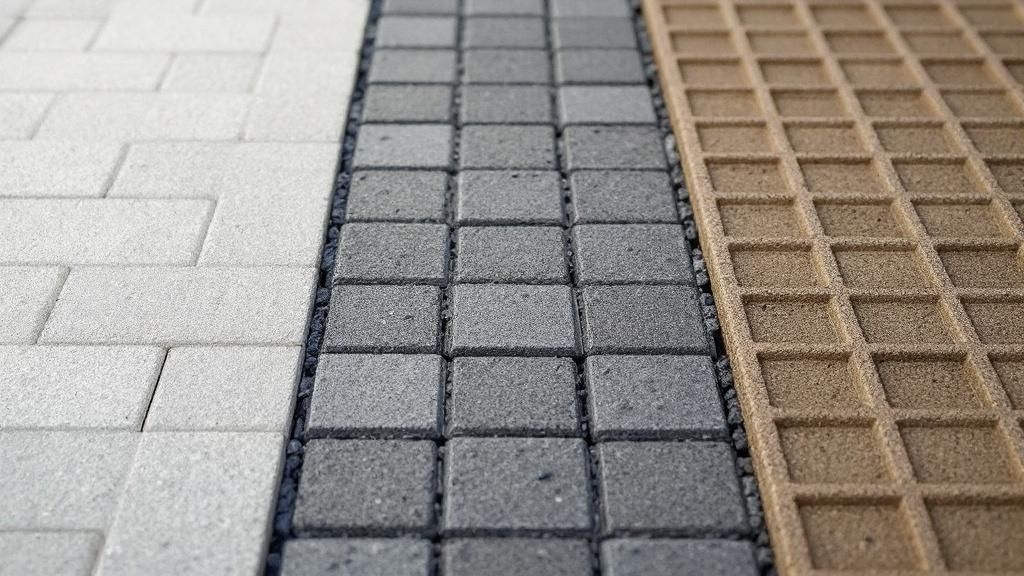
Permeable Interlocking Concrete Pavers (PICP)
This is the one that usually comes to mind first. Permeable Interlocking Concrete Pavers (PICP) look almost identical to the traditional decorative pavers you see everywhere. The key difference is the small spacer bars built into their sides, which automatically create a uniform gap between each paver during installation.
Instead of sweeping sand into these gaps, you fill them with small, clean stones. That’s the magic—rainwater funnels right through these stone-filled joints and into the prepared gravel base underneath.
- Best For: Driveways, patios, walkways, and public spaces where you want both good looks and serious strength.
- Key Advantage: They come in a massive range of styles, colors, and textures, so you can easily find a design that complements your home’s architecture.
Pervious Concrete and Porous Asphalt
Now, imagine a solid surface that drinks water like a sponge. That’s the idea behind pervious concrete and porous asphalt. Unlike the standard stuff, these materials are mixed with a special recipe that leaves a network of tiny, interconnected holes all the way through the slab.
Here, water flows through the material itself, not just between the cracks. This creates a uniform, seamless look that's often used for larger commercial lots, but it works just as well for a modern residential driveway.
You’re not the only one thinking about smarter paving. The global market for permeable paver systems was valued at around $1.77 billion and is expected to grow to $2.38 billion by 2032. It's a clear sign that homeowners and builders are shifting toward more sustainable solutions. You can see the market research for yourself.
Plastic or Concrete Grid Systems
If you want a greener, more natural look, grid systems are a fantastic option. These are essentially honeycomb-like grids, often made from 100% recycled plastic or concrete, that you lay over a prepared gravel base.
The open cells of the grid can be filled with either gravel for a tidy, rustic path or topsoil and grass seed. This gives you a surface that's strong enough to drive on but blends right into the landscape.
- Grass-Filled Grids: Perfect for creating a "hidden" driveway or an overflow parking spot that just looks like part of the lawn.
- Gravel-Filled Grids: A great way to get a stable gravel driveway without the usual mess. The grid locks the stones in place, preventing ruts and scattering.
Comparison of Permeable Paver Types
With a few great options on the table, it can be tough to decide which is the best fit for your home. This table breaks down the key differences to help you compare them at a glance.
| Paver Type | Best For | Typical Cost | Aesthetic Appeal | Durability |
|---|---|---|---|---|
| PICP | Driveways, patios, walkways | Moderate to High | High (many styles, colors, and patterns) | Very High |
| Pervious Concrete | Modern driveways, large lots | Moderate | Minimalist, uniform, industrial | High |
| Grid Systems (Grass) | "Invisible" driveways, overflow parking | Low to Moderate | Natural, green, blends with lawn | Moderate to High |
| Grid Systems (Gravel) | Rustic driveways, paths, utility areas | Low to Moderate | Natural, textured, contained gravel | Moderate to High |
Ultimately, the right choice balances your design vision with the practical demands of your property. Whether you prioritize the classic, high-end look of PICP or the disappearing act of a grass-filled grid, there’s a permeable solution that will work for you.
Key Environmental and Financial Benefits
When you're weighing paving options, it's easy to just compare the look of asphalt versus concrete. But choosing permeable pavers is a decision that goes far deeper—it’s an investment that pays you back in powerful ways, both for the planet and for your wallet.
At its core, a permeable system simply mimics how nature handles rain. Instead of creating a solid, impenetrable surface that forces water to run off, it allows rain to soak right back into the ground where it falls.
This one simple function completely changes the game. It stops rainwater from washing over your driveway or patio, picking up pollutants, and overwhelming the local storm drains. It's a smarter, more sustainable approach to building.
Powerful Environmental Advantages
As rainwater makes its way down through the layers of stone beneath the pavers, something amazing happens: it gets cleaned. The layered base acts as a natural filter, trapping sediment, chemicals, and nasty stuff like oil and heavy metals from cars.
By the time that water reaches the groundwater table, it's significantly cleaner. This has a few profound effects on the local ecosystem:
- Improved Water Quality: By filtering pollutants before they can escape, permeable pavers protect the health of our local creeks, rivers, and the aquatic life that depends on them.
- Groundwater Recharge: The system actively replenishes underground aquifers, which are a critical source of drinking water for so many communities.
- Erosion and Flood Control: Permeable surfaces can slash surface runoff by up to 90%. This slows water down, preventing soil erosion and dramatically reducing the load on municipal storm sewers during heavy downpours.
You don't have to take my word for it—the global shift toward these solutions is undeniable. The market for permeable pavers was recently valued at $5.6 billion and is projected to grow significantly. Why? Because they are a key tool in fighting urban water pollution, with runoff from impervious surfaces being responsible for an estimated 70% of the problem. You can dig into more data on this trend in the full permeable paver market report.
Long-Term Financial Gains
I'll be honest—the upfront cost for a permeable paver system can be higher than for traditional paving. But that initial number doesn't tell the whole story. They often deliver some serious long-term savings that make them a very smart financial move.
Because the system manages stormwater right on your property, it can often eliminate the need for expensive, conventional drainage infrastructure. Think catch basins, underground pipes, and retention ponds. On larger properties or new builds, cutting those out can lead to major cost reductions.
On top of that, many towns and cities are now charging property owners stormwater fees based on how much hard, non-porous surface they have. A permeable system can slash those ongoing fees or even get rid of them entirely.
And let's not forget the boost to your home's curb appeal and property value. Green features like permeable pavers are highly sought after and can even help your project qualify for certifications like LEED points. You can discover more about how these systems can transform your property by checking out our guide on permeable driveway options.
Installation And Maintenance Best Practices
A permeable paver system is only as good as its installation. While the finished surface is what you see, the real workhorse is the meticulously prepared base hidden just out of sight. Getting this foundation right is everything—it’s the key to long-term performance and proper stormwater management.
The process is a bit more involved than a standard paver project, and for good reason. It starts with careful excavation, and sometimes we’ll even analyze the soil to see how well the ground drains naturally. From there, the magic happens in the precise layering of the aggregate base, which acts as both the system's structural backbone and its underground reservoir.
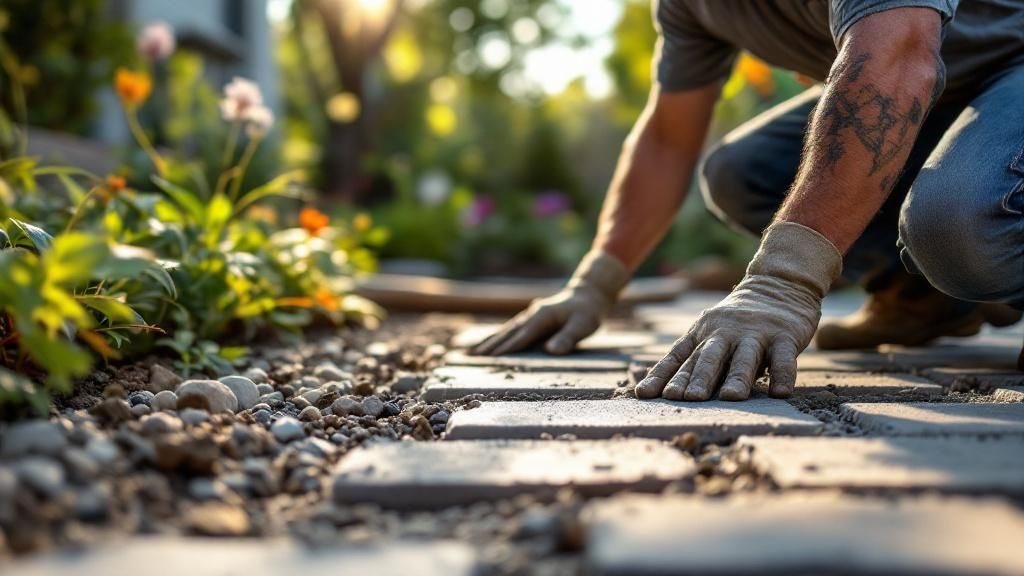
A Successful Installation Process
While every property is unique, a professional installation follows a few key steps to ensure your system works flawlessly for decades. Knowing what to expect can help you have a much more productive conversation with your contractor.
- Excavation and Site Prep: First, we dig out the area to a specific depth, which depends on your soil type and the amount of water we expect it to handle. A layer of geotextile fabric usually goes down next to keep the native soil from mixing with our new stone base.
- Layering the Aggregate: Next come the layers of open-graded, clean-washed stone. We install and compact them carefully. The depth here is critical—it has to be deep enough to support vehicles and store all the water from a heavy downpour.
- Setting the Pavers: Once the base is perfectly level and stable, the pavers are set in place. Their built-in spacer bars automatically create the gaps needed for water to flow right through.
- Filling the Joints: Finally, small, angular stones (typically ASTM No. 8 or 9) are swept into the joints. This step locks the pavers together and creates the final porous surface.
There's a common myth that these systems are a headache to maintain. The truth? They're surprisingly easy to care for. With just a little routine attention, a permeable paver system can perform beautifully with minimal effort and easily last 20-30 years.
Simple Maintenance For Longevity
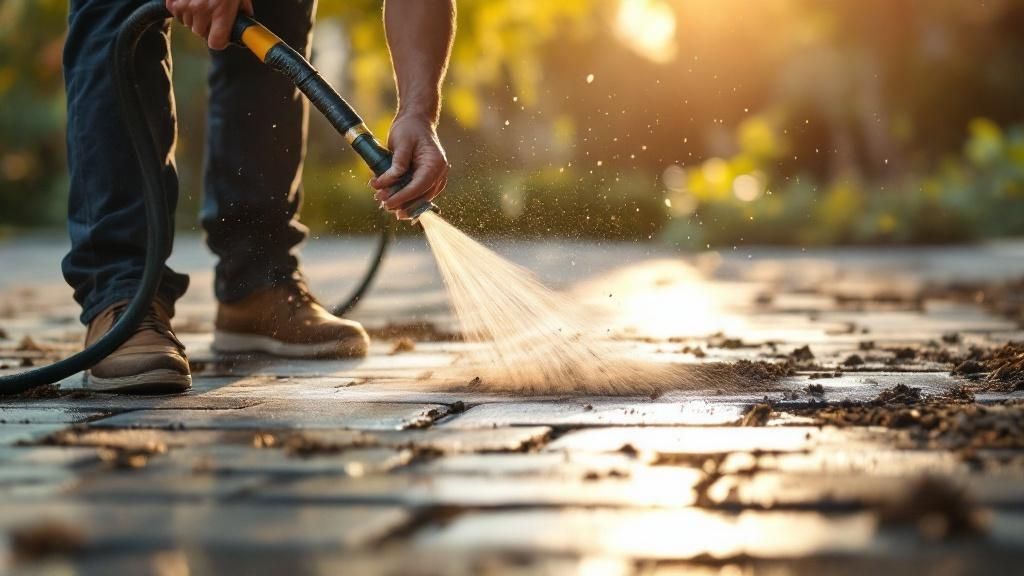
Keeping your permeable pavers in top shape is less about hard work and more about simple, routine upkeep. The main goal is just to keep the joints from getting clogged with fine sediment or organic debris like leaves and dirt.
A quick pass with a leaf blower or a stiff broom is usually all it takes to clear the surface. For a deeper clean, especially in high-traffic zones, you can use a shop vac to gently pull out any fine particles that have settled into the paver joints. This simple action helps maintain the system's surface infiltration rate so it keeps working at peak efficiency. Our detailed guide on designing a permeable pavers patio offers even more tips on long-term care.
For larger projects like commercial parking lots, it's also important to think about how other systems will integrate. This includes things like lighting and the necessary electrical protection equipment for roadway parking lighting projects to ensure all components work together safely and effectively.
How to Budget for Your Permeable Paver Project
Figuring out the cost of a permeable paver project is one of the first—and most important—steps. It's easy to get fixated on the price of the pavers themselves, but the final bill is about so much more than what you see on the surface.
The real investment is in the entire system, especially the deep, layered aggregate base that does all the heavy lifting for structural support and stormwater management. Honestly, this base is the heart of the project and where a significant portion of the budget goes.
Key Cost Factors
A few key things will shape your total investment. The biggest drivers are the type of paver you choose, the total square footage of your project, and how deep that stone base needs to be—something that depends entirely on your local climate and soil type.
Beyond that, you’ll also need to account for:
- Site Preparation: This isn't just digging a hole. It involves careful excavation, grading the area correctly, and fixing any existing drainage problems before you even start.
- Labor Rates: The cost of hiring skilled, certified installers can vary quite a bit from one region to another. This is not a job for a general handyman.
- Project Complexity: If you’re dreaming of intricate patterns, custom inlays, or have a tricky, hard-to-access site, expect those details to add to the bottom line.
As a general rule of thumb, you can expect a professionally installed permeable paver system to land somewhere between $20 to $40 per square foot. This all-in price covers everything—materials, expert labor, and the extensive site prep needed to build a system that performs beautifully for years.
The demand for greener paving solutions is definitely on the rise. In fact, the global permeable paver market was recently valued at $5.67 billion and continues to grow, pushed by the urgent need for better stormwater control in our towns and cities. This trend is sparking some great innovation and, thankfully, making these systems more accessible. You can read more about these market insights if you want to dig deeper.
By getting a handle on all these factors, you can have much more productive conversations with contractors and build a realistic budget. No one likes financial surprises halfway through a project.
Answering Your Top Questions About Permeable Pavers
It’s one thing to understand the concept of permeable pavers, but it's another to know how they’ll hold up in your own backyard. After explaining how these systems work, homeowners almost always have a few lingering practical questions.
Let’s tackle the most common ones I hear—from icy winters and sloped yards to whether they can handle the family RV.
Do Permeable Pavers Work in Cold Climates?
They absolutely do. In fact, you might be surprised to learn they often perform better than traditional pavement when the temperature drops. The deep, open-graded stone base underneath the pavers acts like a natural reservoir, giving snowmelt a place to go instead of pooling on top and turning into a sheet of ice.
This design dramatically cuts down on dangerous black ice. And with a professional installation, the system is engineered to prevent frost heave—that damaging process where trapped water freezes, expands, and pushes pavers out of place. The only real rule is to skip the rock salt, which can degrade the pavers and harm the local ecosystem. If you need extra grip, sand is a much friendlier choice.
A common misconception is that permeable pavers are fragile. When installed correctly over a professionally engineered base, a permeable interlocking concrete paver (PICP) system can handle the same heavy vehicle loads as conventional pavement, making them perfectly suitable for residential driveways.
Can You Install Permeable Pavers on a Slope?
Yes, but this is where hiring an expert really matters. On a gentle slope—think a grade of 5% or less—a standard permeable installation works beautifully.
Once the grade gets steeper, a skilled installer will use special techniques to manage water flow. This might involve terracing the base or installing underground "check dams." These are small, hidden barriers within the stone foundation that act like speed bumps for water, slowing its downhill rush and giving it the time it needs to soak into the ground instead of gushing out at the bottom.
Can They Handle Heavy Vehicles Like an RV or Truck?
This is probably the most frequent—and important—question I get. The answer is a resounding yes, provided the system is designed for it. A well-built permeable paver system can easily support residential vehicles, including heavy SUVs, work trucks, and even RVs.
The secret isn’t in the pavers themselves, but in the engineered foundation beneath them. The load-bearing strength comes from that deep, compacted aggregate base. For a driveway that needs to support heavy loads, that base might be 12 inches deep or more, while a simple garden path might only need half that. This robust foundation spreads the weight out, preventing ruts and ensuring your driveway stays solid and stable for years to come. It’s all in the prep work.
Ready to transform your outdoor space with a beautiful, sustainable paving solution? The team at Tamura Designs Landscape and Construction has over 30 years of experience creating stunning, eco-friendly hardscapes across Silicon Valley. Let's discuss your project today.
