
Understanding What Makes Permeable Driveways Actually Work
Beyond what you see on the surface, a permeable driveway relies on a sophisticated, multi-layered system working together below. It's more than just choosing a porous material; it's about engineering a complete drainage solution that mimics how nature handles rain. A well-built system acts like a large, constructed filter, designed to manage water from the moment it hits the surface until it safely re-enters the ground.
This shift towards smarter water management is gaining serious traction. The global market for permeable pavements was valued at USD 15.8 billion in 2023 and is projected to more than double by 2032. You can explore the market drivers and detailed projections in the full market analysis.
The Critical Sub-Base Layers
The real workhorse of any permeable driveway option is the sub-base. This is where the project's long-term success or failure is determined, well before the first paver is laid or stone is spread. A proper installation involves several distinct layers:
- Geotextile Fabric: This special fabric is the first layer, placed directly on top of the prepared native soil (the subgrade). Its main purpose is to separate the soil from the stone layers above, preventing mud and silt from migrating upward and clogging the system, all while allowing water to pass through freely.
- Open-Graded Aggregate Base: This is a deep layer of large, clean-washed crushed stone. The significant gaps, or voids, between these stones create a reservoir that temporarily holds rainwater as it soaks in, preventing it from overwhelming the soil below.
- Choker or Bedding Course: A thinner layer of smaller, open-graded stone sits on top of the main base. This course creates a stable and level surface, providing the final bed for the visible driveway material like pavers or grids.
This diagram shows a typical cross-section of a permeable paver system, illustrating how these layers work in unison.
Notice how the system is engineered as a series of layers. Each one plays a specific role in both managing water and providing the necessary structural support for a vehicle.
How Water Moves Through the System
When rain falls, it passes directly through the joints or pores of the surface material. From there, it flows into the bedding course and down into the larger aggregate base layer. The water is temporarily stored in this base, a key step that slows its release and prevents flash runoff.
Finally, it seeps through the geotextile fabric at the bottom and is absorbed by the underlying subgrade soil. This methodical process effectively recharges local groundwater, cuts down on polluted runoff entering storm drains, and minimizes standing water on your driveway. Understanding this subsurface engineering is crucial to appreciating why a professional site evaluation and installation are absolutely essential for the system's performance and durability.
Permeable Pavers: When Premium Investment Makes Sense
Among the different permeable driveway options, permeable pavers stand out as a premium choice, mixing refined aesthetics with solid engineering. While the upfront cost is higher than gravel or grass systems, certain situations justify the investment through long-term value, performance, and better curb appeal. Homeowners who want maximum design flexibility often find pavers are the best fit, as they come in a wide range of colors, textures, and patterns that other materials just can't offer. This allows you to create a driveway that's not just functional but also a core part of your property's overall design.
This mix of style and function has sparked significant market interest. The global permeable paver system market was valued at around $5.67 billion in 2025 and is expected to grow, pushed by increasing urbanization and the need for effective stormwater management. You can learn more about the permeable paver industry growth if you're interested in market trends. This growth shows a wider appreciation for durable, eco-friendly infrastructure in home settings.
Real-World Performance and Durability
Permeable pavers perform exceptionally well in residential areas with regular vehicle traffic, from daily family cars to the occasional heavy delivery truck. Their interlocking design spreads weight evenly across the surface, which prevents the ruts and shifts often seen with loose materials like gravel. The secret to this durability is in the installation. A properly prepared sub-base, correct joint spacing filled with small, permeable aggregate, and strong edge restraints are essential for a successful, long-lasting driveway. When installed correctly, these systems are tough enough to handle freeze-thaw cycles in colder climates without the cracking that often affects solid surfaces.
To help you understand how different permeable paver materials stack up, the table below compares their key performance characteristics.
Permeable Paver Performance Comparison
Detailed comparison of different permeable paver materials showing durability, cost, and maintenance requirements
| Material Type | Load Capacity (PSI) | Permeability Rate | Lifespan | Maintenance Level |
|---|---|---|---|---|
| Concrete Pavers | 8,000+ | High | 30+ years | Low-Moderate |
| Clay Brick Pavers | 12,000+ | Moderate-High | 50+ years | Low |
| Natural Stone Pavers | 10,000 – 20,000+ | Varies by stone/joint | 50-100+ years | Low-Moderate |
| Plastic Grid Pavers | Varies by fill | Very High | 15-25 years | Moderate |
This comparison highlights that while all paver types offer good load capacity, options like concrete and clay provide a reliable balance of strength and permeability for most residential driveways. Natural stone offers the highest durability but can be the most expensive, while plastic grids are highly permeable but may not have the same longevity.
The infographic below shows how interlocking pavers achieve a clean, modern look while allowing for natural drainage through the joints.
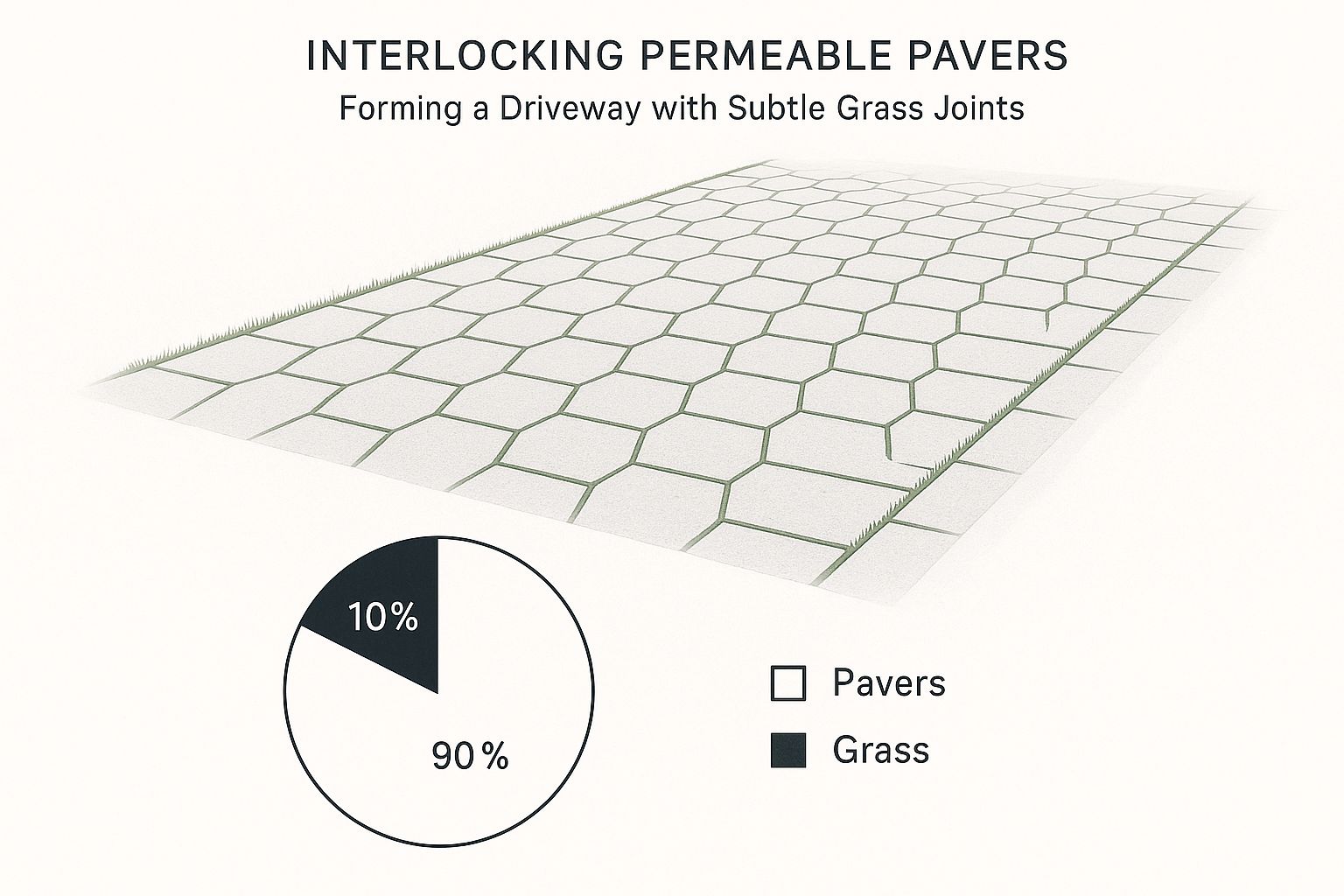
This visual demonstrates the blend of structural strength and environmental function, which is a key feature of well-designed paver systems.
Maintenance and Long-Term Value
While no permeable system is completely maintenance-free, pavers have a manageable upkeep routine. Regular sweeping and an occasional rinse are typically enough to keep the joints clear of debris and maintain proper water flow. Unlike poured surfaces, if a single paver gets stained or damaged, it can be replaced individually, saving you from large, costly repairs. This repairability, along with a lifespan that can exceed 30 years, makes the higher initial cost a smart investment for homeowners who care about both longevity and appearance. For those wanting to fit such features into a complete vision, working with professionals on a custom landscaping design and installation ensures the driveway complements the entire property. Pavers only become an expensive mistake when installation is rushed, but they are a premium asset when done with precision.
Gravel Systems: Maximizing Value While Managing Expectations
For homeowners looking for an affordable entry into permeable paving, gravel systems make a very strong case. Their success, however, depends on understanding the different types available and matching the right system to your specific needs and how much maintenance you're willing to do. A basic, loose-stone driveway has the lowest initial cost of almost any permeable driveway option, but it often brings long-term challenges like ruts, stones scattering into the lawn, and the need for constant raking and topping up. These issues can quickly eat away at your initial savings through ongoing labor and material costs.
Moving Beyond Loose Stone: The Role of Gravel Grids
To solve the natural instability of loose gravel, many modern installations now feature plastic or honeycomb-style gravel stabilizer grids. These grids are laid over a prepared base, creating a network of interlocking cells that securely hold the gravel. This reinforcement creates a surprisingly firm and stable surface that stands up to vehicle tires and prevents the gravel from shifting when you walk on it. The outcome is a driveway that keeps its clean lines and structural integrity with far less maintenance than a traditional loose-stone version. This improvement is a major reason the specialized gravel paver market, valued at about USD 1.2 billion in 2024, is projected to more than double. You can discover more insights on the growing gravel paver market to see where it's headed.
Critical Considerations for Long-Term Success
Whether you opt for a loose or grid-stabilized system, the performance of a gravel driveway is directly linked to its foundation. A professionally installed sub-base, complete with geotextile fabric and open-graded aggregate, is essential for proper drainage and support. Cutting corners on this foundation is the main reason many gravel driveways fail, resulting in soggy patches and a messy appearance.
Additionally, homeowners need to have realistic expectations for upkeep.
- Weed Control: Weeds will eventually pop up through the stones. A quality weed barrier underneath the gravel is crucial, but you will likely still need to do some occasional hand-weeding or spot treatments.
- Snow Removal: Plowing a gravel driveway requires a gentle touch. If a plow blade is set too low, it can easily scrape away the gravel with the snow. It's better to use a snow blower or set the plow blade slightly higher.
- Debris Management: Organic materials like leaves and grass clippings can build up and clog the surface over time, which reduces its permeability. Using a leaf blower regularly is important to keep the system draining as it should.
Ultimately, a gravel system can be a smart, cost-effective choice, but only when the installation is solid and the homeowner is ready for the specific maintenance it demands.
Pervious Concrete: Engineering Performance For Demanding Applications
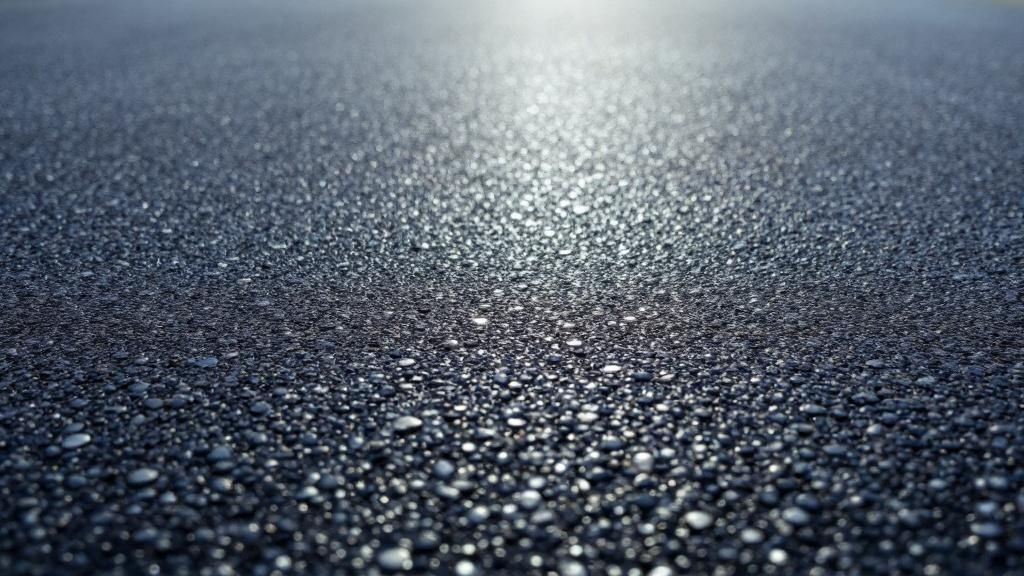
When a project requires exceptional durability and structural strength, pervious concrete is a leading choice among permeable driveway materials. Unlike pavers or gravel systems that rely on individual units for drainage, pervious concrete forms a single, solid slab with interconnected voids. This structure allows water to flow directly through the surface, making it ideal for properties that contend with heavy rain, steep slopes, or need a consistently solid surface.
The performance of pervious concrete is directly linked to the quality of its installation. This isn't a weekend DIY project; it demands a specialized contractor familiar with its unique mix design and curing requirements. The mix uses a very low water-to-cement ratio, creating a stiff consistency that must be placed and compacted precisely to achieve the necessary void structure of 15% to 25%. The weather during installation is also a major factor—high temperatures or strong winds can cause it to cure too quickly, weakening both its strength and permeability.
When to Justify the Higher Cost
The greater upfront cost of pervious concrete makes sense in specific, challenging situations. For driveways on steep grades, its solid form prevents the erosion and material shift common with loose gravel. It also delivers superior support for homeowners who need to park heavy vehicles like RVs or work trucks, eliminating the risk of rutting found in other permeable systems. While its look is often more industrial, modern methods allow for some customization, including integrated color and decorative cuts, offering a cleaner finish than basic asphalt.
To help visualize how it stacks up against its traditional counterpart, the table below provides a direct comparison of key performance factors.
Pervious Concrete vs Traditional Concrete Performance
Side-by-side comparison showing performance metrics, costs, and environmental benefits
| Performance Factor | Pervious Concrete | Traditional Concrete | Advantage |
|---|---|---|---|
| Stormwater Management | Excellent; allows water to pass through, reducing runoff. | Poor; creates significant runoff, contributing to flooding. | Pervious Concrete |
| Installation Cost | High ($8-$16 per sq ft); requires specialized labor. | Moderate ($6-$12 per sq ft); widely available contractors. | Traditional Concrete |
| Structural Strength | Good; suitable for standard vehicles and some heavy loads. | Excellent; engineered for heavy-duty commercial applications. | Traditional Concrete |
| Maintenance Needs | High; requires regular vacuuming/pressure washing to prevent clogs. | Low; occasional sweeping and crack sealing. | Traditional Concrete |
| Environmental Impact | Positive; recharges groundwater, reduces heat island effect. | Negative; contributes to runoff pollution and urban heat. | Pervious Concrete |
| Surface Durability | Good, but prone to damage from snowplows or heavy point loads. | Excellent; highly resistant to abrasion and wear. | Traditional Concrete |
The table highlights that while traditional concrete offers lower maintenance and higher structural strength, pervious concrete provides significant environmental benefits and solves critical drainage problems.
Proper maintenance is crucial for the long-term effectiveness of a pervious concrete driveway. The main job is to keep the pores clear of dirt and debris. Regular cleaning with a vacuum sweeper or pressure washer is essential to prevent clogging, which would turn it into a non-permeable surface. For properties where structural stability and high-volume water management are the main goals, pervious concrete delivers a level of engineered performance that other permeable driveway options cannot provide.
Grass Pavers: Balancing Natural Beauty With Practical Function
For homeowners looking to integrate their driveway with the surrounding greenery, grass pavers present a unique, living surface. These systems typically use a grid made of plastic or concrete, which provides the structural integrity needed to support vehicles while allowing grass to grow through the openings. The result is a "living driveway" that feels more like a part of the lawn than a piece of hardscaping. This method is a sophisticated blend of structural design and horticulture, offering a beautiful, green surface that also manages stormwater effectively.
Choosing a grass paver driveway means committing to the upkeep of a high-traffic lawn. The maintenance is a distinct mix of typical yard work—like mowing, watering, and fertilizing—and the structural diligence required to keep a driveway functional.
Horticultural Realities and Performance
The long-term success of a grass paver system depends heavily on getting the horticultural details right. It’s more involved than just placing a grid and adding some grass.
- Soil Preparation: The material filling the paver cells is crucial. It must be a carefully measured mix of sand and topsoil to encourage healthy root growth while providing excellent drainage. The right blend prevents root rot and keeps the soil from becoming overly compacted under vehicle weight.
- Grass Selection: Not just any grass can handle being driven on regularly. It's essential to select tough, drought-resistant species. Certain types of fescue or zoysia grass are excellent choices because they can withstand the stress, especially in areas with hot summers or infrequent rain.
- Irrigation and Traffic: A consistent watering schedule is vital, particularly when the grass is first establishing itself. Homeowners also need to be mindful of how the driveway is used. While built for cars, constant, heavy traffic concentrated in one area can compact the soil and kill the grass. These systems work best for intermittent use, such as for guest parking or less-frequented secondary driveways.
Design Applications and Long-Term Viability
Grass pavers truly shine in specific design contexts where appearance is the main goal. They are a perfect solution for creating overflow parking areas that can revert to a green lawn when not in use, or for access paths to garden sheds and other backyard features. They do a wonderful job of blurring the line between hardscape and softscape, a key consideration when planning a custom outdoor living space. However, because they are alive, they have a dormant season. In colder climates, the grass will brown during the winter, changing the driveway's look.
Ultimately, this permeable driveway option is best suited for the homeowner who sees their driveway as an extension of their garden. It requires a level of commitment far beyond what standard hardscapes need. For those willing to invest the horticultural effort, it delivers a distinct aesthetic that no other material can match. It’s less of a "set it and forget it" surface and more of a rewarding landscape feature that also serves a practical purpose.
Making Smart Decisions Based On Your Specific Situation
Selecting the right permeable driveway option requires a straightforward look at your property, budget, and how much maintenance you're willing to handle. A system that works perfectly in one setting might be a poor choice in another, which is why a one-size-fits-all recommendation doesn't work. Success begins with understanding the specific factors that will impact both the initial installation and your long-term satisfaction.
Evaluating Your Site-Specific Factors
Before you get attached to a particular material, take a close look at your property’s conditions. Your soil is a primary consideration; heavy clay soils drain much slower than sandy loam, which might mean you need a deeper aggregate base to prevent water from pooling. The driveway's slope is also a key factor. A steep grade can lead to erosion with loose materials like gravel, making a more stable system like pervious concrete or interlocking pavers a better choice.
It's also important to think about how different materials will hold up in your local climate. Research on choosing construction materials for specific climates explains how heat, cold, and moisture impact durability—a principle that applies directly to your driveway. For example, the freeze-thaw cycles in colder regions can be tough on certain materials, giving flexible base pavers an edge over more rigid surfaces.
Balancing Costs with Long-Term Value
The cheapest option upfront is rarely the most economical over the driveway's entire life. You need to weigh these practical trade-offs:
- Initial Cost vs. Maintenance: A loose gravel driveway has one of the lowest installation costs but requires the most frequent upkeep, including raking, weeding, and adding more stone. In contrast, permeable pavers cost more at the start but demand far less ongoing work.
- Aesthetics and Property Value: A well-designed paver or grass paver driveway can seriously boost your home's curb appeal, delivering a return on investment that a plain gravel or concrete surface might not provide.
- Lifespan and Replacement: A properly installed pervious concrete or paver system can last for 30+ years. Cheaper alternatives often need replacement or significant repairs much sooner, quickly wiping out any initial savings.
Making the right choice means looking past generic pros and cons and matching a system’s features to your real-world needs. For more ideas on incorporating these kinds of features into your property, you might find our landscape and construction blog helpful. This comprehensive approach ensures your investment is not just functional but also a durable asset for your home.
Your Next Steps: From Decision to Successful Installation
Moving from the research phase to the reality of your new permeable driveway involves careful planning. A successful installation depends heavily on finding the right professionals and overseeing the project to ensure it performs correctly from day one. This final stage is just as important as choosing the right material.
Vetting Your Installation Partner
Not every landscaper or paving contractor is experienced with the specific requirements of permeable systems. When vetting potential partners, ask to see a portfolio that includes successful installations of the permeable driveway option you've selected.
- Request references from past clients who have had their permeable system in place for at least two years.
- Confirm their expertise in sub-base preparation, including the correct aggregate depth and the use of geotextile fabric suited for your soil type.
- Verify they have access to the necessary equipment, such as rollers for pavers or specialized tools for pervious concrete.
An experienced installer can anticipate site-specific issues, like coordinating with other contractors or scheduling work around challenging weather. For instance, installing pervious concrete demands specific temperature and humidity levels to cure properly—a detail a seasoned pro will manage carefully.
Project Management and Long-Term Care
Once you’ve hired a contractor, set clear expectations for the project timeline and quality control. Visiting the site during installation allows you to confirm that the sub-base layers are built to the specified depth and that the materials meet quality standards.
After installation, your focus will shift to maintenance. Create a simple annual schedule to keep your driveway in top shape. For paver and gravel systems, this involves semi-annual sweeping to clear debris that could clog the joints. For pervious concrete, a yearly cleaning with a pressure washer or vacuum sweeper is recommended to preserve its permeability. Proper, proactive maintenance is the key to ensuring your driveway functions effectively for its entire lifespan, which can often exceed 30 years.
By following these deliberate steps, you can protect your investment and ensure your new driveway provides both the visual appeal and environmental benefits you're looking for.
If you're ready to transform your property with a professionally designed and installed driveway, the expert team at Tamura Designs is here to help. Contact us today to discuss your project.
