
An entryway remodel is your chance to completely redefine how your home greets you and your guests. This isn't just about a new coat of paint or a different doormat. We're talking about a thoughtful overhaul of the space's function, flow, and style to create an entrance that's as practical as it is welcoming.
Defining Your Entryway Remodeling Vision
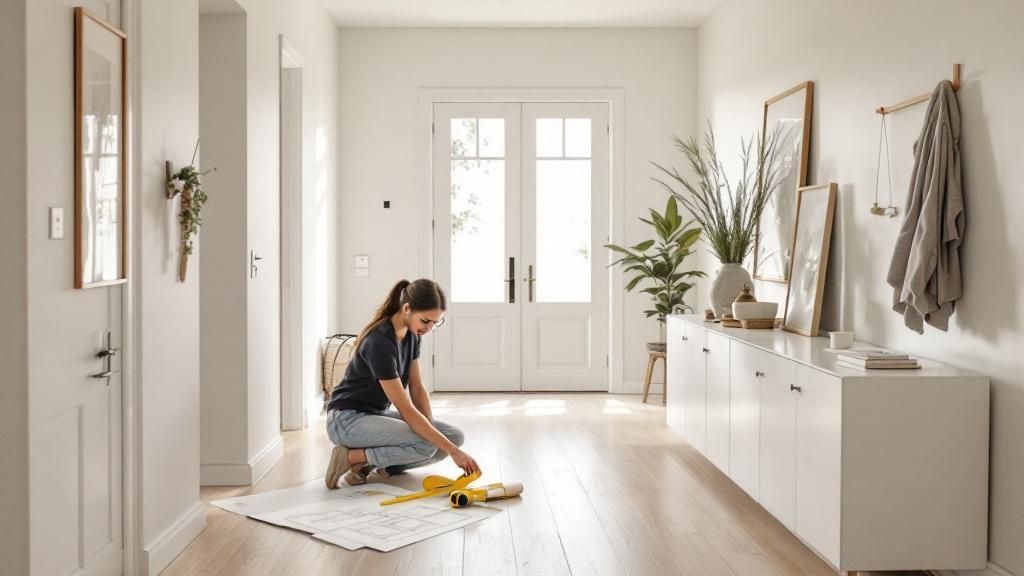
Before you even think about picking out tile or light fixtures, the most important work happens. You need a crystal-clear vision. A truly successful entryway remodel starts by taking a hard, honest look at your current space and figuring out what you really need it to do.
This planning phase is your best defense against costly mistakes down the road, ensuring the finished product actually fits your lifestyle.
Pinpoint the Core Problems
Start by simply walking through your front door. What are the immediate frustrations? Is it a constant war with clutter? Does the space feel dark and closed-in? Maybe the style just feels stuck in another decade and disconnected from the rest of your home.
Jot down a list of these pain points. It might look something like this:
- "There's nowhere to put shoes, so they're always in a pile right by the door." This immediately tells you that clever storage is a top priority.
- "I can never see what I'm doing when I'm fumbling for my keys at night." This highlights a clear need for better, layered lighting.
- "The entryway feels totally separate from our open-concept living room." This points to a need for more cohesive design choices and materials that tie the spaces together.
A great entryway isn't just about looking pretty; it solves real, everyday problems. By focusing on what's broken first, you guarantee your remodel will add genuine value to your daily routine.
Gather Your Inspiration
Once you know the problems, you can start hunting for solutions. Now for the fun part—gathering ideas!
Start a Pinterest board or a physical mood board. Collect images that capture the feeling you want your entryway to have. Don't limit yourself to just pictures of other entryways, either. Pull inspiration from textures you love, color palettes that speak to you, or even a piece of furniture you saw somewhere.
This process helps translate a vague feeling into a tangible plan. As you collect ideas, you’ll start to see a theme emerge that truly reflects your home's character and your personal style. To keep things organized and make sure you don't miss anything, grabbing an ultimate home remodel checklist can be a huge help.
And as your ideas take shape, you can find more tailored inspiration in our guide on custom entryway design and installation.
This focus on improving home life is part of a much bigger picture. The global home improvement market, valued at around $916 billion, has now climbed to an estimated $963 billion. This growth is driven by increasing urbanization—with over 56% of the world's population living in cities, homeowners are more invested than ever in making their living spaces beautiful and highly functional.
Getting this planning stage right solidifies your vision, making every other step of your entryway remodel focused and far more effective.
Creating a Functional Layout for Your Modern Entryway
Looks are one thing, but a functional entryway? That’s life-changing. This is where your grand vision for a remodel really gets down to business, turning a pretty space into a hardworking hub that simplifies your daily hustle. The goal is to design a layout that just feels right—intuitive, uncluttered, and perfectly suited to your home, whether you're working with a narrow hallway or a wide-open foyer.
A smart layout makes the most of every square inch without feeling cramped. It's less about just placing furniture and more about choreographing the natural flow of your family's life. In a tighter spot, for example, a slim console table gives you that crucial drop zone for keys and mail, while a few well-placed wall hooks can handle coats without eating up precious floor space.
Mastering Flow and Storage
Take a second and think about your daily routine. Where do the shoes, backpacks, and jackets always seem to end up? A great layout anticipates this and provides a home for everything. That classic built-in bench with a lift-top seat? It's a classic for a reason—it gives you a place to sit and hides the clutter all in one go.
For a truly modern touch that boosts both function and security, you might want to look into keyless entry systems. They're not just convenient; they also help create that clean, streamlined aesthetic by getting rid of bulky keyholes. Pair that with smart lighting that turns on when you arrive, and your entryway immediately feels safer and more welcoming.
My Pro Tip: When you're planning storage, always think vertically. Tall, skinny cabinets or a set of floating shelves can draw the eye upward, making the ceiling feel higher and the whole space seem bigger. Plus, it gets all that daily stuff up off the floor.
Before you start knocking down walls or even buying a can of paint, you need a solid plan. Mapping out your space is the first, most critical step.
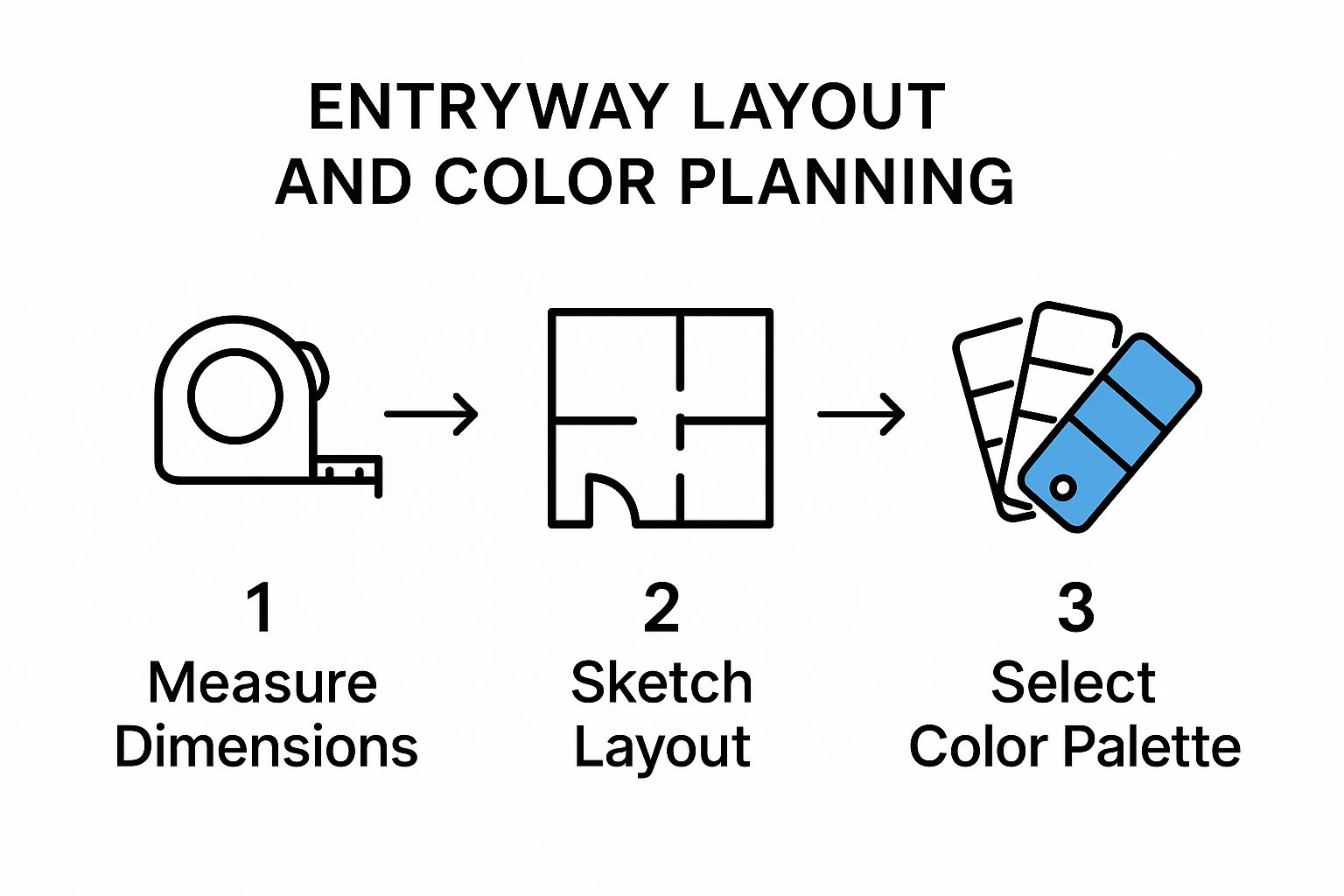
As you can see, getting those measurements right is non-negotiable. It’s the foundation that everything else is built on—from sketching a realistic layout to choosing colors that work with the room’s light and scale.
Layering Light for Maximum Impact
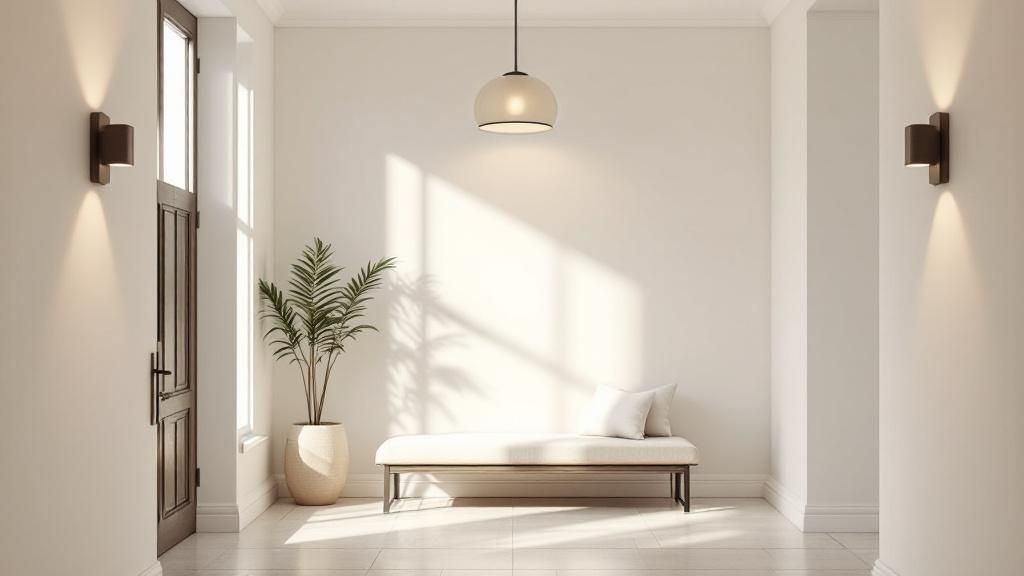
Lighting can completely change how a room feels. A single, harsh overhead light often makes an entryway feel small and clinical. What you really want is a layered lighting scheme that mixes different types of light for both function and ambiance.
- Ambient Light: This is your main source of overall light. Think of a beautiful chandelier in a grand foyer or a sleek flush-mount fixture in a smaller space.
- Task Light: This is focused light for specific jobs. Wall sconces on either side of a mirror are perfect for a last-minute check before you head out the door. A small, stylish lamp on a console table works wonders, too.
- Accent Light: Use this to add a little drama. It’s great for highlighting a cool architectural feature, a piece of art, or a textured wall.
Investing in your home’s functionality is a big deal right now. The global home renovation market was recently valued at nearly $2 trillion and is expected to hit about $2.66 trillion by 2032. North America is a huge part of that trend, making up roughly 33.34% of the market as more of us prioritize creating living spaces that are well-designed, sustainable, and smart.
Choosing Materials That Withstand Real Life
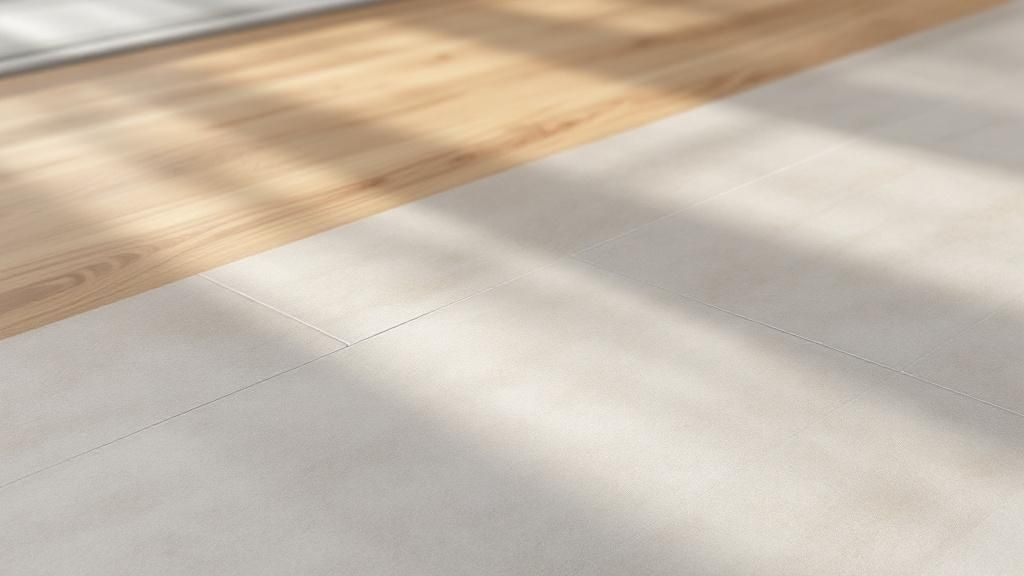
Your entryway materials are on the front lines every single day. They’re the first to greet muddy boots, dripping umbrellas, and the general chaos of a busy household. This is precisely why making smart, durable choices here is so important. It’s an investment that pays off for years, keeping your new entryway looking fantastic with minimal fuss.
Let’s be honest, this isn't just about looks. It's a practical decision about longevity and how much time you want to spend on upkeep. It’s about creating a space that can truly handle real life in your Morgan Hill home.
High-Traffic Flooring That Lasts
The floor in your entryway is arguably the hardest-working surface in your entire house. It needs to fight off scratches, shrug off moisture, and be a breeze to clean. Let's look at some of the top contenders we recommend to our clients.
Porcelain Tile is a true champion of durability. It’s incredibly dense, which makes it a fortress against water, stains, and scratches. The design possibilities are practically endless, too, whether you want the look of natural stone or something with a bold, modern pattern.
Luxury Vinyl Plank (LVP) has shot up in popularity, and for good reason. You get the warm, inviting look of wood but with far superior water resistance, which is a huge stress-reliever on rainy days. Plus, it’s a bit softer underfoot than tile, a small comfort that makes a big difference.
Engineered Hardwood offers that classic, timeless feel of real wood but with a more stable construction. Its layered design means it’s less likely to warp from humidity swings compared to solid hardwood—though you’ll still want to wipe up puddles quickly.
Here's a pro tip we always share: pay attention to the finish. A slightly textured or matte floor will be much more forgiving when it comes to hiding dust and tiny scuffs than a high-gloss, polished surface.
Selecting Your Front Door
Your front door does more than just welcome guests; it's a major statement piece and your home's first line of security. The material you pick has a huge impact on everything from energy bills to maintenance.
| Door Material | Key Benefits | Considerations |
|---|---|---|
| Fiberglass | Fantastic durability, almost no maintenance, and highly energy-efficient. It resists dents and will never rust or rot. | The upfront cost can be higher than steel, but it’s a great long-term value. |
| Steel | The go-to for top-tier security and affordability. It provides a strong barrier and is very energy-efficient when insulated. | Can be prone to dents. Scratches need to be touched up promptly to prevent rust. |
| Wood | Nothing beats the classic beauty and high-end feel. It just feels solid and substantial. | Requires the most maintenance (staining, sealing) to protect it from the elements and can be prone to warping over time. |
A well-chosen door has a massive effect on your curb appeal. It's the perfect starting point for any outdoor beautification project, creating a beautiful transition from the outside in. That connection between a stunning entryway and a gorgeous yard is something we see all the time in our custom landscaping design and installation projects.
Wall Treatments Beyond Just Paint
A fresh coat of paint can do wonders, but let’s face it, entryway walls take a beating from scuffs, fingerprints, and bumped bags. This is where a more strategic wall treatment can be both beautiful and practical.
Think about installing wainscoting or beadboard on the lower portion of the walls. This classic touch adds a tough, durable layer right where it’s needed most. It not only protects the drywall but also adds architectural character and anchors the space visually. It’s a perfect blend of form and function.
Budgeting Your Project and Finding a Pro
A stunning entryway remodel really comes down to two things: a smart budget and the right team. Getting the financial side buttoned up and finding a professional you can trust are just as critical as picking out the perfect front door or flooring. This is where the dream meets the practical details, making sure your project runs smoothly without any surprise costs.
Let's get right into the numbers. The home remodeling market is absolutely massive—we're talking an industry valued at around $961.83 billion globally, and it's expected to rocket past $1 trillion. This boom is driven by homeowners like you who are investing in making their homes smarter, more efficient, and more beautiful. You can dive deeper into the booming home remodeling market to see just how big this trend is.
Breaking Down Your Budget
When you're mapping out the finances for an entryway remodel, the costs generally fall into three buckets. Getting a handle on this breakdown is the first step toward feeling confident about your spending.
- Materials (40-50%): This is almost always the biggest chunk of your budget. It covers all the tangible items—your front door, flooring, light fixtures, paint, hardware, and any custom millwork.
- Labor (30-40%): If you're bringing in the pros, this portion pays for their skill, time, and craftsmanship. Don't underestimate the value of expertise here.
- Contingency (15-20%): Think of this as your project’s safety net. Never, ever skip it. Setting aside a 15-20% buffer is your best defense against the unexpected, like finding hidden water damage behind a wall or having a special-order item get delayed.
A well-planned budget isn’t about putting a leash on your creativity; it’s about empowering it. When you know exactly where your money is going, you can make strategic choices, like splurging on that high-impact front door you love while opting for a more budget-friendly (but still stylish) light fixture.
DIY vs. Hiring a Professional Contractor
The "should I do it myself or hire someone?" question is always a big one. For an entryway, where first impressions and structural integrity are everything, the answer usually points toward hiring a professional.
Sure, simple tasks like painting a wall or swapping out an old light fixture are fantastic DIY projects. But when you get into jobs that involve structural changes, intricate tile patterns, installing a new door, or touching any electrical wiring, it's time to call in a licensed and insured contractor. A poorly installed front door doesn't just look bad; it can compromise your home's security and energy efficiency, costing you a whole lot more down the road.
This applies to the outside, too. If your entryway vision includes larger landscaping elements like a structural retaining wall, understanding professional costs is essential. You can check out our guide on retaining wall costs to get a clearer picture of how those projects are typically priced.
When you start interviewing contractors in Morgan Hill, come prepared with pointed questions. Are you licensed and insured in California? Can I see a portfolio of entryway projects you’ve completed? Will you provide a detailed, itemized contract before any work begins? A true professional will be happy to answer these questions, giving you the confidence that your entryway remodel is in capable hands from the very start.
Adding Personality With Finishing Touches
Alright, this is where the fun really begins. Once all the big, foundational work is behind you, it’s the finishing touches that breathe life and personality into the space. This is how you transform it from a construction project into a warm welcome home. These are the small details that make a huge impact.
Think of hardware as the jewelry for your entryway. A new door handle, updated cabinet pulls, or even designer light switch plates can tie the whole design together. For instance, swapping an old, dated brass doorknob for a sleek, matte black lever instantly elevates the feel, creating a cohesive look that pulls your new door and lighting into the same story.
Curating A Welcoming Atmosphere
Now, let's inject some character. Your decor choices are where your personal style truly gets to shine. A great area rug does so much more than just protect your brand-new floors; it defines the entryway as its own little "room" while adding a layer of texture and warmth underfoot.
A strategically placed mirror is another must-have. It’s a classic designer trick for a reason—it bounces light around, making even a small entryway feel significantly brighter and more expansive. I always advise clients to look for a frame that echoes the finish of their new hardware.
The goal here is to make the space feel intentionally styled, not just decorated. Every single piece, from the mirror to the mail holder, should have a purpose while reflecting the story you want your home to tell the moment someone steps inside.
As you finalize these elements that blend style with function, it’s also a great time to look into integrating smart home security systems for an added layer of convenience and peace of mind.
Adding Life And Functional Style
Bringing in natural elements is one of the easiest ways to add life and keep the space from feeling too sterile. You don't need a green thumb—a hardy snake plant in a stylish pot or a small vase of fresh flowers on a console table does the trick beautifully.
Finally, choose your accent furniture wisely. The key is to find something that is both beautiful and functional without cluttering up the precious floor space.
- A Slim Console Table: Perfect for creating that much-needed "drop zone" for keys and mail without being bulky.
- A Storage Bench: Gives you a spot to sit and deal with shoes while keeping them neatly tucked away and out of sight.
- Wall-Mounted Hooks: A stylish, space-saving alternative to a clunky coat rack, ideal for keeping everyday jackets and bags organized.
These are the thoughtful choices that truly complete your entryway remodel, ensuring it’s a space you’ll genuinely love walking into, day after day.
Answering Your Top Entryway Remodeling Questions
It's completely normal to have a list of questions before diving into an entryway remodel. From timelines to budgets and those tricky design decisions, getting clear answers upfront gives you the confidence to get started. I've heard them all over the years, so let's tackle some of the most common questions Morgan Hill homeowners ask.
Getting these details sorted out early is the best way to guarantee a smooth project and an outcome you'll be proud of for years to come.
How Long Does An Entryway Remodel Usually Take?
Honestly, the timeline for an entryway remodel is all over the map—it really depends on the scope of work.
If you’re just looking for a simple cosmetic refresh, like a new coat of paint, an updated light fixture, and some fresh decor, you can knock that out over a weekend. It's a fantastic way to get a high-impact result with a very small time commitment.
But a more involved renovation is a different beast entirely. If your plans involve tearing out old flooring, a full front door replacement with a new frame, adding custom built-in storage, or running new electrical, you're looking at a project that could take anywhere from one to four weeks. Things like material availability, your contractor's schedule, and waiting on permits can definitely stretch that timeline.
What Upgrades Offer The Best Return On Investment?
This is the big one—everyone wants to know where their money will make the most impact. When it comes to an entryway, the upgrades that boost curb appeal and make your daily life easier almost always provide the best return on investment (ROI).
- A New Front Door: This is a classic for a reason. Swapping an old, worn-out door for a modern, high-quality steel or fiberglass model is consistently one of the best home improvements for ROI. It instantly makes your home look better, feel more secure, and improves energy efficiency.
- Durable Flooring: You can't go wrong with upgrading to attractive, tough flooring. Materials like porcelain tile or luxury vinyl plank not only look great but stand up to heavy foot traffic, adding real, lasting value.
- Smart Storage: A cluttered entryway is a universal problem. Adding well-designed, organized storage—whether it's a bench with cubbies or a full mudroom-style built-in—is a feature that homebuyers absolutely love.
We saw this firsthand with a client, Jim, who remodeled his 1970s split-level. He had a classic cramped entryway, so we opened up the layout and added some much-needed storage. That one change made a huge difference, and he ended up selling the home for $80,000 over his asking price. Smart, functional design always wins.
How Can I Make a Small Entryway Feel Larger?
You don’t have to knock down walls to make a compact entryway feel more spacious. It's all about using some clever design tricks to create an illusion of openness.
Start with a light, neutral color palette on the walls. Whites, soft grays, and beiges are fantastic for bouncing light around the room. Next, hang a large mirror. It's a timeless trick that works every time to create an immediate sense of depth.
Also, be strategic with your furniture. Opt for streamlined, multi-functional pieces like a narrow console table or a storage bench instead of anything bulky that will just eat up valuable floor space. And finally, don't skimp on lighting. A beautiful ceiling fixture paired with wall sconces can eliminate dark corners and make the whole area feel bigger and so much more welcoming.
Do I Need a Permit for My Entryway Remodel?
This is a critical question, and the answer really depends on where you live and what you're planning to do. For simple cosmetic updates like painting or swapping out a light fixture, you almost never need a permit.
However, if your remodel involves any structural changes, you will almost certainly need one. This includes work like:
- Moving or removing a wall
- Altering any electrical wiring
- Changing the size or location of your front door opening
My best advice? Always check with your local Morgan Hill building department before you start any work. It's a simple phone call that can save you from potential fines, legal headaches, and the nightmare of having to undo work that isn't up to code.
Ready to transform your entryway into a stunning and functional space that reflects your style? The team at Tamura Designs Landscape and Construction has over 30 years of experience creating award-winning custom entryways and outdoor living solutions in Morgan Hill. Let's start designing your dream entrance today.
