
Your home's entryway is so much more than a path to the front door. It’s the very first impression you make, a handshake that welcomes guests and sets the tone for your entire home. A truly great residential entry design marries beautiful aesthetics with the practical needs of daily life, creating an arrival that feels both impressive and effortless.
Crafting the Perfect First Impression
Think of your entryway as the opening chapter of your home's story. Whether it's a grand, two-story foyer or a more modest, functional mudroom, this space signals a transition from the public world to your private sanctuary. It’s where you greet loved ones, drop your keys after a long day, and wrangle the daily influx of shoes, bags, and mail. A well-designed entry handles all of this with grace.
The best designs honor your home's architectural bones while perfectly suiting your family's lifestyle. A busy family with active kids might need a durable, highly organized mudroom, whereas a couple who entertains often might prefer a more formal, elegant foyer. The secret is aligning the function of the space with its form to create a transition that just feels right.
Defining Your Entryway Style
So, what are most homeowners looking for? An analysis of over 235,000 homes reveals that traditional and contemporary designs still reign supreme for entryways. And while the hyper-functional mudroom is having a major moment on social media, the classic foyer remains the most common choice, showing that a dedicated, welcoming area is still a top priority for many.
This isn't just about looks; a well-executed residential entry design can seriously influence a home's market appeal.
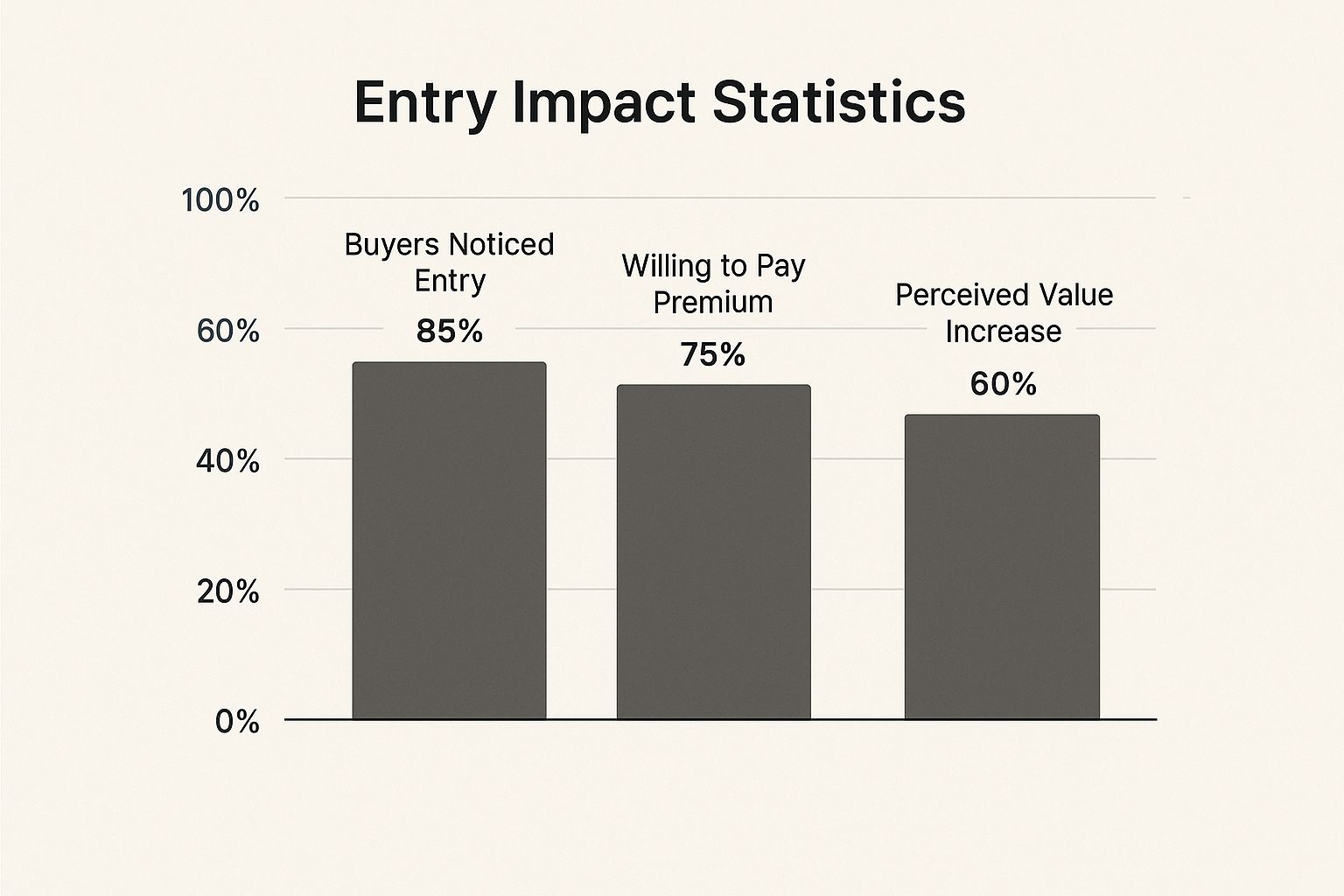
As you can see, a thoughtfully designed entryway is a tangible asset. A significant percentage of buyers are willing to pay more for a home that makes a powerful first impression right from the curb.
Not sure which style fits your life? A quick comparison can help clarify your priorities.
Matching Entryway Types to Your Lifestyle
This table breaks down the most common entryway types to help you find the best match for your home and day-to-day needs.
| Entryway Type | Primary Function | Best For |
|---|---|---|
| Traditional Foyer | Formal welcoming & greeting | Homes with a dedicated entry space, homeowners who entertain frequently. |
| Mudroom | High-traffic organization & storage | Busy families, homes in regions with messy weather, pet owners. |
| Open-Concept Entry | Seamless transition to living areas | Smaller homes, modern or minimalist architectural styles. |
| Split-Level Entry | Directing traffic up or down | Split-level or bi-level homes, managing flow between floors. |
Ultimately, the best entryway is one that feels like it was designed just for you—because it was.
Key Elements of a Successful Design
Creating an entryway that truly works involves more than throwing down a welcome mat. It's a careful blend of several core elements. When you get these components working in harmony, you transform a simple doorway into a memorable experience.
Here’s what I always focus on in my projects:
- Spatial Planning: How does the space feel when you walk in? Is there a natural flow? You need enough room for people to comfortably enter, take off their coats, and say hello without bumping into each other.
- Material Selection: This is a high-traffic zone, so durability is non-negotiable. Think tough flooring that can handle dirt and water, and wall paint that’s easy to clean.
- Lighting: Layered lighting is key. A combination of ambient (a beautiful overhead fixture), task (a lamp on a console), and accent lighting makes the space feel warm, bright, and secure.
- Storage Solutions: Clutter is the enemy of a great entryway. Smart, integrated storage for coats, shoes, mail, and keys is absolutely essential.
- Decor and Personality: This is the fun part! It’s where you introduce your home's character with a piece of art, a stylish console table, a statement mirror, or a vibrant rug.
A successful entryway is the perfect blend of beauty and utility. It should feel like a natural extension of your home's exterior and a warm preview of the interior.
If you're aiming for an arrival experience that is completely unique to your home, exploring options for custom entryways design and installation can provide solutions perfectly tailored to your vision. To see what else is shaping home aesthetics, check out the latest home design trends for even more inspiration.
Before you even think about picking out a console table or a light fixture, let's talk about the foundation of any great entryway: the layout. A truly successful design isn't just about looking good; it's about creating a space that works with the natural rhythm of your home and your life. Get this part right, and every other decision will fall into place perfectly.
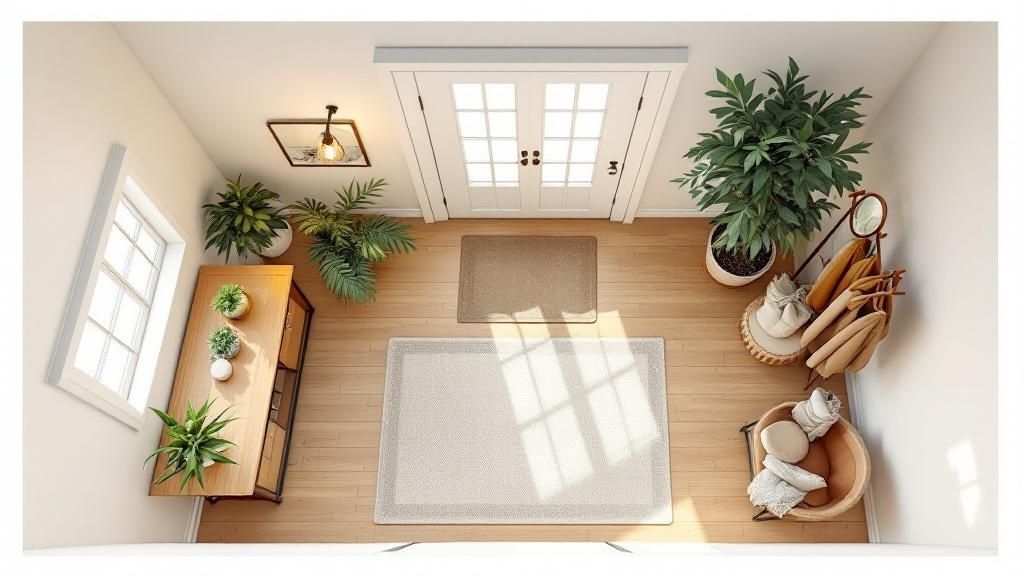
First things first, grab a tape measure and sketch out the footprint of your entryway. You don't need to be an architect—just get the basic floor dimensions, ceiling height, and the locations of doors, windows, and any other fixed features. This simple map is your blueprint for what's possible.
Next, it's time to think about movement. For a day or two, just observe how you and your family actually move through the space. Where do you walk when coming in? When leaving? That path is your primary traffic flow, and it needs to stay clear. I always tell my clients to aim for a clear walkway of at least 36 inches. Anything less and you create a bottleneck right at the front door.
Mapping Out Functional Zones
Even the smallest entry can be zoned for specific tasks. A smart layout anticipates what you need when you walk in the door: a place to drop your things, a spot to sit, and storage for all the grab-and-go items.
- The Drop Zone: This is your little command center. It could be a console table, a floating shelf, or a small cabinet right by the door. It's the designated spot for keys, mail, sunglasses—all the things you're juggling when you walk in.
- The Seating Area: A bench or a sturdy ottoman is a game-changer. Having a dedicated place to sit while you wrestle with shoes is a small luxury that makes a huge difference in your daily routine.
- The Storage Hub: This is where you wrangle the clutter. Think about how you can neatly store coats, bags, shoes, and umbrellas. Wall-mounted hooks are great for tight spaces, while a classic coat tree or a cabinet with baskets can handle a bit more.
I like to think of a good entryway layout like a well-choreographed dance. Every piece has its place, allowing for smooth movement and effortless transitions without tripping over shoes or searching for your keys.
This push for efficiency is becoming a big deal in modern home design. We're seeing a trend toward smaller, more thoughtfully designed homes, which means entryways are changing. In fact, a recent survey noted that 25% of new home projects were downsized last year to manage rising costs. This has led to designers rethinking traditional hallways, often integrating the entry directly into the main living area to eliminate wasted square footage. For a deeper dive into this shift, you can find more insights on how architects are redesigning home layouts for better flow and function.
Adapting to Different Entry Types
Of course, the perfect layout depends entirely on the space you're working with. You have to play the hand you're dealt, whether it's a long, skinny hallway or just a corner of the living room.
A narrow hall, for instance, requires a completely different strategy than a wide-open entryway.
| Entryway Type | Layout Strategy |
|---|---|
| Narrow Hallway | Go vertical! Use wall-mounted hooks, floating shelves, and slim-profile furniture. A long runner rug can also work wonders to create a clear visual path. |
| Open-Concept | Your goal is to define the "entry" without walls. A large area rug is perfect for this. You can also use a console table or a bench to create a subtle boundary. |
| Small Corner | Maximize every inch. A corner shelving unit or a small bench tucked into the nook works well. I also love using a round mirror here to soften the angles and make the space feel bigger. |
By taking the time to really analyze your space, map out the flow, and create these dedicated zones, you build a strong foundation for your design. This kind of thoughtful planning is the real secret behind a residential entry design that's just as practical as it is beautiful.
Choosing Finishes That Combine Style and Durability
The materials you select for your entryway are where aesthetics and practicality have to shake hands. This is one of the highest-traffic zones in your entire home—it's the first line of defense against muddy shoes, dripping raincoats, and the general wear and tear of daily life. So, every surface needs to be as resilient as it is beautiful.
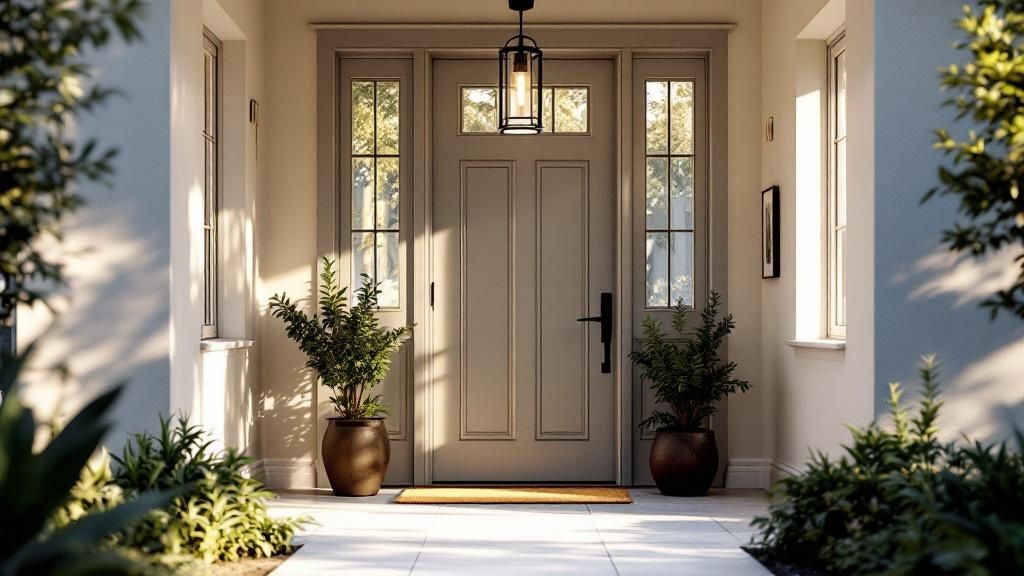
Flooring is, without a doubt, the most critical decision here. It takes a constant beating from moisture, grit, and foot traffic. While the warmth of hardwood is timeless, it's often a bit too delicate for a primary entrance, as it’s prone to scratches and water damage. It can be done, but it requires a lot more upkeep.
That’s why I often steer my clients toward more robust materials. Porcelain tile is a workhorse, offering incredible durability and a seemingly endless variety of styles. Another favorite is Luxury Vinyl Plank (LVP). It’s waterproof, tough as nails, and can convincingly mimic the look of real wood or stone without the maintenance headaches.
Selecting Surfaces for Walls and Doors
Once the floor is settled, your walls and front door step into the spotlight. For the walls, think beyond just a standard coat of paint. I always recommend a high-quality, scrubbable paint in an eggshell or satin finish. It makes wiping away fingerprints and smudges a breeze.
For a bit more character and protection, consider adding wainscoting or beadboard. This architectural detail not only looks fantastic but also shields the lower part of the wall from scuffs and bumps. If you’re feeling bold, a durable wallpaper can inject a ton of personality right at the threshold.
Your front door isn't just a way in; it's a statement piece. The material, color, and hardware should be a confident preview of your home's character.
The door itself is your single biggest opportunity to make an impression. Whether you choose the classic warmth of solid wood, the sleek durability of fiberglass, or the modern security of steel, make sure it feels right for your home’s architecture. Don’t forget the hardware! A stylish handle set in a finish that echoes your light fixtures is the final touch that ties everything together.
These interior choices should feel connected to your exterior. For homeowners who want that seamless flow from the curb to the foyer, exploring eco-friendly landscaping can offer some great ideas for harmonizing your entry with the surrounding environment.
Comparing Top Entryway Flooring Materials
Choosing the right floor really comes down to balancing how you want it to look with how you need it to perform. Here’s a quick comparison of my go-to options.
| Flooring Material | Key Advantages | Best For |
|---|---|---|
| Porcelain Tile | Extremely durable, waterproof, easy to clean, and available in countless styles and textures. | Homes in wet climates, high-traffic households, and those seeking a low-maintenance, long-lasting solution. |
| Luxury Vinyl Plank (LVP) | Waterproof, highly scratch-resistant, comfortable underfoot, and offers realistic wood or stone looks. | Families with kids and pets, basement entries, and anyone wanting the look of hardwood without the upkeep. |
| Engineered Hardwood | Offers the authentic look of real wood with greater stability and moisture resistance than solid hardwood. | Homeowners who love the classic feel of wood but need a more durable option for a busy entrance. |
By thoughtfully picking finishes that can handle the demands of a busy entryway, you’re not just designing a space that looks great on day one—you’re creating a welcome that will stand the test of time.
Illuminating Your Entry for Welcome and Safety
Lighting is one of the most powerful tools in a designer’s arsenal, especially when it comes to a home’s entrance. Good lighting isn't just about finding your keys in the dark; it’s about carving out a sense of space, creating warmth, and adding a crucial layer of security. A well-lit entry feels deliberate and inviting, masterfully guiding visitors from the curb to your front door.
The best way I’ve found to achieve this is by creating a layered lighting plan. This isn't about just one big, bright light. It’s a thoughtful blend of three distinct types of light—ambient, task, and accent—that work together to build a scheme that's both functional and full of character. This approach ensures your entryway is perfectly lit whether the whole family is tumbling in at once or you're welcoming a single guest for a quiet evening.
The Three Layers of Entryway Lighting
Forget a single, glaring overhead fixture. A truly great lighting strategy relies on each layer to do its specific job. When you combine them, the result is a rich, welcoming atmosphere that just feels right.
- Ambient Lighting: Think of this as the foundation—the general, overall light that fills the space. This is your chance to make a statement. I often recommend clients explore elegant options like modern round chandeliers for foyers or a striking, large-scale pendant light to set the tone.
- Task Lighting: This is the focused light you need for specific jobs. It could be a stylish table lamp on a console table where you drop the mail, or a pair of wall sconces flanking a mirror for that last look before heading out. It’s all about function.
- Accent Lighting: I call this the "jewelry" of your lighting plan. Use it to highlight what you love—a piece of art, a beautiful architectural detail, or the rich texture of a stone wall. A small, well-aimed spotlight can turn a simple object into a dramatic focal point.
A great lighting plan does more than just brighten a room—it tells a story. It guides the eye, highlights beauty, and makes the simple act of coming home feel like a special event.
Don't forget the most important light source of all: the sun. Maximizing natural light is a game-changer. If your home's structure allows, adding glass-paneled doors, sidelights, or a transom window above the door can flood your entryway with daylight, making it feel larger and more connected to the outdoors.
Inspired by Timeless Design Principles
Using light to shape an experience is hardly a new idea. Ancient Roman architects were masters of 'compression and release,' using changing ceiling heights and light sources to create a dramatic sense of arrival. This very concept was later revived by geniuses like Frank Lloyd Wright. You can see for yourself how ancient influences continue to shape modern entryway design and lead to stunning spatial experiences even today.
This thoughtful play of light and shadow is a cornerstone of exceptional residential design. By layering artificial fixtures and embracing natural brightness, you create an entrance that isn't just a hallway. It becomes a true introduction to your home’s personality—a space that’s safe, functional, and undeniably beautiful.
Furnishing and Styling Your Entryway
Now for the fun part. With the layout, finishes, and lighting all figured out, it’s time to bring your entryway to life. This is where you inject your personality and style, choosing the final pieces that truly make the space feel like home. The right furniture and decor don’t just fill a space; they complete it.
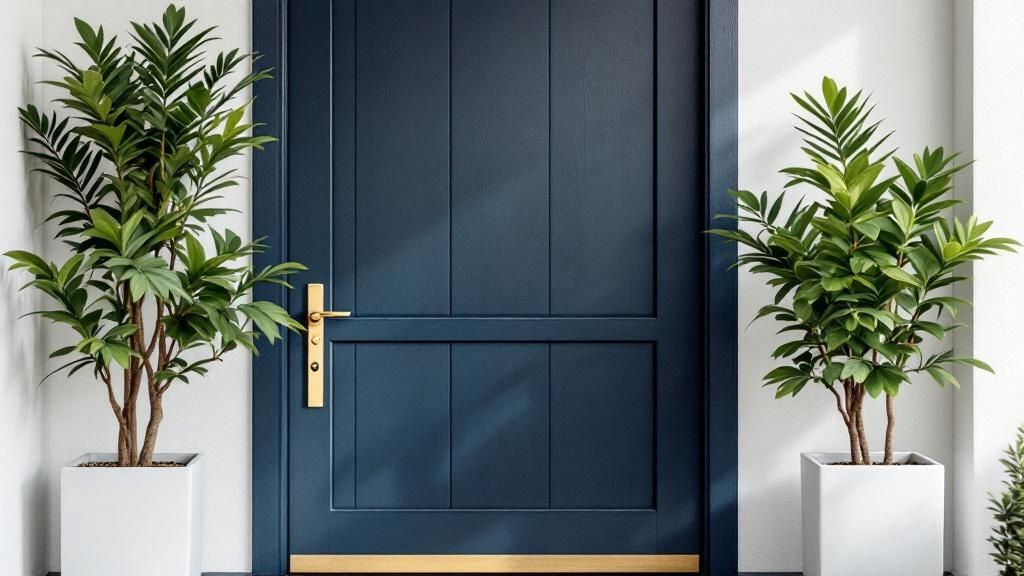
The first thing to tackle is selecting foundational furniture that actually fits the scale of your entry. I’ve seen it a hundred times: homeowners fall in love with a substantial piece only to find it makes their entry feel cramped and cluttered. It’s a common mistake.
If you’re working with a narrow hall, a slender console table or even a simple floating shelf is perfect. It gives you that much-needed drop zone for keys and mail without getting in the way. For a grander foyer, you have more room to play—maybe with a beautiful chest of drawers or a comfortable bench.
Choosing Functional and Stylish Pieces
Every single item in your entryway should have a job, whether it's purely practical or simply there to look good. A well-placed bench, for example, is brilliant. It offers a convenient spot to sit down and kick off your shoes, and many models even come with built-in storage underneath—a lifesaver for hiding away baskets or footwear.
A mirror is another non-negotiable for me. It’s not just for that last-minute check before you head out the door. A large, well-placed mirror can visually double your space and amplify light, making any entryway feel instantly brighter and more expansive.
A great entryway vignette tells a story. It’s a curated collection—a lamp for warmth, a tray for keys, a small plant for life—that says "welcome home" without a single word.
Creating this kind of styled moment is simpler than you might think. Start with an anchor piece on your console, like a statement lamp or a tall vase. From there, add objects of varying heights to create visual interest. A stack of your favorite design books, a decorative bowl, and a framed family photo can complete the look perfectly.
And don't forget how your entryway connects with the rest of your home's architecture. Windows, for instance, play a huge role in the overall feel. If you're looking for ways to elevate your home’s visual appeal, these Top Window Design Ideas have some fantastic inspiration.
Key Entryway Furniture and Its Function
Choosing the right furniture is about blending form and function. Here’s a quick breakdown of the essential pieces I recommend to clients and what to look for when you're shopping for your own space.
| Furniture Piece | Primary Use | Selection Tip |
|---|---|---|
| Console Table | Serves as a primary "drop zone" for keys, mail, and daily essentials. | Choose a style that complements your home's decor and is scaled appropriately for your wall space. Slim profiles work best in narrow areas. |
| Bench | Provides seating for putting on or taking off shoes and can offer hidden storage. | Look for a sturdy bench with a durable finish. Models with a lower shelf or built-in cubbies are excellent for shoe organization. |
| Mirror | Makes the space feel larger and brighter while offering a functional reflection point. | Go as large as your wall allows to maximize the light-reflecting benefits. The frame style should match your overall design aesthetic. |
| Area Rug | Defines the entry zone, adds texture and color, and protects your flooring from dirt and moisture. | Select a durable, low-pile rug made from materials like wool or polypropylene that can withstand heavy foot traffic and are easy to clean. |
These core pieces create the foundation, but the real personality comes from the finishing touches.
Finally, look at your walls. A piece of art that you genuinely love is the perfect final touch, introducing both color and your unique personality. These last details are where your style truly shines, creating a welcome that’s warm, organized, and inviting.
The same principles of creating a beautiful and functional arrival point extend beyond your front door. For those looking to harmonize their entire property, our guide to designing a custom outdoor living space is packed with inspiration.
Of course. Here is the rewritten section, crafted to sound like an experienced human expert while adhering to all the specified requirements.
Answering Your Top Residential Entry Design Questions
Even with a solid plan, questions always come up during a design project. After more than 30 years of creating custom entryways, we’ve heard just about all of them. Getting these details right is what separates a good entry from a great one.
Let's walk through some of the most common hurdles homeowners face and how to clear them with confidence.
How Can I Make My Small Entryway Feel Bigger?
This is easily the most common challenge we encounter. When you’re tight on space, you have to be clever with light, color, and scale. The goal is to trick the eye and create a sense of openness.
Start with a fresh coat of paint in a light, reflective color. Think soft off-whites, pale grays, or other gentle neutrals for the walls and trim. This one change can instantly make a cramped space feel brighter and more expansive.
Next, bring in a large mirror. It’s a classic designer trick for a reason—it works. A well-placed mirror not only creates a powerful illusion of depth but also bounces light around the room, amplifying both natural sunlight and your light fixtures.
Speaking of lighting, stay away from anything too bulky. A sleek flush-mount or semi-flush-mount fixture provides plenty of light without dropping down and visually shrinking the ceiling height. Finally, choose your furniture wisely. A narrow console table or even a simple set of floating shelves can give you that essential spot to drop your keys and mail without eating up valuable floor space.
Our Pro Tip: The most impactful thing you can do in a small entry is keep the floor as clear as possible. When your line of sight isn't blocked, the brain perceives the area as much larger than it actually is.
What's the Best Flooring for a High-Traffic Entryway?
Your entryway floor takes a beating. From muddy boots to wet umbrellas, it has to withstand more abuse than almost any other surface in your home. Durability isn't just a nice-to-have; it's non-negotiable.
Here are our go-to materials that stand up to the test:
- Porcelain or Ceramic Tile: This is a top-tier choice for a reason. It's incredibly tough, completely waterproof, and a breeze to clean. Plus, with options ranging from realistic wood-look planks to elegant stone patterns, you don't have to sacrifice style for function.
- Luxury Vinyl Plank (LVP): Another fantastic contender, LVP has become a client favorite. It’s waterproof, highly scratch-resistant, and a bit softer underfoot than tile. Its ability to convincingly mimic real hardwood makes it perfect for creating a seamless flow from the entry into the rest of the house.
- Engineered Hardwood: If you absolutely love the look and feel of real wood, you can make it work. Just be sure to choose a hard species like oak and protect it with a top-quality finish. We always recommend placing high-quality rugs both outside and inside the door to trap dirt and moisture before they have a chance to do damage.
One material we generally advise against is wall-to-wall carpeting. It traps grime, holds onto moisture (which can lead to musty smells), and quickly shows wear patterns in a busy spot like an entryway.
How Do I Create an Entryway When I Don't Have a Foyer?
What if your front door opens right into your living room? This is common in many homes, and you can absolutely create a distinct and functional entry zone without putting up walls. The secret is to use visual cues to define the space.
Start by anchoring the "entry" area with a stylish rug. This immediately sets the zone apart from the rest of the room. Next, place a slim console table or a low-profile bench against the wall nearest the door. This becomes your designated drop zone for keys, mail, and anything else you're carrying. For coats and bags, wall-mounted hooks are a brilliant space-saver, keeping clutter off your furniture.
For a more defined separation, consider using a tall, open-backed bookshelf as a subtle room divider. It adds tons of storage and helps screen the entry from the main living area, all while maintaining that open, airy feeling.
At Tamura Designs, we believe every part of your home should be both beautiful and functional, starting with the very first step inside. With over 30 years of experience creating award-winning landscapes and custom entryways in Morgan Hill and across Silicon Valley, we specialize in designs that reflect your lifestyle. If you’re ready to transform your arrival experience, visit us at https://tamuradesigns.com to see how our commitment to quality craftsmanship can bring your vision to life.
