
Creating a truly private backyard is all about blending smart design with the right physical and living elements. It's not just about throwing up a fence; it's a thoughtful process of combining barriers, planting lush screens, and using clever landscaping tricks to block out the world. When you start with a clear plan, you can turn a yard that feels like a fishbowl into your own secluded retreat.
Planning Your Private Backyard Escape
Before you even think about grabbing a shovel, remember that a great privacy project starts with a solid plan. Just saying you want "more privacy" is too broad. To do this right, you need to get specific about your weak spots and decide what real seclusion looks like for your yard. Think of this planning stage as your blueprint—it's what will keep you from making expensive mistakes and ensure your backyard escape is both beautiful and effective.
The desire for private, well-designed outdoor living areas has never been greater. The global landscaping services market, which covers everything from fences to hedges, was recently valued at over USD 330 billion and is still climbing. You can dig into the specifics in this report from Grandview Research. This isn't just a fleeting trend; it shows how much homeowners now see their backyards as essential living spaces where privacy is paramount.
To give you a quick overview, here's a look at the most common methods people use to reclaim their outdoor spaces.
Your Quick Guide to Backyard Privacy Methods
A quick look at the most effective ways to create backyard privacy, comparing their benefits and ideal applications.
| Privacy Method | Best For | Key Benefit | Consideration |
|---|---|---|---|
| Fences | Defining boundaries and blocking ground-level views. | Instant and effective privacy. | Can feel imposing; check local building codes for height limits. |
| Hedges & Trees | Creating a natural, living wall that also absorbs sound. | Aesthetically pleasing and good for the environment. | Takes time to grow and requires ongoing maintenance. |
| Layered Landscaping | Blocking specific sightlines with a mix of plant heights. | Creates depth, interest, and a feeling of seclusion. | Requires more design skill and planning to get right. |
| Screens & Pergolas | Targeting problem areas like patios or hot tubs. | Offers focused, stylish privacy without fencing the whole yard. | Provides partial, not total, seclusion. |
Choosing the right approach—or more likely, a combination of a few—is what will make your project a success.
Pinpoint Your Privacy Problem Areas
First things first, you need to play detective in your own yard. Go outside and stand in the places you use most—the deck, the patio, that sunny spot where you like to read. Now, really look around. What can you see? More importantly, what can see you?
- Neighboring Windows: Is there a direct line of sight from your seating area to a neighbor’s second-floor window? If you can see them, they can definitely see you.
- Public Walkways: Does your yard back up to a sidewalk or street? Pinpoint the angles where people walking by get a clear view.
- Adjacent Yards: How much of your neighbor's yard can you see? Remember, that view goes both ways.
Here's a pro tip I always give my clients: have a friend or family member walk along the edge of your property while you stay put in your main hangout spots. It's a simple but incredibly effective way to see exactly where your "privacy hotspots" are. These are the areas you'll want to tackle first.
Expert Insight: Don't just think horizontally. The most common privacy blunder is forgetting about views from above—like a neighbor's tall deck or an upstairs window. A truly effective plan has to account for these vertical sightlines, too.
Define Your Ultimate Privacy Goal
Once you know where you're exposed, you need to figure out what kind of privacy you're actually aiming for. Your goal will dictate the solution. Are you trying to:
- Block a specific view? If the sight of your neighbor's rusty old shed is driving you crazy, a single strategically placed screen or a cluster of tall, slender evergreens might be all it takes.
- Muffle unpleasant noise? For those dealing with traffic from a busy road or the sounds of a nearby park, a solid barrier like a fence paired with the gentle sound of a water feature can work wonders.
- Create a feeling of seclusion? Sometimes it’s less about blocking one thing and more about cultivating a cozy, intimate vibe. This is where layered plantings, pergolas draped in vines, and warm outdoor lighting really shine.
This infographic gives a great visual breakdown of how different privacy solutions can impact your yard's feel and even its value.
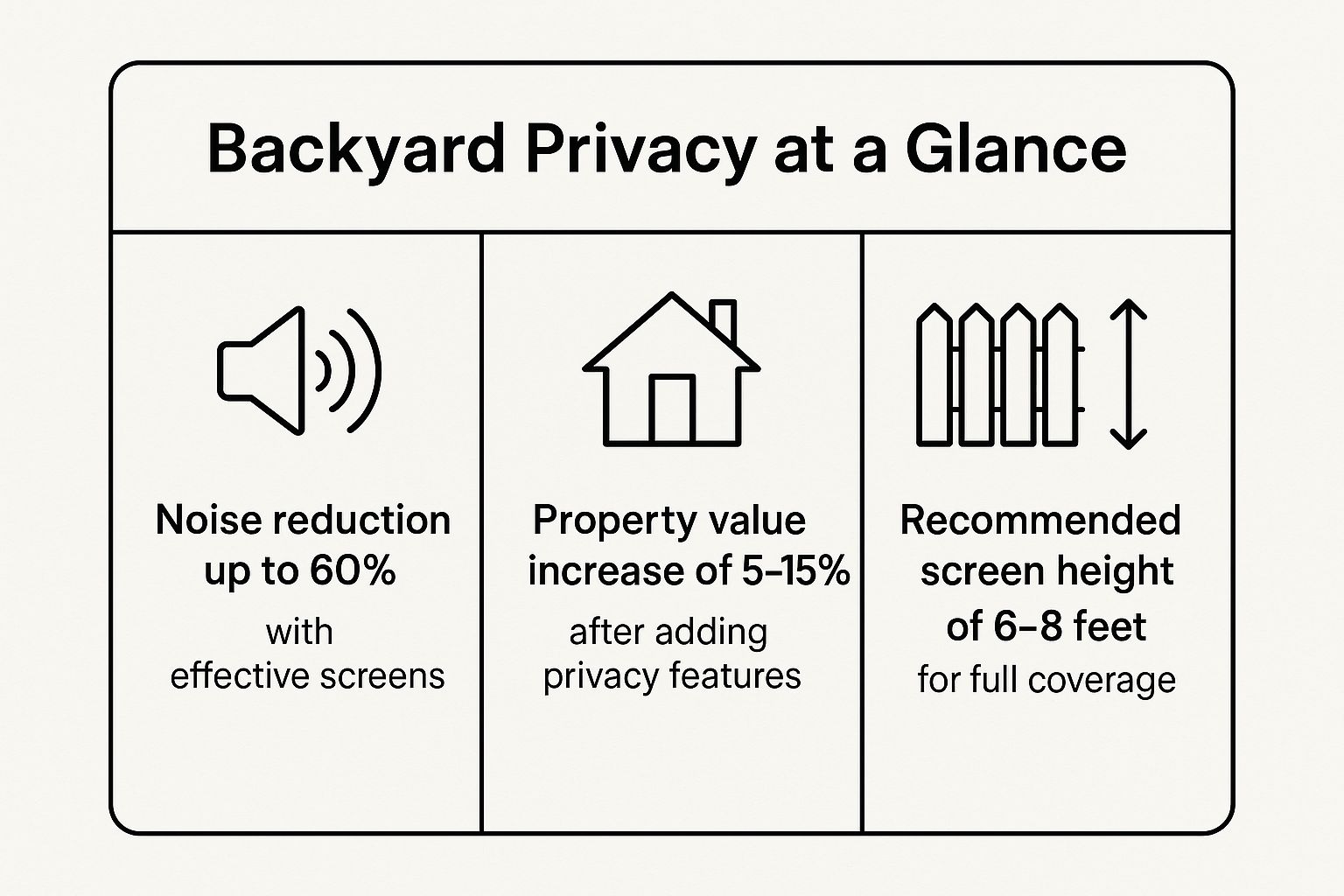
As you can see, the right additions do more than just improve your day-to-day life; they can be a smart investment that makes your entire outdoor experience better.
Building Your Privacy With Fences and Screens
When you want privacy now, nothing gets the job done faster than a well-chosen fence or screen. While I love the organic, living feel of a hedge, it's a long game. Fences and screens, on the other hand, give you that immediate sense of seclusion and a clearly defined space the day they go up.
But putting up a fence is a lot more involved than just picking a pretty style. Think of it as a serious investment in your home's curb appeal and its security. The materials you land on will have a huge impact on your budget upfront, not to mention how much time and money you’ll sink into maintenance down the road.
Choosing Your Fence Material
Every single fencing material comes with its own list of pros and cons. A fence that’s perfect for a laid-back yard in a mild climate could be a total disaster for someone dealing with harsh winters or relentless sun. Let's walk through the most popular options.
- Wood Fences: It's the classic for a reason. Wood just has a warm, timeless appeal, and you can customize it with endless paint and stain options. The trade-off? It’s the most high-maintenance choice. You should plan on re-staining or sealing it every few years to keep rot, warping, and pests at bay. Pro tip: Woods like cedar and redwood are naturally more resistant to decay, but they do cost a bit more.
- Vinyl (PVC) Fences: If "low-maintenance" is your mantra, vinyl is a top contender. It won't rot, warp, or ever need a coat of paint. A quick wash with soap and water is pretty much all it takes to keep it looking fresh. The main drawback is that while it’s tough, a hard hit from something like a falling tree limb can crack or shatter a panel, which means you’ll have to replace the whole section.
- Composite Fences: This is a fantastic hybrid option. Composite gives you the rich look of real wood without all the demanding upkeep. It’s made from a blend of wood fibers and recycled plastics, making it incredibly durable and resistant to both rot and insects. You never have to stain it. Yes, the initial cost is higher, but you can easily make that back in what you save on maintenance over the years.
- Metal Fences: For pure strength and longevity, you can't beat aluminum and steel. While traditional wrought iron is gorgeous, it's also incredibly heavy and notorious for rusting. Modern aluminum fencing gives you that same elegant look but is lightweight and rust-proof, making it a stellar choice for just about any climate.
A Quick Word on Height: For most situations, a standard six-foot fence does a great job of blocking views from ground level and creating that cozy, enclosed feeling. But if your neighbor's second-story window looks right into your yard, you might need to go up to eight feet. Just be sure to check your local zoning laws and any HOA rules first—many communities are very strict about fence height.
Beyond the Traditional Fence
Don't feel locked into the idea of a standard, vertical-plank fence. There are so many stylish and functional alternatives out there that can act as beautiful focal points in their own right.
Decorative screens, for instance, are an amazing way to add targeted privacy. They often feature laser-cut metal or durable composite materials in a huge variety of patterns. You can use one to strategically block an awkward sightline or group a few together to create a stunning accent wall behind a patio or deck.
This isn't just a niche trend; it's a significant shift in how we approach outdoor design. The global market for outdoor privacy screens was valued at around USD 1.2 billion in 2022 and is expected to keep growing. People are clearly looking for solutions that blend function with sophisticated design. You can see more details on this growth over at Verified Market Reports.
Hiring the Right Installation Pro
Let's be honest—unless you're a really experienced DIYer with the right tools, installing a fence is a job best left to the pros. A poorly installed fence isn't just an eyesore; it can be a safety hazard and will likely fail long before it should.
When you're vetting installers, look for a company that has a solid local reputation and a portfolio you can look through. Ask them detailed questions about their process, especially how they set the posts. For a fence to truly last, the posts need to be set in concrete below the frost line. This prevents them from heaving up and down during winter's freeze-thaw cycles.
Make sure any contractor you consider is licensed, insured, and gives you a clear, itemized quote that spells out all costs for materials, labor, and hauling away the old fence. A quality installation is the final, crucial step to make sure your investment stands strong for years to come.
Using Plants for Natural Seclusion
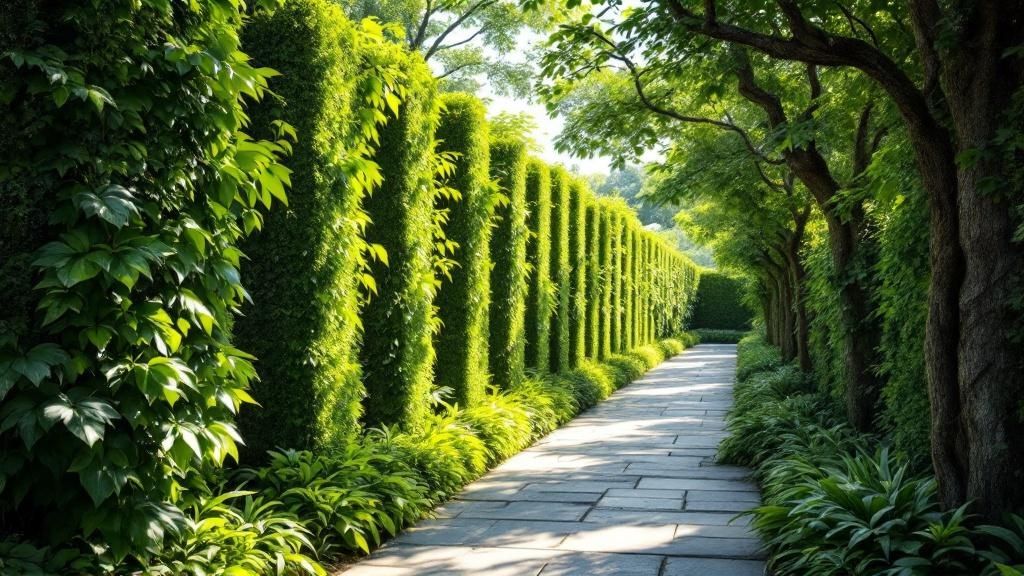
While a new fence provides privacy overnight, there’s a certain magic to creating a living wall. Using plants for seclusion softens the hard edges of your property, creating a beautiful, organic screen that feels like a natural part of the landscape. It’s more than just a barrier; it's a dynamic backdrop that filters sound, improves air quality, and changes with the seasons.
The real secret to a lush, effective plant screen is thinking in layers. Planting a single, soldier-like row of trees often looks a bit stark and can leave gaps. The best approach is layered planting, where you combine plants of different heights and textures to build a dense, visually rich screen that looks full and intentional.
The Foundation of Layered Planting
Imagine you're painting a landscape, but with plants. You need a background, a middle ground, and a foreground to create depth and fullness.
-
The Backbone (Tall Layer): This is where you place your tallest evergreen trees or shrubs. These are the heavy lifters, tasked with blocking major sightlines like a neighbor’s second-story window. They form the primary vertical structure of your screen.
-
The Middle (Dense Layer): In front of your tall backbone plants, add a layer of dense, bushy shrubs. Their job is to fill in the spaces between the trunks of the taller trees, creating a solid wall of green at eye level.
-
The Foreground (Low Layer): To finish the look, add smaller shrubs, ornamental grasses, or perennials at the very front. This layer adds texture and color, beautifully integrating the privacy screen with the rest of your garden.
This tiered method doesn't just look better; it’s healthier for the plants, too. It gives them better air circulation and access to sunlight, resulting in a more robust and resilient living wall.
A living privacy screen does more than just block views; it actively contributes to your local ecosystem. By choosing a diverse mix of native or well-adapted plants, you provide food and shelter for pollinators and birds, turning your backyard into a small-scale nature preserve.
Choosing Your Plant Palette
Your plant selection will define the look, feel, and long-term maintenance of your living wall. The first big decision is whether to go with evergreen or deciduous plants.
Evergreens are the go-to for year-round privacy, which is a huge advantage for most homeowners. Deciduous plants, on the other hand, lose their leaves in the fall. This can be perfect if you only need screening in the warmer months and would welcome extra sunlight during the bleak winter. Many of the best designs I've seen use a smart mix of both.
Here’s a quick look at some proven performers for privacy.
Comparing Popular Privacy Plant Options
Choosing the right plants can feel overwhelming. This table breaks down some of the most reliable options to help you find the perfect fit for your yard's conditions and your desired timeline.
| Plant Type | Growth Rate | Maintenance Level | Best Climate | Key Feature |
|---|---|---|---|---|
| Arborvitae 'Emerald Green' | Moderate | Low | Zones 3-7 | Classic, neat columnar shape. |
| Leyland Cypress | Very Fast | Moderate | Zones 6-10 | Grows 3-4 feet per year for quick results. |
| Holly | Moderate | Low-Moderate | Zones 5-9 | Dense foliage and winter berries. |
| Willow Hybrid | Extremely Fast | High | Zones 4-9 | Can grow 6+ feet per year; needs space. |
| Lombardy Poplar | Fast | Moderate | Zones 3-9 | Great for narrow spaces due to its tall, thin form. |
From this, you can see how a fast-grower like a Willow Hybrid might require more upkeep than a steady grower like Arborvitae. Balancing speed with long-term care is key to a successful screen.
If your goal is a beautiful screen that doesn’t become a second job, you'll want to choose your plants wisely. You can find some fantastic low-maintenance backyard ideas that pair perfectly with a natural privacy screen, creating a space that’s both serene and easy to manage.
Smart Spacing and Healthy Soil
I can’t stress this enough: don’t plant your screen too close together! It’s a classic mistake. Everyone wants instant results, so they cram plants in, but this strategy almost always backfires. Overcrowded plants will compete for sun, water, and soil nutrients, leading to stressed, leggy growth with bare spots at the bottom.
Always check the plant tag for its mature width and space accordingly. It might look a little sparse for the first year or two, but trust me, your patience will be rewarded with a thick, healthy screen that fills in beautifully.
Finally, give your plants a fighting chance by preparing the soil. Before you dig a single hole, amend the entire planting area with compost or other organic matter. This ensures your plants have access to the nutrients they need to establish strong roots and grow vigorously from day one. It’s a simple step that makes all the difference.
Clever Privacy Ideas for Every Budget
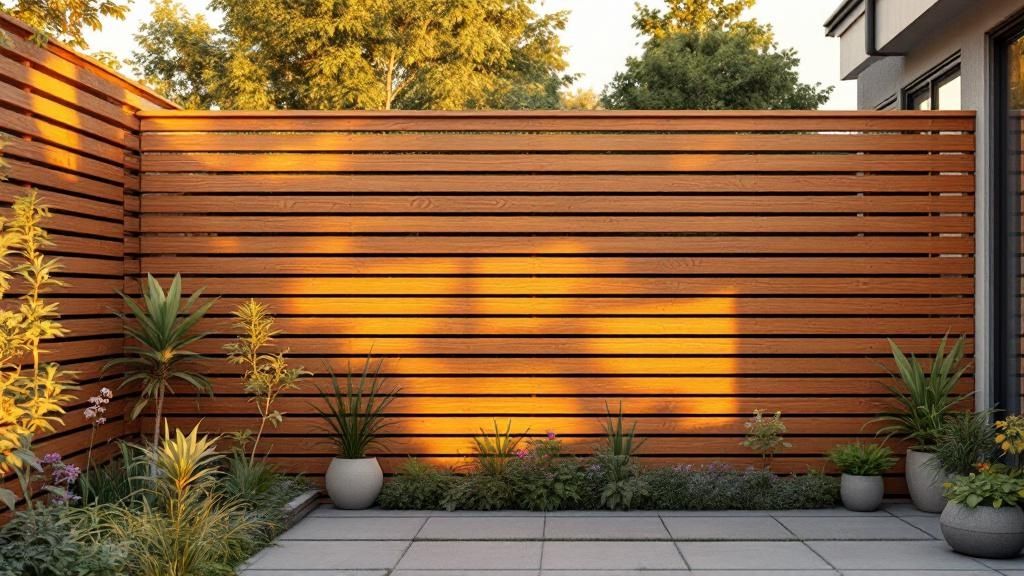
You don’t need a massive construction budget to carve out a private, cozy corner in your backyard. Honestly, some of the most effective solutions I've seen are also the simplest and most creative. With a bit of ingenuity, you can create pockets of seclusion that feel both stylish and personal, perfect for renters or anyone who wants to build up their privacy over time.
The trick is to think beyond massive, permanent fences. Take simple lattice panels, for example. You can find them at any home improvement store, and they're incredibly versatile. Attach them to an existing deck railing, or mount them on a few posts to create a freestanding screen. I love seeing clients paint them a bold color for a pop of personality or stain them to blend seamlessly with their existing woodwork.
Another fantastic, low-commitment option is outdoor fabric. Hanging durable, weather-resistant curtains around a patio or pergola instantly defines the space with a soft, inviting touch. It’s like creating an outdoor room—giving you visual separation when you want it and easily pushed aside when you don't. This works especially well for creating an intimate dining or lounging area.
Strategic Use of Movable Screens
One of my favorite ways to get flexible privacy is with large planters. When you fill oversized containers with tall, slender plants, you’re essentially creating movable green screens. They can be shifted around as needed to block a specific view without digging up your yard.
Here are a few plant options I recommend for portable privacy screens:
- Tall Ornamental Grasses: Varieties like Feather Reed Grass or Zebra Grass shoot up quickly, offering great height and a wonderful, soft texture.
- Clumping Bamboo: This isn't the invasive running bamboo people worry about. Clumping varieties stay put in their container, making them a perfect, low-maintenance choice for screening.
- Slender Evergreens: Small columnar evergreens like the Sky Pencil Holly provide year-round screening and have a really tidy, compact shape.
The demand for these kinds of flexible barriers is through the roof. As our cities get denser and backyards shrink, the need for effective screening has exploded. The global market for outdoor privacy screens was valued at around USD 2.98 billion and is projected to hit over USD 5.16 billion by 2033, all driven by this shift toward more private outdoor living.
Pro Tip: Don't ever underestimate the power of illusion. Just adding an outdoor rug can visually ground a seating area, making it feel like a distinct "zone." Pair that with a large cantilever umbrella tilted at an angle, and you create a powerful sense of enclosure without building a single wall.
Layering Elements for Maximum Impact
For a truly polished and effective result, try combining a few of these affordable ideas. Start with a foundation, like a few strategically placed lattice panels, and then layer planters of varying heights in front of them. This multi-layered approach adds so much depth and visual interest while seriously boosting your level of seclusion.
We’ve put together a ton of visual examples in our guide on privacy screen ideas for your backyard to get your own creative juices flowing.
Ultimately, creating backyard privacy on a budget is all about smart placement and clever layering. You can build up your secluded oasis over time, adding pieces as your budget allows. And remember, it's not just about visual barriers. You might also look into active strategies to deter unwanted guests to enhance that overall feeling of security. By focusing on defining specific zones, you can get that coveted private retreat without a major renovation.
Creating Privacy Through Sound and Ambiance
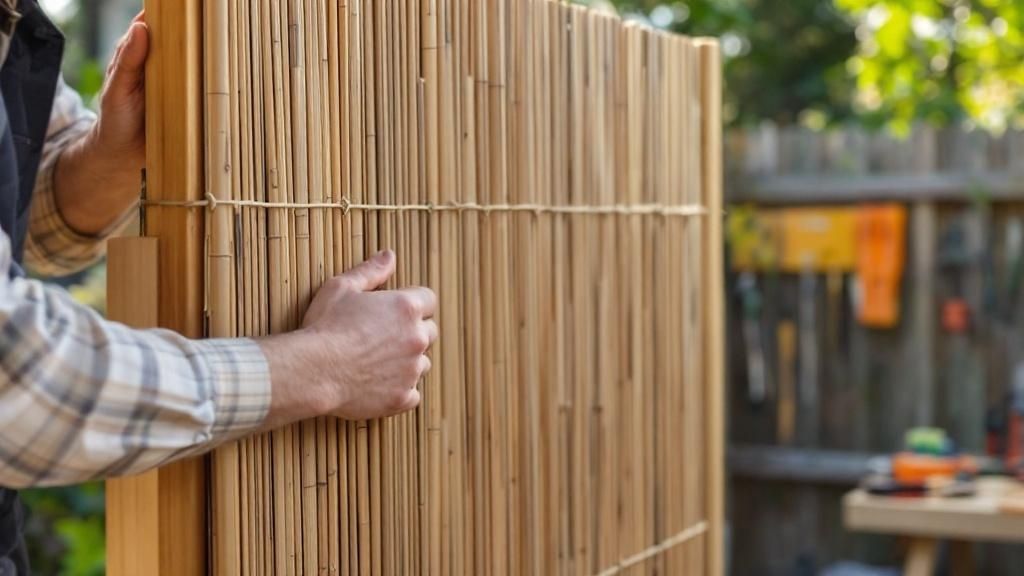
When we talk about backyard privacy, most people think visually. Fences, trees, screens—it’s all about blocking sightlines. But true privacy is a full sensory experience. What good is a hidden yard if the drone of traffic or the sound of your neighbor’s loud conversation constantly breaks the peace?
This is where you get to play with sound and atmosphere. Think of it as soundscaping. You’re not just passively accepting the noise from the outside world; you’re actively layering in sounds you want to hear to mask the ones you don’t. It’s about curating a tranquil ambiance that feels completely separate from everything else.
Harnessing the Power of Water
One of my favorite ways to introduce positive background noise is with a water feature. There's a reason so many spas use them. The gentle, consistent sound of moving water is a natural form of "white noise," and it’s incredibly effective at drowning out inconsistent, annoying sounds like a barking dog or a car alarm.
You’ve got a ton of options here, and they can fit any budget or space.
- Bubbling Urns or Fountains: These are fantastic for smaller patios or decks where space is tight. They produce a soft, gurgling sound that’s subtle but works wonders at close range.
- Small Waterfalls or Cascades: If you need more sound coverage, a small waterfall built into a garden bed or retaining wall creates a broader, more immersive soundscape that can help mask noise across a larger area.
The trick is to match the sound to your specific problem. A simple urn might be all you need to make a little seating nook feel intimate. But if your yard backs up to a busy street, you’ll want a more substantial feature to really do the job.
Using Plants for Natural Sound
Plants are more than just a visual screen; they can add a beautiful, organic layer of sound to your yard. Few things are as calming as the rustle of leaves in a gentle breeze. It instantly contributes to a private, naturalistic vibe.
When you’re choosing plants, think about their auditory qualities. Ornamental grasses, like Big Bluestem or Fountain Grass, create a soft, shushing sound as the wind moves through them. Trees with fine, delicate leaves, such as a Quaking Aspen or Birch, produce a gentle rustling canopy that adds to the peaceful atmosphere.
By layering these natural sounds with a water feature, you create a complex and organic soundscape. The combination makes it much harder for distracting outside noises to penetrate your peaceful bubble.
If noise from neighbors or traffic is a serious issue, you can also explore different soundproofing solutions to further insulate your private oasis.
Setting the Mood With Lighting
Once the sun sets, lighting is your secret weapon for creating a sense of privacy. A well-executed lighting plan isn’t about flooding the yard with light—that just makes you feel like you’re on a stage. Instead, it’s about carefully controlling focus.
By placing soft uplights on a beautiful tree or highlighting a garden sculpture, you create points of interest within your yard. This clever trick draws the eye inward, making the dark, unlit perimeter of your property fade away. The whole space suddenly feels cozier, almost like an outdoor room.
Use low-voltage path lights to define spaces and guide the eye, but steer clear of harsh floodlights that create stark shadows and ruin the intimate effect. For some great examples of how to do this well, check out these outdoor lighting ideas for your backyard to see how to masterfully create zones of light and shadow.
Your Top Backyard Privacy Questions, Answered
Once you decide to tackle a backyard privacy project, the questions start popping up. It's a real investment of time and money, so you want to get every single detail right. We hear these questions all the time, so we’ve put together some straightforward answers to help you move forward with total confidence.
Getting these common queries sorted out can be the difference between a project that goes off without a hitch and one that's full of costly second-guessing. Let’s clear up some of the big ones.
How High Does My Privacy Fence Need to Be?
This is probably the first and most important question on everyone's mind. The right height almost always boils down to two things: what you're trying to block and what your local rules allow.
For most situations, like blocking the view from a neighbor’s yard or a sidewalk, a six-foot fence is the industry standard. It’s tall enough to give you a real sense of enclosure and stop most direct sightlines, making your patio feel like a true outdoor room.
But what if you're dealing with a bigger challenge, like a second-story window or a tall deck looking straight down into your yard? That's when you need to go higher. An eight-foot fence is often the perfect solution to solve those tricky vertical sightline problems.
A Crucial Heads-Up: Before you fall in love with a specific height, you must check with your local city or county and your Homeowners Association (HOA), if you have one. Many areas have strict rules limiting fence height, often capping it at six feet unless you get a special permit. Ignoring these regulations can lead to fines and, worst-case scenario, being forced to tear your brand-new fence down.
Will a Living Fence Actually Block Out Noise?
Yes, but it's more about muffling the sound than creating total silence. A dense wall of plants is fantastic at absorbing and deflecting sound waves, which can make a noticeable dent in noise from traffic, loud neighbors, or a nearby park. Think of it less like soundproofing and more like sound dampening.
How well it works really depends on a few things:
- Density: A thick, layered planting of evergreens with dense foliage will do a much better job than a thin, single row of leafy trees.
- Mass: The taller and wider your natural barrier is, the more sound it can soak up. A deep garden bed with staggered plants is far more effective than a skinny line.
- Plant Type: Generally, plants with large, broad leaves and lots of complex branches are better at scattering sound.
While a hedge won't give you a cone of silence, it absolutely can lower the noise level enough to make your backyard feel more peaceful. For maximum effect, a great strategy is to combine a living fence with a solid fence or even a water feature.
How Can I Get Privacy Without Making My Yard Feel Tiny?
This is a great question, especially for those of us with smaller city or suburban lots. The trick is to avoid building a solid, uniform "box" around your yard. Instead of one monolithic fence, you want to use a mix of elements to create layers and visual interest.
Try some of these strategies:
- Be Strategic with Screens: Instead of fencing the entire perimeter, just use shorter fence sections or decorative screens where you need them most—like right around a patio, hot tub, or outdoor kitchen.
- Bring in Trellises: A trellis covered in climbing vines gives you that feeling of enclosure but without the heavy, solid look of a fence. The see-through nature of the structure keeps the space feeling open and airy.
- Mix Your Materials: Try combining a short stone wall with a taller hedge behind it. Or, break up a long run of wood fencing with panels of decorative metal. This variation is key to breaking up long, boring lines.
- Go Dark with Paint: Here’s a clever design secret: paint your fence a dark color like black or charcoal gray. It sounds counterintuitive, but dark colors visually recede, making the fence seem less imposing and making the green of your plants really pop.
What’s the Absolute Fastest Way to Get Privacy?
If you need seclusion and you needed it yesterday, a fence or a set of privacy screens is your best bet. A professional installation can often be wrapped up in just a few days, giving you an immediate and complete visual block. It's the go-to solution if you can't wait a few years for plants to mature.
If you're set on a living option, you'll want to look at fast-growing trees and shrubs.
Fastest Growing Privacy Plants
| Plant | Growth Rate | Key Consideration |
|---|---|---|
| Leyland Cypress | 3-4 feet per year | Can get very large; needs regular pruning. |
| Willow Hybrid | 6+ feet per year | Requires a lot of water and space. |
| Lombardy Poplar | 5-6 feet per year | Has a shorter lifespan (15-20 years). |
Just remember, while these plants give you speed, they often demand more maintenance to keep them from getting out of control. If you go this route, be ready to prune them regularly to maintain the size and shape you want.
Feeling inspired to transform your own outdoor space? The team at Tamura Designs Landscape and Construction has been creating stunning, private backyard retreats in the Morgan Hill area for over 30 years. From elegant stone patios to custom living walls, we can bring your vision to life. Visit us to learn more about our award-winning design and construction services.
