
So, what's the real difference between a landscape architect and a landscape designer? It boils down to two key things: licensing and the structural complexity of the job.
A landscape architect is a state-licensed pro who can legally design and engineer large, complex projects that involve things like grading, drainage, and building retaining walls. Think of them as the engineers of the outdoor world. A landscape designer, on the other hand, is all about the aesthetics—the beauty, the flow, and the plants that bring a residential garden to life.
Choosing Your Outdoor Design Professional
Figuring out who to hire really depends on what you're trying to accomplish. Are you envisioning a complete backyard overhaul with a new pool, multi-level patio, and major changes to the slope of your yard? Or are you dreaming of a lush, beautiful garden with expertly chosen plants, a charming stone path, and a cozy fire pit area?
One professional is a master of technical site plans and big-picture engineering, while the other is an artist who paints with plants and textures to create stunning, livable spaces. It’s not about which one is better, but whose expertise is the right fit for your specific project.
Before you even start making calls, it’s a great idea to do a little homework. Understanding how to plan a garden effectively will help you nail down what you want and communicate your ideas clearly, no matter who you end up hiring.
At a Glance Comparison
To help you see the differences more clearly, I've put together a quick comparison table. This should give you a high-level snapshot to guide your decision.
Landscape Architect vs Designer Key Differences
| Attribute | Landscape Architect | Landscape Designer |
|---|---|---|
| Primary Focus | Technical, structural, and large-scale site planning | Aesthetic, horticultural, and functional space design |
| Qualifications | State-licensed; degree in landscape architecture required | Often certified; focuses on horticulture and design principles |
| Typical Projects | Public parks, corporate campuses, complex grading, retaining walls | Residential gardens, patios, planting plans, outdoor styling |
| Legal Authority | Can stamp and seal official plans for permits | Cannot approve plans requiring structural engineering |
This table lays out the core distinctions, helping you match your project’s needs with the right professional qualifications.
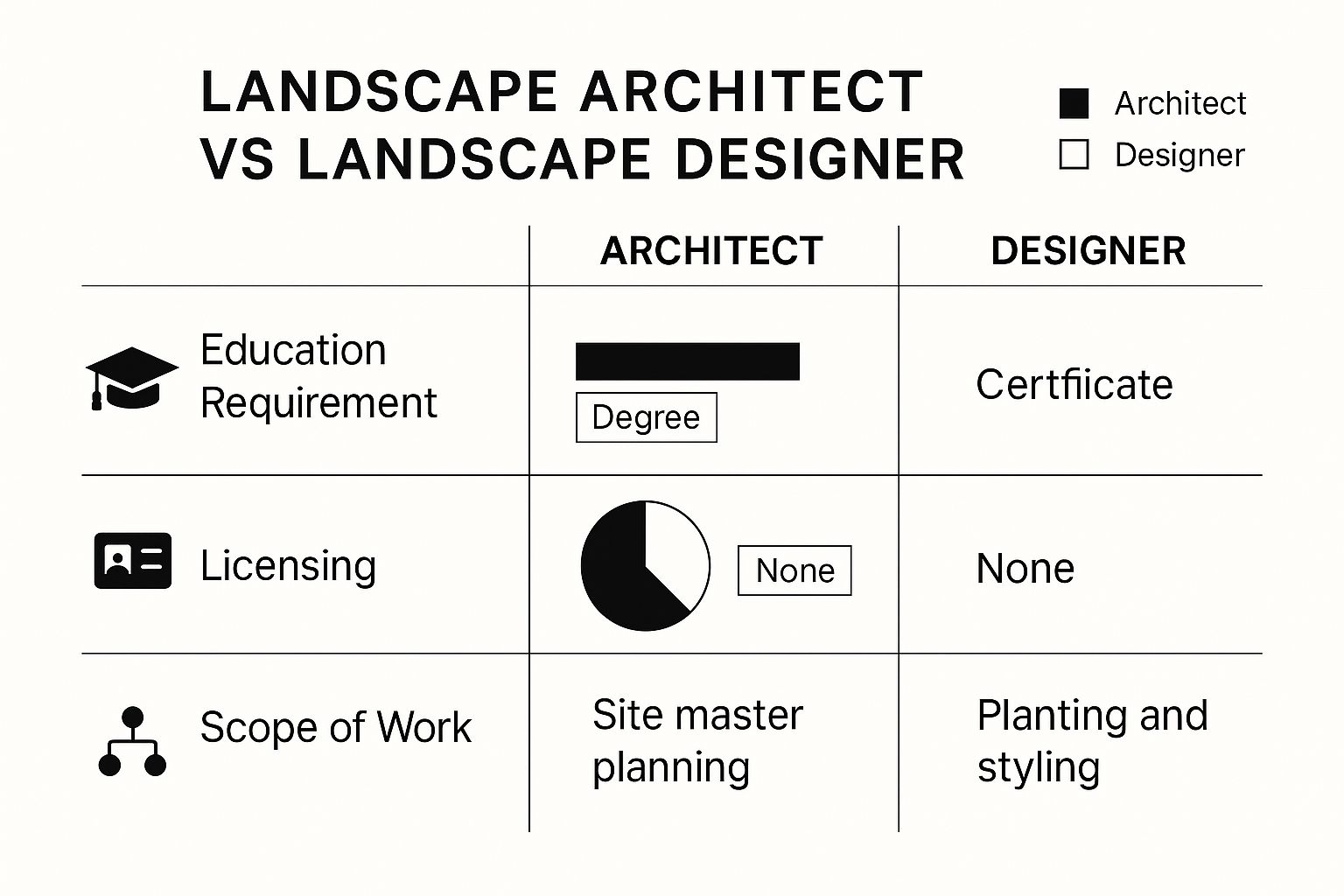
As you can see, the road to becoming a landscape architect is paved with formal education and state-level licensing. This rigorous training gives them the authority to take on projects with serious structural or environmental hurdles that require official, permitted plans.
The Foundation: Education and Licensing
The biggest difference between a landscape architect and a landscape designer really comes down to their formal education and legal standing. It’s these foundational elements that determine the scope, scale, and complexity of the projects each professional can legally and safely take on.
You could say the path to becoming a landscape architect is a long and demanding one, and for good reason.
The Architect's Path to Licensure
The journey starts with a professional degree—usually a Bachelor of Landscape Architecture (BLA) or a Master of Landscape Architecture (MLA) from a university with a program accredited by the Landscape Architectural Accreditation Board. These are not light, fluffy art degrees; they're intensely technical and cover everything from site engineering and hydrology to soil science, urban planning, and even structural design.
After graduation, they aren't done yet. They have to complete a period of supervised work, typically two to three years, under a licensed landscape architect. Think of it as an apprenticeship. This hands-on experience is critical preparation for the final hurdle: passing the Landscape Architect Registration Examination (L.A.R.E.). It's a notoriously tough, multi-part exam that tests their competence on everything from project management to creating detailed grading and drainage plans.
Only after passing the L.A.R.E. can they officially become a licensed landscape architect. This credential is required in all 50 states to use the title and handle the full scope of an architect's work.
The professionalization of landscape architects through rigorous degree and licensing requirements first emerged in the 20th century. This was a direct response to growing needs in urban planning and environmental policy, establishing architects as key authorities in the field.
The Designer's Diverse Journey
In contrast, the path for a landscape designer is much more varied and far less regulated. There is no state-mandated licensing requirement to hang out a shingle as a landscape designer. Their qualifications usually come from a mix of certification programs, associate degrees in horticulture or garden design, and a whole lot of hands-on experience.
This practical focus makes them true masters of the "softscape"—the living, breathing parts of a landscape. Their expertise is deeply rooted in:
- Horticulture: An encyclopedic knowledge of plants, soil types, and local climate zones.
- Aesthetic Composition: A natural skill for using color, texture, and form to create truly beautiful spaces.
- Spatial Design: The ability to lay out functional and inviting patios, walkways, and garden beds.
While they won’t be engineering retaining walls or complex drainage systems, their specialized knowledge is absolutely essential for creating a healthy, thriving garden. A great designer ensures the right plant goes in the right place, which is the cornerstone of any successful, long-lasting landscape. For those interested in eco-friendly approaches, you can learn more about how these principles are applied in our guide to sustainable landscape design. This distinction is why understanding the difference between a landscape architect vs landscape designer is so crucial for your project's success.
Comparing Project Scope And Practical Skills
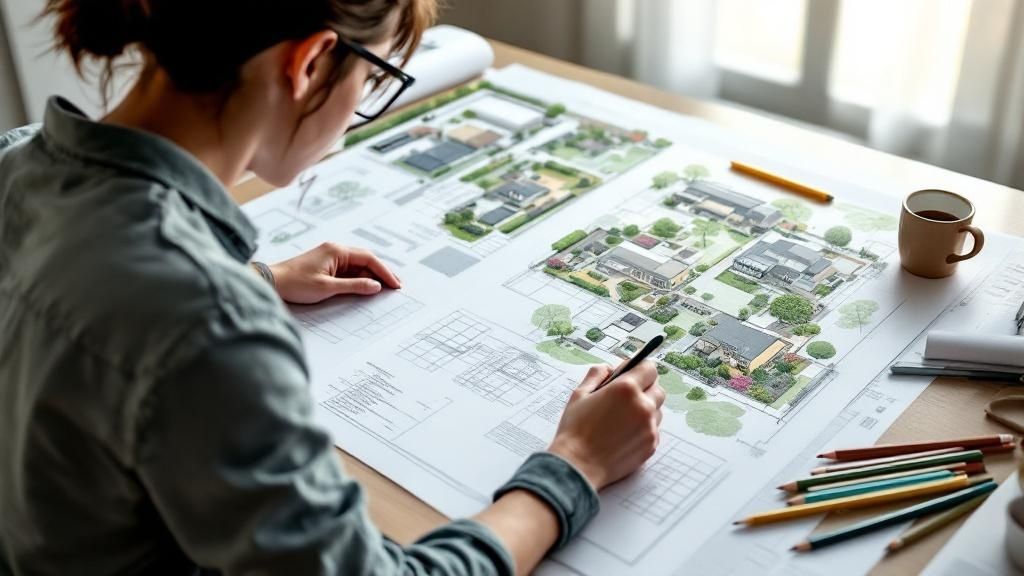
While education and licenses draw a clear line in the sand, the most tangible difference between a landscape architect and a landscape designer really comes out in their day-to-day work. The kinds of projects they tackle and the practical skills they bring to the table are fundamentally distinct, and understanding this is key to hiring the right pro for your job.
A landscape architect operates on a much grander scale. They’re the ones you call when the earth itself needs to be moved, managed, and reshaped for large-scale projects like public parks, corporate campuses, or sprawling urban plazas. Their expertise is deeply technical and analytical, zeroing in on the science that makes an outdoor environment safe, sustainable, and functional.
On the other hand, a landscape designer’s world is one of artistry and horticulture, usually within residential properties. Their work is all about creating beautiful, livable spaces that truly feel like an extension of the homeowner's personality. They are the masters of planting palettes, color theory, and arranging elements to make a backyard feel like a personal retreat.
The Architect’s Technical Toolkit
When your project involves more than just plants and patios, an architect is a must. Their skills are built to handle the heavy-duty complexities that lie beneath the surface.
You’ll find them focused on things like:
- Site Analysis and Master Planning: This involves a top-to-bottom evaluation of an entire property to create a cohesive, long-term plan that accounts for every environmental and structural factor.
- Grading and Drainage: They engineer the precise slope of the land, making sure water flows away from your home and other structures to prevent pooling, flooding, or erosion.
- Stormwater Management: They design complex systems like bioswales or permeable pavements to handle runoff, which is often a strict requirement from local municipalities.
- Structural Design: Need blueprints for a large retaining wall, a multi-level deck, or an intricate pergola? They create the official plans that ensure these structures meet building codes and are built to last.
This kind of work means a landscape architect’s time is split between the office and the job site. They spend a significant amount of time indoors drafting detailed plans with CAD software, but they’re also out in the field constantly, assessing site conditions and making sure the construction follows every regulation to the letter.
The Designer’s Creative Focus
A landscape designer’s skill set is all about the look and feel of a space—the visual and sensory experience. They are absolute experts at taking a blank canvas of a yard and turning it into a stunning and functional outdoor room.
For a designer, the joy is often in the details—translating a client's dream into a realized reality. It’s about creating a unique space where people feel prioritized and can connect with nature on a personal level.
Their primary focus is on the "softscape" (the plants) and the "hardscape" (the patios, paths, and walls) that define an outdoor living area. If you’re dreaming up a big project like an outdoor kitchen, they can walk you through different outdoor kitchen design ideas and figure out how to weave them perfectly into your garden plan. This artistic and horticultural expertise is exactly what you need when your main goal is to elevate the beauty and usability of your property without getting into major structural or environmental modifications.
Breaking Down The Cost To Hire A Pro
Let's talk about the bottom line. Understanding the financial side of things is a huge part of deciding between a landscape architect and a landscape designer. The cost to bring in either pro can vary quite a bit based on your project's scale, where you live, and their specific experience. But one thing is almost always true: there’s a distinct cost difference between them.
Generally speaking, a landscape architect’s services will carry a higher price tag. This premium reflects their advanced education, the demanding process of state licensing, and their authority to manage complex engineering and permitting. You're not just paying for a fancy title; you’re investing in expertise that ensures safety, compliance with local codes, and the structural soundness of your property for years to come.
On the other hand, a landscape designer is often the more budget-friendly route. They deliver incredible value, especially for projects where aesthetics and plant knowledge are the main focus. Their knack for plant selection and creating beautiful, functional layouts can completely reinvent your outdoor living experience without the higher overhead that comes with architectural-level services. This makes them a fantastic and accessible choice for homeowners looking to make a significant, beautiful upgrade.
Common Pricing Structures
When you start reaching out for quotes, you’ll probably see a few common ways professionals structure their fees. Getting familiar with these will make it much easier to compare apples to apples.
- Hourly Rates: The pro charges for the actual time they put into your project. This is pretty standard for initial consultations or smaller tasks with a clearly defined scope.
- Flat Fees: You get a single, all-in price for the entire design. This gives you budget certainty right from the start and works great for projects where the scope is well understood.
- Percentage of Project Cost: The design fee is a percentage of the total construction and installation budget, often in the 10-20% range. This is common for large-scale projects where the architect or designer is also overseeing the entire build-out.
Why The Price Difference Matters
So, why the gap in cost? It really boils down to qualifications and legal responsibility. A licensed architect is your safeguard against expensive mistakes with drainage, grading, or structural elements—the kind of problems that can turn into major headaches and repair bills down the road. Their official stamp on a set of plans is basically a form of insurance that you're building to code.
The financial gap reflects the different value propositions. An architect's higher fee covers technical assurance and liability for complex structural work, whereas a designer's more accessible price point delivers specialized aesthetic and horticultural mastery.
You can even see this difference in national salary data. In 2023, the median salary for landscape architects in the U.S. was around $99,110, while landscape designers earned a median of about $70,982. Ultimately, the right choice depends on your budget and what your project truly needs—whether that's picking out gorgeous and resilient California native drought-tolerant plants or completely re-engineering a tricky sloped yard.
When You Need To Hire A Landscape Architect
While a landscape designer is fantastic at transforming your yard with beautiful plants and cozy living areas, some projects go way beyond aesthetics. They venture into the world of structural engineering, environmental science, and complex site planning.
In these situations, hiring a licensed landscape architect isn't just a smart move—it’s often a legal must. Think of them as the specialists you bring in for any project involving significant, tricky changes to the land itself. An architect is trained to see the whole picture and manage the technical details that prevent costly headaches down the road.
Navigating Complex Site Challenges
A landscape architect is the only pro truly qualified to tackle projects that involve major changes to your property's topography. They have the specific technical skills to analyze and reshape the land safely and effectively, ensuring everything stays stable and functions correctly for years to come.
You absolutely need to hire a landscape architect for projects like these:
- Significant Grading and Drainage: If your yard has a steep slope, serious water runoff problems, or you need to re-contour the land to build a level patio or pool area, an architect is essential. They create the official grading plans needed to manage water flow and stop erosion in its tracks.
- Structurally Complex Hardscaping: Building a retaining wall over a certain height (often 3-4 feet, depending on local rules) requires stamped engineering plans. This is a big deal—these walls have to hold back immense soil pressure. An architect provides the certified documents to make sure it's built to last.
- Working Near Sensitive Areas: Any work near protected wetlands, steep hillsides, or coastal zones is subject to strict environmental regulations. An architect knows how to navigate these rules, design solutions that comply, and get the permits you need to move forward without breaking the law.
The real job of a landscape architect is to solve complicated site problems with fully integrated solutions. They understand how every piece—from soil type to water flow—interacts, making sure the final result is not only beautiful but also safe, stable, and sustainable.
At the end of the day, any project that requires official construction documents or a seal of approval for a building permit demands an architect's touch. Their license gives them the legal authority to sign off on these plans. This protects you from liability and guarantees your project meets all public safety standards. The difference between a landscape architect vs landscape designer is never clearer than when legal and structural integrity are on the line.
When A Landscape Designer Is The Perfect Fit
While a landscape architect tackles the big-picture structural and environmental challenges, a landscape designer is the artist you bring in to craft your personal outdoor sanctuary. Their expertise is best suited for projects where the main goals are aesthetics, horticultural health, and creating beautiful, functional living spaces that don't require major structural or grading changes.
Think of it this way: if your vision is all about the look and feel of your yard, a designer is your ideal collaborator. They live and breathe this stuff. This is where their deep knowledge of plants, color theory, material selection, and spatial arrangement really comes into play, helping translate your personal style into a cohesive and stunning environment.
When To Choose A Designer
A landscape designer is absolutely the right choice for these common residential projects:
- Vibrant Planting Plans: You want a garden that’s alive with color and texture through the seasons, but you're not sure what will actually grow. A designer will select and arrange the perfect plants for your specific soil, sun exposure, and climate conditions.
- Patio and Walkway Layouts: Your main goal is to create a gorgeous, functional patio for entertaining or a charming garden path that meanders through your yard. A designer excels at crafting layouts that feel natural, flow beautifully, and make the most of your usable outdoor space.
- Complete Aesthetic Refresh: Your backyard is functional, but it feels bland and uninspired. A designer can completely reimagine the space, using a fresh palette of plants, materials, and furniture layouts to give it a modern, personalized, and cohesive feel.
A designer finds deep joy in translating a homeowner's wants and desires into a physical space. It's about welding a dream into a realized reality, creating a unique garden where you feel prioritized and can connect with nature.
Ultimately, the choice in the landscape architect vs landscape designer debate really comes down to the project's scope. For projects centered on aesthetics, planting, and creating livable spaces without needing permits or heavy construction, a designer brings specialized, focused expertise. They are true masters of creating beautiful, thriving gardens that you’ll love for years.
For instance, if you're concerned about water usage, a designer can help you explore beautiful and practical options. You can learn more about this in our guide to drought-tolerant landscape design.
Common Questions About Hiring Landscape Pros

When you're trying to choose between a landscape architect and a landscape designer, a few practical questions almost always pop up. Getting those answers sorted out helps you move forward with confidence, knowing you’re hiring the right pro for your specific needs.
One of the big ones I hear all the time is about whether these two professionals can work on the same project.
Can a Landscape Architect and a Designer Work Together?
Absolutely, and on large-scale residential projects, it’s not just possible—it’s often the best approach. Think of it as a tag-team effort where each pro plays to their strengths.
The landscape architect usually takes the lead on the big-picture master plan. They're the ones handling the technical heavy lifting: complex grading, drainage solutions, and navigating the permit process for major structures like pools or pavilions.
Once that solid, technical framework is in place, the landscape designer can step in to work their magic. They bring the vision to life, focusing on the detailed planting schemes, selecting materials and finishes, and perfecting the overall aesthetic. This partnership ensures you get the best of both worlds.
Key Insight: For complex projects, hiring an architect for the technical foundation and a designer for the aesthetic execution ensures every aspect of your project is handled by a dedicated specialist.
Another point that can cause some confusion is what to do when a project’s scope changes partway through.
What if My Project Grows in Complexity?
This is a classic scenario, and the best advice is to anticipate the full potential of your project from the very beginning. Let’s say you start with a designer for what seems like a simple planting project, but then you decide you want to add a large retaining wall or significantly re-grade a sloping yard.
At that point, you’ll almost certainly need to bring a licensed architect or a structural engineer into the fold.
Being upfront about your long-term vision with any professional you consider hiring is crucial. That transparency helps avoid frustrating delays and ensures the initial plans are built on a solid foundation that can support your future ambitions, saving you from a costly and time-consuming overhaul down the road.
At Tamura Designs, we bring over 30 years of award-winning experience to transform your vision into a stunning reality. Whether your project requires meticulous design, expert construction, or both, our team is ready to create an outdoor space you’ll love for years to come. Explore our portfolio and start your journey at https://tamuradesigns.com.
