
When you hear "sustainable landscape design," what comes to mind? It's much more than just a trendy phrase—it's about creating a true partnership with nature. We're talking about designing a beautiful, functional outdoor space that works with your local environment, not against it. The result is a garden that's not only better for the planet but is also a lot less work for you in the long run.
Understanding Sustainable Landscape Design
Think of that perfect, traditional green lawn for a moment. It's often a high-maintenance dependent, constantly demanding resources. It needs tons of water, a steady diet of chemical fertilizers, and weekly mowing, all while offering very little back to the local wildlife. In many ways, it's a sterile "monoculture desert" that consumes heavily but gives little back to the ecosystem.
Sustainable landscape design flips that script completely. Instead of a dependent, you get a self-regulating ecosystem. It’s like building a tiny, thriving nature preserve right in your own backyard. The whole point is to create a space that’s resilient, resourceful, and humming with life.
This forward-thinking approach is quickly becoming the new standard. In fact, the global market for sustainable landscaping services was recently valued at $40 billion and is projected to nearly double to almost $80 billion by 2032. This explosive growth shows a major shift in how homeowners think, prioritizing ecological responsibility and smart resource use.
A Philosophy of Working Smarter, Not Harder
At its heart, sustainable design is about making intelligent choices that pay off for years to come. Instead of constantly fighting nature with chemical inputs and endless upkeep, the goal is to align with it. This involves a focus on a few key areas:
- Water Conservation: Using plants that are naturally suited to your local climate and installing smart irrigation to cut down on water waste.
- Reduced Chemical Use: Building healthy, rich soil with natural compost instead of relying on synthetic fertilizers and pesticides.
- Waste Reduction: Repurposing yard trimmings into nutrient-rich mulch and choosing durable, recycled, or locally sourced materials for hardscaping.
- Biodiversity: Intentionally creating habitats that attract and support essential pollinators like bees, butterflies, and birds.
The table below gives you a quick snapshot of how these two approaches really differ.
Traditional vs. Sustainable Landscape Design At a Glance
This table provides a clear, side-by-side comparison of the core philosophies and outcomes of traditional and sustainable landscaping approaches, helping you quickly grasp the fundamental differences.
| Aspect | Traditional Landscaping | Sustainable Landscape Design |
|---|---|---|
| Primary Goal | Uniform aesthetic, often a monoculture lawn. | Create a diverse, resilient, self-sustaining ecosystem. |
| Water Use | High; relies on frequent, often inefficient, irrigation. | Low; uses drought-tolerant plants and smart water systems. |
| Maintenance | High; requires frequent mowing, fertilizing, and pest control. | Low; designed to require minimal intervention once established. |
| Material Sourcing | Often uses new, non-local materials. | Prioritizes local, reclaimed, or recycled materials. |
| Wildlife Support | Limited to none; can be hostile to local species. | High; actively supports local pollinators and wildlife. |
| Soil Health | Often degraded by chemical fertilizers and pesticides. | Enriched naturally through composting and mulching. |
As you can see, the shift is from a system that consumes resources to one that regenerates them.
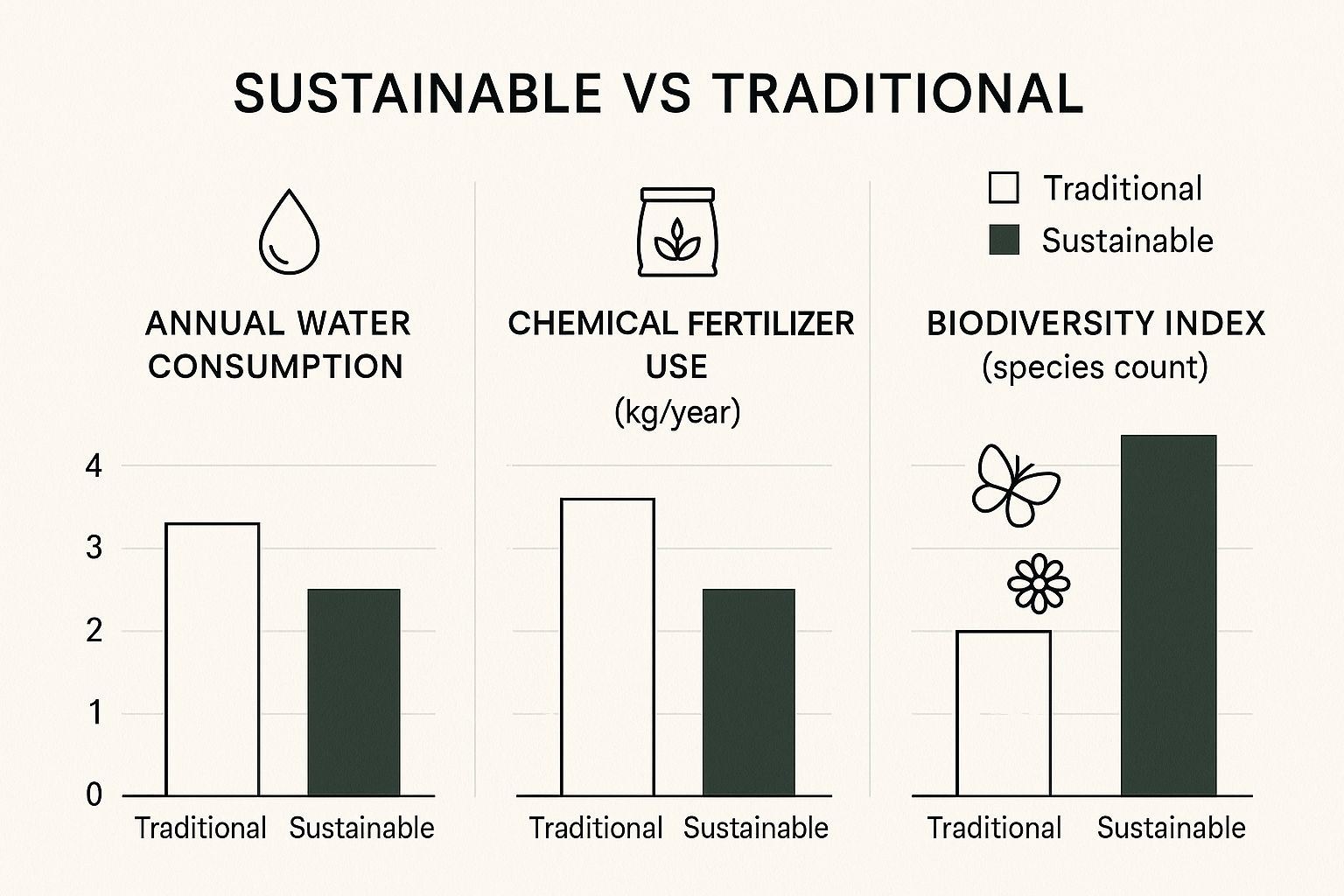
The data clearly illustrates how sustainable practices can dramatically reduce water and chemical inputs while significantly boosting the number of local species. It’s a powerful visual of the positive impact you can make right in your own yard.
By embracing these principles, you create a landscape that is not only environmentally friendly but also more engaging and less demanding over time. It's a shift from a yard that takes to one that gives back.
If you're interested in bringing these ideas to life, Tamura Designs specializes in creating custom outdoor spaces that are both beautiful and responsible. You can explore our guide to learn more about our eco-friendly landscaping strategies and see how we weave sustainability into every project we touch. This approach ensures your outdoor living area will be a source of joy for years to come.
The Core Principles of Eco-Friendly Landscaping
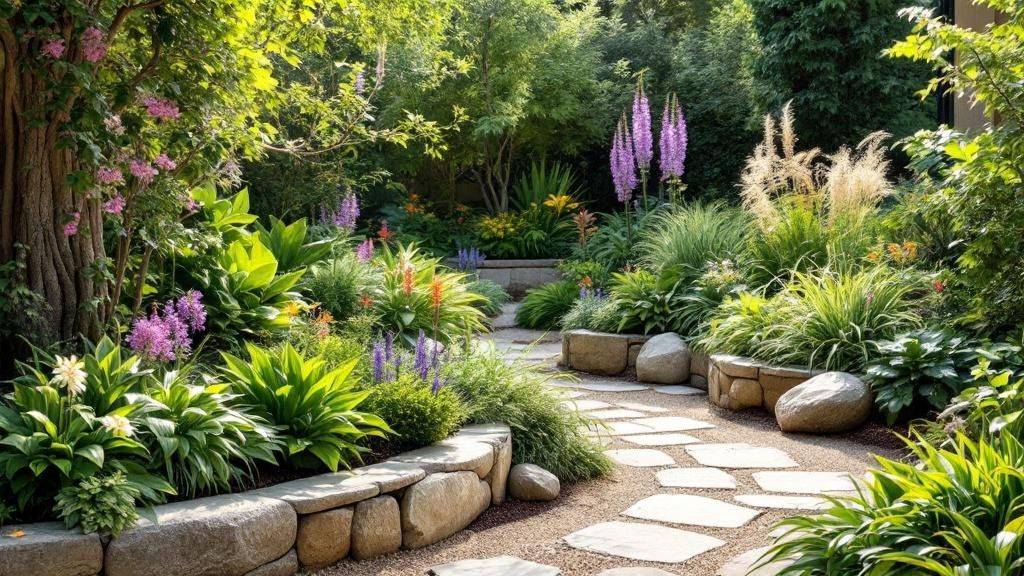
To really get what sustainable landscape design is all about, we have to look at its core pillars. These aren't complex theories from a textbook; they're practical, connected strategies that work together to create a gorgeous, low-impact outdoor space. Think of them as the key ingredients in a recipe for a healthier, more resilient yard.
By walking through these concepts, we can go from just talking about "sustainability" to taking real, actionable steps. We'll build up your understanding, starting with our most critical resource—water—and then moving through the other essentials like soil, plants, and wildlife. This gives you a clear blueprint for bringing an eco-friendly landscape to life.
Conserve Water with Smart Planning
Here in California, water is gold. Traditional landscaping often treats water like it’s an endless supply, which leads to a staggering amount of waste. A sustainable approach, however, puts water conservation front and center from day one.
This all starts with a strategy called xeriscaping. It’s a fancy word for something simple: designing a landscape that needs very little extra watering. And no, it doesn't mean your yard has to be just rocks and cacti—it means making smarter choices.
Here are a few powerful ways we do this:
- Permeable Surfaces: Instead of a solid concrete patio that sends rainwater rushing down the storm drain, we can use permeable pavers or gravel. These materials let rain soak right into the ground where it falls, nourishing your soil and reducing wasteful runoff.
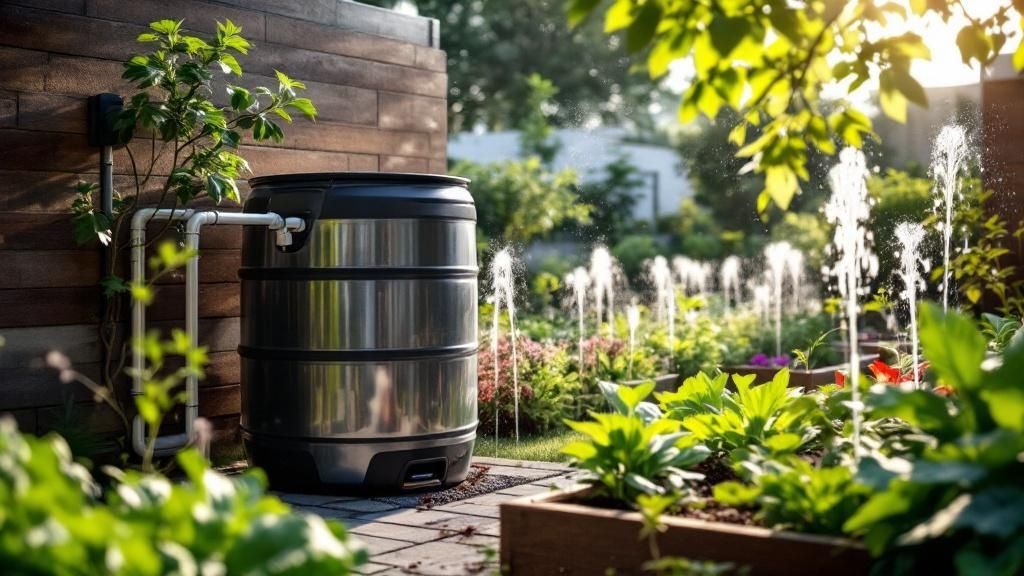
- Rainwater Harvesting: Installing rain barrels or a cistern to capture runoff from your roof gives you a free, chlorine-free water source for your plants. It’s an easy win for both your water bill and the health of your garden.
- Intelligent Irrigation: Modern smart irrigation systems use real-time weather data to water only when it's truly needed. We also group plants with similar water needs together (a technique called hydrozoning) to make every drop count.
Nurture Healthy Soil Naturally
Healthy soil is the absolute foundation of a healthy garden. For decades, the go-to solution has been synthetic fertilizers that give plants a quick jolt but do nothing for long-term soil health. In fact, over time, they can degrade the soil's structure and kill off the beneficial microbes that plants rely on.
Sustainable design treats soil as a living, breathing ecosystem that needs to be fed, not just force-fed chemicals. The goal is to build a rich, loamy, and self-sustaining base where your plants can truly thrive.
“Building healthy soil is like making a long-term investment in your garden’s future. It pays dividends in the form of stronger plants, better water retention, and a reduced need for any chemical intervention.”
The best way to create this living soil is through composting. Turning kitchen scraps and yard trimmings into compost creates a powerhouse amendment that improves soil structure, helps it hold water, and feeds a bustling community of earthworms and good bacteria. Laying down a layer of organic mulch, like shredded bark, further protects the soil, keeps weeds down, and locks in moisture.
Choose Native and Climate-Appropriate Plants
Plant selection is where sustainable design really gets to shine. Instead of fighting to keep exotic plants alive in a foreign climate, this approach is all about using plants that are already perfectly adapted to your local soil, weather, and rainfall.
Native plants are the undisputed heroes here. They’ve spent thousands of years evolving to thrive in our specific region.
This means they naturally:
- Need much less water once they're established.
- Are resistant to local pests and diseases.
- Don't need chemical fertilizers to look their best.
When you choose plants that are a perfect match for your environment, your maintenance workload plummets. You’ll spend less time watering, fertilizing, and fighting problems, and a lot more time just enjoying a garden that feels like it belongs.
Create Habitats for Local Wildlife
A sustainable landscape is a living landscape. That perfectly manicured, weed-free lawn might look neat, but it’s often a biological desert, offering zero food or shelter for the creatures that are vital to a healthy ecosystem. Eco-friendly landscaping works to fix this by intentionally creating habitats for local wildlife.
This isn’t about letting your yard run wild. It's about making thoughtful choices that invite nature back in. Planting native flowers provides nectar for bees, butterflies, and hummingbirds. Including shrubs that produce berries offers a feast for local birds. Even adding a small water feature can provide a critical drinking spot for all sorts of animals.
By weaving these elements into your design, your yard becomes more than just a static space—it transforms into a dynamic sanctuary. You're not just creating a garden; you're helping re-establish a small piece of the natural world, supporting the pollinators our food system depends on, and fostering a vibrant ecosystem right outside your door.
Discovering Benefits Beyond the Environment
While helping the planet is a great reason to go sustainable, the rewards hit much closer to home. This approach isn't about making sacrifices; it's about making a smart investment that delivers real, tangible benefits to your lifestyle and your wallet.
Let's unpack the advantages that you'll actually feel day-to-day. We’ll look at the economic, functional, and aesthetic perks that make a sustainable outdoor space a major upgrade, not a compromise.
Economic Savings That Add Up
One of the most immediate—and satisfying—perks of a sustainable landscape is watching your regular bills drop. Think about your water bill shrinking month after month. By swapping out a thirsty, high-maintenance lawn for beautiful, native plants, homeowners often slash their outdoor water use by 50-75% or even more.
The savings don't stop at the water meter, either. A thoughtfully designed landscape dramatically cuts down on your upkeep costs.
- Less Mowing: With less lawn to worry about, you'll spend less on fuel, equipment maintenance, and your own valuable time.
- No More Fertilizers: Native plants thrive in healthy, compost-rich soil, which means you can say goodbye to buying bags of synthetic fertilizers.
- Fewer Pesticides: A balanced garden ecosystem attracts beneficial insects that naturally keep pests in check, saving you from spending on chemical sprays.
These savings really compound over time, making this a financially savvy move. As you consider the big picture of sustainable upgrades, it's interesting to see how the financial viability of solar energy follows a similar path of long-term returns.
Functional Benefits for Your Home and Health
A sustainable landscape is designed to work for you. It's an active, living system, not just a pretty backdrop. One of the biggest functional benefits is natural climate control right outside your windows.
Planting deciduous trees in the right spots can shade your home from the blistering summer sun, keeping it cooler and cutting down your air conditioning costs. Come winter, those same trees drop their leaves, letting the warm sunlight stream in to help heat your home naturally.
A well-designed sustainable landscape acts as a natural utility, providing cooling, managing water, and even producing food. It’s an extension of your home’s infrastructure, powered by nature.
This natural engineering extends to water, too. Features like rain gardens and swales are designed to catch and absorb stormwater, which prevents erosion and runoff while naturally replenishing the groundwater. And if you're a foodie, incorporating native, fruit-bearing plants can give you an amazing edible harvest right in your own yard.
Aesthetic Beauty That Thrives
There's a huge myth that sustainable gardens look messy or wild. Honestly, that couldn't be further from the truth. A well-designed sustainable landscape offers a dynamic, four-season beauty that a flat, green lawn just can't compete with. For a great look at what’s possible, check out our guide on the top California native drought-tolerant plants that create absolutely stunning, low-water gardens.
Instead of just one shade of green, you get a rich tapestry of colors, textures, and shapes that evolve with the seasons. From the delicate blooms of spring wildflowers to the striking silhouettes of ornamental grasses in the winter, your garden is always offering something new to admire.
This approach creates a space that's buzzing with life. The vibrant flowers become a hub for birds, bees, and butterflies, turning your yard into an engaging, living sanctuary. It's a kind of beauty that feels truly alive and connects you to the natural world right outside your door.
Implementing Your Sustainable Outdoor Space
This is where the vision for your beautiful, eco-friendly yard finally starts to take root. Thinking about transforming your current landscape into a sustainable oasis can feel like a huge project, but the secret is taking a practical, phased approach. When you break it down into manageable steps, an intimidating job becomes an exciting journey.
The first, and most important, step is a thorough site analysis. Think of it as getting to know your property’s unique personality. We don’t just glance at the space; we study its specific patterns of sun and shade, see how water naturally moves across it, and test the existing soil. This deep dive gives us the blueprint for every single decision that comes next.
Armed with this knowledge, you can map out a long-term plan that works with your land’s natural tendencies, not against them. It’s the key to creating a thriving, low-maintenance outdoor space that feels perfectly at home.
Creating Your Long-Term Plan
A truly sustainable landscape doesn't happen overnight. It’s a thoughtful evolution guided by a long-term plan—a roadmap that steers the transition from a high-maintenance yard to a more self-sufficient ecosystem. A big part of this strategy is phasing out the most resource-hungry areas.
The most common starting point? That traditional grass lawn. Instead of tearing it all out at once, you might decide to shrink it bit by bit over several seasons, replacing sections with climate-appropriate native plant beds or stylish permeable hardscaping.
Here’s what a phased approach could look like:
- Year 1: Conduct your site analysis and start a compost system. Remove a small patch of lawn and replace it with a native pollinator garden to attract bees and butterflies.
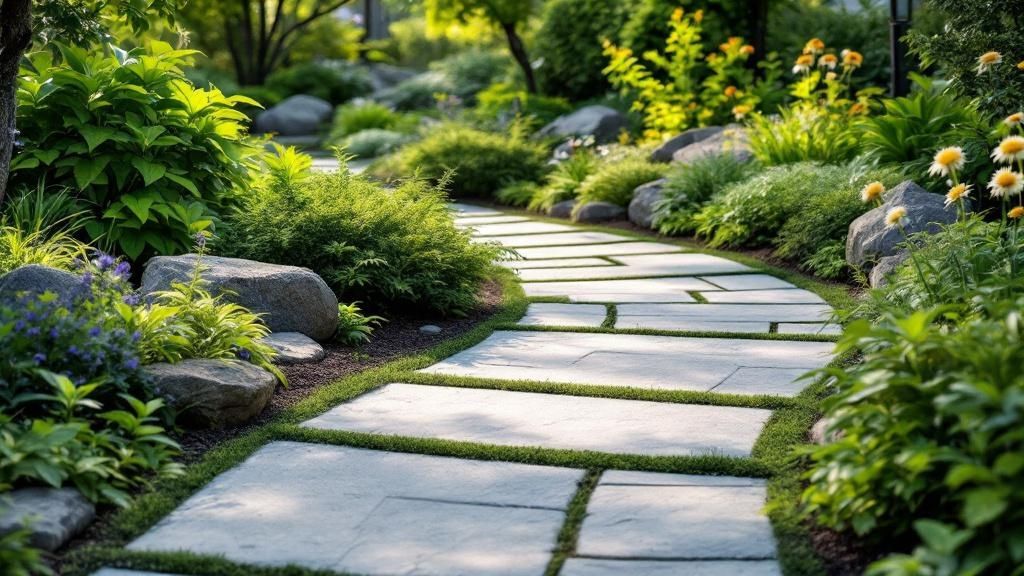
- Year 2: Expand your native garden beds, install a rain barrel to capture roof runoff, and convert a heavily used path to permeable pavers.
- Year 3: Add smart irrigation for any grass that’s left, plant a deciduous tree for natural summer shade, and maybe even add a small water feature to support local wildlife.
This gradual method makes the project much more affordable and far less overwhelming. It also gives you the chance to learn and adjust as you go.
A well-structured plan is the bridge between your sustainable aspirations and a real-world, functional landscape. It ensures that every action you take is a deliberate step toward your final goal.
The Value of Professional Expertise
While the DIY route can be rewarding, the complexities of a cohesive sustainable design often benefit from a professional touch. An experienced landscape designer sees the bigger picture, helping you sidestep costly mistakes and ensuring all the individual pieces work together in perfect harmony.
Think of a professional as a skilled orchestra conductor. They know exactly how to arrange the different "instruments"—your plants, hardscaping, and water systems—into a beautiful and functional symphony. Their expertise becomes especially critical for more complex jobs.
This is particularly true for the technical side of things. The landscaping and gardening service market, valued at a massive $123.48 billion, is increasingly shaped by new technologies. Professionals are skilled at integrating smart irrigation systems that can slash water waste by 30-50% and are up-to-date on the best ways to meet modern efficiency standards.
Hiring a professional helps streamline several critical stages:
- Developing a Cohesive Plant Palette: An expert can curate a diverse range of native and climate-appropriate plants that not only look fantastic together but also share similar water and sun needs, creating efficient "hydrozones."
- Designing Efficient Systems: This involves everything from creating precise irrigation plans and effective drainage solutions like swales or rain gardens to planning for low-voltage LED lighting and other features.
- Sourcing Quality Materials: Professionals have connections with the best suppliers for high-quality, sustainable materials like reclaimed wood, locally sourced stone, and products made from recycled content.
As you envision your sustainable outdoor space, get inspired by designs that seamlessly blend renewable energy into the landscape. You can see some incredible examples of integrated solar and green energy landscapes to spark ideas for what’s possible.
Ultimately, partnering with an expert like Tamura Designs turns a daunting project into a seamless and successful one. It’s an investment that guarantees your new outdoor space will be beautiful, resilient, and truly sustainable for decades to come.
Choosing Sustainable Materials and Smart Technology
A truly sustainable landscape design is where the wisdom of nature meets the best of modern innovation. It’s about more than just picking the right plants; it’s about making thoughtful choices in materials and technology that minimize your environmental footprint while boosting your property's efficiency, beauty, and long-term value.
This means we have to look at the entire story of the materials we bring into your yard. Think of your hardscape—the patios, walkways, and decks—as the very bones of your garden. Instead of using brand-new materials with a heavy carbon footprint, we can opt for smarter, more responsible choices that often have a story to tell.
Building with a Conscience: Materials That Matter
The materials you choose have a huge impact on how sustainable your landscape really is. Every single selection is a chance to reduce waste, lower carbon emissions, and even support local businesses. It's about building with a conscience.
Some of our go-to choices include:
- Reclaimed Wood: Using wood salvaged from old buildings gives it a second life, saving it from a landfill. It brings an instant character and rustic charm that you just can’t get from new lumber.
- Recycled Composite Lumber: For decks and fences, materials made from recycled plastic and wood fibers are incredibly durable. They fight off rot and pests without needing any chemical sealants, making them a fantastic low-maintenance option.
- Locally Sourced Stone: Choosing stone quarried right here in our region slashes the carbon footprint tied to transportation. It also means your landscape features, like retaining walls and patios, will look like they truly belong.
These aren't just eco-friendly alternatives; they create a landscape with depth, history, and a genuine sense of place.
Putting Smart Technology to Work for Peak Efficiency
Beyond the physical materials, smart technology acts as the nervous system for a sustainable landscape, making sure resources are used with total precision. These aren't just flashy gadgets; they are essential tools for maximizing efficiency, saving you money, and shrinking your environmental impact—all without you having to lift a finger.
Smart technology transforms your landscape from a passive space into an active, responsive system. It automates conservation, making resource efficiency an effortless part of your daily life.
Water-conserving landscapes, often called xeriscaping, are a perfect example. This approach can slash outdoor water use by 50–60% in areas where water is precious. If you're looking for inspiration, we have a detailed guide on drought-tolerant landscaping ideas to get you started.
Key Technologies in a Modern Sustainable Design
So, what does this technology actually look like on the ground? Most of the time, it's so well-integrated you'll barely notice it’s there, working quietly behind the scenes.
Smart Irrigation Controllers
These are the brains of your entire watering system. By connecting to live weather feeds, they use real-time data on temperature, rain, and humidity to automatically adjust watering schedules. Your plants get the perfect amount of water exactly when they need it, cutting out the waste.
Energy-Efficient LED Lighting
Outdoor lighting can completely transform a space after dark, but it can also be a huge energy hog. We use low-voltage LED fixtures that consume up to 80% less energy than old-school halogen bulbs and last for years longer. This gives you a stunning and safe nighttime ambiance without the high energy bills.
Solar Power Integration
Harnessing the sun’s power is a cornerstone of modern sustainability. Solar panels can run everything from your landscape lights and water features to pond pumps, completely offsetting their energy use. When planning the layout, using tools like drones for land surveys gives us invaluable data for optimal placement.
By pairing beautiful design with intelligent technology, we create outdoor spaces that are as smart as they are stunning.
Frequently Asked Questions About Sustainable Design
Taking the first step toward a sustainable landscape is exciting, but it’s natural to have a few questions. I find that most homeowners wonder about the look, the cost, and the real-world effort involved in shifting away from a traditional lawn. Let's clear up some of the common myths so you can feel confident about the path ahead.
We'll tackle the biggest concerns head-on, giving you the clarity you need to make the best decisions for your outdoor space.
Will My Yard Look Messy or Overgrown?
This is probably the number one misconception I hear, and the short answer is a definite no. A sustainable design isn't about letting your yard turn into an untamed wilderness. It’s about creating a well-structured, intentional, and gorgeous space that works with nature, not against it. Think of it as a curated garden, not uncontrolled chaos.
The look of a sustainable landscape is actually incredibly polished and full of life. It swaps the boring, uniform green of a lawn for a rich tapestry of colors, textures, and shapes. We use core design principles like composition, balance, and scale to create elegant, well-kept gardens that are buzzing with activity.
A sustainable landscape is a thoughtfully composed garden, not an abandoned lot. It trades the simple, flat green of a lawn for the dynamic, four-season beauty of a thriving ecosystem. The look is intentional, clean, and full of visual interest.
Instead of an overgrown jungle, you get a garden defined by:
- Structured Layouts: Clean lines, well-defined garden beds, and elegant pathways give the space a sense of order.
- Textural Variety: The interplay between soft ornamental grasses, the bold forms of succulents, and delicate perennials creates a sophisticated, layered look.
- Year-Round Color: With a carefully chosen mix of plants, something is always providing visual interest, whether it's blooming flowers, vibrant foliage, or winter structure.
The result is a landscape that feels lush and alive, not messy or neglected.
Is Sustainable Landscaping More Expensive Upfront?
This is a fair question. A thoughtful landscape transformation is an investment, and yes, the initial cost of a sustainable landscape design can sometimes be higher than just rolling out new sod. That's because the process is more comprehensive, involving careful planning and the installation of high-quality, long-lasting elements.
This initial investment might cover things like:
- Healthier, more established native plants that are ready to thrive.
- The installation of smart irrigation or rainwater harvesting systems.
- Building permeable patios or walkways with durable, often recycled, materials.
But it’s so important to see this as a long-term investment, not just an expense. Those upfront costs are consistently balanced out by major savings down the road. You’ll spend far less money and time on watering, fertilizers, pesticides, and the endless maintenance a traditional lawn demands. In just a few years, the design often pays for itself.
How Much Maintenance Is Really Required?
While there's no such thing as a "no-maintenance" garden, a well-designed sustainable landscape is dramatically lower maintenance than a conventional one. The whole point is to create a resilient ecosystem that, once established, mostly takes care of itself.
After the first year or two—while the plants are getting their roots settled—your to-do list shifts from constant, intensive labor to light, seasonal touch-ups.
| Maintenance Task | Traditional Lawn | Sustainable Landscape |
|---|---|---|
| Watering | Frequent, manual adjustments. | Automated by smart systems. |
| Mowing | Weekly during growing season. | Minimal to none. |
| Fertilizing | Several times per year. | None; soil fed by compost. |
| Weeding | Constant battle. | Reduced by dense planting/mulch. |
| Pest Control | Chemical applications needed. | Naturally managed by ecosystem. |
Your main jobs will become a bit of occasional pruning, refreshing the mulch every year or so, and, most importantly, enjoying the beautiful, thriving habitat you’ve helped create.
Can I Apply These Principles to a Small Yard or Balcony?
Absolutely! Sustainable design isn't about how much space you have; it's about the principles you use. These ideas are incredibly flexible and can be scaled to fit any area, from a compact city backyard to a tiny apartment balcony.
For a small yard, you could:
- Use Container Gardens: Group pots of native flowers and herbs to create a mini-pollinator paradise.
- Install a Vertical Garden: Grow up! A green wall or trellis makes the most of a small footprint.
- Choose a Single Specimen Tree: One beautiful, climate-appropriate tree can provide shade, habitat, and a stunning focal point.
Even on a balcony, you can set up a small compost bin, arrange pots of drought-tolerant plants, and install a mini drip irrigation system. Every little bit makes a difference for our local environment.
Are you ready to transform your outdoor space into a beautiful, functional, and sustainable sanctuary? At Tamura Designs, we specialize in creating custom landscape solutions that align with your lifestyle and the natural beauty of California. Let's start designing your dream yard today.
