
Picture your driveway behaving less like a sealed slab of concrete and more like a natural sponge. That’s the simple yet brilliant idea behind water permeable pavers. Instead of creating a river of runoff every time it rains, these pavers are the surface of a cleverly engineered system designed to let water pass right through and soak back into the earth.
How Water Permeable Pavers Work
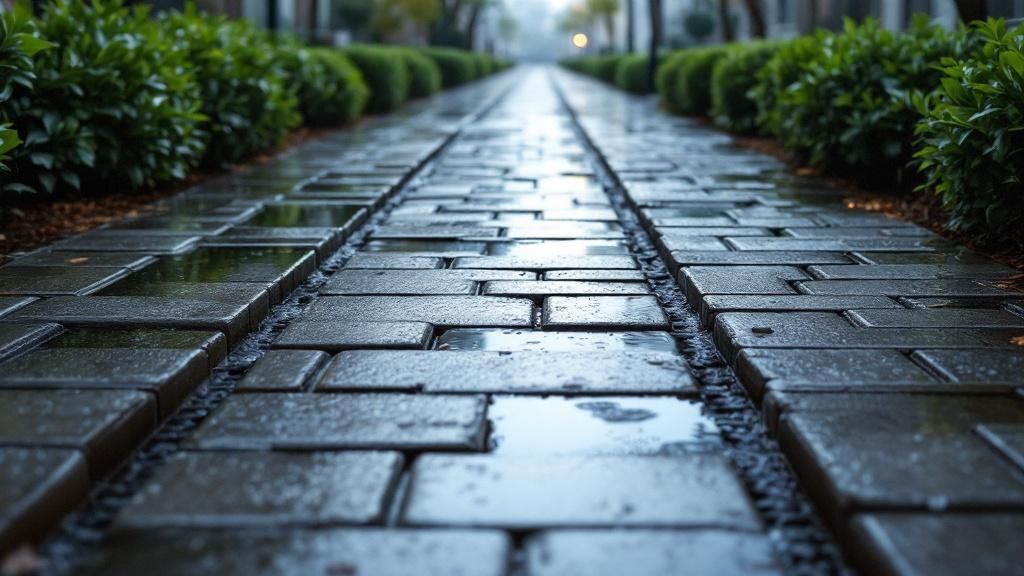
To really get it, you have to stop thinking of permeable pavers as just the stones on top. They're actually the visible part of a sophisticated, multi-layered system. Each piece works together to manage rainwater right where it lands, turning your property into an active part of a healthier local environment. The real magic isn't just in the paver itself, but in the intelligent design built underneath it.
This whole setup is a huge departure from conventional paving. The old way treats rainwater like a problem to get rid of fast, funneling it into storm drains that get overwhelmed during heavy downpours. That runoff carries all the gunk from our streets—oil, chemicals, and debris—straight into local creeks. A permeable system, on the other hand, works with nature, not against it.
The Anatomy of a Permeable System
So, what makes it all tick? It boils down to two key parts: the pavers on top and the base below.
The pavers themselves are made with little spacer bars on their sides. When a professional installer lays them, these bars automatically create small, intentional gaps between each stone. These gaps are the front door for rainwater. Instead of being filled with the usual sand, they’re filled with a small, clean crushed stone that lets water flow right through.
The core principle is powerful in its simplicity: slow the water down, let it soak in, and filter it naturally. This approach directly combats the harmful effects of the impervious, sealed surfaces so common in suburban areas like Morgan Hill.
Once the water passes through the pavers, it moves into the most important part of the system—the layers underneath.
The Crucial Layers Beneath
Under the pavers you see lies a deep bed of larger, open-graded crushed stone. This isn’t just filler; it’s the engine of the entire system.
- Detention and Storage: This rock layer acts like an underground reservoir. It holds a huge volume of water and lets it release slowly into the soil below. This prevents the ground from getting overwhelmed, which is especially important in areas with heavy clay soils.
- Structural Support: This base of interlocked stone creates an incredibly strong and stable foundation. It can easily handle the weight of cars and trucks without shifting or sinking over time.
- Natural Filtration: As rainwater trickles down through the different layers of stone, it gets cleaned. Pollutants like oil drips, heavy metals, and sediment from your car get trapped and filtered out. It’s a natural process that sends cleaner water back to recharge our local groundwater.
This technology is becoming a bigger and bigger deal as communities everywhere focus on smarter, more sustainable development. The global permeable paver market was valued at around USD 1.77 billion and is expected to climb to USD 2.38 billion by 2032, driven by the growing need for better stormwater solutions.
Traditional Paving vs. Water Permeable Pavers
To see the difference clearly, let's do a quick side-by-side comparison of how these two surfaces handle a typical rainstorm. If you'd like to dive even deeper, our guide on what permeable pavers are covers these benefits in more detail.
| Feature | Traditional Paving (Asphalt, Concrete) | Water Permeable Pavers |
|---|---|---|
| Water Handling | Creates immediate, high-volume runoff. | Allows water to infiltrate directly into the ground. |
| Storm Drain Impact | Significantly increases the load and risk of overflow. | Reduces strain on municipal storm drain systems. |
| Pollutant Control | Washes surface pollutants directly into waterways. | Filters pollutants naturally through aggregate layers. |
| Groundwater | Prevents natural groundwater recharge. | Actively replenishes local groundwater supplies. |
Ultimately, by choosing permeable pavers, homeowners in Morgan Hill aren't just getting a new driveway or patio. They’re installing a personal, small-scale stormwater management facility right on their property. It’s a choice that helps protect our local creeks and builds a more resilient and sustainable community.
The Real Benefits for Your Home and Environment
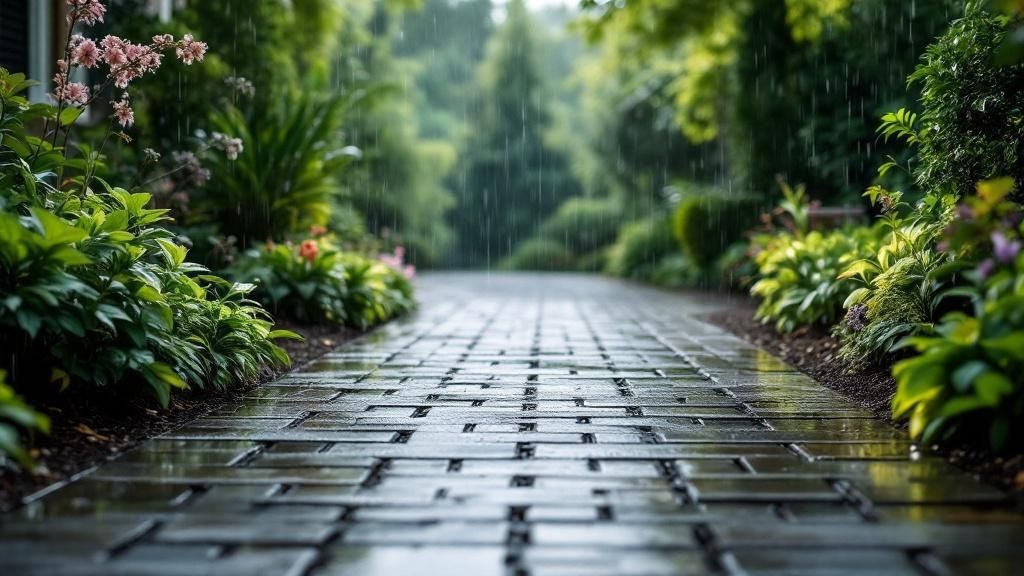
It’s one thing to understand how a permeable system works, but what really matters is seeing the difference it can make for your own home. When you choose water permeable pavers, you’re not just making an aesthetic upgrade. You're making a smart, functional investment that pays you back—and benefits our whole community.
Think of your driveway or patio transforming from just a slab of concrete into an active, living part of a healthier landscape.
The most immediate benefit you'll notice is how it handles a downpour. Traditional concrete and asphalt are like a shield, forcing water to run off as fast as it falls. During a heavy California rain, that runoff becomes a torrent, overwhelming Morgan Hill’s storm drains, flooding yards, and eroding precious topsoil.
A permeable paver system completely flips the script. Instead of shedding water, it welcomes it, allowing rain to soak straight into the ground beneath. This simple change nearly eliminates surface runoff from your property. For homeowners, that means serious protection against the erosive power of uncontrolled water and less worry about pooling around your foundation.
Protecting Our Precious Groundwater
The benefits stretch far beyond your property line. Here in California, where water is gold, every drop counts. Permeable pavers are a fantastic tool for replenishing our local aquifers—those underground layers of rock and soil that store our groundwater.
Instead of sending perfectly good rainwater down the drain, your driveway helps it get back to where it belongs: in the earth. It’s a beautiful way to restore the natural water cycle that existed long before our neighborhoods were built.
By managing stormwater on-site, a permeable paver installation becomes your personal contribution to a more water-secure future for our community. It’s a proactive step toward environmental stewardship that starts right at your doorstep.
There's another huge environmental win: natural water filtration. As rainwater washes over a standard driveway, it picks up all sorts of nasty stuff—oil, gasoline residue, heavy metals, and other pollutants. That contaminated soup flows untreated into our local creeks and, ultimately, into Monterey Bay.
The layers of aggregate gravel beneath water permeable pavers act like a natural filter. They trap many of those pollutants before they ever reach our waterways. Studies have confirmed that these systems are incredibly effective at reducing suspended solids and other contaminants from vehicle runoff.
Boost Your Curb Appeal and Property Value
Of course, the advantages of water permeable pavers also hit close to home, boosting your property’s look and financial value. Let's be honest, they offer a sophisticated, high-end look that plain concrete or asphalt just can't touch. With a huge variety of colors, shapes, and patterns, you can create a custom design that truly elevates your home's curb appeal.
This modern, eco-conscious aesthetic is exactly what many homebuyers are looking for today. A home with sustainable features like a permeable driveway doesn't just look better; it signals a well-maintained, forward-thinking property, which can absolutely increase its market value.
The market backs this up. Growing environmental concerns have fueled major growth in the permeable pavers market, which is projected to jump from USD 2.5 billion to an estimated USD 4.5 billion by 2033. This surge is a direct answer to the problems caused by expanding impervious surfaces in our cities—surfaces the EPA reports have increased by 30% in recent decades, making local flooding worse. You can read more about this trend in this detailed report on permeable paver growth.
When you boil it down, installing water permeable pavers is a win-win-win scenario. You get:
- Enhanced Flood Protection: A massive reduction in water pooling and landscape erosion on your own property.
- Environmental Contribution: You'll be actively helping recharge our groundwater and filter out pollutants.
- Increased Home Value: A beautiful, modern look that appeals to today's eco-aware buyers.
This powerful combination of practical, environmental, and financial perks makes it one of the smartest upgrades a homeowner in the Morgan Hill area can make.
Choosing the Right Materials and Design
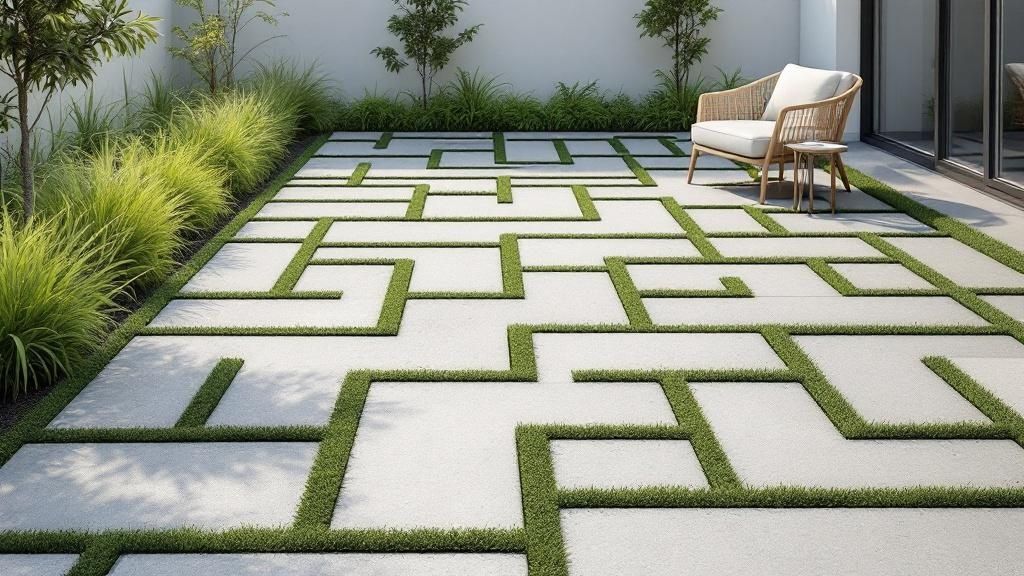
When you opt for a water permeable pavers system, you’re not just making a practical choice for stormwater management—you're making a major design decision for your home’s exterior. This is where smart engineering meets beautiful aesthetics.
The right material does more than just let water through. It elevates the entire look and feel of your property, creating a stunning driveway, walkway, or patio that perfectly suits your Morgan Hill home. The good news is, you don’t have to sacrifice style for function.
Permeable pavers come in a surprisingly rich palette of materials, colors, textures, and patterns. This gives you the freedom to move beyond a simple, gray surface and craft a custom look that’s a true reflection of your personal taste and your home’s unique character. Let's look at some of the most popular options out there.
Permeable Interlocking Concrete Pavers (PICP)
Hands down, the most common and versatile choice for residential projects are Permeable Interlocking Concrete Pavers, or PICP for short. Think of these as the stylish, hardworking champions of the permeable world. They’re specifically engineered to create a powerful, load-bearing surface that’s tough enough for anything from a quaint garden path to your family’s busy driveway.
So, how do they work? PICP get their permeability from the small, precisely engineered gaps between each individual paver. We fill these joints with a fine, clean aggregate (think tiny stones) that allows water to drain right through while locking the pavers securely in place.
Here’s why they’re such a popular choice:
- Tons of Design Flexibility: PICP are available in a huge variety of shapes, sizes, colors, and finishes. This means you can get creative with intricate patterns like herringbone or basketweave, or go for a clean, modern aesthetic with large-format slabs.
- Seriously Strong: When they’re installed correctly over a proper base, these pavers are incredibly durable. They can easily handle the weight of daily vehicle traffic without cracking or shifting under pressure.
- A Proven Track Record: This isn’t some new, untested fad. PICP technology is time-tested and has been used successfully for years in both residential and commercial projects.
If you want to see some different styles in action, check out our guide on the 7 best patio pavers to get your creative juices flowing.
Plastic Grid Pavers
What if you want the strength of a paved surface but the look of a lush lawn? For homeowners chasing a more natural, green aesthetic, plastic grid paver systems are a fantastic solution. These systems use a sturdy grid—often made from 100% recycled plastic—that provides all the necessary structural support while being nearly invisible once the project is finished.
The grid’s open cells can be filled with either topsoil and grass seed or with decorative gravel. This clever design lets you create a surface that is both completely drivable and beautifully green, or a crisp gravel area that stays stable and puddle-free.
A grass-filled grid system is the ultimate blend of nature and engineering. It gives you the load-bearing capacity of pavement while maintaining the soft look and feel of a healthy lawn, effectively hiding the hardscape right under your feet.
These systems are perfect for driveways, overflow parking spots, or fire lanes where you want to minimize the visual footprint of traditional pavement. The grassed option also has the added benefit of helping combat the urban heat island effect, as the plants naturally cool the air around them.
Comparison of Permeable Paver Materials
Choosing between these materials really comes down to what you want the space to look like, how you plan to use it, and how much maintenance you’re comfortable with. To make it a little easier, we’ve put together a quick comparison of the options.
| Material Type | Best For | Aesthetic | Typical Cost | Maintenance |
|---|---|---|---|---|
| PICP | Driveways, high-traffic patios, walkways. | Can be classic, modern, or rustic; endless pattern potential. | Mid to High | Regular sweeping; occasional top-off of joint aggregate. |
| Plastic Grid (Grass) | Driveways, auxiliary parking, green "hardscape" areas. | Natural, seamless with the lawn, lush. | Mid | Standard lawn care (mowing, watering, fertilizing). |
| Plastic Grid (Gravel) | Pathways, low-traffic driveways, patios. | Clean, contemporary, or rustic; great for Japanese garden styles. | Low to Mid | Occasional raking to smooth out the gravel. |
At the end of the day, both PICP and grid systems deliver on their promise of outstanding stormwater management. Your choice simply allows you to tailor the final look of your water permeable pavers to create an outdoor space that’s not just eco-friendly, but a beautiful and valuable extension of your home.
Understanding the Professional Installation Process
A truly successful water permeable pavers system isn’t just about the beautiful stones you see on top. Its real strength and function come from what lies beneath. The installation is much more involved than for a traditional patio because it requires creating an entire underground reservoir to manage stormwater. This isn't just a suggestion—it’s why getting a professional is absolutely essential.
Knowing the steps a qualified contractor takes will help you ask the right questions and understand the quotes you receive. It's a job of precision engineering where every single layer is critical for the system's long-term success. Think of it less like laying a patio and more like building a small, high-performance civil engineering project right in your yard.
Step 1: Site Preparation and Excavation
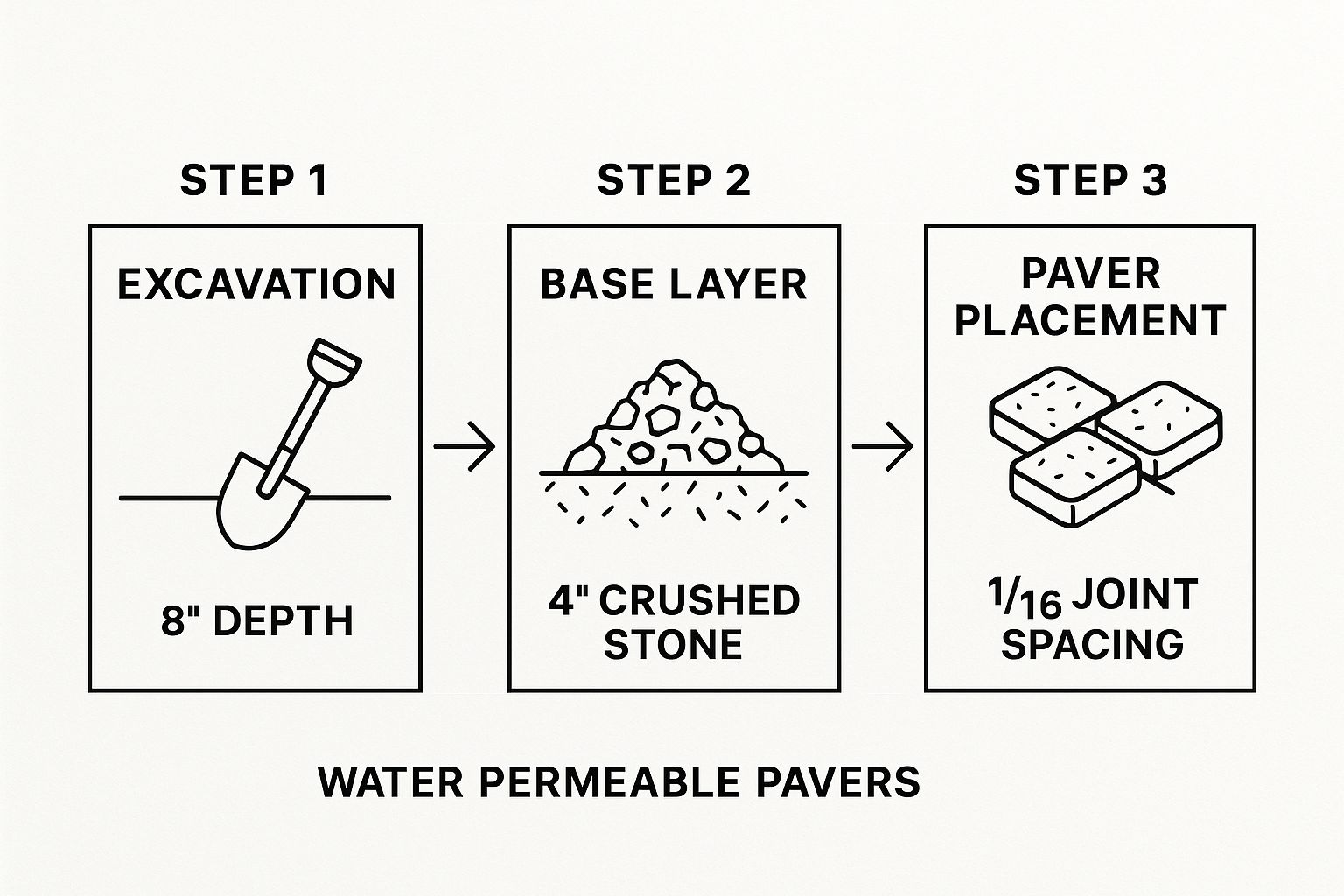
The first, and you could argue most important, phase is getting the site ready. This starts with a serious excavation that goes much deeper than what’s needed for standard pavers. A pro crew will typically dig down anywhere from 8 to 24 inches, and sometimes even more.
How deep they go depends on a few key things:
- Your Soil: Heavy clay soils drain slowly, so they need a deeper base to hold water while it soaks in. If you have sandy soil that drains fast, the base might not need to be as deep.
- Morgan Hill's Climate: We have to plan for our seasonal downpours. The system needs enough capacity to handle the runoff from a major storm.
- What It's For: A driveway that needs to support cars and trucks requires a much thicker, stronger base than a simple garden path.
This initial dig is all about making room for the permeable system to do its job. A rushed or shallow excavation is the number one reason these systems fail down the road.
Step 2: Building the Sub-Base
Once the area is excavated, it’s time to build the multi-layered sub-base. This is the heart and soul of your water permeable pavers system. First, a sheet of geotextile fabric is rolled out. This special fabric is a barrier that stops the underlying soil from mixing with and clogging up the clean stone above it, all while letting water pass straight through.
You can think of the geotextile fabric as the system's unsung hero. It's a critical piece that stabilizes the whole installation, making sure the stone layers stay clean and functional for decades.
Next, the crew starts adding the open-graded aggregate. This isn't just any old gravel; it's a specific kind of crushed stone with almost no fine dust or sand, which creates large gaps between the rocks for water storage. The base is built up in layers, or "lifts," and each one is compacted thoroughly to create a strong, interlocked foundation.
This aggregate base is a true multitasker: it provides the structural muscle to support weight (like your car) and acts as the hidden reservoir that holds rainwater as it slowly filters into the ground below.
Step 3: Laying the Pavers and Finishing Touches
With the base perfectly graded and compacted, a thin bedding layer of smaller, clean crushed stone is spread evenly on top. This creates a smooth, level surface to set the pavers. The crew then carefully lays the water permeable pavers in your chosen pattern, using the small spacer bars built into the pavers to keep the joint widths consistent—usually around 1/16 to 1/4 inch.
Finally, a smaller aggregate is swept into these joints. This joint stone is what locks all the pavers together and serves as the final doorway for rainwater to enter the system. If you want to see how stunning these finished surfaces can be, take a look at our guide on creating a beautiful permeable pavers patio. When done by a pro, the result is a gorgeous, incredibly durable, and highly functional surface that's truly built to last.
Here is the rewritten section, crafted to sound like an experienced human expert and match the provided style examples.
Keeping Your Permeable Pavers in Top Shape for the Long Haul
I hear this a lot: "Permeable pavers sound great, but what about the upkeep?" It's a fair question, but the idea that these systems are a headache to maintain is one of the biggest myths out there.
The good news is, taking care of a permeable paver system isn't about hard work. It's just a different, and frankly, simpler routine than what you might be used to with a traditional sealed patio. The whole game is about one thing: keeping the joints clear so water can get through.
Forget about deep scrubbing for stains. Your main job here is to stop leaves, dirt, and other gunk from piling up and clogging the tiny gaps between the pavers. Think of it like cleaning out your rain gutters—a little preventative care goes a long, long way in making sure everything works when you need it most.
Your Simple Annual Maintenance Plan
For most of the year, your permeable pavers will happily do their job with very little help from you. A bit of consistent, light-touch care is all it takes to keep them performing at their best for decades. Best of all, you can do most of this in a few minutes with tools you already have in the garage.
Here’s a basic routine that works wonders:
- Regular Sweeping: Grab a stiff-bristled broom and give the surface a good sweep every few weeks, especially when the leaves are falling. This gets rid of twigs and debris before they can break down and muck up the works.
- Occasional Rinsing: A couple of times a year, a quick rinse with a garden hose can wash away fine dust that the broom misses. Just be sure to use a regular nozzle—a high-pressure washer can blast the special aggregate right out of the joints.
- Weed Patrol: The stone-filled joints aren't exactly prime real estate for plants, but you might get an ambitious weed now and then. Just pull it by hand before it puts down roots. It's usually a five-second job.
That’s really it. This simple, proactive approach is all you need to ensure your water permeable pavers drain perfectly, season after season.
The secret to permeable paver care is prevention, not reaction. If you keep organic stuff off the surface, you stop the fine sediment that causes clogs before it even starts. Your system will always be ready for the next downpour.
The Occasional Deeper Clean
Even if you're on top of your sweeping game, some very fine sediment can work its way deep into the joints over many years. To keep your system's absorption rate at its peak, I recommend a slightly deeper clean every 3 to 5 years. Don't worry, you won't need to call in a professional crew.
The most effective tool for this is a regular shop vacuum. Just run the nozzle over the paver joints to suck out any of those tiny particles and decomposed bits. It’s a surprisingly easy way to "reset" the whole system.
After you’ve vacuumed, you might need to top off the joints with a little fresh aggregate. Just sweep it into the gaps until they’re full again. This small step ensures your investment will continue to protect your property and our local environment for its entire 20-30 year lifespan.
Alright, let's talk about the dollars and cents. When you're looking at a water permeable paver system, it's a different kind of investment than your standard driveway or patio, and it’s important to know exactly where your money is going.
The initial cost is almost always higher than traditional concrete or asphalt, and for a very good reason. You aren't just buying pavers; you're investing in a sophisticated stormwater management system built right into your landscape. That higher price tag comes almost entirely from the intensive site work needed to make it all work—the deep excavation and the carefully layered, specialized aggregate base.
Breaking Down the Investment
Think of it as a long-term play for your property's value and resilience. While a quote for a permeable system might seem 15-30% higher than conventional pavers at first glance, that number doesn't really tell the full story.
A properly installed permeable paver system can completely eliminate the need for other expensive drainage fixes, like French drains, dry wells, or catch basins. Once you factor in the money you'll save by preventing costly water damage and landscape erosion, the lifetime value really starts to shine through.
This forward-thinking approach is catching on. The global market for these solutions was recently pegged at around USD 5.67 billion and is poised for steady growth. More and more homeowners are choosing materials that look fantastic while being kinder to the environment. The upfront cost is a hurdle for some, but the long-term rewards are what's really driving the demand. You can dig into the market trends in this comprehensive permeable paver system report.
Finding a Truly Qualified Pro
Now for the most critical part: hiring the right contractor. Because the installation is so technical, this is single-handedly the most important decision you'll make. This isn't a job for a general landscaper or a weekend handyman. You absolutely need a specialist with proven, hands-on experience in permeable systems. An installation done incorrectly is a complete failure and a total waste of your investment.
When you're vetting contractors here in the Morgan Hill area, you need to know what to look for:
- Specific Permeable Experience: Don't just ask if they install pavers. Ask to see a portfolio of their finished water permeable paver projects. You want to see pictures and, if possible, visit a local job they've completed.
- Professional Certifications: Look for credentials from well-respected industry groups. A certification from the Interlocking Concrete Pavement Institute (ICPI) is a gold standard. It shows a contractor is serious about their craft and up-to-date on the correct techniques.
- In-Depth Questions: A real pro will be a bit of a detective. They’ll ask you about your soil type, where water currently pools on your property, and what you plan to do with the space. They should be educating you, not just trying to sell you.
Before you even think about signing a contract, make sure you get clear answers to these questions:
- Based on my soil and project, exactly how deep will you need to excavate?
- What specific types and layers of aggregate will you use for the sub-base?
- Are you ICPI certified? Can you show me your certification?
- Can I speak to a few of your past clients who had permeable systems installed?
Going with a cheaper, unqualified installer is the fastest way to turn your dream project into a nightmare. Take the time to find a certified professional. It’s the only way to ensure your beautiful new surface works exactly as it should for decades to come.
Answering Your Top Questions About Permeable Pavers
It's completely normal to have a few questions before diving into a big project like this. Even after seeing all the benefits, homeowners want to know the practical ins and outs. Let's tackle some of the most common questions we hear from our clients right here in Morgan Hill.
Can I Actually Park My Car on Permeable Pavers?
Absolutely. This is a common concern, but rest assured, these are not your average decorative stones. Permeable Interlocking Concrete Pavers (PICP) are specifically engineered to handle the daily weight and stress of residential vehicles.
The real magic happens underneath. When a professional installs them over a properly engineered, deep base of open-graded aggregate, the entire system is incredibly strong and stable. You get a durable, beautiful driveway that also happens to be a stormwater-fighting machine.
Will They Clog Up and Become Useless?
Clogging is a possibility, but it's one you can easily prevent with a little bit of straightforward care. The goal is just to keep organic gunk—think leaves, loose dirt, and stray mulch—from settling into the joints between the pavers.
A simple sweep now and then or a quick rinse with a hose is usually all it takes to keep the system flowing freely. If you do notice some heavier sediment buildup after a few years, a shop vacuum can clear out the joints and restore permeability in no time. It's not a "set-it-and-forget-it" surface, but the maintenance is far from demanding.
Are Permeable Pavers a Lot More Expensive?
Upfront, yes, you can expect the initial installation cost for water permeable pavers to be about 15-30% higher than a standard interlocking paver project. That extra cost comes from the deeper digging and the specialized layers of aggregate rock needed to create the system's underground reservoir.
But it's really important to look at this as a long-term investment, not just an expense. This system can completely eliminate the need for separate, costly drainage solutions, protect your property from expensive flood damage, and often adds significant appeal and value to your home.
What if I Have Clay Soil? Will They Still Work?
Yes, they will. This is a huge advantage for us here in the Morgan Hill area, where dense clay soil is the norm. While our native soil doesn't drain well on its own, a permeable paver system is designed specifically to compensate for that.
Think of the deep gravel base as an underground holding tank. It captures the rainwater and gives it the time it needs to slowly soak into the stubborn clay below. For properties with extremely dense clay, we can also install an underdrain—basically a perforated pipe at the very bottom of the rock base—to safely direct any major overflow away from the area.
Ready to see how a beautiful, sustainable paver system could transform your outdoor space? The expert team at Tamura Designs has been designing and building stunning landscapes in Morgan Hill and across Silicon Valley for over 30 years. Contact us today to schedule your consultation.
