
When you're looking at pool deck resurfacing options, you have a lot of great choices. These include tough concrete coatings, classic stone pavers, fancy tile, and natural pebble finishes. The best one for you depends on your budget, the style you want, and how much cleaning you're willing to do. In the end, any of these choices will make your pool area safer and look much better.
Why Resurfacing Your Pool Deck Is a Smart Investment
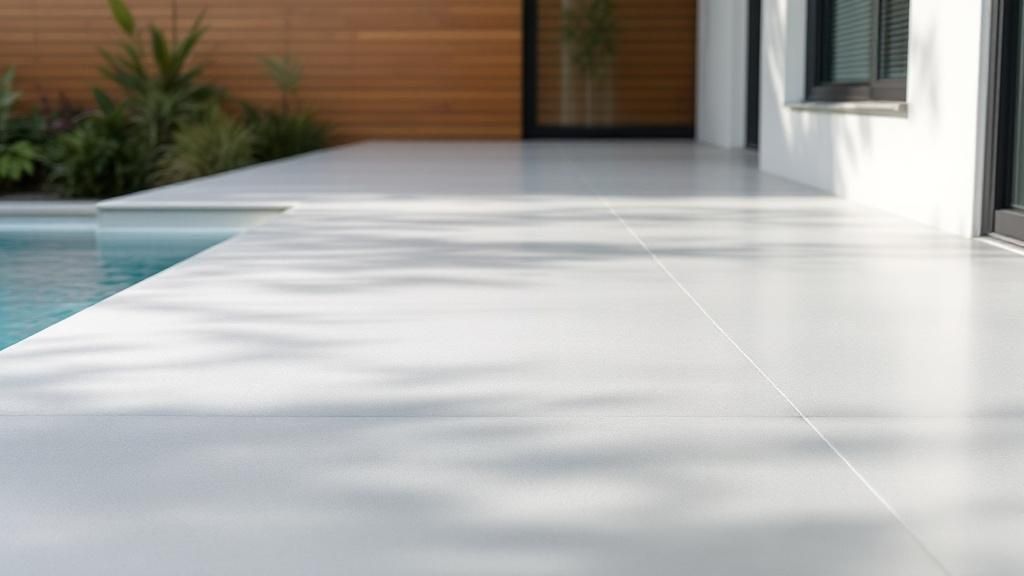
Fixing up your pool deck is more than just a cosmetic touch-up—it’s a smart investment in your home. Think of it as important maintenance that protects your pool area and, most importantly, keeps everyone safe. A worn-out, cracked deck isn't just ugly; it can be dangerous.
Pool construction and updates are more popular than ever, which shows how important this is. The worldwide swimming pool market was worth USD 8.3 billion in 2023 and is expected to keep growing. A big part of that is homeowners replacing old deck materials with something new that can handle water, chemicals, and sun. To learn more, you can read the full research about the swimming pool market.
Key Benefits of an Upgraded Deck
One of the best things about resurfacing is better safety. Over time, pool decks can get slippery when wet or have uneven spots that are easy to trip on. New materials are made with non-slip textures to give you a firm grip and reduce the risk of falls.
And don't forget how it looks. A fresh, new pool deck can turn your backyard into a beautiful outdoor space and increase your home’s value. It's often the first thing people see.
Resurfacing is a way to prevent bigger problems. It lets you fix small issues like tiny cracks or stains before they turn into major, expensive damage that would require a total replacement.
Common Warning Signs Your Deck Needs Attention
Not sure if it’s time for an upgrade? Your deck will usually give you clues. Look for these clear signs. Catching them early can save you a lot of money and trouble down the road.
- Visible Cracks: Even small cracks are a problem. Water seeps in, freezes, and expands, turning a small crack into a big one.
- Surface Discoloration: Do you see stains from chemicals, algae, or rust that won't go away? That’s a sign the deck's protective coating has worn off.
- Excessive Heat: If your deck gets too hot to walk on with bare feet, it's time for a change. Newer "cool deck" materials are made to reflect sunlight and keep the surface cooler.
- Slippery When Wet: This is a big one. If the surface is smooth and feels slick when wet, it’s a major safety risk that resurfacing can fix right away.
Comparing the Most Popular Pool Deck Materials
Choosing the right material for your pool deck is a big decision. You have to balance looks, cost, and how easy it is to take care of. The best options don't just look good—they are also safe, strong, and add a style that makes your pool area a true backyard getaway. Let's look at how these materials work in the real world.
This picture shows how materials like natural stone can create a beautiful and unified outdoor space.
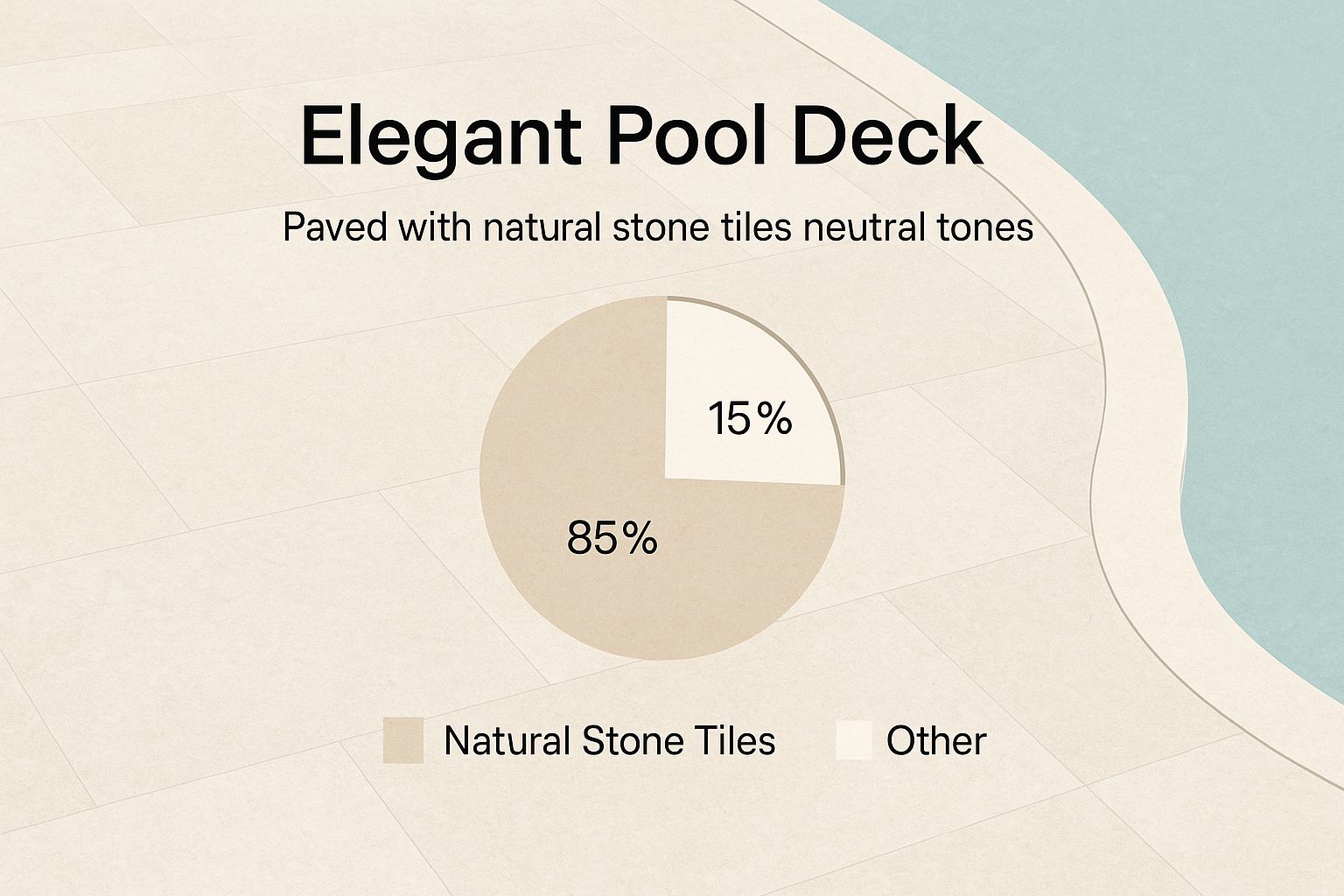
The image shows how different textures and colors—like travertine or flagstone—can create a classy, resort-like feel that is both welcoming and stylish.
Concrete Overlays: A Versatile Foundation
For a flexible option, it's hard to beat concrete overlays. This method involves putting a thin layer of a cement-based product over your old concrete. This new layer can then be customized in almost any way you can think of—stamped, stained, or textured.
Imagine a family with young kids who are always running and splashing. For them, a knockdown texture overlay is a great choice. This finish is sprayed on and creates a non-slip surface that feels good on bare feet and stays cooler in the sun. It’s a smart, safe choice that still looks clean and modern.
Pavers: The Classic Choice for Flexibility
Pavers—made from concrete, brick, or natural stone like travertine—offer a classic, elegant look that is always in style. They are installed as separate, interlocking pieces, which gives them a big advantage.
For example, if your home is in an area where the ground shifts, a solid concrete deck is likely to crack. Interlocking pavers, however, can move slightly with the ground and avoid major damage. And if one paver cracks or gets stained? You can simply lift it out and replace it. This makes repairs much easier and cheaper.
While pavers look great, they do need some special care to stay that way.
- Weed Prevention: The small gaps between pavers can grow weeds unless they’re filled with a special type of sand called polymeric sand.
- Level Surface: Over time, some pavers might sink, creating uneven spots that you could trip on. These will need to be re-leveled by a professional.
- Regular Sealing: To protect pavers from stains and sun-fading, you should have them sealed every few years.
Tile: An Elegant but Slippery Surface
Porcelain and ceramic tiles can bring a touch of luxury to a pool deck. With so many colors, patterns, and finishes, you can create a unique design that matches your home’s style perfectly.
But this style comes with a big safety warning. Many beautiful tiles get very slippery when wet, making them a risky choice for a busy pool. If you really want tile, you must choose one that is made for outdoor, wet areas and has a high slip-resistance rating.
For instance, a homeowner who wants a modern look might like large porcelain tiles. To make it safe, they would need to pick a tile with a textured, matte finish, not a glossy one. Good installation with thin grout lines is also important to stop mildew and make cleaning easier. To see how different stone and paver options can look, check out these inspiring hardscaping and patio ideas.
Pool Deck Material Comparison at a Glance
To give you a quick summary, here's a table that breaks down the main features of these popular pool deck options. Use it as a handy guide.
| Material | Average Cost (per sq ft) | Lifespan | Slip Resistance | Maintenance Level |
|---|---|---|---|---|
| Concrete Overlays | $6 – $15 | 10-20 years | High (with texture) | Low |
| Pavers | $15 – $50 | 25-50+ years | Good to Excellent | Moderate |
| Tile | $5 – $35 | 50+ years | Varies (select carefully) | Low |
By thinking about how you and your family will use the space, you can compare the pros and cons of each material. It’s all about finding the right balance of beauty, strength, and safety for your pool deck.
A Closer Look at Concrete Resurfacing Options
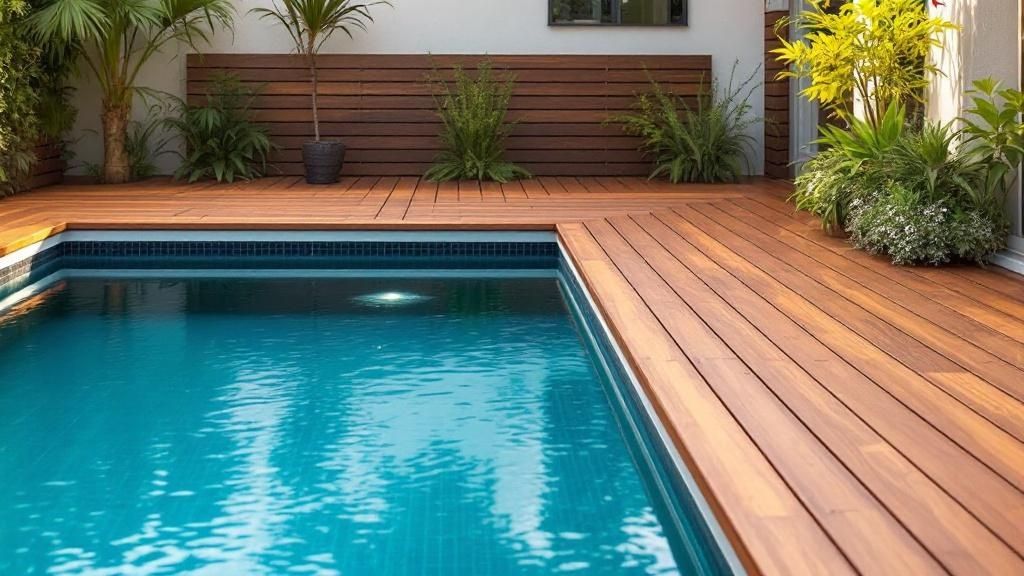
When you look into pool deck resurfacing options, concrete overlays are often the first choice you'll see. There’s a good reason for this. They offer many styles, are affordable, and can completely change your pool area without the mess of tearing everything out.
The process is simple: a new layer of a cement-based product is applied right over your old concrete. This opens up a world of design ideas. Instead of starting over, an overlay lets you fix flaws while adding style and safety.
Stamped Concrete Overlays
If you want the rich look of natural stone or brick but don't have the budget, stamped concrete is a perfect choice. After the overlay is poured, large patterned stamps are pressed into the surface. This creates textures that look so real, they can trick almost anyone.
The real magic is in the coloring. A mix of stains and dyes is used to create natural-looking color variations, making the "stones" or "bricks" look real. A stamped overlay is a great choice for anyone who wants a high-end, custom look.
A big plus for stamped concrete is its solid surface. Unlike pavers, there are no gaps for weeds to grow or ants to build nests. That means less work for you and a cleaner look.
Spray-Down Textures (Knockdown Finish)
For a pool deck focused on family fun and safety, a knockdown finish is a great option. This surface is made by spraying a thin layer of concrete material and then smoothing it with a tool called a trowel. This leaves a comfortable, lightly textured surface that’s easy on bare feet.
This texture is a huge help for slip resistance, which is a must-have around a pool. It also helps keep the deck cooler. The texture allows air to move better than a smooth, solid slab of concrete. It’s a smart, safe, and nice-looking choice for any pool. If you're interested in other surfaces that handle water well, you might want to learn about what permeable pavers are and how they help with drainage.
Epoxy Pebble Coatings
For a unique and natural look, epoxy pebble coatings are a great option. This method involves mixing small, smooth river pebbles with a strong epoxy glue. This mix is then spread over your old deck, creating a seamless and textured finish.
The result is a beautiful, strong surface that feels great to walk on—almost like a dry riverbed. It's very tough and holds up well against pool chemicals. And because water can drain through it, there are fewer puddles. It’s a great way to make an old, cracked deck look new again.
Choosing Pavers or Tile for a Timeless Style
If you want a classic or high-end look for your pool deck, pavers and tiles are excellent choices. These options bring a timeless beauty that can turn your outdoor area from a simple poolside into a stylish retreat.
Unlike a concrete overlay, which is one solid surface, pavers and tiles are individual pieces. This not only gives them a special look but also offers some real benefits.
The Classic Appeal of Pavers
Pavers have been a popular choice for a long time because they are strong and look great. They usually come in two types: affordable concrete pavers and more luxurious natural stone options like travertine. One of the best things about pavers is how they are installed. Because they are separate pieces, they can move a little as the ground shifts. This helps you avoid the large cracks that often appear in solid concrete decks.
Fixing a paver deck is also very simple. If one paver gets stained or cracked, you just take it out and put a new one in. They do need some care—you'll need to add sand to the joints every few years to keep weeds out—but they last for a very long time, making them a smart choice. You can see how different materials look together by checking out some of the best patio pavers available.
One of travertine's best features is that it stays cool. This natural stone doesn't get as hot in the sun, making it comfortable for bare feet on summer days.
This trend toward beautiful, lasting materials is part of a bigger movement. The global swimming pool market was worth USD 3.55 billion in 2023 and is expected to grow to USD 4.18 billion by 2032. This is because more people want to create their own custom outdoor spaces. If you're curious, you can discover more insights about the swimming pool market on dataintelo.com.
The Sleek Look of Porcelain Tile
For a truly custom and elegant design, porcelain tile is hard to beat. Tiles offer endless possibilities with so many colors, sizes, and patterns. You can create anything from a modern look to a detailed mosaic. They are also very dense, so they stand up well to water, stains, and fading from chlorine and the sun.
But with tile, safety must come first. Many tiles can get very slippery when wet. It's extremely important to choose a tile that is made for outdoor, wet areas. Look for tiles with:
- A high slip-resistance rating (sometimes called a high coefficient of friction).
- A textured or matte finish, not a smooth, shiny one.
- A frost-proof rating to make sure it won't crack when the temperature changes.
Whether you choose pavers or tile, proper installation is key. Pavers need a solid base of gravel and sand to keep them from sinking and to allow for good drainage. For tiles, using the right mortar and grout for outdoor use is a must. This creates a strong bond that will resist moisture and mildew for years.
How to Choose the Right Option for Your Home
Choosing the right pool deck material isn't just about what looks good. It's about finding a surface that fits your life. Think about how you and your family will actually use the space. This will help you make a choice you'll be happy with for years.
Let's go through a few common examples. Seeing how different needs lead to different materials will help you find the perfect fit for your own backyard.
Scenarios to Guide Your Choice
-
For Families with Young Children: Here, safety is the most important thing. A knockdown texture concrete overlay is a great choice. It has a non-slip surface with plenty of grip for running feet. It also stays cooler than other materials, which is great for little bare feet on a hot day.
-
For the Modern Design Enthusiast: If you want a clean, high-end look, large porcelain tiles are a great option. Just be sure to pick a tile with a textured, matte finish and a high slip-resistance rating to get that stylish look without giving up safety. The thin grout lines create a smooth, unified appearance.
-
For the Budget-Conscious Homeowner: A simple concrete overlay is the most affordable way to get a fresh-looking deck. A basic broom finish can add texture and grip, or you can add a single-color stain for a more finished look that won't cost a lot.
Your local weather is also very important. If you live in an area where the ground moves a lot, interlocking pavers are a better choice than a solid slab. They can move and flex without causing large cracks.
Of course, a big project like this often comes down to money. Figuring out your house renovation financing options from the start will help you narrow down your choices right away.
By thinking about your family's needs, your style, the local climate, and your budget, you can move forward with confidence. The right material will not only update your pool area—it will make your whole outdoor living experience better.
Common Questions About Pool Deck Resurfacing
When you start planning a big project, it's normal to have questions. Getting clear, simple answers is the best way to set a realistic budget and timeline from the start. Let's cover some of the most common questions homeowners ask about their pool deck resurfacing options.
How Long Does Pool Deck Resurfacing Take?
Most professional resurfacing jobs take about 2 to 5 days. That time can change depending on the size of your deck, the material you choose, and the weather.
Remember that preparing the old surface and letting the new material dry completely are very important for a strong, long-lasting finish. For example, a simple concrete overlay on a small deck might take two days. But a more difficult paver installation over a large area could take closer to a week.
One of the biggest things that can affect the timeline is the condition of your old concrete. If we find large cracks that need to be fixed or areas that need to be leveled before the new surface can be applied, that can add at least an extra day to the job.
What Is the Most Durable Pool Deck Surface?
When it comes to being tough and long-lasting, it's hard to beat concrete pavers and high-quality concrete overlays. We think these are the best options. They are very strong and have a special advantage: they resist cracking from small ground movements much better than a single, large slab of concrete.
These materials are built to handle everything—lots of foot traffic, splashes from pool chemicals, and all kinds of weather.
Can I Resurface My Pool Deck Myself?
You might see some do-it-yourself overlay kits at the hardware store, but the truth is that most resurfacing jobs need a professional. Methods like stamping concrete, laying pavers correctly, or applying an epoxy pebble finish require special skills to get a good result.
Hiring a professional is almost always the right choice. It makes sure a few important things are done correctly:
- Proper Drainage: A professional will make sure water flows away from your pool and your house, which is important for preventing future problems.
- A Level Surface: We make sure the final surface is perfectly level. This prevents dangerous tripping spots and puddles.
- A Durable Result: An expert will make sure the materials are mixed and applied correctly for the longest possible lifespan, so you get the most for your money.
Ready to transform your pool deck into a stunning and safe outdoor oasis? The award-winning team at Tamura Designs Landscape and Construction has over 30 years of experience creating beautiful, functional outdoor living spaces. Visit us at https://tamuradesigns.com to schedule your consultation today.
