
Creating a garden with native plants is about using the power of plants that already belong in your area. It means choosing plants that have grown in your region for hundreds of years, long before people lived there.
The idea is simple: pick plants that are a perfect match for your local weather, soil, and wildlife. In return, you get a beautiful garden that is very easy to care for and good for the environment. It's about working with nature, not fighting it.
Why Native Plants Are Your Garden's Best Friend
Switching to native plants is one of the best things you can do for your yard. But what does "native" really mean? A plant is native if it grew naturally in a certain area for thousands of years without human help.
These plants have deep connections to the local soil, weather, and animals. They have seen it all.
This means they are naturally strong. They are built to handle your area's unique conditions, from hot summers to cold winters. Because they are so well-suited to the area, they create a garden that needs much less work from you.
Less Work, More Beauty
Imagine a garden that doesn’t need to be watered all the time, fed with fertilizer, or sprayed with chemicals. That’s what a native garden is like.
Once their roots grow deep, native plants can take care of themselves. In fact, studies show that gardens with native plants can use 60% to 80% less water and need much less care than a normal grass lawn.
Here’s a quick look at the benefits:
- Saves Water: Native plants have very deep roots. Nature designed them to find water deep in the ground. This helps lower your water bill.
- No Chemicals Needed: Because they grew up with local bugs and diseases, they are naturally strong against them. You can stop using bug sprays and fake fertilizers.
- A Home for Wildlife: Native plants provide the right food and shelter that local birds, bees, and butterflies need. This turns your yard into a busy, living place.
By choosing native plants, you are not just planting a garden. You are helping to fix a small piece of your local environment. It’s a great way to make a positive change right at home.
The good things don't stop at your fence. This idea fits with the principles of regenerative agriculture, a movement that works to heal and improve whole ecosystems. These are not just garden trends; they are key ideas for taking care of our land in a healthier way.
If you want to see how this fits into a bigger picture, you can learn more about how it all connects in our complete guide to https://tamuradesigns.com/sustainable-landscape-design/. This is about building a real partnership with nature.
Traditional vs. Native Garden Quick Comparison
To see the difference clearly, here’s a simple chart that compares a native plant garden to a typical lawn or a garden with non-native plants.
| Feature | Traditional Garden (Lawn & Non-Natives) | Native Plant Garden |
|---|---|---|
| Water Needs | High; often needs a lot of extra watering. | Low; deep roots make them handle dry weather well once they are settled. |
| Maintenance | High; needs regular mowing, fertilizing, and pulling weeds. | Low; very little mowing (if any) and no need for chemical fertilizers. |
| Chemical Use | Often needs bug sprays and weed killers. | None needed; naturally resistant to local pests and diseases. |
| Wildlife Support | Very little; offers almost no food or shelter for local bugs and birds. | High; gives needed food, nectar, and homes for native wildlife. |
| Soil Health | Can use up soil nutrients over time, so you have to add them back. | Builds healthy soil through deep roots and natural decay. |
| Cost | Ongoing costs for water, fertilizer, chemicals, and tools. | Lower long-term costs because you need less water and do less work. |
As you can see, the choice is clear if you care about the planet, want to do less work, and want a healthier local environment. A native garden doesn't just look good—it does good.
Learning to Read Your Own Backyard
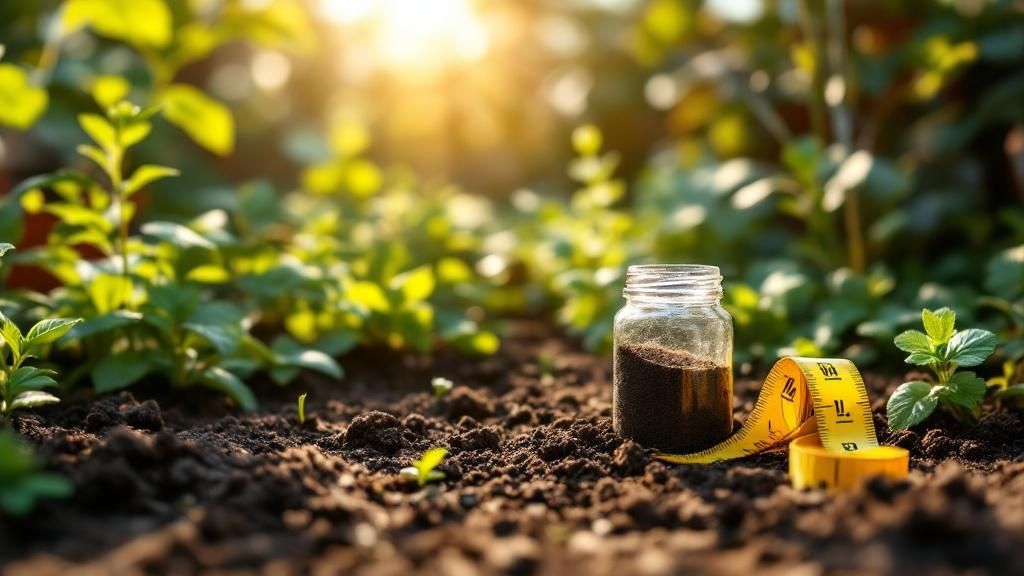
A great native plant garden design starts long before you go to a plant store. The first and most important thing to do is to become a detective in your own yard. Learning to understand its unique clues—like the sun, the soil, and the water—is the secret to picking plants that will feel at home right away.
Think of your yard as a puzzle with different "microclimates," or small areas with their own weather. The best way to learn about them is to just watch. Go outside and take pictures in the morning, at noon, and in the late afternoon. This helps you make a "sun map" and shows you which spots get sun all day and which ones stay cool and shady.
This knowledge is your secret weapon. A plant that needs full sun (at least six hours of direct light) will never do well in a shady spot, no matter what you do. And a delicate, shade-loving plant will get burned in an area with hot afternoon sun.
Figuring Out Your Soil
Alright, let's get our hands dirty. Understanding your soil is the next piece of the puzzle, and you don't need a science kit to do it. A simple test with your hands will tell you almost everything you need to know.
Grab a small handful of soil—it should be damp, but not dripping wet—and squeeze it in your hand.
- Sandy Soil: Does it feel gritty? Does it fall apart when you open your hand? You probably have sandy soil. It drains very quickly and doesn't hold onto nutrients well.
- Clay Soil: If it feels sticky and you can easily roll it into a firm ball or a long ribbon, you have heavy clay. Clay holds water well (sometimes too well) and can be very thick.
- Loamy Soil: Does it hold its shape when squeezed but crumbles easily when you poke it? You’ve hit the jackpot. This is loam, the perfect mix that most plants love.
Knowing your soil type from the start helps you pick plants that are naturally suited for it. Trust me, this will save you a lot of trouble later.
Your notes about sun, soil, and water are the base of your whole garden plan. Taking time to understand these things helps you choose plants that will not just survive, but truly grow well in their new home.
Watching for Water
Finally, pay attention to what water does in your yard after a good rain. Do you have spots where puddles stay for a day or two? That’s an area with poor drainage. It’s perfect for native plants that like "wet feet," like Swamp Milkweed or Blue Flag Iris.
Or maybe you have a dry, sloped area where water disappears right away. This is the perfect spot for plants that can handle dry spells and hate soggy roots, like a Coneflower or Black-Eyed Susan. A great native garden works with these natural patterns, not against them.
Finding The Perfect Native Plants For Your Area
This is where the fun starts. Now that you know your yard’s sun, soil, and water conditions, you’re ready to pick the plants that truly belong there.
It can seem like a lot at first, but there are some great free tools to help. One of the best is the National Wildlife Federation's Native Plant Finder. You just type in your zip code, and it gives you a list of local plants that are perfect for your corner of the world.
Using Online Tools to Build Your Plant List
Think of these online tools as your personal cheat sheet for making a garden that does well. They take the guesswork out of the process. They connect you with plants that are already programmed to succeed in your weather.
For example, a gardener in California will get a very different list of plants than someone in the Midwest. This local approach is what makes native gardening work so well and, honestly, so much easier. These tools help you narrow down hundreds of choices to a smaller list of great plants for your space.
It’s easy to see why this is becoming so popular. About 58% of gardeners have bought native plants recently. That's more than 107 million people in the U.S. We are all realizing that plants suited to local conditions just mean less work for us.
Thinking Through The Seasons
A really great garden has something interesting to look at all year, not just for a few weeks in the spring. As you look at your plant list, think about how you can create a show of beauty that changes with the seasons.
- Spring: Look for early flowers like Wild Columbine or Virginia Bluebells. They give you the first pop of color and provide important food for bees and butterflies that are just waking up.
- Summer: Now you can choose big, bright flowers. Think Coneflowers, Blazing Star, or Bee Balm to create a lively spot full of activity.
- Fall: Pick plants that will give you bright fall color. The red leaves of a Sumac bush or the yellow flowers of Goldenrod can keep your garden looking great long after summer is over.
- Winter: Don’t forget about winter! The dried seed heads of grasses and flowers not only look pretty with frost on them but also provide food for birds. Even the interesting bark of a native tree can be a beautiful thing to look at.
The Secret of Layering
Here's a simple design trick that experts use: layering. It's about creating a picture with plants of different heights to give your garden depth and texture. It’s what makes a garden feel full and well-planned.
Layering is about arranging plants from shortest to tallest, just like you would for a group photo. This simple trick keeps smaller plants from being hidden and creates a full, interesting look from every angle.
A well-layered garden usually has three main levels:
- Groundcovers: These are your low-growing plants that spread out to cover the soil, like a living mulch. Plants like Wild Ginger or Creeping Phlox are perfect for this.
- Mid-Layer: This is the heart of your garden bed. It’s where you put your medium-sized flowers and small shrubs—things like Black-Eyed Susans, Milkweed, or Little Bluestem grass.
- Backbone Plants: These are your tallest plants. They are the shrubs or tall flowers that create a background for everything else. Joe Pye Weed or a native Viburnum shrub works perfectly here.
By combining these layers, you create a rich, 3D space that looks great and also gives different kinds of homes for wildlife. For those in drier areas, you can find great examples of plants that fit these layers in our guide on top California native drought-tolerant plants.
Designing and Preparing Your Garden Space
Okay, you know your yard well and have a list of plants that will grow there. Now for the fun part: making your garden real. This is where we go from drawings on paper to digging in the dirt. The goal is to create a design that looks planned but also natural, and then give your new plants the best start.
Here’s a simple trick that works great: plant in odd-numbered groups. Planting in groups of three, five, or seven just looks better. It creates a more natural, relaxed look, like how plants grow in the wild. Try to avoid planting in straight lines unless you want a very formal garden.
Mapping everything out doesn't have to be hard. This picture shows a simple way to turn your ideas into a real plan.
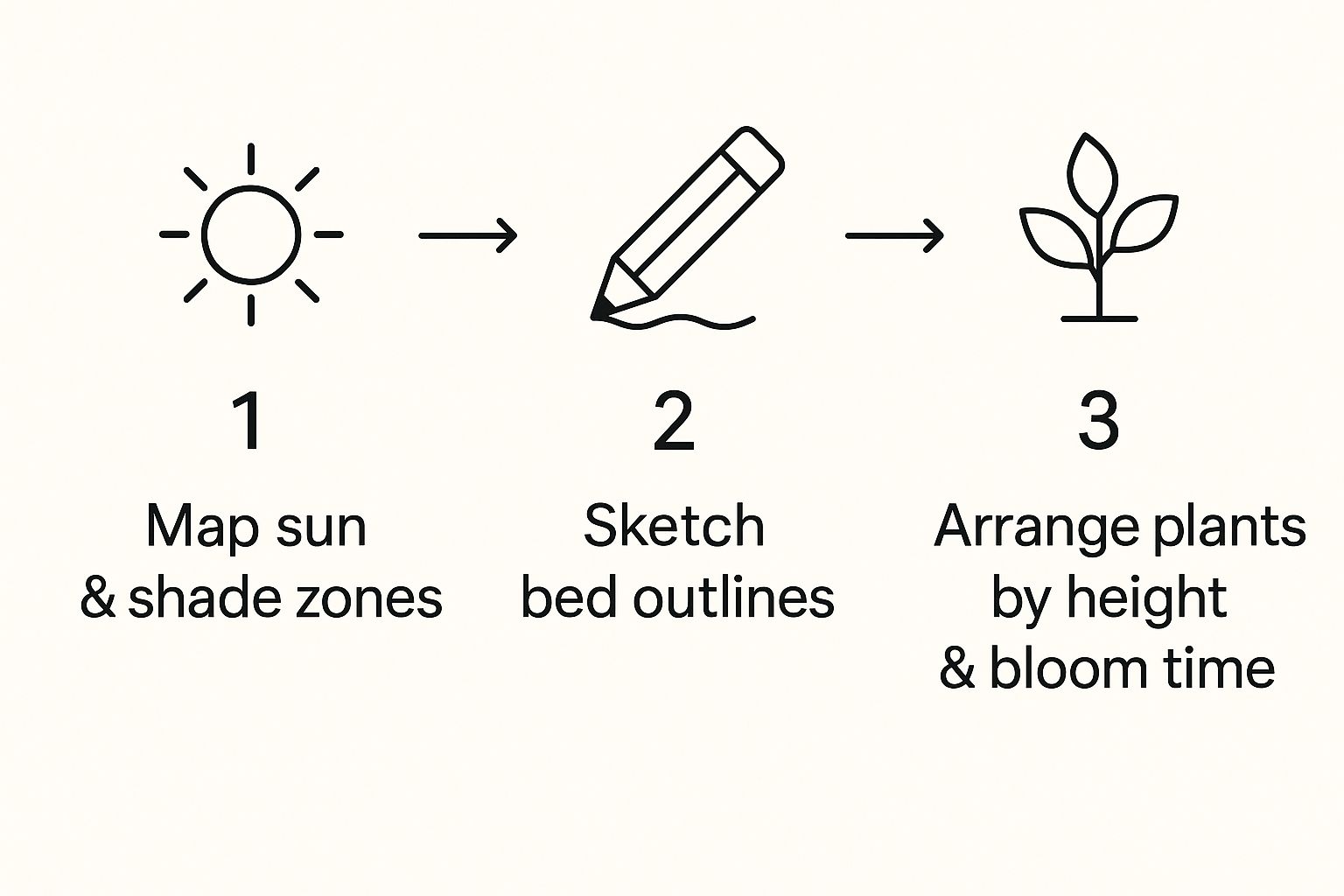
As you can see, a great design starts with paying attention—watching the sun, sketching a shape, and then placing your plants where they will have room to grow to their full size.
Getting the Ground Ready
If there’s one step you can’t skip, it’s preparing the garden bed. This is your foundation. We need to get rid of the grass or weeds and make sure the soil is ready for new plants.
And no, you don't need to use strong chemicals. One of my favorite earth-friendly methods is sheet mulching. Think of it as building a compost pile right on top of your future garden.
Here’s how to do it:
- Cut it down: Mow or cut the grass and weeds as short as you can. Leave the clippings where they are.
- Block the light: Lay down a layer of cardboard or a thick stack of newspapers over the whole area. Make sure the edges overlap so no sun can get through. This is what kills the old lawn.
- Soak it: Water the cardboard well. This helps it start to break down and keeps it from blowing away.
- Add the good stuff: Pile on a thick layer of compost—I'm talking four to six inches deep. This is the rich layer your new plants will live in.
- Tuck it in: Finish with a two to three-inch layer of mulch, like wood chips or shredded leaves. This keeps moisture in and stops new weeds from growing.
Sheet mulching does more than just kill your lawn. It builds amazing soil. As those layers break down, they add good organic matter to the ground, bring in helpful earthworms, and create the perfect, soft home for native plant roots to grow deep.
Why Healthy Soil Matters Most
Taking the time to build up your soil with compost is the best thing you can do for your garden's future. Sure, many native plants are tough, but even they do better in soil that’s alive and full of nutrients.
Good compost does wonders for soil, whether you have heavy clay or sandy soil. It helps break up thick clay so it can drain better, and it helps sandy soil hold onto water.
What does that mean for you? Your plants will be stronger and handle both heavy rains and dry summers more easily. A well-prepared garden bed is your ticket to a beautiful and easy-to-care-for garden for years to come.
Planting and Nurturing Your New Native Garden
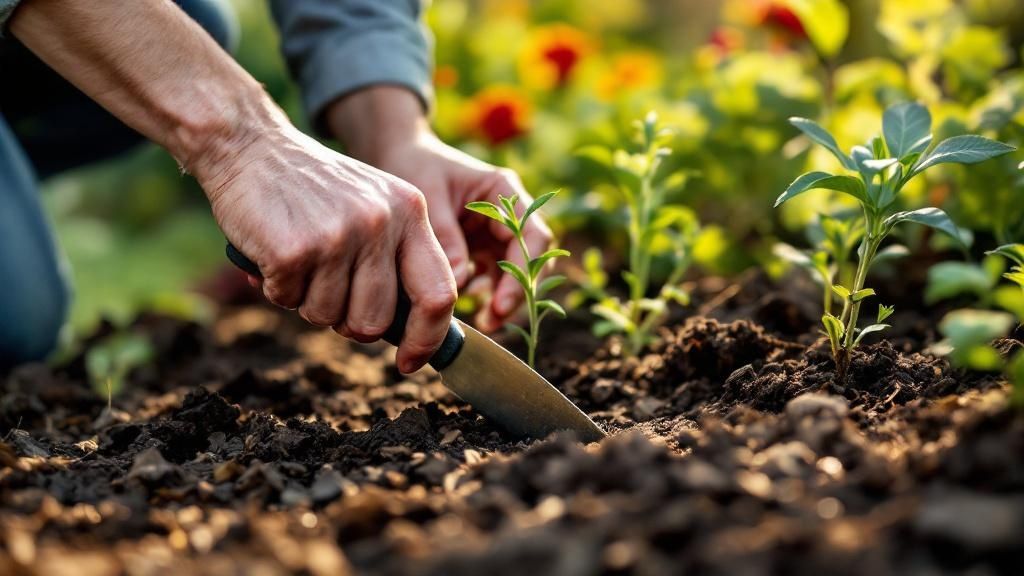
With your garden beds ready and your new plants waiting, it's finally time for the best part—planting day. This is when your native plant garden design goes from a plan to a living space right outside your door.
When you're ready to start, a good rule is to dig a hole twice as wide as the plant's pot, but no deeper. This gives the roots plenty of room to spread out into the soft soil around them.
Gently take the plant out of its pot and place it in the hole. Make sure the top of its roots is level with the ground around it. Fill the hole back in with the soil you dug out, pat it down gently, and then give your new plant a deep, slow drink of water to help it settle in.
The First Year Is Different
It's important to be patient that first year. Even the toughest native plants need extra care while they get used to their new home. Think of this first year as an investment in their future health.
During their first growing season, your plants are using almost all their energy to grow deep, strong roots. This growth is happening underground where you can't see it, but it’s the secret to their strength later. It means they’ll need more regular watering from you, especially when it's hot and dry.
That first year of steady care is your down payment on a future of low-maintenance beauty. By helping your plants grow a strong root system, you're setting them up to do well on their own for years to come.
Simple Long-Term Care Strategies
Once your garden is settled in, taking care of it becomes wonderfully simple. This move toward less work is a big part of what makes native gardening so great and is a key part of any good eco-friendly landscaping plan.
Mulching is one of your best friends here. A two to three-inch layer of natural mulch, like shredded leaves or wood chips, does several jobs at once:
- It helps the soil hold onto water, which means you water less.
- It keeps weeds from growing, which means less work for you.
- As it breaks down, it slowly adds good nutrients back into the soil.
Another easy tip is to not clean up too much in the fall. Leaving the dried seed heads of flowers like coneflowers and black-eyed susans standing through winter provides important food for birds. This idea of gardening for wildlife is growing fast. In fact, more than one-third of U.S. adults have planned to buy plants specifically to help local animals.
This hands-off approach turns your garden into a working part of the local environment, offering food and shelter all year long. It’s a simple change that makes a big difference.
Common Questions About Native Plant Gardening
Even with a good plan, you might have some last-minute questions. It’s normal to have some doubts before you start. Let's go over some of the most common worries we hear about native plant gardens so you can start with confidence.
Will My Native Garden Look Messy?
This is probably the biggest myth we hear. A native plant garden only looks "weedy" if you want it to look like a wild meadow! You are in charge of how it looks.
A well-designed native garden can look just as neat and planned as any other landscape.
The secret? It's all about structure. Using clean borders with stone or metal, planting in nice groups, and arranging plants with different textures and heights all help create a neat design. A garden that is planned well and has something interesting to see in every season will always look beautiful, not just "wild."
How Long Until My Garden Fills In?
Patience is a gardener's best friend. There’s an old saying that helps set expectations: "The first year they sleep, the second they creep, and the third they leap."
In the first year, your new plants are putting all their energy into growing strong roots underground—you won't see much happening on top. During the second year, you'll see them start to spread out. By year three, they should really take off and fill in the space to create the full garden you've been imagining.
Don't be sad if growth seems slow that first year. Your plants are busy building the foundation for years of beauty. Those first roots are what make them so strong and easy to care for later on.
Where Should I Buy My Native Plants?
Your best choice is usually a local nursery that specializes in native plants. The workers there are experts who can help you find plants that are perfect for your area. Another great place to look is your state's Native Plant Society—they often have plant sales with locally grown plants you won't find anywhere else.
While some large stores are getting better at selling native plants, you’ll find that smaller local growers are more reliable for true native plants that haven't been changed for the mass market.
Do I Have To Rip Out My Whole Lawn At Once?
Not at all! In fact, starting small is a great idea. You can begin by turning just one small part of your lawn into a garden bed. Even making a tiny "pollinator patch" or replacing a strip of grass along a sidewalk gives big benefits to local wildlife.
This way, you can learn as you go without feeling like it's too much work. As your garden grows, you might want to learn about other parts of earth-friendly gardening. For example, you might want to explore how certain plants, like lavender, might naturally deter common pests as part of a chemical-free yard. Doing the project one piece at a time makes the whole thing more fun and easy to manage.
Ready to transform your outdoor space with a beautiful, sustainable native plant garden design? The team at Tamura Designs Landscape and Construction has over 30 years of experience creating stunning, eco-friendly landscapes in Morgan Hill and across Silicon Valley. Let our award-winning experts bring your vision to life. Contact us today to start your project.
