
Are you thinking about adding the classic look of stone to your home? It's a great upgrade. But the first question everyone asks is, "What will it cost?" Let's break it down.
On average, a professional stone veneer installation costs between $13 and $22 per square foot. This total price is made of two parts: the cost of the stone and the labor to install it. Understanding how these two parts work together is key to making a budget you can stick with.
Your Quick Guide to Stone Veneer Installation Costs
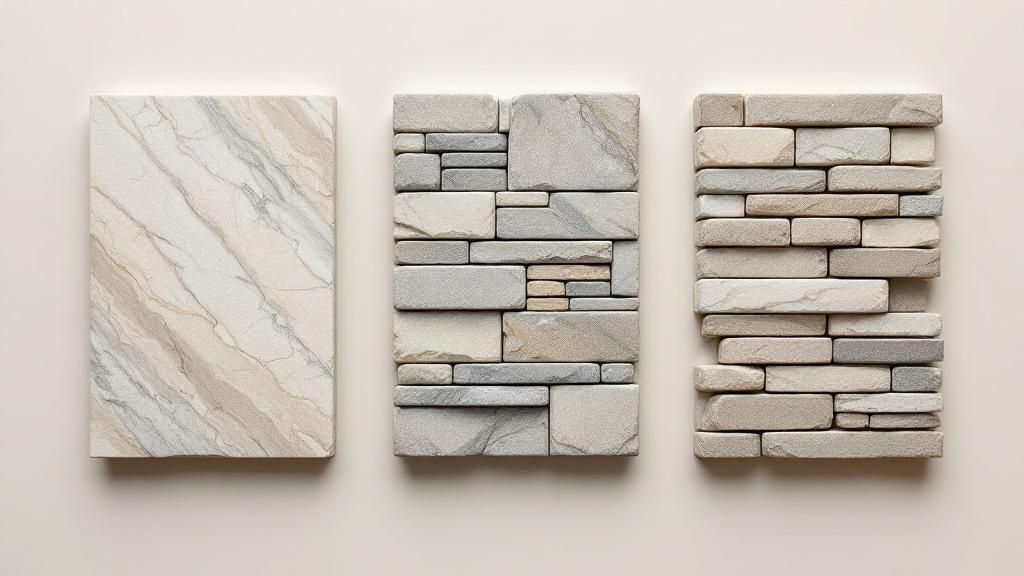
When you look at the price of a stone veneer project, think of it like a puzzle with two main pieces. The first piece is the materials—the stone veneer you choose. The second piece is the skilled labor needed to put it all together.
The Two Main Puzzle Pieces of Your Budget
The total cost is not just one number; it's the sum of its parts. Usually, the stone veneer materials will cost you between $11 and $18 per square foot. Then, the professional labor to install it adds another $2 to $4 per square foot.
These two costs are the foundation of your project budget. Let's look at what each one covers:
- Materials Cost: This is the price of the stone veneer panels or individual stones. The cost can change a lot depending on the style, color, and if you choose natural or manufactured stone.
- Labor Cost: This pays for the installer’s time and skill. It covers everything from preparing the wall to carefully placing each stone for a beautiful, strong finish.
A professional installation is very important for the life of your stone veneer. Good work prevents water problems and makes sure the veneer stays attached to your home for many years.
A Clear Cost Breakdown
To give you a clearer picture, here is a simple table. It shows how these costs usually break down per square foot. This is a great starting point for understanding the cost of the project before we get into the details that can change these numbers.
Average Stone Veneer Installation Cost Breakdown
| Cost Component | Average Cost Per Square Foot |
|---|---|
| Materials | $11 – $18 |
| Labor | $2 – $4 |
| Total Professional Installation | $13 – $22 |
Now that you have a general idea, you can see how this investment compares to other home improvements. For some perspective, you can see a guide on how much it costs to install air conditioning to get a better feel for home project costs. Next, we will look at the specific things that can make your final price go up or down.
Decoding Material Costs: Natural vs. Manufactured Stone
The biggest thing that affects your stone veneer installation cost is the stone itself. It's like choosing between real hardwood floors and a good laminate. Both look great, but they are made differently, weigh different amounts, and have different prices.
For stone veneer, you have two main choices: natural stone and manufactured stone. Deciding which one is right for you is key to matching your home's style with a budget you are comfortable with. One comes from the earth, and the other is made to look just like it.
What Is Natural Stone Veneer?
Natural stone veneer is real stone that has been cut thin for installation. Workers take large blocks of granite, limestone, or slate from the ground. Then they cut them into thin pieces, about one to two inches thick. This keeps the stone’s real colors, textures, and unique character. No two pieces are ever the same.
Because it's real stone, it has a timeless, genuine feel that is hard to copy. But that realness costs more. The process of getting, cutting, and shipping heavy stone makes it the more expensive choice.
Understanding Manufactured Stone Veneer
Manufactured stone, also called faux or cultured stone, is a very good alternative. It is made from a mix of cement, light materials, and color pigments. This concrete mix is poured into molds made from real stones. This process copies every little detail and texture of the original.
This gives manufactured stone a few clear benefits. It is much lighter than natural stone, which can make installation quicker and easier. And since it's a man-made product, the colors and shapes are consistent. This makes planning and installation simpler.
This picture shows how material and labor costs usually split the total price for a stone veneer project.
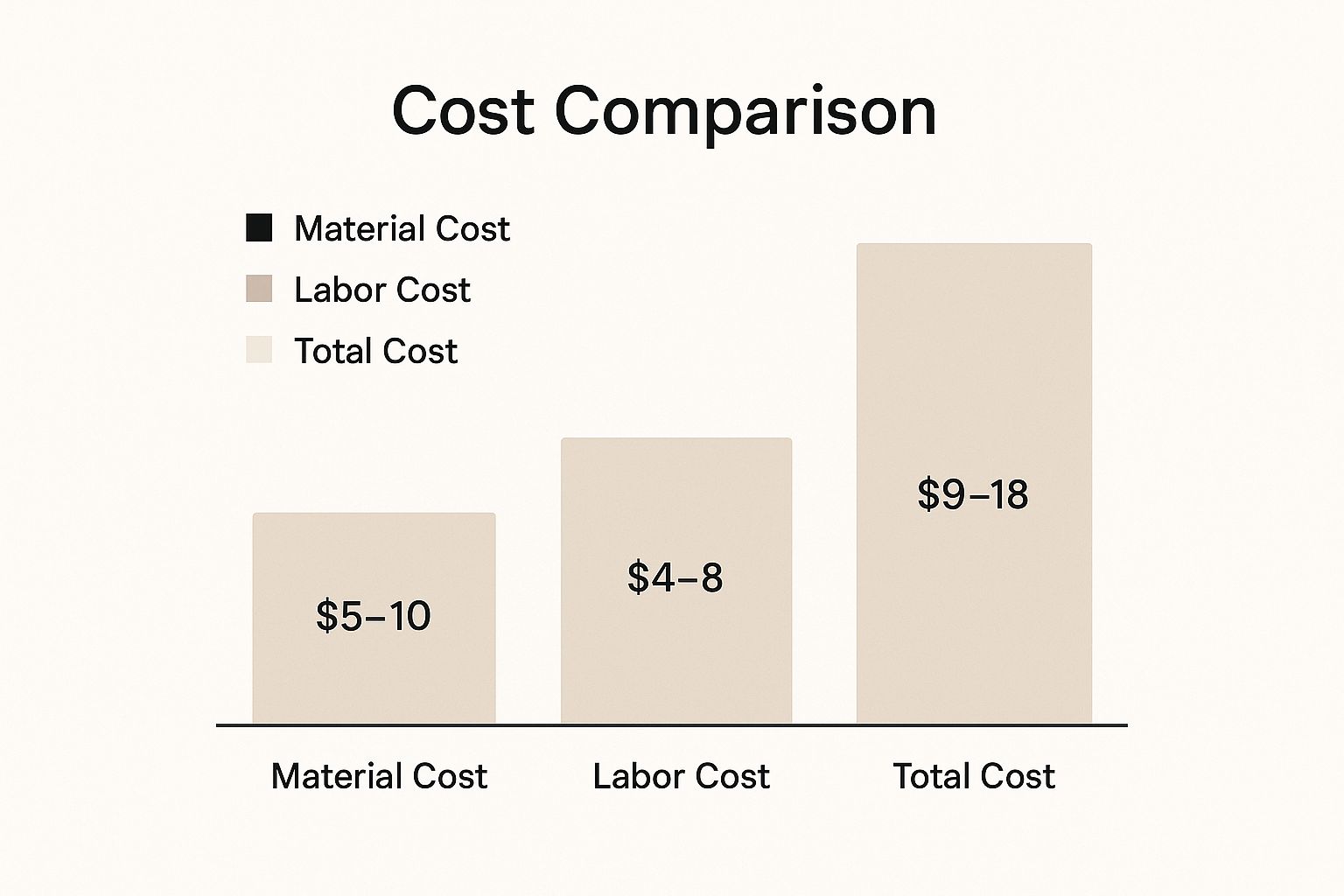
As you can see, materials make up a large part of the total cost. This shows why choosing between natural and manufactured stone is such an important budget decision.
Comparing Key Differences and Costs
The choice between natural and manufactured stone often comes down to looks, budget, and what your project needs. Natural stone offers unique beauty. Manufactured stone offers a durable and beautiful look at a lower price. The best choice is the one that fits what is important to you.
In general, you can expect material prices for stone veneer to range from $4 to $21 per square foot. Labor is another big factor, usually costing between $6 and $24 per square foot. This work is hard and needs a skilled person to make sure the mortar is applied correctly and the final installation is safe. You can find more detailed pricing in various home improvement cost guides.
The higher cost of natural stone buys you its unique, real beauty. Manufactured stone, on the other hand, gives you a consistent, high-quality look that can be much better for your wallet, especially for large projects.
To help you see the differences easily, here’s a quick comparison.
Natural vs. Manufactured Stone Veneer Comparison
Choosing between the real charm of natural stone and the consistent quality of manufactured stone is a big step. This table breaks down the key features to help you decide.
| Feature | Natural Stone Veneer | Manufactured Stone Veneer |
|---|---|---|
| Material Cost | Higher ($10 – $21+ per sq. ft.) | Lower ($4 – $12 per sq. ft.) |
| Weight | Heavier, may need extra support | Lighter, easier to handle and install |
| Appearance | Unique, one-of-a-kind colors and textures | Consistent color and shape, predictable pattern |
| Installation | More complex, needs skilled workers | Simpler and faster to install |
| Durability | Extremely durable, naturally weather-resistant | Very durable, made to resist weather |
In the end, both materials are a great way to improve your home’s look. By understanding what you are paying for, you can choose the perfect stone veneer that fits your vision and your budget.
Understanding Labor Costs: What Are You Paying For?
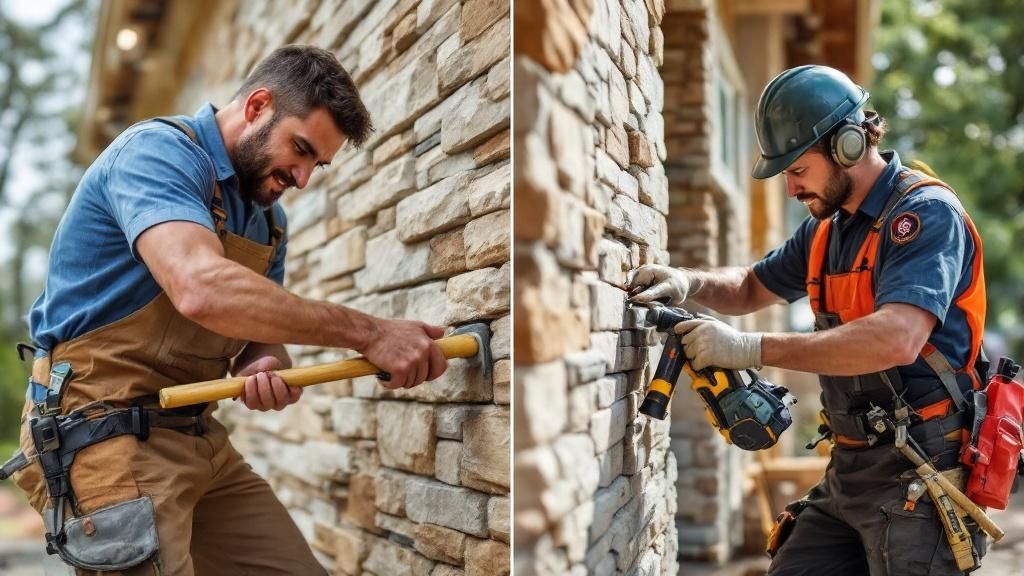
When you look at a quote for stone veneer installation, it is easy to focus on the materials. But a big part of that total goes to labor, and for a good reason. It is not just about sticking rocks to a wall. You are paying for a worker's skill, care, and knowledge of how to protect your home.
Think of it as an investment. Paying for a professional's time and skill makes sure the job is done right the first time. This protects you from future problems like water damage or stones falling off the wall. You are buying peace of mind and a beautiful finish that is built to last.
The Step-By-Step Installation Process
A good stone veneer installation is like baking a perfect cake—every layer matters. If you skip a step or use the wrong amounts, the whole thing can fail. A professional follows a trusted process to make sure your stone veneer looks amazing and holds up to the weather.
Here is a breakdown of what that careful process looks like:
- Wall Prep: First, the installer inspects the wall. They will remove any old siding and check the surface for rot or damage. A clean, strong foundation is a must for a lasting bond.
- Weather Barrier: Next, they will wrap the wall in two layers of a water-resistive barrier (WRB). This is like a raincoat for your house. It stops any water that gets behind the stone from reaching the structure.
- Lath & Scratch Coat: A metal mesh, called lath, is attached to the wall. This acts as a skeleton for the mortar to hold onto. Then, a thick layer of mortar—the "scratch coat"—is spread over the lath and scratched with grooves. This creates the perfect rough texture for the stones to stick to.
- Mixing the Mortar: A lot of time is spent just preparing the mortar. Using tools like efficient cement mixer attachments helps, but the mix has to be just right for maximum strength.
- Setting the Stone: This is where the real skill shows. Each stone is covered with mortar on the back and pressed firmly onto the scratch coat. The worker carefully arranges the stones in a natural, balanced pattern, cutting pieces to get the perfect fit.
- Grouting & Finishing: After the stones are set, the gaps are filled with mortar. This is called grouting. This final step locks everything into place and creates that classic, solid-stone look.
This is careful work that requires a skill you only get from years of experience. Finding the right team is important. It's always a good idea to check out guides on the best stone and masonry contractors before you hire someone.
How Project Complexity Affects Labor Costs
Let's be honest, not all walls are the same. A simple, flat wall on a one-story house is much easier than a tall chimney or a wall with lots of windows and corners. Several things can make the job harder. This requires more time and skill from your installer—and that adds to the labor part of your stone veneer installation cost.
The complexity of the job is a major driver of labor costs. Things like arches, tight corners, and second-story work need more careful cutting and planning. This means more hours on the job.
Here are a few common things that can raise the price:
- Working at Heights: Installing veneer on a second story or a tall wall requires scaffolding. Setting up, moving, and working on this equipment slows things down and adds to the labor cost.
- Architectural Details: Every window, door, or archway requires careful, slow cuts. The more breaks on a wall, the more custom fitting is needed, and the higher the labor cost.
- Intricate Patterns: If you want a specific, complex look like a herringbone pattern, your installer will have to spend more time planning the layout and choosing each stone. That artistic touch takes time.
- Corners: Getting corners to look right is a true test of skill. It requires either special corner pieces or very careful cutting to create a seamless, natural look.
Knowing what makes a job more complex helps you understand why one quote might be higher than another. You are not just paying for hours worked; you are paying for the skill to handle your project's unique challenges.
Uncovering Factors That Affect Your Final Price
When you are making a project budget, it's easy to focus on the big items like materials and labor. But the final stone veneer installation cost often has other expenses that can surprise you. Knowing about these ahead of time is key to building a realistic budget and avoiding last-minute issues.
Think of it like buying a car. The sticker price is just the start. You still have to pay for taxes and fees. Your stone veneer project works the same way, with extra costs for prep work, supplies, and site needs that are just as important.
Site Preparation: The Foundation of a Good Install
Before any stone goes up, the wall itself has to be ready. This prep stage is very important for a durable, long-lasting installation. Its cost can change depending on your home's current condition.
If you have old siding, it has to be removed. Then, the wall underneath needs to be checked for any weak spots or rot. Any problems must be fixed before the project can continue, which adds to both labor and material costs.
- Siding Removal: Tearing off and getting rid of old vinyl, wood, or stucco.
- Structural Repairs: Fixing any water damage or weak spots in the wall.
- Surface Cleaning: Power washing or cleaning the surface so the new materials can stick well.
This is not just a suggestion—proper prep is a must. It makes sure the veneer sticks correctly and is fully protected from water.
Beyond the Stone: Essential Supplies and Materials
The stone veneer might be the star of the show, but it needs a good supporting cast. A whole system of materials is needed to hold everything together and create a strong, weatherproof finish.
These are not optional upgrades; they are required for a professional job that meets building codes. The cost for these items is usually included in your contractor's quote, but it's a major part of the total price.
A professional installation is a layered system. It includes a water-resistive barrier, a metal lath that gives the mortar something to grab onto, and the right mortar mix. Cutting corners on these "hidden" materials is a sure way to have big problems later.
Overlooked Expenses: Scaffolding, Permits, and Cleanup
Finally, a few other things can change your final price, usually tied to your property and local rules. These are easy to forget, but they can make a real difference in the budget.
For example, working on a two-story home means you will need scaffolding for safety. This comes with rental and setup fees. For projects that involve structural parts, you might also want to understand the cost of building a retaining wall, since many of the same site factors can apply.
A few other common costs include:
- Building Permits: Your city or county might require a permit for outside work, which always has a fee.
- Waste Disposal: Renting a dumpster to throw away old siding and construction trash is standard.
- Specialty Tools: While your contractor has their own tools, unique patterns or complex cuts might require special equipment rentals.
The size of these costs can vary a lot. While the average cost of stone veneer siding installation in the U.S. is around $16,000, projects can range anywhere from $1,500 to $90,000. This depends on the home's size, the quality of the stone, and how hard the job is. You can learn more about these siding cost factors on HomeAdvisor. By asking your contractor about these possible expenses upfront, you can make sure your budget is complete and accurate from the start.
Smart Ways to Save on Your Stone Veneer Project
Adding stone veneer is a great way to improve your home’s look, but you don't have to spend a fortune. With some smart planning, you can get that beautiful, high-end finish you want while keeping the stone veneer installation cost under control.
The secret is not just finding the cheapest materials. It's about being smart with where and how you use the stone. You don't always need to cover a whole wall to make a big impression. Sometimes, less is more.
Use Stone Veneer as a Strategic Accent
Instead of covering your whole house, think about using stone veneer as a strong accent piece. This can have a huge visual impact for a much lower cost. It's like adding a nice piece of jewelry—it improves the whole look without a big expense.
By focusing on areas people see most, you create a beautiful focal point that catches the eye. This method gives you the most return on your investment by putting your money where it will be seen and admired.
Here are a few popular ways to use stone as an accent:
- Entryway Focus: Frame your front door to create a grand, welcoming entrance.
- Foundation Skirting: Wrapping the bottom of your house gives it a solid, grounded look.
- Columns and Posts: Covering porch columns adds texture and style.
- Gable Ends: Highlighting the peaks of your roof gives your home a custom-designed touch.
Make Smart Material and Timing Choices
The materials you choose and when you schedule the work can also lead to big savings. A little flexibility here can make a big difference.
One of the easiest ways to save is by choosing a high-quality manufactured stone. Today's faux stone is very realistic and durable. It gives you a look that is almost identical to natural stone at a much lower price per square foot.
Timing is also important. Contractors are usually very busy in the spring and summer. If you can schedule your project for the off-season, like late fall or early winter, you might find better prices from workers looking to fill their schedules.
Take Control of Your Project Costs
Besides the big decisions, there are several simple steps you can take to keep your budget on track. A little effort here goes a long way.
- Get Multiple Quotes: Never go with the first price you get. Always talk to at least three good local contractors. This lets you compare prices and make sure you are getting a fair deal.
- Consider DIY Prep Work: If you are good with basic home tasks, you might be able to do some of the prep work yourself. Simple things like removing old siding or clearing the work area can reduce labor hours.
- Plan Ahead: Last-minute changes can be expensive. Finalize your design and material choices early to avoid costly surprises once the project starts. You can also save by doing your veneer project with other upgrades. Check out our guide to hardscaping and patio ideas for ideas on how stone can tie your whole outdoor space together.
Is Stone Veneer a Good Investment for Your Home?
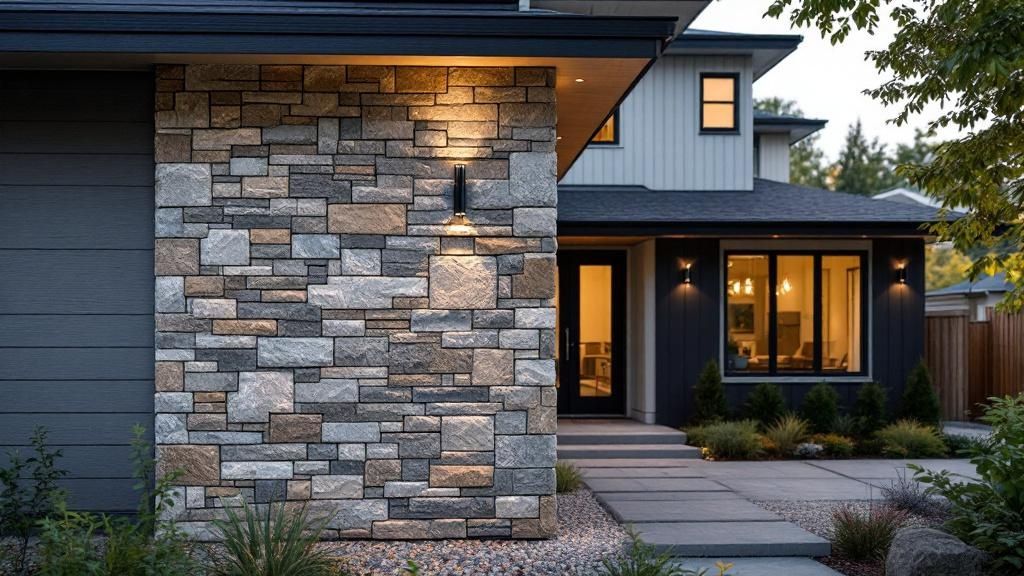
After looking at the stone veneer installation cost, you are probably asking the big question: is it worth the money? It's easy to see the instant visual improvement. But it helps to think of this project as a long-term investment in your property. The value it adds often goes beyond the first price tag.
Thinking about the return on investment (ROI) helps you see the expense differently. A stone veneer project is not just a cost. It is a smart improvement that can pay you back in more ways than one, from your own enjoyment to future financial gains.
Boosting Curb Appeal and Resale Value
First impressions are everything. Nothing improves a home's curb appeal like the timeless look of stone. A house with a nice stone exterior stands out. It gives off a feeling of quality that buyers notice.
Outside improvements often offer some of the best returns on investment. A manufactured stone veneer project, for example, can get back a huge part of its cost when you sell. That improved curb appeal can make your home sell faster and for a better price.
When you invest in stone veneer, you're not just improving the look of your home for yourself. You are making it more attractive to buyers and increasing its potential resale value. This makes it a powerful financial tool.
It is always a good idea to put this upgrade in context by prioritizing home improvement projects to see how it compares with other options.
Long-Term Savings from Durability and Low Maintenance
The financial benefits don't stop at resale value. One of stone veneer’s best features is that it is very durable and needs almost no upkeep. Unlike wood or vinyl siding that needs regular painting or repairs, stone veneer is built to handle the weather.
This means real savings over the years. Think about the costs you will avoid:
- No Repainting: The color is part of the stone, so it will not chip, peel, or fade.
- Pest and Rot Resistance: It is strong against insects and water damage.
- Weather Toughness: It holds up well against rain, wind, and sun without warping.
By choosing stone veneer, you are paying for decades of low-maintenance beauty. The money you save on upkeep adds up, making the initial installation cost a very wise investment. When you combine the great curb appeal with these long-term savings, it becomes clear that a well-done stone veneer project is one of the smartest upgrades you can make.
Answering Your Stone Veneer Questions
Even with all the numbers, you probably still have a few questions. That’s normal. Getting clear answers to these common questions is the last step before you can feel confident about your decision.
Let’s clear up some of the things we hear most often from homeowners.
Can I Just Install It Myself to Save a Few Bucks?
The thought of doing a project yourself to save on labor is always tempting. But stone veneer is much more than just sticking stones to a wall. While you would save on the labor cost, a professional installation is about creating a waterproof shield for your home.
A proper job involves a multi-layered system. This includes a water-resistive barrier, metal lath, and a perfectly applied scratch coat. If you get any of that wrong, it’s not just a small problem. You could face serious water damage, rot, or even have stones fall off the wall in a few years.
A DIY project might save money now, but a bad installation can lead to repairs that cost much more than hiring a pro. For most homeowners, hiring a certified mason is the smartest, safest investment you can make.
How Does Stone Veneer Stack Up Against Brick or Real Stone?
It’s helpful to know how stone veneer compares to other popular siding choices. Imagine a cost ladder, where each step is a different price and has its own benefits.
- Brick Veneer: This usually costs about the same as manufactured stone veneer. Both are great, durable choices, so the final decision often comes down to the look you prefer.
- Manufactured Stone Veneer: This is the middle-of-the-road choice. It gives you that high-end, classic stone look at a more affordable cost.
- Natural Stone Veneer: Since this is a real product from the earth, it costs more than the manufactured version.
- Full-Bed Natural Stone: This is the most expensive option by far. It involves thick, heavy stones that need their own foundation for support. This greatly increases both material and labor costs.
Stone veneer gives you that real stone look without the huge price and structural problems of full-bed stone. That is why it is such a popular and practical choice.
Is It Cheaper to Install Inside or Outside?
You might think the cost would be the same, but outside projects are almost always more expensive. This is because of the intense prep work needed to protect your home from the weather.
An outdoor installation needs a complete weatherproofing system, with drainage and special flashing around every window and door. That process takes time, skill, and special materials, all of which add to the total stone veneer installation cost.
On the other hand, an inside project like a fireplace or an accent wall is much simpler. You don't have to worry about rain and snow. The installer can often apply the veneer directly to drywall or cement board. That means less prep, fewer materials, and fewer labor hours—making indoor projects much easier on your wallet.
Ready to transform your Morgan Hill home with the timeless beauty of stone? The experts at Tamura Designs Landscape and Construction have over 30 years of experience creating stunning, durable stone features that last a lifetime. Contact us today for a consultation and let's bring your vision to life.
