
When you start dreaming about a new stone patio, one of the first questions that comes to mind is, "What's this actually going to cost me?" While there's no one-size-fits-all answer, a professionally installed stone patio typically lands somewhere between $6,250 and $11,500. Most homeowners find their project settles in around the $9,000 mark.
Of course, that final number really boils down to three key things: the patio's size, the type of stone you fall in love with, and the cost of labor in your area. Let's break down how these pieces fit together.
Understanding the True Cost of Your Future Patio
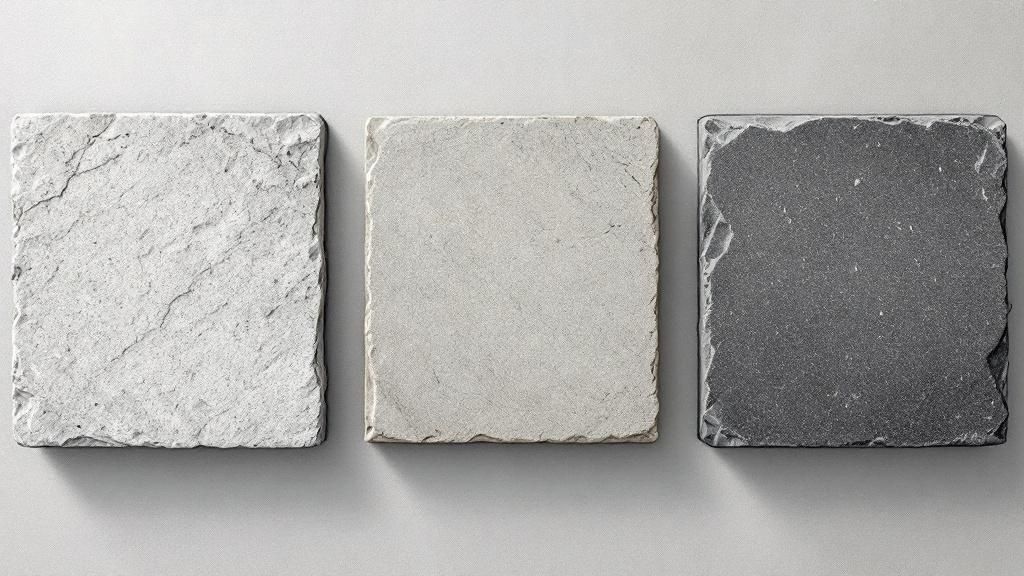
Think of your patio budget as a recipe. The final result—and its price tag—is a blend of a few essential ingredients. The mix you choose will determine everything.
First up is the most straightforward factor: the size of the patio. Just like buying flooring for your house, a larger footprint simply requires more material and more time to install. A cozy little nook for your morning coffee will be significantly lighter on the wallet than a sprawling entertainment space designed for neighborhood cookouts.
To give you a quick snapshot of what to expect, here’s a look at how different budget levels translate into real-world projects.
Stone Patio Cost At a Glance
| Budget Level | Typical Project Scope | Estimated Cost Range |
|---|---|---|
| Budget-Friendly | A smaller (10×12) patio using cost-effective pavers or gravel on a simple, level site. | $1,800 – $5,000 |
| Mid-Range | A medium-sized (16×20) patio with quality flagstone or bluestone, including professional site prep. | $6,250 – $11,500 |
| High-End | A large, complex patio with premium materials like travertine or granite, custom design features, and extensive site work. | $12,000 – $30,000+ |
This table gives you a solid starting point, but let's get into the details that drive these numbers.
The Core Cost Drivers
Your choice of stone is the next major player in the budget game. It’s a lot like choosing new kitchen countertops. You could go with a practical, attractive option, or you could opt for a show-stopping slab of exotic granite. In the world of patios, manufactured pavers are often the budget-conscious choice, while premium natural stones like flagstone or travertine carry a higher price tag for their unmatched character and durability.
Finally, you have professional labor. This is so much more than just plopping stones on the ground. A huge part of the cost covers the crucial prep work—excavating the area, grading it properly for drainage, and building a rock-solid base that ensures your patio won't sink, heave, or shift over time.
A good rule of thumb is to budget between $15 to $30 per square foot for a professionally installed patio. Labor often accounts for a big slice of that, typically running $50 to $100 per hour, depending on the project's complexity and your local market. For a deeper dive, you can explore professional patio installation costs on Angi.com to see national averages.
Getting a handle on these key components is the first step toward creating a realistic budget. When you understand how size, materials, and labor impact the bottom line, you can make smart decisions that bring your vision to life without breaking the bank.
How Your Choice of Stone Defines the Price Tag
When you're planning a new outdoor space, the single biggest decision that will shape your budget is the stone you choose. It’s a lot like buying a car—the model you pick doesn't just set the initial price, but it also dictates long-term performance and style. A simple, reliable sandstone might be the budget-friendly sedan of the patio world, while a rare granite slab is the high-performance, luxury SUV.
This choice is all about striking the right balance between what you want to spend, the look you’re going for, and how long you expect it to last. The price tag for any given stone comes down to a few key things: how rare it is, how difficult it is to quarry and ship, and its natural toughness.
The image below gives you a great visual breakdown of how materials, labor, and other fees add up in the total cost per square foot.
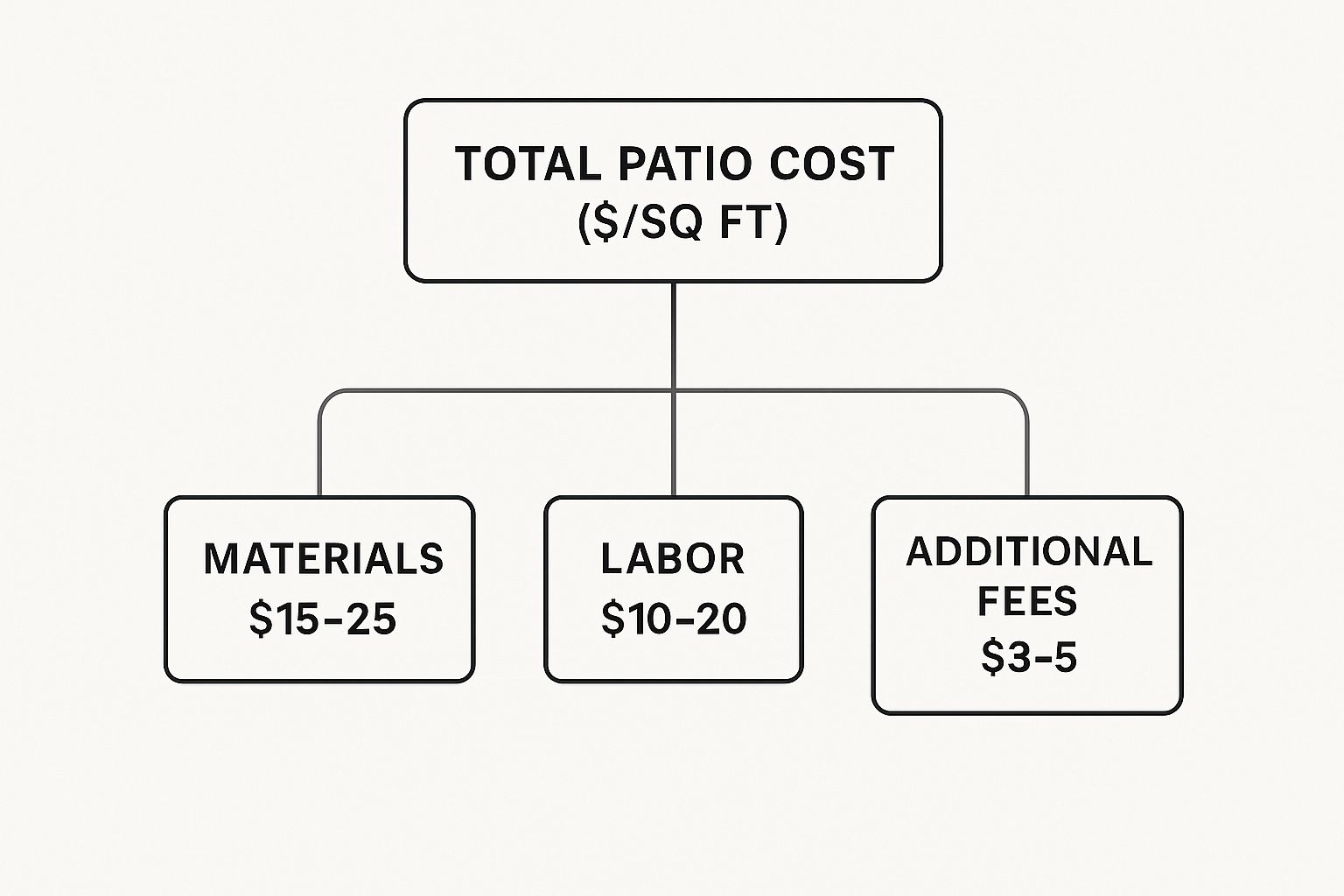
As you can clearly see, the stone itself is the largest piece of the pie, often accounting for nearly half of the total expense. This really drives home why your material selection has such a massive impact on the final numbers.
The Most Popular Patio Stone Options
So, what are the common materials you'll be looking at? Each one has its own unique blend of cost, aesthetics, and durability, making them a better fit for different projects and priorities.
- Flagstone: This is a timeless favorite, loved for its natural, irregular shapes and earthy tones. Flagstone is actually a whole category that includes popular varieties like slate, bluestone, and quartzite. Its rustic charm fits almost anywhere, but be aware that its varied thickness can make the installation a bit more labor-intensive.
- Granite: If you’re looking for toughness, it doesn't get much better than granite. This is one of the most durable options out there, standing up beautifully to scratches, stains, and harsh weather. Because it’s so dense and heavy, it sits at a premium price point.
- Limestone & Travertine: For a softer, more classic and uniform appearance, limestone and travertine are fantastic choices. They often come in beautiful shades of tan, grey, or white. While they look stunning, they are more porous than granite and will likely need regular sealing to keep stains at bay, especially if your patio isn't covered.
To help you weigh these options side-by-side, here’s a quick comparison table breaking down the costs and characteristics of the most common patio stones.
Patio Stone Material Cost Comparison
| Stone Type | Average Cost per Sq. Ft. | Pros | Cons |
|---|---|---|---|
| Flagstone | $15 – $35 | Natural, rustic appearance; durable; non-slip surface. | Irregular shapes can increase labor costs; can be expensive. |
| Granite | $20 – $40 | Extremely durable and weather-resistant; wide color variety. | One of the most expensive options; very heavy, requires professional installation. |
| Limestone | $15 – $30 | Classic, uniform look; versatile design options. | Softer and more porous, can stain or scratch; may require sealing. |
| Travertine | $15 – $30 | Stays cool in the sun; elegant, old-world aesthetic. | Porous and susceptible to acidic stains; can be slippery when wet. |
| Slate | $15 – $25 | Unique layered appearance; durable; available in dark, rich colors. | Can chip or flake over time; surface can get hot in direct sun. |
| Sandstone | $12 – $25 | Budget-friendly; warm, earthy tones; easy to cut and shape. | Porous and absorbs water, prone to staining and weathering. |
Making an informed choice is about understanding these trade-offs. What works perfectly for a covered courtyard in a mild climate might not be the best fit for an open-air pool deck in a region with heavy rain.
Don't Forget Budget-Friendly Alternatives
If natural stone is pushing your budget a bit too far, don't worry—manufactured pavers are an excellent alternative. These are concrete-based products engineered to mimic the look of natural stone, classic brick, or even cobblestone, but at a significantly lower cost. Their perfect uniformity is another big plus, as it can make installation much faster and bring down labor expenses.
For homeowners trying to decide between these paths, our guide to the best patio pavers provides a detailed comparison to help you find the perfect fit for both your style and your wallet.
Getting a handle on these different material tiers is the key. It gives you the power to have productive conversations with contractors and make a final choice that perfectly aligns with your vision and your budget. After all, the goal is to build a patio that brings you joy for many years to come.
Calculating the Cost of Professional Installation
While the stone itself sets a baseline, the professional labor is almost always the biggest—and most variable—part of your total patio cost. It’s easy to look at the price tag on a pallet of flagstone, but what are you really paying for when you hire a skilled crew? It’s so much more than just laying down stones; it’s about the expertise to build a beautiful outdoor space that will actually last a lifetime.
Think of it like hiring a master carpenter instead of a handyman. Both might be able to assemble a bookshelf, but the master's work will be perfectly level, flawlessly joined, and built to handle decades of use without wobbling. The same idea applies here. Professional installation is a detailed, multi-step process, and every single step is critical for your patio's durability and good looks.
The Stages of Professional Labor
The labor bill you see on a quote covers a whole sequence of essential tasks. A professional crew doesn’t just show up and start placing stones. They follow a precise system that guarantees a stable, long-lasting, and attractive final product.
- Excavation and Grading: This is the unglamorous but absolutely vital first step. The crew will dig out the grass and soil to the perfect depth. Then, they meticulously grade the entire area to make sure water drains away from your home's foundation, not toward it.
- Base Preparation: Next, they install a compacted gravel base. This creates a solid foundation that prevents stones from sinking, shifting, or heaving during the freeze-thaw cycles of winter. This step is completely non-negotiable for a patio that lasts.
- Stone Laying: This is where the real artistry comes in. Each stone is carefully placed, leveled, and often cut to fit perfectly, especially if you're using irregular flagstone. The pattern you choose has a huge impact on the time and skill required here.
- Jointing and Finishing: The final touch involves sweeping special sand, like polymeric sand, into the joints. This locks the stones together, prevents weeds from popping up, and gives it a clean finish. Of course, this includes a thorough site cleanup.
The complexity of your design is a major cost driver. A simple running bond pattern is far less labor-intensive than an intricate herringbone or basketweave design, which requires more cuts and precise placement. This difference can significantly impact the final labor cost.
How Contractors Structure Their Pricing
Understanding how contractors bill for their work will help you compare your quotes much more effectively. You’ll usually see one of two main pricing models.
One common method is per-square-foot pricing. This approach bundles all the labor and installation materials (like the gravel, sand, and edge restraints) into a single, easy-to-understand rate. For instance, a contractor might quote $10 to $20 per square foot for all the labor involved.
Alternatively, some crews charge an hourly rate, which can range anywhere from $50 to $100 per hour for each worker on the job. This is more common for complex repairs or highly customized projects where it’s tough to estimate the total time upfront. When you're looking at quotes, always ask which model they’re using.
Finding the right team is crucial, and our guide to the best stone and masonry contractors can help you identify qualified professionals in your area.
How Size and Site Prep Drive Your Final Budget
When you're mapping out your patio budget, two things will steer the final number more than anything else: the patio's size and what's happening in the ground beneath it. It’s a pretty straightforward relationship. The bigger the patio you want, the more it's going to cost. You'll need more stone, more base material, and more hours from your installation crew.
You can see this play out in real-world numbers. Take paver patios, for example. A cozy 60-square-foot spot might land somewhere between $480 and $1,440. A more standard 280-square-foot patio—big enough for a dining set—hovers around $3,400 on average. And if you're dreaming of a sprawling 600-square-foot entertainment zone, you could be looking at a range of $4,800 to $14,400. You can see a more detailed breakdown of these costs from contractors like JS Brick Corporation.
The Invisible Costs of Site Preparation
Now for the part you'll pay for but never see. A huge chunk of your budget goes into preparing the site, and this is where homeowners can get sticker shock. This isn't just about clearing a bit of grass. It's the critical foundation work that guarantees your patio won’t sink, turn into a pond, or start coming apart after a few winters.
Think of it like the foundation of your house. It’s completely hidden, but the entire structure depends on it being solid.
Here's what that prep work actually involves:
- Excavation: First, the crew has to dig. They'll remove soil, roots, and grass to a depth of about 6-8 inches to create a clean slate for the patio's base. If your yard is on a steep hill or hard to reach with equipment, this part can take longer and cost more.
- Grading: This is maybe the most important step of all. The crew carefully slopes the excavated area—usually just a quarter-inch drop per foot—to guide rainwater away from your house. Without proper grading, you risk water pooling against your foundation, which can lead to serious problems down the road.
- Base Installation: A thick layer of crushed gravel is brought in, spread out, and compacted down hard. This creates a rock-solid, stable platform that won't shift during freeze-thaw cycles and allows water to drain through.
If there’s one place you should never cut corners, it’s the base. A poorly compacted base is the number one reason patios fail. Stones will sink and shift, creating an uneven, unsafe surface that’s a real headache to fix.
Why a Solid Base is Non-Negotiable
After the heavy-duty gravel base is compacted, a final, thinner layer of sand or fine stone dust is spread over the top. This acts as a setting bed. It’s what allows the installers to set each stone perfectly, making sure the surface is smooth and even from one end to the other.
All this foundational work—the digging, the grading, the gravel, the sand—is absolutely essential for a quality patio. While these steps add to the initial cost of stone patios, they are a true investment in making sure it lasts for decades. Understanding this process helps you see exactly what you're paying for and why a professional's quote accounts for so much more than just the stones themselves.
What About Hidden Costs and Popular Add-Ons?
A beautiful stone patio rarely ends with just the stone and labor. The final bill often includes a few items that can catch homeowners by surprise, potentially throwing a carefully planned budget for a loop. Getting a handle on these potential hidden costs and popular upgrades from the start is the key to a smooth, stress-free project.
Think of it like buying a car. The sticker price gets you the base model, but the features that make it truly enjoyable—a sunroof, that premium sound system—are extras. It’s the same with your patio. The elements that turn a simple stone slab into a true outdoor living room will adjust the final cost of stone patios.
Common Upgrades and What They Cost
Many of the most inviting patios weave in features that add both function and flair. These popular upgrades are where you can really personalize your space, but each comes with its own price tag. For a ton of great inspiration, you can explore various hardscaping and patio ideas to see how these elements might fit into your backyard vision.
Here are a few common add-ons to think about:
- Built-in Fire Pit: A natural gathering spot, a stone fire pit can add $1,500 to $5,000 or more. The final cost depends on its size, the stone you choose, and whether it’s wood-burning or gas-fueled.
- Seating Walls: These low walls offer permanent, built-in seating while helping to define the patio's edge. You can expect to add $150 to $300 per linear foot for a professionally built stone seating wall.
- Retaining Walls: If your yard has a slope, a retaining wall is often essential for creating a flat, stable patio surface. These are structural and can run $50 to $75 per square face foot.
- Outdoor Lighting: Low-voltage lighting adds wonderful ambiance and safety, letting you enjoy your patio long after the sun goes down. A basic professional lighting package starts around $2,000 to $4,000.
Beyond the exciting upgrades, there are several logistical costs that can quietly pad your budget. These "hidden" expenses are a normal part of any major construction project but are easy to forget when you're just starting to plan.
The Less Obvious Project Expenses
While they aren’t as glamorous as a new fire pit, budgeting for these practical necessities is absolutely critical for an accurate final cost. Forgetting them is a classic pitfall that can lead to some unexpected financial stress down the road.
Be ready for these potential line items:
- Permit Fees: Many towns and cities require a building permit for patios, especially if they’re over a certain size or include structures like retaining walls. These fees can range from $100 to $500.
- Debris Removal: The excavation process creates a surprising amount of dirt, sod, and sometimes old concrete. Hauling all that away isn't free, often costing $300 to $800, depending on how much material there is.
- Landscape Designer: For more complex projects, hiring a landscape designer to draw up a master plan is a very smart investment. Design fees can run anywhere from a few hundred to several thousand dollars.
By planning for both the desirable upgrades and the necessary behind-the-scenes fees, you end up with a much more comprehensive and realistic budget. This transparent approach helps ensure there are no frustrating financial bumps on the road to building your perfect outdoor oasis.
Smart Ways to Reduce Your Stone Patio Cost
A stunning stone patio doesn't have to break the bank. You can absolutely get that dream outdoor space without overspending, and I'm not talking about cutting corners that you'll regret later. It’s all about making smart, strategic decisions that deliver the best value.
One of the easiest wins? Timing. Most people want their patios built in the spring and summer, which means contractors are slammed. If you can schedule your project for the off-season—think late fall or even winter—you’ll often find companies are much more willing to negotiate. This simple shift in timing can often save you 10-15% on labor costs as they look to keep their experienced crews busy.
Another huge factor is the design itself. A simple, clean rectangular patio is always going to be more budget-friendly than one filled with swooping curves and complex patterns. Every curve and intricate angle adds significant cutting time and material waste, which gets passed directly onto your installation bill. Sticking with a straightforward layout is a surefire way to lower labor costs.
Material Choices and Smart Labor
The stone you choose is obviously a major cost driver, but you can be clever here, too. Modern manufactured pavers have come a long way. Many are engineered to beautifully mimic high-end natural stone like bluestone or travertine but cost just a fraction of the price. Plus, their uniform size and shape make them much faster—and therefore cheaper—to install.
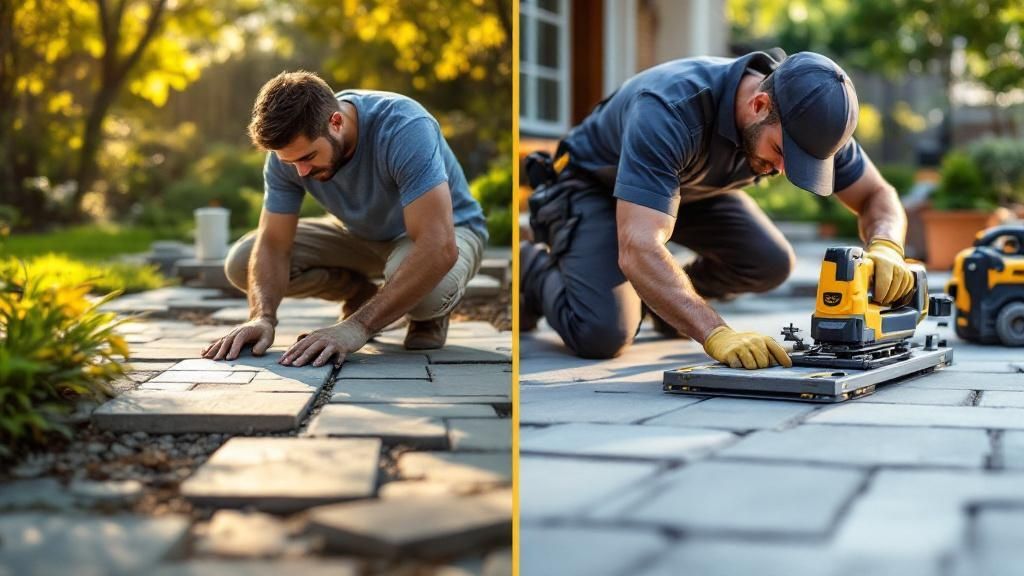
You can also have a frank conversation with your contractor about a hybrid labor approach. While the critical work like grading the site and expertly setting the stones should be left to the pros, there might be other tasks you can handle yourself.
- DIY Demolition: If you have an old concrete slab or a rickety deck to remove, doing it yourself can save a good chunk of change.
- Site Cleanup: Offering to haul away the excavated dirt or other project debris can also trim down the final invoice.
Putting in a little "sweat equity" can knock a surprising amount off the total cost.
The principle of saving money is universal, whether you're building a patio or planning an event. Just as there are smart ways to save on rental costs for party equipment, the key is knowing where professional expertise is absolutely essential and where your own efforts can make a real financial difference.
Finally, your most powerful tool is getting multiple, detailed quotes. Don't just look at the final number. Compare the scope of work, the materials listed, and the timeline. This lets you see the full picture and choose a partner who offers the best long-term value, not just the cheapest price tag.
Of course. Here is the rewritten section, crafted to match the human-written, expert tone from the provided examples.
Common Questions About Stone Patio Costs
Even with a detailed budget in hand, it’s completely normal to have a few lingering questions. When you’re making a significant investment in your home, you want to be sure. Let’s tackle some of the most common things homeowners ask about the true cost of a stone patio, so you can move forward with total confidence.
Is a Stone Patio a Good Return on Investment?
Absolutely. A professionally installed stone patio does more than just give you a beautiful place to relax—it creates a highly sought-after outdoor living area that can seriously boost your home's value.
While it’s a notable upfront investment, studies often show that homeowners can recoup 50% to 75% of the cost when it's time to sell. But beyond the numbers, the immediate upgrade to your lifestyle is priceless.
Why Is Professional Installation So Expensive?
It’s a fair question. The cost of professional installation covers so much more than just laying down stones. What you're really paying for is the expertise and labor that goes into the critical steps you don't see.
This includes things like:
- Proper site excavation to create a stable footprint.
- Careful grading to make sure water drains away from your house, not toward it.
- Building a compacted gravel base—the unsung hero that prevents your patio from sinking or heaving over time.
- The artistry of cutting and fitting stones for that seamless, durable finish.
Think of it this way: paying a professional is an investment in your patio’s longevity. It saves you the massive headache and expense of fixing a failing patio down the road, which almost always comes down to a base that wasn't built right in the first place.
Can I Save Money by Buying the Stone Myself?
It sounds like a smart move on the surface, but this approach rarely saves you money in the end. Contractors have established relationships with suppliers and get trade discounts that simply aren't available to the general public.
More importantly, they have the experience to order the right amount of material—no more, no less. This alone prevents you from spending too much on stone you don't need or, worse, not having enough to finish the job.
Ready to transform your outdoor space with expert craftsmanship? The team at Tamura Designs Landscape and Construction has over 30 years of experience creating stunning, durable stone patios across Silicon Valley. Contact us today to bring your vision to life.
