
Your backyard should be a personal sanctuary, a place to unwind, entertain, and connect with nature without feeling watched. However, close-set homes and open-plan neighborhoods can leave you feeling exposed. This is where strategic privacy screening becomes essential. Far from just building a taller fence, modern solutions are about integrating beauty, function, and personality into your landscape. This guide explores a range of innovative privacy screen ideas for your backyard, moving beyond basic barriers to offer creative, stylish, and effective ways to carve out your private haven.
We will delve into everything from lush, living walls that support local ecosystems to high-tech adjustable screens that adapt to your needs on demand. Each concept is designed to not only block views but also enhance your outdoor aesthetic, creating a more intentional and enjoyable space. To truly reclaim your outdoor space and transform it into a secluded haven, exploring comprehensive ideas for a complete DIY private backyard oasis can provide further inspiration. Whether you are working with a sprawling lawn or a compact patio, these ideas will inspire you to transform your outdoor space into the secluded retreat you've always dreamed of.
1. Living Privacy Fences
A living privacy fence utilizes strategically planted trees, shrubs, or bamboo to create a natural, growing barrier. This is one of the most aesthetically pleasing and eco-friendly privacy screen ideas for a backyard, as it seamlessly integrates with your landscape while providing a dense screen. Unlike static wooden or metal fences, a living wall evolves with the seasons, adds vibrant green texture, and can significantly enhance your property's curb appeal.
These green screens are exceptionally versatile. In suburban Atlanta neighborhoods, rows of Leyland Cypress can grow to form a solid, 12-foot-tall green wall within a few years. For a more modern or Asian-inspired aesthetic, clumping bamboo (a non-invasive variety) creates an almost instant, dense screen in Pacific Northwest yards.
Why Choose a Living Fence?
Living fences are an excellent choice for homeowners seeking a sustainable solution that offers more than just privacy. They improve air quality, provide a habitat for local wildlife, and can help reduce noise pollution from neighboring properties. A well-planned living fence becomes a beautiful backdrop for your garden beds and patio spaces.
Pro Tip: For the quickest coverage, plant your trees or shrubs in a staggered, zig-zag pattern rather than a single straight line. This creates a denser visual barrier much faster as the plants mature.
Implementation and Care
Success with a living fence depends on smart planning and consistent care, especially in the first few years.
- Choose Wisely: Select species suited to your climate zone and soil type. Arborvitae, Holly, and Privet are popular evergreen choices for year-round privacy. For regions with water restrictions, consider exploring drought-tolerant landscaping ideas for hardy, low-water options. Learn more about water-wise plant selections on tamuradesigns.com.
- Plan for Growth: Always consider the mature size of the plants. Spacing them properly from the start prevents overcrowding, which can lead to disease and bare spots.
- Invest in Irrigation: A drip irrigation system is a game-changer. It delivers water directly to the roots, minimizing waste and ensuring your new plants establish themselves successfully.
For a quick reference, the infographic below summarizes the key attributes of a living fence.
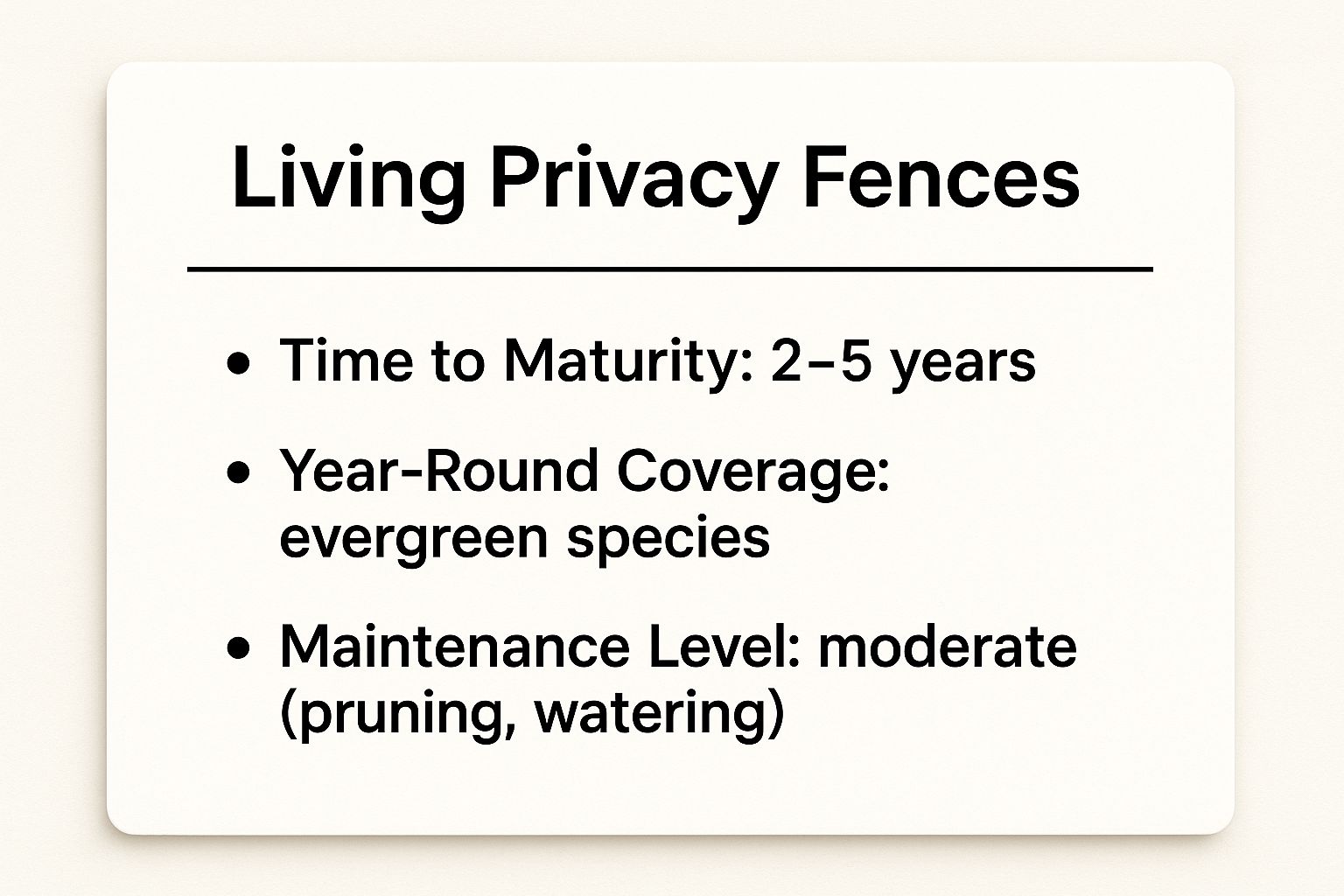
As the data shows, a living fence requires patience and a commitment to moderate maintenance but rewards you with year-round coverage. The investment in time and care pays off with a beautiful, functional, and living addition to your backyard landscape.
2. Outdoor Privacy Screens and Panels
Manufactured outdoor privacy screens and panels offer an immediate, stylish solution for seclusion. These versatile structures are crafted from durable materials like weather-resistant wood, laser-cut metal, low-maintenance vinyl, or modern composites. Available as freestanding units or panels that can be mounted to an existing fence or wall, they provide instant privacy without the wait time of a living fence.
These privacy screen ideas for a backyard are highly adaptable to specific architectural styles. Horizontal slat cedar panels, for instance, are a hallmark of modern California homes, creating clean lines and warm texture. In contemporary Australian backyards, you might see laser-cut metal screens with intricate geometric or botanical patterns that act as functional art. For coastal properties, composite privacy panels are ideal, as they expertly resist corrosion from salt air.
Why Choose a Privacy Screen or Panel?
These panels are the perfect choice for homeowners, and even renters, who need an immediate and targeted privacy fix. They excel at screening off specific areas like a hot tub, a patio dining space, or an unsightly utility box. Their decorative potential is a major advantage, allowing you to introduce artistic elements and architectural interest into your landscape design. For specific needs, such as a practical garden care unit, privacy is paramount and often integrated directly into the structure and surrounding panels.
Pro Tip: Don't limit yourself to a single panel type. Combine a solid panel at eye level for maximum privacy with a semi-transparent, patterned panel above it. This blocks the direct line of sight while still allowing light and air to filter through, preventing a "boxed-in" feeling.
Implementation and Care
Proper installation and material selection are key to a long-lasting and effective privacy screen.
- Secure the Foundation: These panels can act like sails in high winds. Ensure they are anchored securely with posts set in concrete or fastened to a sturdy structure with heavy-duty brackets. Always check local building codes for footing requirements.
- Complement Your Home: Choose materials and colors that harmonize with your home’s existing architecture and your overall hardscaping design. A dark metal screen might complement a modern industrial-style home, while a white vinyl panel suits a classic Cape Cod. Explore various hardscaping and patio ideas on tamuradesigns.com to see how different materials can work together.
- Enhance with Lighting: Integrate low-voltage uplighting or backlighting to transform your decorative panels at night. This highlights the patterns and turns your privacy screen into a dramatic focal point after dark.
3. Pergolas with Privacy Elements
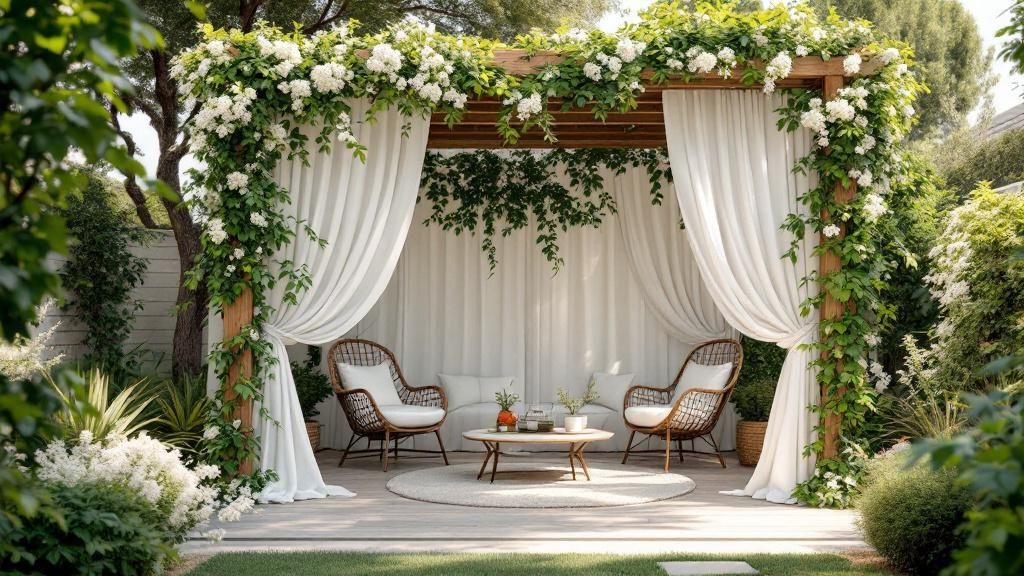
A pergola enhanced with privacy elements elevates this classic architectural feature from a simple shade structure to a versatile outdoor room. By integrating curtains, lattice panels, climbing plants, or retractable screens, you can create an intimate, secluded space. This approach is one of the most flexible privacy screen ideas for a backyard, offering adjustable screening and weather protection while maintaining an open, airy atmosphere.
These hybrid structures blend function and style seamlessly. Imagine an aluminum pergola with retractable shade screens in a sun-drenched Phoenix backyard, providing instant relief from the intense heat and prying eyes. Alternatively, a classic cedar pergola in a Southern garden, draped with fragrant climbing jasmine, offers a romantic and natural form of seclusion.
Why Choose a Pergola with Privacy Elements?
This solution is ideal for homeowners who want to define an outdoor living area, like a dining or lounging space, without constructing a solid, permanent wall. It allows for dynamic control over privacy and sunlight, adapting to different times of day, seasons, or social occasions. A pergola creates a strong architectural focal point that adds significant value and visual appeal to your property.
Pro Tip: For ultimate flexibility, combine multiple privacy elements. Use fixed lattice panels on one side for permanent screening from a close neighbor and add outdoor curtains on another side to block the late afternoon sun or create a cozy evening ambiance.
Implementation and Care
Success lies in selecting the right materials and planning for functionality from the start. A well-designed pergola becomes a true extension of your indoor living space.
- Choose Materials Wisely: For curtain panels, use weather-resistant fabrics like Sunbrella that resist fading, moisture, and mildew. For the structure itself, consider long-lasting materials like cedar, vinyl, or powder-coated aluminum.
- Plan for Versatility: Integrating retractable elements gives you the power to adapt. Motorized screens or shades can be deployed with the touch of a button, offering a sophisticated and convenient way to manage privacy and light.
- Incorporate Greenery: When using climbing plants, select varieties that are not overly aggressive and won't damage the pergola's structure over time. Wisteria, climbing roses, and clematis are excellent choices that add beauty without causing structural harm.
4. Lattice and Trellis Systems
Lattice and trellis systems offer an elegant and highly versatile privacy solution that balances structure with nature. These frameworks, typically made from wood, vinyl, or metal, provide immediate partial screening that can be enhanced over time with climbing plants. This method is one of the most popular privacy screen ideas for a backyard because it allows homeowners to create a living wall without the long wait associated with planting a hedge from scratch.
These systems are perfect for defining specific zones, like separating a dining patio from a play area or enclosing a hot tub. In classic New England cottage gardens, you might see white vinyl lattice panels adorned with vibrant purple clematis, creating a charming and private nook. Conversely, a minimalist Morgan Hill backyard could feature sleek, black metal grid trellises supporting evergreen ivy for a modern, year-round screen that requires little maintenance.
Why Choose a Lattice or Trellis System?
Lattice and trellises are an ideal choice for homeowners who appreciate a solution that evolves. They provide an architectural element from day one while offering the future promise of a lush, green wall. This adaptability allows you to control the level of privacy, starting with the open framework and gradually increasing density as plants mature. They are also excellent for adding vertical interest to smaller yards.
Pro Tip: To create a dynamic, multi-season display, combine different types of climbing plants on the same trellis. Pair an early-blooming clematis with a summer-blooming climbing rose and finish with an evergreen vine to ensure your screen offers visual interest and coverage all year long.
Implementation and Care
Proper installation and plant selection are crucial for a beautiful and long-lasting trellis screen.
- Secure the Foundation: Climbing plants become surprisingly heavy over time, especially after rain or wind. Ensure your trellis is attached to sturdy posts that are securely anchored in the ground, similar to how you would install a traditional fence.
- Pick the Right Plants: Match your plant choice to your climate and the amount of sun the area receives. For sunny spots in California, Bougainvillea or Star Jasmine are excellent choices. For shadier areas, consider Climbing Hydrangea.
- Train for Success: In the beginning, you will need to gently guide new plant growth, weaving stems through the lattice or tying them to the trellis. This "training" encourages the plant to cover the structure evenly for the best privacy coverage.
5. Vertical Gardens and Green Walls
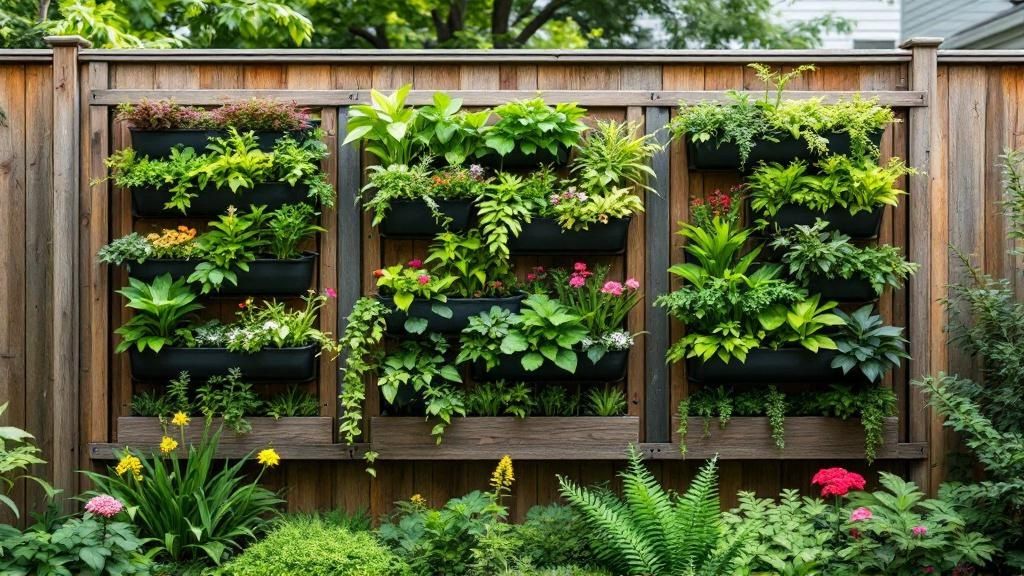
A vertical garden, or green wall, transforms a plain fence or bare wall into a living, breathing privacy screen. This innovative method uses specialized planting systems to grow a dense wall of foliage, making it one of the most space-efficient privacy screen ideas for a backyard. It maximizes greenery in compact areas like patios or balconies while providing an excellent visual barrier, noise reduction, and natural air purification.
Modern systems range from simple felt pocket planters mounted on a wall to sophisticated, self-watering hydroponic installations. For example, hydroponic tower gardens are a popular choice on urban Los Angeles patios, allowing homeowners to grow a mix of herbs and flowers that screen the view. Similarly, felt pocket systems are used on New York apartment balconies to create lush, private oases in the middle of the city.
Why Choose a Vertical Garden?
Vertical gardens are ideal for homeowners who want to introduce significant plant life without sacrificing valuable floor space. They add a stunning "wow" factor to any outdoor area, turning a functional privacy screen into a dynamic piece of living art. This approach is particularly effective for covering up unsightly concrete walls or adding a vibrant, green texture to a modern landscape design.
Pro Tip: For a successful and low-maintenance green wall, group plants with similar water, light, and soil requirements together. This prevents a situation where some plants are overwatered while others are left thirsty.
Implementation and Care
A successful vertical garden hinges on selecting the right system and plants for your environment. Proper setup and a consistent care routine are essential for a thriving green wall.
- Start Simple: If you're new to vertical gardening, begin with a manageable, modular pocket system. This allows you to learn the ropes before investing time and money into a more complex, large-scale installation.
- Plan Your Plants: Choose species that will thrive in your specific conditions. Ferns, succulents, herbs, and trailing vines are excellent candidates. For more ideas on sustainable plant choices, explore some eco-friendly landscaping options. Learn more about sustainable gardening at tamuradesigns.com.
- Ensure Proper Drainage: Adequate drainage is non-negotiable. A good system will prevent water from pooling at the bottom, which can cause root rot and potentially damage the wall or structure behind it.
- Consider Automation: For larger installations, an automated drip irrigation system with a timer is a worthwhile investment. It provides consistent moisture, which is key to keeping your vertical garden lush and healthy with minimal daily effort.
6. Decorative Fence Panels and Screens
Decorative fence panels and screens transform a functional privacy barrier into a stunning piece of landscape art. These panels use laser-cut patterns, geometric designs, or nature-inspired motifs to offer seclusion without completely blocking light or air. Made from materials like Corten steel, powder-coated aluminum, or treated wood, they provide one of the most stylish privacy screen ideas for a backyard, creating dynamic shadow patterns that shift throughout the day.
This approach adds a layer of sophisticated visual interest that a plain fence cannot match. For instance, Corten steel panels featuring elaborate leaf cutouts are a popular choice in modern Australian gardens, their rustic patina complementing natural surroundings. In minimalist California landscapes, you might see powder-coated aluminum screens with crisp, geometric patterns that define a patio space while maintaining an open, airy feel.
Why Choose Decorative Panels?
These screens are ideal for homeowners who view their backyard as an extension of their interior design and want to make a strong aesthetic statement. They offer a perfect balance between privacy and openness, preventing a small yard from feeling boxed-in while screening direct views from neighbors. They are also highly effective at breaking up monotonous expanses of solid fencing or blank walls.
Pro Tip: Position your decorative panels based on the sun's path across your yard. A pattern that catches the afternoon sun will cast long, dramatic shadows across your patio or lawn, adding an element of living art to the space.
Implementation and Care
Proper installation and material choice are key to maximizing the impact and longevity of decorative screens.
- Select the Right Material: Corten steel develops a stable, rust-like appearance that requires no painting or maintenance. Powder-coated aluminum is lightweight, rust-proof, and available in a vast array of colors to match your home's exterior. Treated wood offers a warmer, more traditional look but may require periodic sealing.
- Create a Focal Point: Use these panels strategically. A single, beautifully lit screen can serve as a focal point behind a water feature or seating area. Alternatively, you can alternate decorative panels with solid ones for a custom look that balances privacy, style, and budget.
- Incorporate Lighting: Uplighting or backlighting is essential to showcase the intricate patterns after dark. Low-voltage landscape lights installed at the base of the screen can turn your privacy solution into a dramatic nighttime feature, enhancing ambiance for evening entertaining.
7. Retractable and Adjustable Privacy Solutions
Retractable and adjustable privacy solutions offer the ultimate flexibility, allowing you to control your backyard's level of seclusion on demand. These dynamic systems include retractable side awnings, roll-up screens, and sliding panels that can be deployed when you need privacy and neatly stored away when you don't. This adaptability makes them one of the most versatile privacy screen ideas for a backyard, perfect for homeowners who want to balance open views with intimate seclusion.
These solutions are ideal for multi-use spaces. Imagine retractable shade sails creating temporary "walls" around a poolside lounge area in a sunny Arizona backyard, providing shade and privacy for an afternoon swim. On a high-rise apartment balcony, a roll-up bamboo screen can be lowered for a private dinner and then retracted to enjoy the city skyline. Similarly, sliding privacy panels on a track system can create flexible outdoor room divisions on a large patio.
Why Choose a Retractable Solution?
Adjustable screens are an excellent choice for those who don't want to commit to a permanent, static barrier. They allow you to preserve scenic views, let in the afternoon sun, or open up your yard for large gatherings, then instantly create a cozy, private retreat when desired. Their modern mechanisms and clean lines complement contemporary home designs perfectly.
Pro Tip: When planning for motorized retractable screens, have an electrician rough-in the wiring during deck or patio construction. This will hide the electrical components for a much cleaner, professionally integrated look.
Implementation and Care
Success with adjustable screens hinges on selecting quality components and performing routine checks to ensure smooth, long-term operation.
- Choose High-Quality Hardware: The deployment mechanism is the heart of any retractable system. Invest in marine-grade stainless steel or powder-coated aluminum hardware to prevent rust and ensure it operates smoothly for years.
- Consider Wind Ratings: If you're installing a fabric screen like a side awning or sail, check its wind rating. A higher rating means it can withstand stronger gusts without tearing or damage to the mechanism.
- Test and Maintain: Regularly operate manual systems to keep the mechanisms from seizing up. For motorized versions, check remote batteries and keep tracks clear of debris.
- Seasonal Storage: To prolong the life of fabric elements, retract them during high winds or harsh winter weather. Some systems come with a protective cassette housing that shields the fabric when not in use.
The video below demonstrates how a retractable side awning can provide instant privacy on a deck or patio.
As you can see, the ability to deploy and retract your privacy screen gives you complete control over your outdoor environment. This blend of functionality and modern design makes it a sophisticated and practical addition to any backyard.
Backyard Privacy Screen Ideas Comparison
| Privacy Solution | Implementation Complexity 🔄 | Resource Requirements ⚡ | Expected Outcomes 📊 | Ideal Use Cases 💡 | Key Advantages ⭐ |
|---|---|---|---|---|---|
| Living Privacy Fences | Moderate (planting, ongoing maintenance) 🔄 | High (plants, water, time to mature) ⚡ | Long-term natural privacy, wildlife support 📊 | Sustainable privacy, eco-friendly yards | Sustainable, natural sound barrier, year-round coverage ⭐ |
| Outdoor Privacy Screens and Panels | Low to Moderate (installation, possible pro help) 🔄 | Moderate to High (materials, installation) ⚡ | Instant, consistent privacy 📊 | Renters, quick privacy needs | Immediate privacy, low maintenance, modular ⭐ |
| Pergolas with Privacy Elements | High (construction, customization) 🔄 | High (materials, labor, maintenance) ⚡ | Adjustable privacy, outdoor living space 📊 | Enhancing patios/decks, flexible privacy | Adjustable privacy, multi-functional space ⭐ |
| Lattice and Trellis Systems | Low (DIY-friendly, basic tools) 🔄 | Low (materials, plants) ⚡ | Partial to full privacy over time 📊 | Budget-conscious, garden privacy | Budget-friendly, supports climbing plants ⭐ |
| Vertical Gardens and Green Walls | Moderate to High (installation, irrigation setup) 🔄 | High (materials, irrigation, maintenance) ⚡ | Space-saving, unique privacy and greenery 📊 | Small yards, urban spaces | Maximizes greenery, air purification, sound dampening ⭐ |
| Decorative Fence Panels and Screens | Moderate (installation, possible pro help) 🔄 | Moderate to High (custom designs, materials) ⚡ | Artistic partial privacy, dynamic visuals 📊 | Design-focused privacy, modern aesthetics | Artistic impact, durable, backlit options ⭐ |
| Retractable and Adjustable Solutions | High (mechanical parts, potential electrical) 🔄 | High (hardware, maintenance, electrical) ⚡ | Flexible privacy levels 📊 | Flexible outdoor spaces, seasonal/occasional use | Ultimate flexibility, multi-use, space-saving ⭐ |
Designing Your Private Paradise: From Idea to Installation
Transforming your backyard from an open, exposed area into a secluded personal haven is more achievable than ever. As we've explored, the journey doesn't follow a single path. Your perfect solution lies at the intersection of your home's architectural style, your desired maintenance level, and the specific privacy challenges you face.
From the patient, organic growth of a living privacy fence to the immediate architectural impact of a custom pergola, each option offers a distinct blend of form and function. The key is to look beyond just blocking a view and instead consider how your choice will enhance your daily life and elevate your property's overall aesthetic.
Key Takeaways for Your Project
Choosing the right privacy screen ideas for your backyard involves a thoughtful process. Before you break ground, remember these crucial takeaways:
- Function Meets Form: The most successful privacy solutions are those that feel like a natural extension of your home and garden, not just a functional barrier. Consider how materials, colors, and textures will integrate with your existing landscape and hardscaping.
- Embrace Layering: You don't have to choose just one solution. Combining different elements, such as a low hedge in front of a decorative fence panel or a trellis on the side of a pergola, can create a richer, more dynamic, and more effective privacy barrier.
- Longevity and Maintenance: Be realistic about the upkeep. A lush vertical garden requires consistent care, while a composite fence panel offers a set-it-and-forget-it advantage. Your long-term satisfaction depends on choosing a solution that fits your lifestyle.
- Think in Three Dimensions: Privacy isn't just about what's at eye level. Consider overhead screening with a pergola to block views from second-story windows or retractable awnings for flexible coverage.
Actionable Next Steps to Create Your Retreat
With these ideas in mind, your next step is to move from inspiration to implementation. Start by walking your property and identifying the specific sightlines you want to obscure. Is it a neighbor's window, a busy street, or just a general desire for intimacy? Define your "privacy zones" and decide whether you need full, partial, or flexible screening.
For dynamic solutions like retractable screens or adjustable louvered panels, integrating modern technology can significantly boost convenience. To enhance the functionality and convenience of your adjustable privacy solutions, exploring advanced technologies like smart control options for your backyard retreat can allow you to modify your level of seclusion with the simple push of a button.
Ultimately, investing in a well-designed privacy screen is an investment in your peace of mind and the enjoyment of your home. It’s about creating a personal sanctuary where you can relax, entertain, and connect with nature on your own terms.
Ready to transform your vision into a stunning, professionally crafted reality? The team at Tamura Designs Landscape and Construction specializes in creating bespoke outdoor living spaces, expertly integrating privacy solutions that are both beautiful and functional. Contact us today to schedule a consultation and take the first step toward building your perfect backyard sanctuary in Morgan Hill.
