
Before you even think about searching for “patio contractors near me,” the most important work starts right at your own kitchen table. Seriously. Having a crystal-clear plan is the single biggest factor in getting the patio you actually want, turning that fuzzy idea in your head into a real project that contractors can accurately bid on.
Laying the Groundwork for Your Patio Project
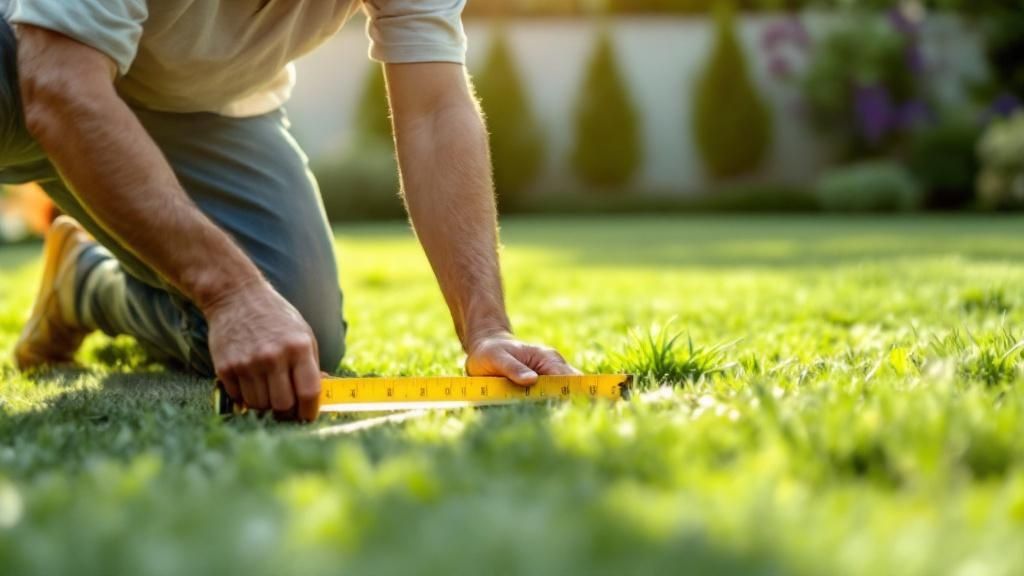
The path to your dream patio doesn't begin when the first paver is laid. It starts with you, figuring out exactly what you want and need. This initial planning isn't just about picking pretty colors; it’s about creating a functional blueprint that matches your vision to your budget.
This clarity is your best defense against miscommunication and sticker shock. When every contractor is bidding on the same, well-defined project, you can compare their quotes apples-to-apples. It’s no surprise that more and more homeowners are investing in professional help to get it right.
The demand for well-designed outdoor spaces is booming. In fact, the global market for patio installation services is expected to hit around $15 billion in 2025 and keep growing by about 6% each year through 2033. You can read more about the trends in patio installation services and market growth if you're curious.
Defining Your Project’s Scope
First things first: how are you going to use this patio? Will it be your quiet spot for morning coffee, the go-to hub for summer BBQs, or a cozy place for late-night chats around a fire? Your answer here will drive every other decision. An entertainment-focused patio, for example, will probably need to be much larger, with distinct zones for grilling, dining, and lounging.
Think through these key elements to start building your project scope:
- Primary Function: Is this for dining, relaxing, cooking, or a mix of everything?
- Must-Have Features: Are you dreaming of a fire pit, built-in seating, a calming water feature, or a full-blown outdoor kitchen?
- Material Preferences: Do you love the classic look of pavers, the clean lines of poured concrete, or the rustic charm of natural flagstone?
A detailed scope is your most powerful tool. It’s the difference between asking for "a patio" and requesting a "400 sq. ft. flagstone patio with a gas fire pit and built-in stone bench." One gets you a vague guess; the other gets you an accurate quote.
This is especially true if you have specific regional needs. For instance, if you're looking for specialized garden landscaping morgan hill expertise, a clear scope helps you find a contractor who knows the local climate, soil, and best-suited materials inside and out.
Finding Reputable Local Patio Contractors

Alright, you've got a solid plan for your dream patio. Now comes the crucial part: finding the right person to build it. This isn't just about a quick Google search; it's about being strategic to find a qualified, local pro who can bring your vision to life.
In an industry as big as deck and patio construction—which hit a $1.3 billion market size in the U.S. in 2024—you can bet there's a huge difference between the average installer and a true craftsman. Quality service and skill are what separate the best from the rest.
I always tell people to start with the most reliable source there is: word-of-mouth. Ask your neighbors, friends, or coworkers if they’ve had a great experience with a patio contractor. Local community groups on Facebook or Nextdoor can also be a goldmine for honest, unfiltered recommendations.
Where To Look Beyond Referrals
Once you’ve collected a few names from your personal network, it’s time to broaden your search. Each of these sources gives you a different angle for finding the perfect fit.
- Online Contractor Platforms: Sites like Houzz or Angi are built for this. You can filter by specialty, browse through portfolios of their actual work, and—most importantly—read reviews from past clients.
- Local Supply Stores: This is one of my favorite insider tips. Head down to your local landscaping and stone supply yards. The folks who work there deal with installers all day long and know who does top-notch work and who specializes in certain materials.
- Hyper-Specific Local Searches: Don't just search for "patio contractor." Get specific. For example, if you live in Morgan Hill, searching for "garden landscaping morgan hill" will connect you with pros who understand the local soil, climate, and popular home styles in your specific area.
Tapping into local expertise is a huge advantage. A contractor who knows your region can recommend materials and designs that won't just look beautiful on day one but will also stand up to your local environment for years to come.
If your project involves stonework, our guide on finding the best stone and masonry contractors has some extra advice tailored just for that.
And honestly, the basic rules for finding a good pro are pretty universal, whether you're building a patio or fixing an appliance. This article on how to find a reliable trader has some great general tips that apply to any home project.
Vetting Your Shortlist of Contractors
Alright, you’ve got a handful of promising names. It's tempting to just pick one and get started, but this next phase is where the real work begins. Proper vetting is what separates a dream patio from a nightmare project. It's the single most important step to protect your investment and ensure you’re hiring a true professional.
First things first: credentials. Don't even think about getting a quote until you’ve confirmed the basics. Any contractor you consider must have a valid license for your state and carry the right insurance. This isn't just red tape; it's your safety net.
Make sure they have both general liability and workers' compensation coverage. It protects you from any liability if an accident happens on your property during the build. For a complete rundown on what to look for, check out this guide on understanding contractor insurance requirements.
Digging Deeper Than Online Reviews
Online reviews are a decent starting point, but they only tell part of the story. The real proof is in their portfolio and, more importantly, what their past clients have to say.
When you look through a contractor’s portfolio, you’re looking for consistency. Do their projects all have that same high-quality finish? Pay attention to the details that matter to you, like the clean lines on their paver installations or how they blend features like fire pits into the overall design.
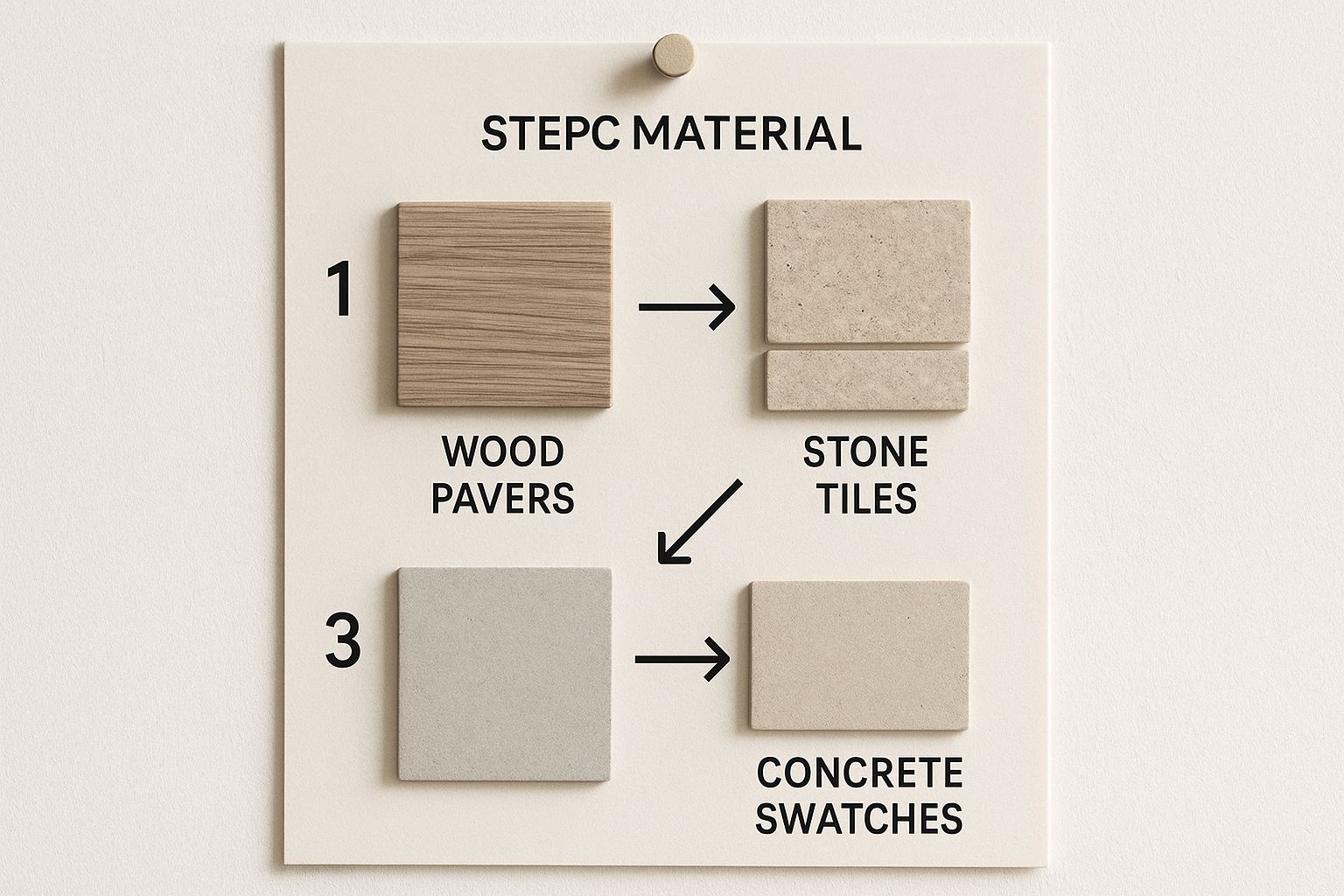
Seeing the actual materials a pro uses can help you visualize how different textures and colors will come together in your own space.
Now, for the most revealing step: talking to their references. Don't just ask, "Were you happy with the work?" That's a 'yes' or 'no' question that won't give you much insight. You need to ask targeted questions to get a feel for the entire experience.
Here are a few questions I always recommend asking:
- How was their communication from start to finish?
- Did the final cost match the original quote? If not, why?
- How did they handle surprises or problems that came up?
- Did the finished patio meet your expectations?
- Would you hire them again without hesitation?
To make this process easier, I've put together a simple checklist you can use for each contractor on your shortlist.
Contractor Vetting Checklist
Use this table to keep your notes organized and compare potential contractors side-by-side. It ensures you don't miss a single crucial detail in your evaluation.
| Vetting Step | What to Look For | My Notes |
|---|---|---|
| Licensing | Is their state license current and valid? | |
| Insurance | Do they have proof of General Liability & Workers' Comp? | |
| Portfolio Review | Is the quality consistent? Do they have relevant project examples? | |
| Reference Checks | Did I speak to at least 2-3 past clients? | |
| Communication Style | Are they responsive, clear, and professional? | |
| Problem Solving | How do references say they handled issues or changes? |
Tracking these points will give you a much clearer picture of who you’re dealing with, helping you move forward with confidence.
How to Compare Patio Installation Quotes
Alright, now the quotes are starting to roll in. Your first instinct might be to scan for the lowest number, but hold on. Comparing quotes is about so much more than just the price tag; it’s your chance to see who truly understands your vision and who’s just trying to win the job.
The first thing I look for is an itemized bid. If a contractor just throws a single, round number at you for the entire project, that’s a massive red flag. A true professional’s quote should look more like a detailed receipt you get before you buy, not after. It needs to break everything down. I’m talking line items for materials (brand, style, and quantity of pavers), labor costs, equipment rentals, permit fees, and even debris removal. Without that detail, you're not comparing apples to apples; you're just guessing.
Looking Beyond the Bottom Line
Once you have a few detailed quotes in hand, it's time to dig in. That surprisingly low bid can be tempting, I get it. But from my experience, a price that seems too good to be true usually is. It often means they're cutting corners somewhere—maybe with subpar materials that will crack in a few years or by skimping on the base preparation, which is the foundation of your entire patio.
Another warning sign? High-pressure sales tactics. A confident, experienced pro will give you the space and information you need to feel good about your decision. They won't rush you.
A solid quote should also clearly spell out these key details:
- Project Timeline: A clear start date and an honest estimate for completion.
- Payment Schedule: When are payments due? Usually, it's a deposit, a mid-project payment, and a final payment upon completion.
- Material Specifics: The exact brands, colors, and quantities of everything being used.
- Contingencies: A plan for how unexpected issues (like hitting a massive boulder during excavation) or changes you request will be handled.
A well-structured quote is a direct reflection of a contractor's professionalism. It shows they’re organized, transparent, and have a solid plan for bringing your project to life.
One crucial detail I always check for is the plan for ground preparation and water management. If drainage isn't mentioned anywhere on the quote, you need to ask about it directly. Improper drainage can ruin a beautiful patio fast. If you want to get up to speed on this, check out these 8 effective patio drainage solutions for 2025 to see what your contractor should be thinking about.
By taking the time to carefully dissect each proposal, you can move forward feeling confident you’ve found the right partner for your project.
You've done the legwork, compared the quotes, and have a winner in mind. Now comes the final, crucial step: locking it all in. This is where you formalize the agreement to protect both yourself and your contractor.
Never, ever move forward on a handshake alone. I've seen it go wrong too many times. A detailed, written contract is the single most important document for your entire project.
This isn't just about a price and a signature. A professional contract is the complete blueprint for the job, from start to finish. And in an industry that’s booming—the global outdoor deck and patio market was valued at around $15.7 billion in 2024 and is only getting bigger—having that clarity is non-negotiable. You can read more about the expanding patio and deck market to see just how much this space is growing.
What Every Solid Contract Must Include
A vague contract is an open invitation for misunderstandings and disputes. Your agreement needs to be airtight, leaving absolutely nothing to chance. Before you even think about signing, grab a highlighter and comb through the document for these key details:
- A Detailed Scope of Work: The contract should read like a story of your project. It needs to explicitly list every single task, mirroring the itemized quote—from digging the foundation and prepping the base to laying the pavers and cleaning up the site.
- Material Specifications: No generic terms here. It must name the exact brands, colors, and styles of all materials. Think "Belgard Catalina Grana pavers in 'Toscana' blend," not just "pavers."
- Total Cost and Payment Schedule: The contract must state the total fixed price. It also needs to outline a clear payment schedule tied to milestones, like an initial deposit, a payment mid-way through, and the final balance only after you’ve signed off on the completed work.
- Change Order Procedures: What happens if you want to add a sitting wall halfway through? The contract should define a clear process for how any changes or additions will be documented, priced, and approved by you in writing before any extra work begins.
- Project Timeline: This includes a projected start date and an estimated completion date. It should also have notes on how potential delays, like a week of non-stop rain, will be communicated and handled.
Don’t be afraid to ask questions or request changes. A reputable contractor wants you to feel 100% confident and will happily walk you through every clause. This is your moment to make sure everything you've discussed is officially on paper.
Getting these details buttoned up is the final step before the real fun begins. It's the difference between just hoping for a great patio and having a concrete plan to get one.
For homeowners dreaming of a truly stunning result, it can be inspiring to see what's possible with a high-end, modern patio design.
Answering Your Top Questions About Hiring a Patio Contractor
Even after doing your homework, a few questions always pop up right before you're ready to pull the trigger. It’s completely normal. Getting these common concerns sorted out upfront will give you the confidence to move forward and help you sidestep any last-minute surprises.
What Will My New Patio Actually Cost?
This is usually the first question on everyone's mind, and the honest answer is: it depends. Patio costs can swing wildly based on the size of your space, the materials you land on, and the intricacy of the design.
For instance, a simple, no-fuss concrete slab is on the lower end, typically running $8 to $12 per square foot. But if you've got your heart set on premium pavers or gorgeous natural stone, you can expect that price to climb to $15 to $50 per square foot, sometimes even more. Don't forget, your local area's labor rates also have a big say in the final number.
How Long Will the Project Take? And What About Permits?
Another big question is about the timeline. For a pretty standard 200 sq. ft. paver patio, a good crew can often knock it out in just 2-5 days, provided the weather cooperates and the site is ready to go. Of course, larger projects with extras like retaining walls or an outdoor kitchen can easily stretch out from one to three weeks.
A common mistake we see is homeowners assuming a permit isn't needed for a patio. While simple, ground-level patios sometimes don't require one, any structure that's raised, has a cover, or involves running utility lines for gas or electricity almost certainly will.
A true professional will know the local codes inside and out and handle the permitting process for you. For example, an expert in garden landscaping morgan hill will be completely up to speed on the specific permit requirements and inspection schedules for that city, saving you a world of headaches.
Finally, think about the best time of year to build. Spring and fall are usually perfect, thanks to the mild weather. Summer is the busy season, so contractors get booked up fast, while winter can bring everything to a halt in many parts of the country. Aiming for the shoulder seasons might just get you on the schedule a lot quicker.
Ready to transform your outdoor space with an award-winning team? Tamura Designs has over 30 years of experience creating stunning, custom patios and landscapes in Morgan Hill and across Silicon Valley. Let's build the backyard of your dreams. Learn more about our patio design services.
