
Retaining walls are more than just functional structures; they are a cornerstone of exceptional landscape design, capable of transforming a simple slope into a stunning terraced garden or a dynamic outdoor living space. While their primary purpose is to hold back soil and manage erosion, the right design can elevate your property's entire aesthetic. This guide moves beyond basic functionality to explore a range of innovative retaining wall design ideas, showcasing how different materials and construction methods create visual interest and solve complex landscape challenges.
From the rustic charm of timber to the industrial chic of gabion baskets and the modern elegance of poured concrete, we'll provide the inspiration and practical insights you need. This article delves into the specific benefits, styling tips, and key considerations for each option, helping you envision a solution that is both beautiful and structurally sound. For homeowners in Morgan Hill and the greater Silicon Valley area, a well-designed retaining wall is a smart investment in both the beauty and stability of your outdoor environment. We will explore specific options, including stone veneer, segmental systems, living walls, and more, to help you find the perfect fit for your property's unique character and needs.
1. Stone Veneer Retaining Wall
A stone veneer retaining wall offers the timeless, high-end look of solid stone without the prohibitive cost and complex installation. This popular retaining wall design idea combines a strong, structural core, typically made from concrete masonry units (CMUs), with a thin layer of real or manufactured stone facing. This approach delivers the best of both worlds: the robust engineering of a modern retaining wall and the classic, natural aesthetic that many Morgan Hill homeowners desire.
This method is ideal when you need significant structural support for a slope but want a finish that complements your landscape's natural beauty. It's a versatile choice seen in residential terraced gardens, elegant driveway borders, and even large-scale commercial applications. Brands like Cultured Stone Corporation and Belgard have perfected manufactured stone veneers that are nearly indistinguishable from their natural counterparts.
Key Considerations for Implementation
When planning a stone veneer wall, success lies in the details. Proper construction is critical to ensure longevity and prevent moisture-related issues.
- Moisture Management: Install a high-quality moisture barrier between the CMU block and the stone veneer. This prevents water that seeps behind the wall from damaging the veneer adhesive or the stone itself.
- Climate-Appropriate Stone: Select a stone veneer rated for the Morgan Hill climate. Some porous stones can be susceptible to cracking during freeze-thaw cycles, so choosing a durable, low-porosity option is essential.
- Color and Texture: For the most authentic look, choose a veneer with natural color variations. Laying out the stones before installation allows you to mix and match pieces to avoid unnatural patterns and create a more organic, custom appearance.
The infographic below highlights the primary benefits of choosing a stone veneer system, summarizing why it's a leading choice for retaining wall design ideas.
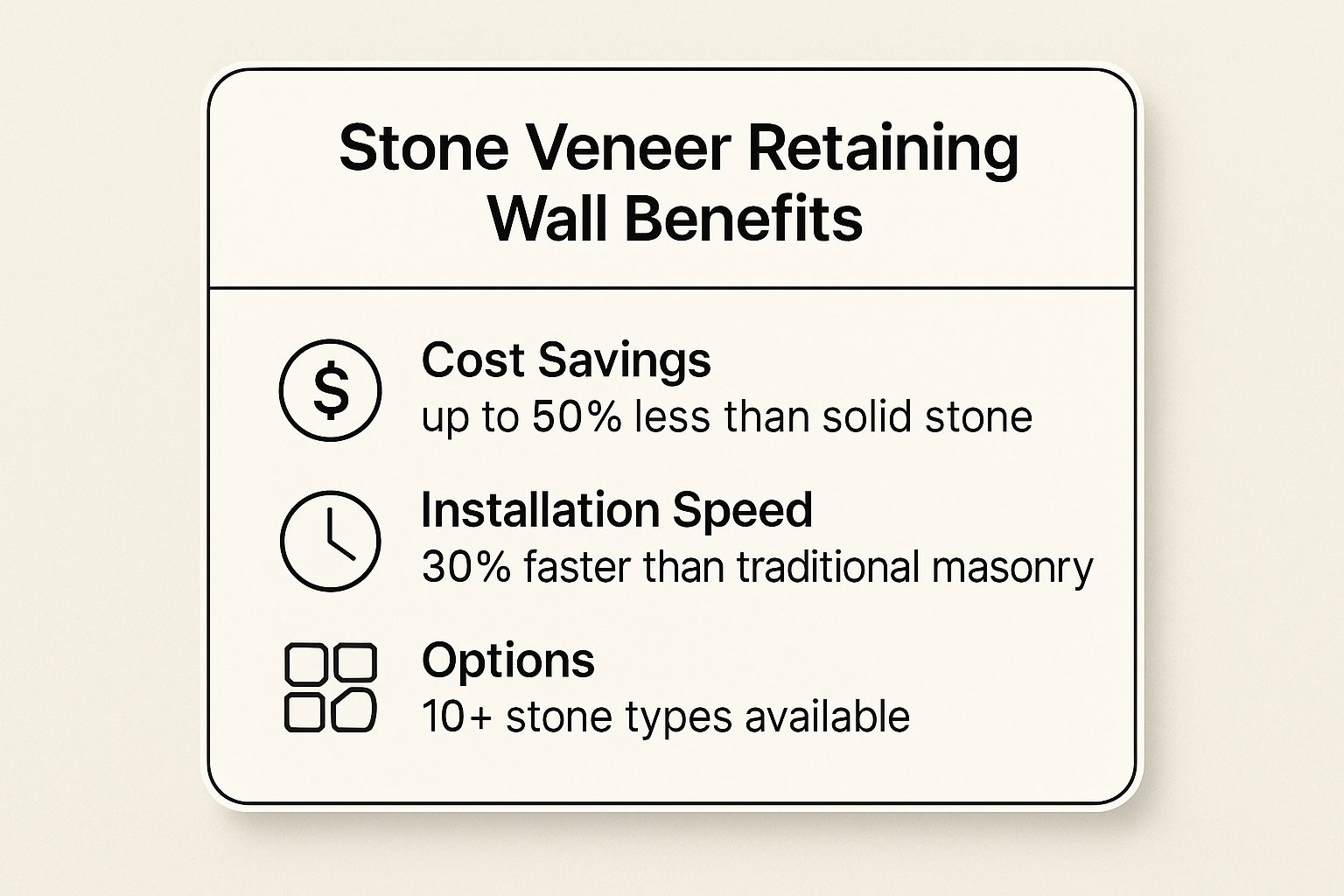
As the data shows, the significant cost and time savings make this beautiful design far more accessible for a wide range of budgets and project timelines. This efficiency, combined with vast aesthetic options, allows for a truly customized yet practical landscape feature.
2. Segmental Retaining Wall (SRW) Systems
Segmental retaining wall (SRW) systems are an engineered marvel of modern landscaping, offering a blend of strength, flexibility, and aesthetic variety. These walls are constructed using high-density concrete blocks that interlock without mortar, relying on their mass, precise geometry, and often, geogrid reinforcement to hold back soil. This gravity-based or mechanically-stabilized earth system is one of the most reliable and widely used retaining wall design ideas for both residential and commercial projects.
This approach is exceptionally versatile, making it perfect for creating terraced gardens, defining property lines, or managing significant grade changes for driveways and patios. The modular nature of SRW blocks allows for the construction of straight, curved, or serpentine walls with ease. Industry leaders like Allan Block Corporation and Keystone Retaining Wall Systems have developed a vast range of block styles, colors, and textures, enabling Morgan Hill homeowners to find a perfect match for their home's architecture and landscape.
Key Considerations for Implementation
Proper installation is non-negotiable for the long-term performance and safety of an SRW system. Following engineered specifications is crucial.
- Compacted Base: A solid foundation is paramount. The first course of blocks must rest on a well-compacted, level base of crushed stone to prevent settling and shifting.
- Geogrid Reinforcement: For walls taller than three or four feet, incorporating layers of geogrid fabric is essential. This mesh extends back into the soil, creating a stable, unified earth-and-wall structure that can withstand immense pressure.
- Essential Drainage: Proper drainage behind the wall is critical. A column of clean, crushed stone must be placed directly behind the blocks, along with a perforated drainage pipe at the base, to relieve hydrostatic pressure and prevent wall failure.
- Manufacturer Setback: Each SRW system has a specified setback, or batter, where each course is stepped back slightly from the one below. Adhering to this specification is vital for the wall’s structural integrity.
The video below from Allan Block provides an excellent visual overview of the components and construction process of an SRW system.
As the video demonstrates, the interlocking mechanisms and reinforcement options make SRWs a highly engineered solution. This system's efficiency, combined with its diverse aesthetic possibilities, ensures it remains a top choice for projects requiring both beauty and brawn.
3. Gabion Wall Systems
A gabion wall system offers a unique blend of industrial-chic and natural aesthetics, creating a highly functional and permeable retaining structure. These walls are constructed using wire mesh baskets, typically made of galvanized or PVC-coated steel, which are filled with rocks, stones, or sometimes even recycled materials. Originally an engineering staple for civil projects, this retaining wall design idea has found a prominent place in modern landscaping for its rustic look, excellent drainage, and structural flexibility.
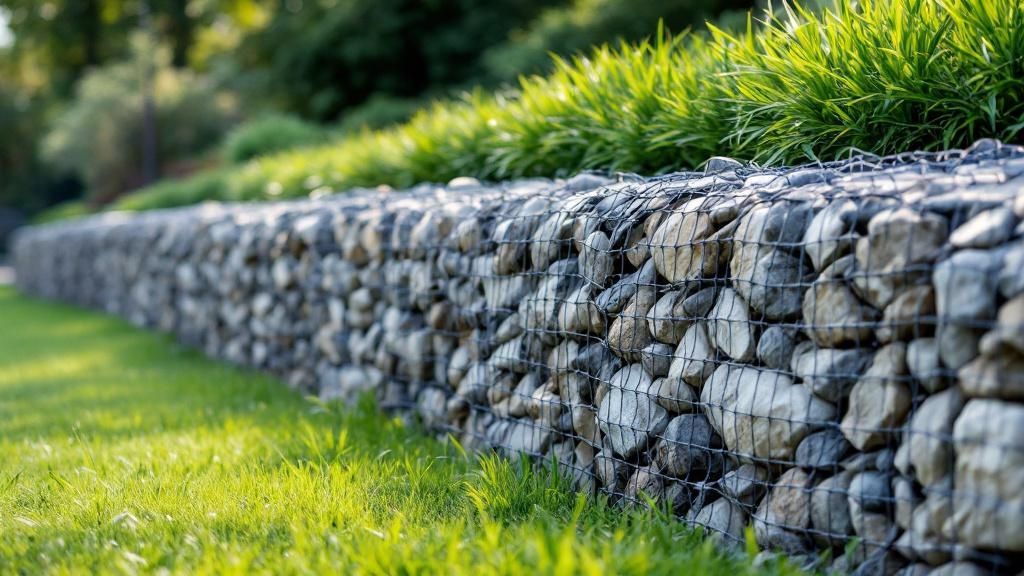
This method is perfect for managing water-heavy slopes or stabilizing stream banks, as the gaps between the stones allow water to pass through freely, relieving hydrostatic pressure. Its modular nature makes it adaptable for both straight and curved designs, from residential garden terraces in hillside Morgan Hill homes to large-scale commercial retaining walls. Pioneering companies like Maccaferri have advanced gabion technology, making it a reliable and visually striking solution.
Key Considerations for Implementation
Proper assembly and material selection are crucial for a gabion wall that is both beautiful and built to last. A well-constructed gabion wall can provide decades of stable, low-maintenance service.
- Choose the Right Fill: Use angular, hard-wearing stone rather than rounded river rock. The angular edges interlock, creating a more stable and stronger internal structure within the basket.
- Ensure a Solid Foundation: Although flexible, gabion walls require a level, compacted foundation of crushed rock or gravel to prevent settling and ensure uniform stability across the entire length of the wall.
- Hand-Place Face Stones: For a polished, high-end look, take the time to hand-place the stones that will be visible on the face of the wall. This creates a tight, attractive surface that looks more deliberate than simply dumping fill material into the baskets.
- Protect Against Corrosion: In environments with high moisture or corrosive soil, opt for PVC-coated wire mesh. This extra layer of protection significantly extends the lifespan of the baskets compared to standard galvanized steel.
4. Timber Retaining Wall
A timber retaining wall brings a warm, natural, and often rustic charm to landscapes, using treated lumber to create a functional and cost-effective soil retention system. This classic retaining wall design idea is prized for its straightforward construction and ability to blend seamlessly into garden settings. The natural aesthetic of wood makes it an incredibly popular choice for Morgan Hill homeowners looking to define garden beds, create terraced levels on a gentle slope, or add a simple, organic-looking border to their property.
This approach is highly versatile, ranging from simple stacked landscape timbers for low-level garden walls to more complex, engineered timber crib walls used in larger-scale applications. Its inherent warmth and texture soften hardscapes and complement plant life beautifully. While DIY-friendly for smaller projects, professional installation ensures the structural integrity needed for taller walls. Companies like Mutual Materials offer a range of landscape timber systems designed for easy integration into residential projects.
Key Considerations for Implementation
Proper material selection and construction techniques are paramount to maximizing the lifespan and performance of a timber retaining wall. Wood is a natural material, and protecting it from the elements is key.
- Use Ground-Contact Rated Lumber: Always select pressure-treated lumber specifically rated for "ground contact." This treatment provides crucial protection against moisture, rot, and insect infestation, which are the primary threats to a timber wall’s longevity.
- Install Robust Drainage: A critical step is to install a proper drainage system behind the wall. This typically involves a layer of gravel backfill and a perforated drainage pipe at the base to channel water away, preventing hydrostatic pressure buildup that can cause the wall to bow or fail.
- Choose High-Quality Fasteners: Use hot-dipped galvanized or stainless steel screws and spikes. Standard fasteners will corrode when in contact with the chemicals in treated lumber, compromising the wall's structural connections over time.
- Plan for Future Replacement: Be aware that even well-built timber walls have a finite lifespan, typically around 15 to 20 years. Factoring this eventual replacement into your long-term landscape plan is a practical approach for this organic and beautiful retaining wall design idea.
5. Poured Concrete Retaining Wall
A poured concrete retaining wall is the epitome of strength and modern design, created by pouring liquid concrete into temporary forms on-site. Once cured, this monolithic structure offers immense durability and can be engineered as either a gravity wall, relying on its own mass, or a more slender cantilever wall reinforced with steel rebar. This method provides unmatched design flexibility, allowing for curves, unique angles, and custom heights that are difficult to achieve with pre-made blocks.
This type of wall is an excellent solution for projects demanding significant structural integrity, such as supporting a steep hillside, creating a walkout basement, or lining a driveway where vehicle loads are a factor. While often associated with utilitarian highway projects, modern techniques allow for decorative finishes like stamping, staining, and integral coloring. These treatments can mimic stone or wood or simply create a sleek, minimalist surface, making poured concrete a surprisingly versatile player among retaining wall design ideas.
Key Considerations for Implementation
Proper engineering and installation are non-negotiable for a poured concrete wall to ensure it remains stable and crack-free for decades. Attention to detail during the construction phase is paramount.
- Structural Reinforcement: The amount and placement of steel rebar are critical and must be engineered based on the wall's height and the pressure it will hold back. Under-reinforcing is a common cause of failure.
- Drainage Systems: A well-planned drainage system, including weep holes and a gravel backfill, is essential. Trapped hydrostatic pressure is the primary enemy of any retaining wall, and concrete is no exception.
- Control Joints: Concrete naturally shrinks as it cures, which can lead to random cracking. Strategically placed control joints encourage cracking to occur in a controlled, straight line for a cleaner aesthetic and to maintain structural integrity.
- Finishing Touches: If you desire a textured or colored finish, it must be planned from the start. Form liners can create patterns, and pigments can be added directly to the concrete mix for a consistent, lasting color.
While the initial setup can be more complex than block systems, the resulting strength and custom look are often worth the investment. As you plan your budget, you can learn more about the cost of retaining wall construction on tamuradesigns.com to see how this option compares to others. The longevity and minimal maintenance make poured concrete a sound long-term choice for Morgan Hill properties.
6. Living Wall (Green Retaining Wall)
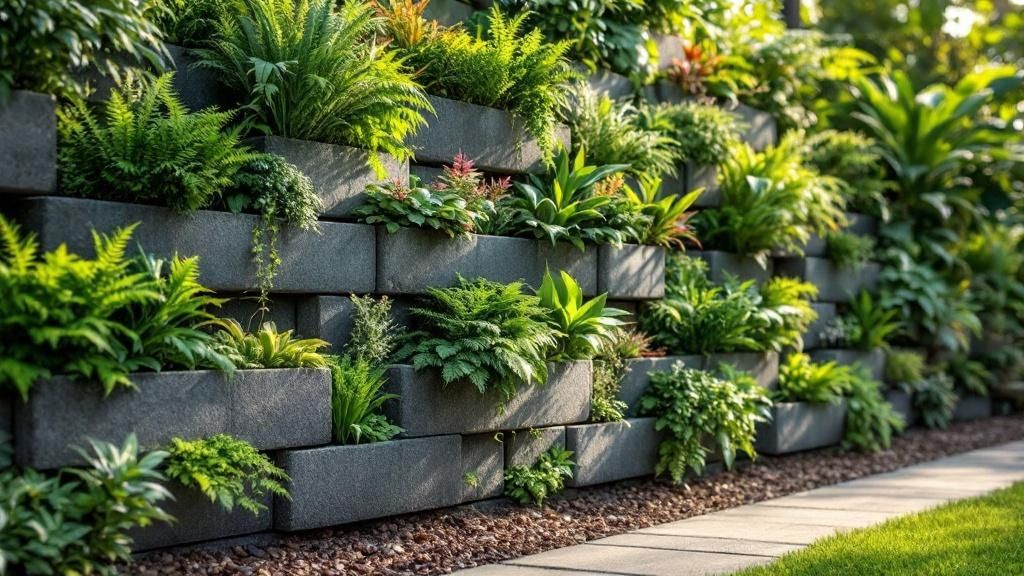
A living wall, also known as a green retaining wall, is a cutting-edge retaining wall design idea that integrates vegetation directly into its structure. This innovative system combines the functional necessity of soil retention with powerful ecological and aesthetic benefits. The structure itself often consists of specialized concrete blocks with voids for soil, vegetated geogrid systems, or modular planting cells that allow plants to root and thrive directly on the wall's face, creating a seamless blanket of green.
This approach is perfect for Morgan Hill homeowners who wish to soften the hardscape, promote biodiversity, and create a unique, natural feature. It is commonly used for stabilizing highway slopes, creating terraced residential gardens, and in bioretention projects for parks and public spaces. If you're exploring the concept of a living wall, consider various vertical gardening solutions to maximize green space and visual impact. Systems from companies like Redi-Rock and Verdura demonstrate how effective these vegetated walls can be in both large and small-scale applications.
Key Considerations for Implementation
A successful living wall depends on creating a sustainable ecosystem that can thrive with minimal intervention once established. Careful planning in the initial stages is paramount.
- Proper Plant Selection: Choose plants that are well-suited to the wall's orientation (sun or shade) and the local Morgan Hill climate. Using California native, drought-tolerant plants is an excellent strategy for long-term success and water conservation.
- Irrigation Planning: A temporary irrigation system, such as drip lines, is crucial for the establishment period. This ensures the young plants receive adequate moisture until their root systems are fully developed and can access water within the wall's soil pockets.
- Adequate Soil and Root Space: The system must provide sufficient soil volume and depth for healthy root development. Cramped roots will lead to stressed, unhealthy plants, so select a block or cell system that matches the needs of your chosen vegetation.
- Seasonal Aesthetics: Plan your planting palette to provide visual interest throughout the year. Mix evergreen plants with species that offer seasonal flowers or foliage color to ensure your wall remains a dynamic and attractive landscape feature in every season.
7. Mechanically Stabilized Earth (MSE) Wall
A Mechanically Stabilized Earth (MSE) wall is an advanced engineering solution ideal for constructing very tall or load-bearing retaining walls. Unlike traditional walls that resist pressure through sheer mass, MSE walls create a composite structure by integrating tensile reinforcements, such as steel strips or synthetic geogrids, into the soil behind the wall face. This reinforced soil mass then acts as a single, coherent block capable of supporting immense pressure.
This system is a go-to for major civil engineering projects like highway embankments and bridge abutments, but it's also a powerful, and often cost-effective, solution for large residential properties in Morgan Hill with significant grade changes. The facing of an MSE wall can be customized with precast concrete panels or segmental blocks, offering a clean, modern aesthetic. Innovators like The Reinforced Earth Company and Tensar International have pioneered systems that make this large-scale technology applicable to a wider range of projects.
Key Considerations for Implementation
Proper engineering is non-negotiable for an MSE wall, as its stability depends entirely on the interaction between the soil, reinforcement, and facing.
- Geotechnical Analysis: A thorough geotechnical investigation is the mandatory first step. A qualified engineer must analyze the soil properties to determine the required type, length, and spacing of the reinforcement material.
- Specified Backfill: Only use the specific type of granular, free-draining backfill material outlined in the engineering plans. Using native soil or improper fill can compromise the friction needed for the reinforcement to work, leading to failure.
- Comprehensive Drainage: An effective drainage system is crucial. Install a chimney drain behind the facing panels and a base drain to prevent hydrostatic pressure buildup, which can destabilize the entire reinforced soil mass. This is a key principle in many eco-friendly landscaping strategies.
- Follow Manufacturer Specifications: Adhere strictly to the installation guidelines provided by the geogrid or reinforcement manufacturer. Proper overlap, tensioning, and placement are critical for achieving the wall’s designed strength and long-term performance.
Retaining Wall Design Ideas Comparison Matrix
| Retaining Wall Type | Implementation Complexity 🔄 | Resource Requirements ⚡ | Expected Outcomes 📊 | Ideal Use Cases 💡 | Key Advantages ⭐ |
|---|---|---|---|---|---|
| Stone Veneer Retaining Wall | Moderate – skilled labor needed | Moderate – stone veneer & CMU base | Durable with natural stone look | Residential & commercial landscaping | Cost-effective, fast installation, versatile aesthetics |
| Segmental Retaining Wall (SRW) | Low to Moderate – modular blocks | Moderate – interlocking blocks & base | Flexible, good drainage | DIY projects, residential terracing, highways | No mortar, quick install, adjustable to settlement |
| Gabion Wall Systems | Moderate – wire mesh assembly | Moderate – mesh cages & stone fill | Highly permeable, flexible | Slopes, erosion control, natural settings | Excellent drainage, cost-effective, environmentally friendly |
| Timber Retaining Wall | Low to Moderate – carpentry skill | Low to Moderate – treated lumber | Moderate lifespan, natural look | Residential gardens, parks, low-height walls | Natural appearance, easy modification, moderate cost |
| Poured Concrete Retaining Wall | High – professional & equipment | High – concrete, steel reinforcement | Very durable, customizable finish | High-rise, heavy-load, commercial & infrastructure | Extremely durable, any height, low maintenance |
| Living Wall (Green Retaining) | Moderate – planting & irrigation | Moderate – plants & structural components | Erosion control, aesthetics | Ecological projects, parks, residential | Habitat creation, air quality, natural beauty |
| Mechanically Stabilized Earth | High – engineered design needed | High – reinforcement & engineered soil | Very tall, stable, adaptable | Tall walls, highways, industrial & military | Suitable for tall walls, flexible design, cost-effective for large walls |
Building Your Vision: From Idea to Installation
As we've journeyed through the diverse world of retaining wall design ideas, it’s clear that these structures are far more than just functional necessities. They are opportunities for creative expression, capable of transforming a challenging slope into a stunning landscape feature. From the rustic, natural charm of a timber wall to the modern, industrial aesthetic of a gabion system, the right design can define your property's character.
We explored the classic elegance of stone veneer, the practical efficiency of segmental retaining wall (SRW) systems, and the bold statement of poured concrete. Each option presents a unique combination of texture, color, and form. The key takeaway is that the most successful projects arise from a thoughtful synthesis of your aesthetic vision and the specific functional demands of your site. A living wall might be the perfect solution for an eco-conscious homeowner, while a large-scale Mechanically Stabilized Earth (MSE) wall provides the engineered strength required for more significant grade changes.
Turning Inspiration into a Lasting Structure
Moving from inspiration to installation requires careful planning. The most beautiful retaining wall will fail if it lacks proper engineering and drainage. Consider these crucial next steps:
- Assess Your Site: Evaluate the soil type, the height of the slope (the "surcharge"), and local water runoff patterns. This assessment is fundamental to determining the required structural integrity.
- Define Your Budget: Your budget will influence material choices and the scale of the project. A well-planned budget prevents compromises on quality and safety down the line.
- Consult a Professional: For any wall over a few feet high, or on a complex site, professional guidance is not just recommended; it's essential for safety, longevity, and compliance with local Morgan Hill building codes.
Key Insight: A retaining wall is a permanent landscape fixture. Investing in professional design and installation ensures it not only looks beautiful on day one but also withstands the pressures of time and weather, protecting your property for decades.
When considering the long-term value and functionality of your outdoor space, the addition of a thoughtfully designed retaining wall can significantly enhance your property's appeal and its real estate investment potential. It’s an investment in both the beauty and the stability of your landscape. Ultimately, your retaining wall should be a source of pride, a seamless integration of form and function that elevates your entire outdoor living experience.
Ready to transform your landscape with a wall that is both a beautiful centerpiece and a lasting structural solution? The award-winning team at Tamura Designs Landscape and Construction has over 30 years of experience turning complex retaining wall design ideas into stunning realities across Morgan Hill and beyond. Contact us to start your design consultation and bring your vision to life.
