
Drought-tolerant landscape design isn't just a smart move; it’s a sustainable approach that brings together stunning beauty and practical function. It's all about minimizing water use by making savvy choices—from picking climate-appropriate plants and improving your soil to incorporating strategic hardscaping. The goal is to create a resilient outdoor space that truly thrives with very little irrigation.
This isn’t about creating a barren, dusty yard. It's about crafting a lush, living garden that works with nature, not against it.
Why Smart Landscaping Is Non-Negotiable
Let's be honest for a second. The classic green lawn, that perfect symbol of suburbia, is quickly becoming an environmental and financial luxury that many of us are starting to rethink. A meticulously watered, perfectly manicured patch of turf demands an enormous amount of resources. We're talking gallons upon gallons of precious water and countless hours of weekly maintenance.
Drought-tolerant landscape design completely reframes this old ideal. It shifts the focus away from a water-guzzling monoculture and toward a vibrant, diverse, and surprisingly self-sufficient ecosystem. This isn't just a niche trend for people living in the desert, either. It’s an essential strategy for any modern homeowner looking to create a beautiful and sustainable outdoor sanctuary. The benefits go far beyond just "saving water," touching on nearly every aspect of homeownership.
More Than Just Water Savings
When you commit to a well-executed water-wise landscape, you unlock a powerful combination of advantages.
- Boosted Property Value: A thoughtfully designed, low-maintenance garden is a huge selling point. It signals sustainability and modern taste to potential buyers.
- Reduced Maintenance Hours: Imagine saying goodbye to constant mowing, fertilizing, and watering. Once these landscapes are established, they require far less hands-on time, freeing you up to actually enjoy your yard.
- Enhanced Ecological Health: By planting native species, you create a natural habitat that supports local pollinators like bees and birds. It’s a simple way to foster a healthier environment right outside your door.
The cultural mindset is definitely shifting. In neighborhoods all across the country, sustainability is the new status symbol. The data backs this up—requests for low-water and drought-tolerant landscapes have surged by 30% in the last year alone, according to Yardzen's 2025 report. This isn't a passing fad; it's a practical, logical response to our changing environmental realities.
A smart landscape is a long-term investment in your property's resilience and your own peace of mind. It’s about creating an outdoor space that gives back more than it takes, season after season.
To help you get started, here's a quick look at the core ideas behind this approach.
Core Principles of Drought Tolerant Design at a Glance
| Principle | Objective | Key Action |
|---|---|---|
| Smart Plant Selection | Reduce irrigation needs by choosing plants adapted to the local climate. | Prioritize native and climate-appropriate plants that naturally thrive in your area's rainfall patterns. |
| Soil Improvement | Increase water retention and provide essential nutrients to plant roots. | Amend soil with organic matter like compost to improve its structure and ability to hold moisture. |
| Strategic Hardscaping | Minimize lawn area and create functional, low-water outdoor living spaces. | Use permeable materials like gravel, pavers, or decks to create patios and walkways. |
| Efficient Irrigation | Deliver water directly to plant roots, minimizing waste from evaporation or runoff. | Install drip irrigation or soaker hoses and water deeply but infrequently to encourage strong root growth. |
| Mulching | Conserve soil moisture, suppress weeds, and regulate soil temperature. | Apply a 2-3 inch layer of organic mulch (like wood chips or bark) around plants. |
These principles are the foundation of a landscape that is not only gorgeous but also fundamentally responsible.
This guide is designed to give you the practical insights you need to make a stunning, water-wise design a reality. To get a better sense of the bigger picture behind intelligent planning, it's worth exploring the role of an environmental designer in shaping these kinds of sustainable spaces. By embracing these ideas, you can build a garden you'll be proud of for years to come.
Planning Your Water-Wise Oasis From the Ground Up
A gorgeous, drought-tolerant landscape doesn't start at the nursery. I've seen it time and time again—the most successful projects are born from thoughtful planning and a real understanding of the yard's unique personality. Rushing this stage is probably the most common mistake people make, and it almost always leads to struggling plants and a lot of wasted effort.
Think of it like getting to know a new friend. You need to spend some time observing your property's quirks. Your first job is simply to watch how the sun moves across your yard throughout the day. Take note of the areas that get absolutely baked in the harsh afternoon sun versus the corners that stay in cool shade. That scorching hot strip along the driveway is going to require a completely different set of plants than the damp, shady spot behind the garage.
These little pockets of sun, shade, and moisture are what we call microclimates, and identifying them is the secret to a thriving garden.
Understanding Your Site's DNA
Once you've got a handle on your sun patterns, it’s time to get your hands dirty—literally. You need to understand your soil. Don't worry, you don't need a fancy lab test to get a good idea of what you're working with. A simple "jar test" can tell you if your soil is mostly clay, sand, or a nice healthy loam.
Just grab a clear jar, fill it about two-thirds full of water, and add a scoop of your soil. Shake it up like you mean it, then let it settle for a day or so. The heavy sand will drop to the bottom first, followed by the silt, and finally, a fine layer of clay will settle on top. Knowing this helps you pick plants that will love your soil as-is, or it tells you exactly how you need to amend it for better results.
One of the most critical parts of any drought-tolerant landscape design is grouping plants with similar water and sun needs together. We call this hydrozoning, and it’s the single most effective way to simplify your watering routine and make sure every plant gets exactly what it needs without wasting a drop.
For a great visual on how to combine beautiful, low-water plants, take a look at this arrangement of salvia, lavender, and ornamental grasses.
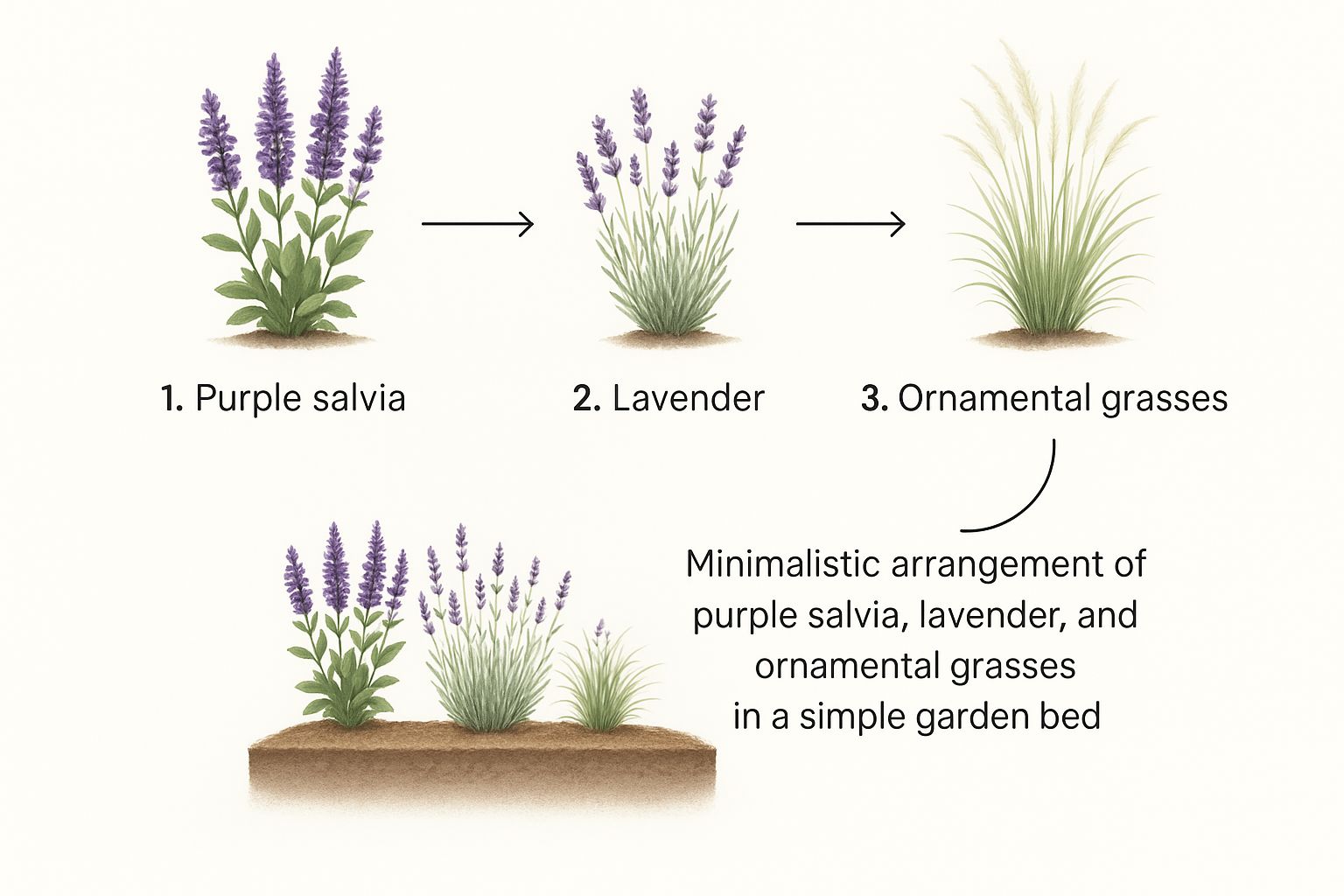
This image is a perfect example of how you can layer different textures and colors to get a lush, full look that's surprisingly water-wise.
Sketching Your Vision
Now it's time to put your observations on paper. Even a rough sketch of your yard is an incredibly valuable tool. Mark your sunny and shady zones, jot down your soil types, and circle any existing features you want to keep. This visual map is where you can start placing your hydrozones logically.
For instance, you might dedicate that sun-blasted area by the street to your most heat-loving, drought-proof plants. Then, in a shadier, more protected spot, you could create a zone for plants that appreciate just a little more moisture. If you need some inspiration for layouts, check out our collection of drought-tolerant landscaping ideas to see how these principles come to life in real-world designs.
Taking the time to plan has real benefits for your wallet and the environment, too. In the U.S., outdoor water use accounts for about 30% of a household's total water consumption, and that number can skyrocket to 60% in drier regions. A well-planned, water-wise garden doesn't just look beautiful—it ensures your investment pays off in both curb appeal and long-term savings.
Choosing Plants That Thrive, Not Just Survive
A gorgeous, low-water garden is about so much more than a few rocks and some lonely succulents. If you want a truly stunning drought-tolerant landscape, the secret is choosing plants that are built to flourish in your specific climate—not just hang on for dear life.
This means looking beyond the generic big-box store offerings and discovering the vibrant world of plants that provide year-round color and texture while barely sipping water.
The absolute best place to start? Native plants. These are the species that have spent thousands of years adapting to your local soil, rainfall, and climate. By their very nature, they are the most resilient and low-maintenance plants you can find. As a bonus, they provide essential food and shelter for local pollinators like bees and birds, helping you create a healthier ecosystem right in your own yard.
Building Your Plant Palette
Walking into a nursery without a plan can feel completely overwhelming. I’ve seen it a hundred times. Instead of wandering the aisles aimlessly, go in with a strategy. I always tell my clients to think in terms of layers, just like a painter would. This approach is what gives a garden that full, lush appearance with plenty of depth and visual interest.
To get you started, think about filling these roles in your garden:
- Hardy Groundcovers: These are your workhorses. They suppress weeds, prevent erosion, and keep the soil cool. Forget basic turf and consider things like Creeping Thyme, which smells amazing when you walk on it, or the silvery leaves of Snow-in-Summer.
- Show-Stopping Perennials: These are the plants that die back in winter but return year after year with spectacular blooms. Salvia varieties bring dramatic spikes of purple or red, Coneflower (Echinacea) adds bold color while attracting finches, and Yarrow (Achillea) offers delicate, flat-topped flowers that are tough as nails.
- Structural Shrubs and Grasses: This group forms the year-round backbone of your garden. Ornamental grasses like Blue Oat Grass add soft texture and movement, while hardy shrubs like Manzanita or Ceanothus provide evergreen structure and beautiful spring flowers.
To see how these layers can come together beautifully, you can find a fantastic list of species perfectly suited for our area by exploring these California native drought tolerant plants. It’s a great resource for building a shopping list before you even set foot in the garden center.
Decoding Plant Tags for Success
Learning to read a plant tag is a critical skill for any gardener. Don't just look at the pretty picture! The tag contains the vital information that tells you whether a plant will actually work in your yard.
You need to pay close attention to these three things:
- Water Needs: Look for keywords like "low water," "drought tolerant," or "xeric." This is your number one clue.
- Sun Exposure: Does it need "full sun" (that means 6+ hours), "part sun," or "shade"? Match this directly to the sun map you created earlier.
- Mature Size: This is the one people always forget. That cute little shrub in a one-gallon pot might grow to be 8 feet tall and wide. Knowing its final size prevents overcrowding and saves you from a major headache down the road.
When you carefully select plants that are a natural fit for your environment, you end up with a garden that isn’t just beautiful and water-wise, but also brimming with life and far easier to maintain. This thoughtful approach is truly the heart of successful landscape design.
Of course. Here is the rewritten section, crafted to sound like an experienced human expert and match the provided examples.
Building a Foundation of Soil and Stone
While those vibrant, water-wise plants are what everyone notices first, the real secret to a tough, beautiful landscape lies in what’s underneath. The unsung heroes of any successful garden are the soil you build and the hardscaping you choose.
If you get these foundational pieces right from the start, you’re setting your entire yard up for a long, healthy life.
It All Starts with the Soil
I’ve seen it time and time again: homeowners pour all their energy into picking the perfect plants, but they overlook the single best investment they can make—their soil.
Most residential soil, especially around newer homes, is a disaster. It's often compacted junk, stripped of all its good stuff. When it rains, water just sheets right off it like a raincoat instead of soaking in. The fix? Amending your soil with a few inches of rich, organic compost. This one step completely changes the game.
Compost works magic on soil structure, creating tiny air pockets that give plant roots room to breathe and grow deep. More importantly, it acts like a natural sponge, holding onto moisture long after you've watered. This means your plants can access that stored water when they really need it, which dramatically cuts down on how often you have to drag out the hose.
Trading Thirsty Lawns for Smart Surfaces
Here's another huge step toward a genuinely water-wise yard: rethinking your lawn. Let's be honest, a traditional turf grass lawn is incredibly thirsty and a ton of work. By strategically swapping out sections of grass for smart hardscaping, you can create functional, beautiful spaces that slash your watering bill.
This doesn't mean you have to pave over your entire yard. Far from it. It’s about being smart with your surfaces. Consider these options:
- Permeable Pavers: Unlike a solid concrete slab, these pavers let rainwater trickle through the gaps and back into the ground. This recharges the soil instead of sending valuable water down the storm drain.
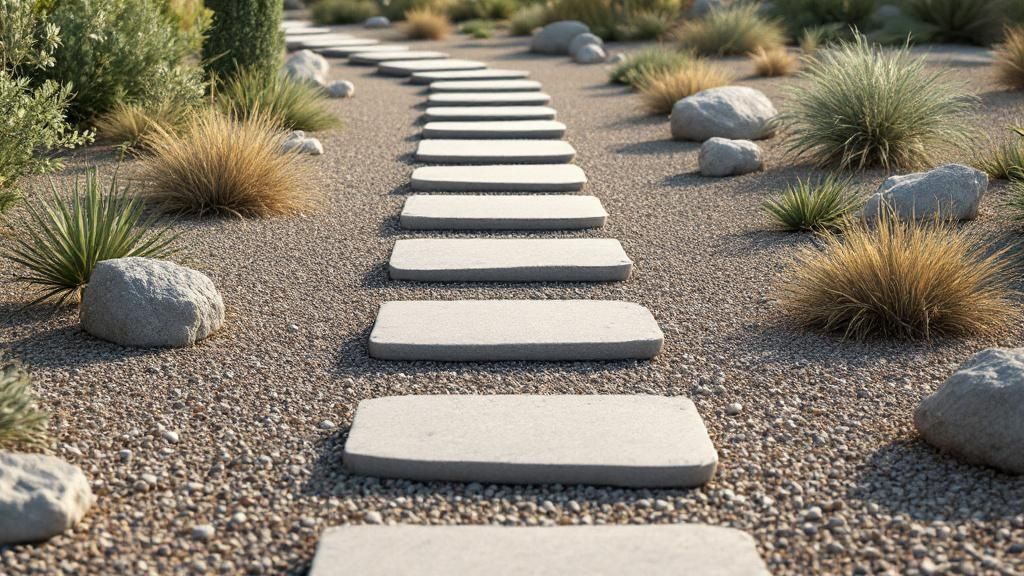
- Gravel and Decomposed Granite: A modern gravel path or a seating area made from decomposed granite is stylish, relatively inexpensive, and totally permeable. It gives you a clean, contemporary look with zero watering required.
- Decks and Patios: A well-designed deck or patio essentially creates an outdoor room. You get a perfect spot for dining and relaxing without a single blade of grass to maintain.
This isn't just a trend for desert climates; it's a smart strategy being adopted all over. In Europe, for example, designers are embracing principles like xeriscaping to deal with new environmental realities. By focusing on smart surfaces and tough plants, they’re not only reducing water use but also supporting local wildlife. You can see more about how these emerging landscaping trends are taking hold on kawasaki-engines.eu.
The goal is to design a landscape where every square foot has a purpose. Hardscaping creates the "rooms" of your outdoor living space, while healthy soil and carefully chosen plants furnish them.
Your Garden's Best Friend: Mulch
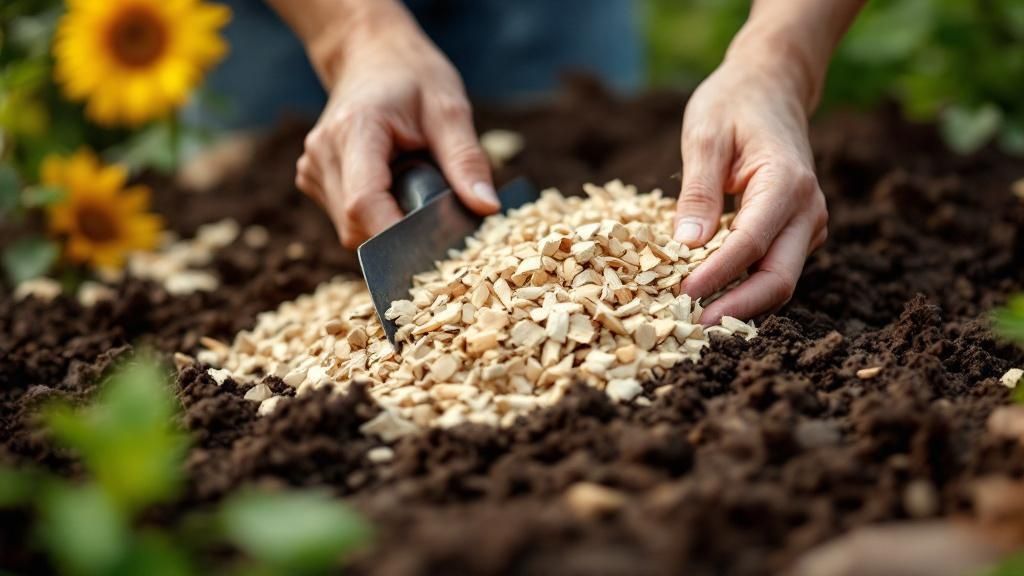
Finally, let's talk about mulch. Applying a thick, 2-3 inch layer of organic mulch is non-negotiable for a healthy, low-water garden. Think of it as a protective blanket for your soil.
It insulates the soil from the baking sun, which dramatically cuts down on how much moisture evaporates. It also smothers weeds, which are notorious for stealing water and nutrients from your plants. A fresh layer of mulch is a simple final touch that protects your entire investment.
Choosing the right mulch can make a big difference. Some hold water better, while others last longer.
Mulch Type Comparison for Water Retention
This table breaks down some common options to help you pick the best one for your needs.
| Mulch Type | Water Retention | Longevity | Best For |
|---|---|---|---|
| Shredded Bark | Excellent | 1-3 years | Sloped areas and general garden beds; knits together well. |
| Wood Chips | Good | 2-4 years | Pathways, around trees and shrubs; breaks down slowly. |
| Compost | Excellent | < 1 year | Vegetable gardens and new plantings; enriches soil as it breaks down. |
| Gravel/Pebbles | Poor (but prevents evaporation) | Permanent | Rock gardens, succulent beds, and contemporary designs. |
Ultimately, any of these mulches are better than bare soil. The key is to get that protective layer down to keep your soil cool and moist.
Watering Smarter, Not Harder
A lush, beautiful landscape doesn't have to come from constant, wasteful spraying. It’s time we rethink how we water, and that means saying goodbye to those old-school sprinklers that can lose up to 50% of their water to wind and evaporation before it ever helps a single plant.
The secret to a successful drought-tolerant garden is delivering water with precision, right where it counts: the plant's root zone.
This is where smart irrigation methods like drip lines and soaker hoses become your best friends. Unlike sprinklers that drench everything in sight (including the sidewalk), these systems release water slowly and directly into the soil. This targeted approach virtually eliminates wasteful runoff and evaporation, making sure every drop gets put to good use by your plants.
For garden beds with individual shrubs or perennials, a drip system with emitters is ideal. You can place an emitter right at the base of each plant, customizing the water delivery to its specific needs. If you have densely planted areas or a vegetable garden, a soaker hose—which weeps water along its entire length—provides gentle, consistent moisture without soaking the leaves, which helps keep fungal diseases at bay.
Mastering the Art of Deep Watering
Once you've got an efficient delivery system, the next step is adopting a smarter watering philosophy. The most common mistake I see homeowners make is frequent, shallow watering. It might feel right, but it actually encourages plants to develop weak, shallow roots near the surface, leaving them incredibly vulnerable during hot, dry spells.
The real goal is to water deeply and infrequently. It's a simple shift in technique that encourages your plants to send their roots searching deep into the soil for moisture.
A plant with a deep, robust root system is far more resilient and self-sufficient. It can tap into moisture reserves buried deep underground, allowing it to withstand periods of drought with much less stress.
This approach strengthens the entire plant, making it tougher and healthier for the long haul. It's a core principle in all forms of eco-friendly landscaping, as it helps plants become more independent while conserving a precious resource.
Timing Is Everything
When you water is just as critical as how you water. Watering in the heat of the day is a recipe for waste, since a huge amount of that moisture will simply evaporate under the hot sun before it can do any good.
The best time to water is in the early morning, typically between 5 a.m. and 9 a.m. During these cooler hours, the wind is usually calm, and evaporation is at its lowest. This gives the water plenty of time to soak deep into the soil and get absorbed by the roots before the day really heats up. While evening watering might seem like a good alternative, it can sometimes promote mildew and other fungal issues, so morning is always your best bet.
When you put these smart irrigation methods together, you create a powerful, water-saving strategy:
- Drip Irrigation: Delivers water directly to the base of individual plants.
- Soaker Hoses: Perfect for providing gentle, even moisture to rows or dense plantings.
- Deep, Infrequent Watering: Promotes strong, resilient root growth.
- Early Morning Schedule: Maximizes water absorption and minimizes evaporation.
By putting these techniques into practice, you’ll dramatically cut down on your water use and the time you spend on maintenance. More importantly, you'll be cultivating a garden that isn't just beautiful, but also strong, resilient, and perfectly equipped to thrive through the hottest, driest months of the year.
Of course. Here is the rewritten section, crafted to sound completely human-written and natural, following all your requirements.
Answering Your Top Questions About Water-Wise Yards
When you first start thinking about a drought-tolerant landscape, it’s completely normal to have some questions. After years in this business, I've heard them all. Most homeowners wrestle with the same few concerns before they get started.
Let's clear the air and bust a few common myths. My goal is to give you the confidence to move forward, knowing this isn’t about creating a barren, empty yard—it's about building a gorgeous, resilient outdoor space that you'll love.
Will a Drought-Tolerant Yard Look Like a Desert?
This is the number one misconception I hear, and I’m happy to say the answer is a firm "no." While classic desert plants like succulents and cacti are fantastic low-water options, they're just one small piece of the puzzle. A well-planned, water-wise landscape can be incredibly lush, vibrant, and bursting with color.
The secret is all about embracing plant diversity. It's like painting with a full palette of colors and textures. Think about layering plants with different heights and bloom times. Imagine beautiful plants like Lavender, Russian Sage, Coneflower, and countless ornamental grasses that offer stunning visual appeal without constantly needing the hose. When you focus on a rich variety of species, you can absolutely create a garden that feels full and alive. It really proves that "low-water" and "lush" can go hand in hand.
How Much Maintenance Does This Kind of Landscape Really Need?
Honestly, one of the biggest payoffs of this approach is how much less maintenance you'll have in the long run. There’s an initial establishment period, of course—usually the first year—where your new plants need some consistent attention to develop strong, deep roots.
But once they're established? Your workload drops dramatically. Maintenance shifts from a constant chore to just occasional tasks. You’ll be doing some deep watering during major heatwaves, a bit of seasonal pruning to keep plants healthy, and refreshing your mulch once a year to hold in moisture and stop weeds. You get to trade hours of mowing and fertilizing for more time simply enjoying your beautiful yard.
Can I Convert My Existing Lawn in Stages?
Absolutely! In fact, this is often the smartest way to tackle a big project. A phased approach makes everything more manageable, both for your schedule and your wallet. A great place to start is with a smaller, defined area—that pesky parking strip or a tired-looking corner of the yard is perfect.
A popular and highly effective method we often use is sheet mulching. It’s a fantastic way to get started. You simply layer cardboard right over the old grass, then top it with a thick layer of compost and mulch. Over a few months, the grass and cardboard break down naturally, leaving you with a perfectly prepped, nutrient-rich garden bed ready for planting. This lets you spread out the cost and effort while you watch your landscape transform, one section at a time.
What Is the Initial Cost for a Drought-Tolerant Landscape?
The upfront cost can really vary. It depends on the size of your space, the types of plants you fall in love with, and how much of the work you want to do yourself. There is certainly an initial investment in plants, soil amendments, mulch, and potentially upgrading to a more efficient drip irrigation system.
It's so important to view this as a long-term investment, not just an expense. The savings on your water bill can be substantial and, in many cases, will pay for the project over time. Also, don't forget to look into local programs. Many water districts offer rebates for lawn removal that can help homeowners offset the initial cost of creating a beautiful, water-wise garden.
Ready to transform your own outdoor space into a stunning, sustainable oasis? The team at Tamura Designs Landscape and Construction has over 30 years of experience creating award-winning landscapes in Morgan Hill and across Silicon Valley. Let's create the outdoor space you've been dreaming of.
